
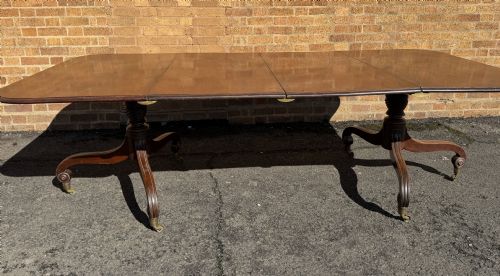
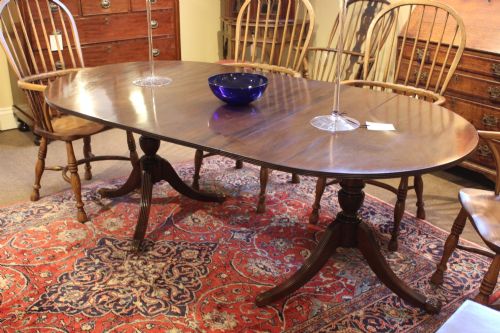
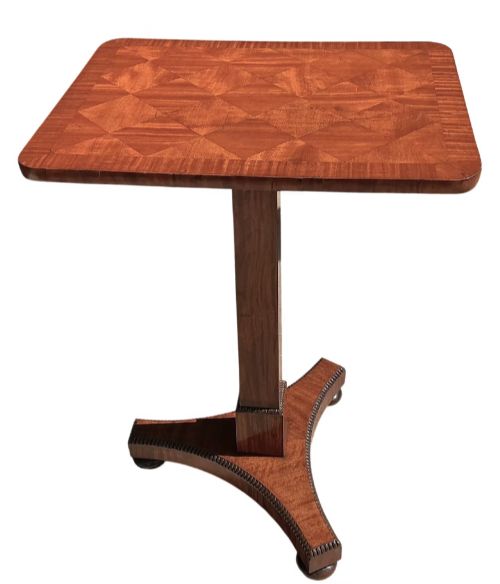
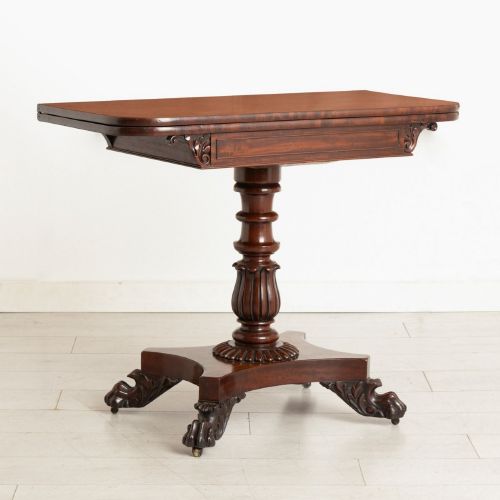
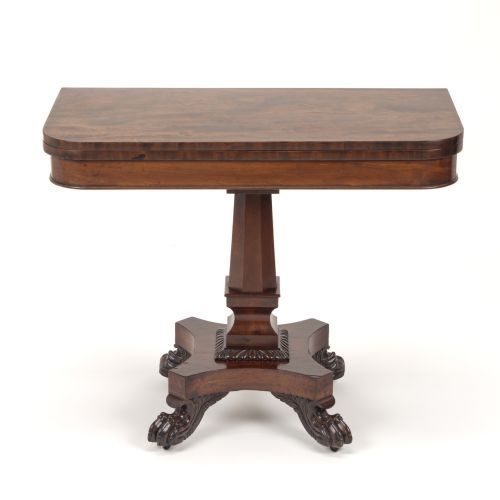


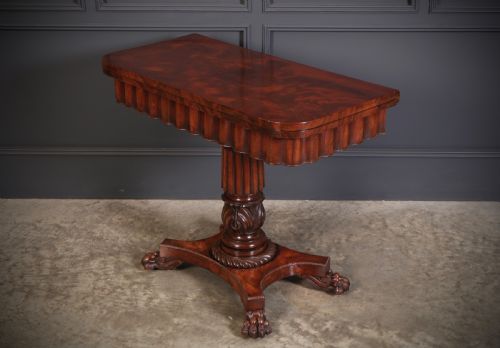

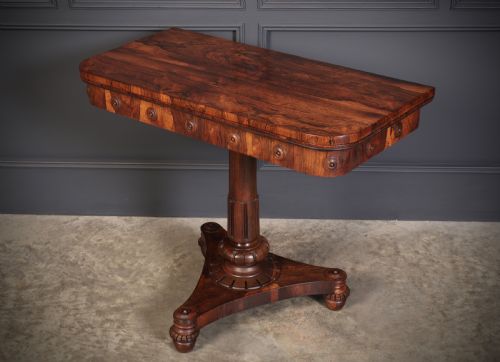

Late Regency Pedestal Table
A late regency pedestal table brings architectural proportion and rich timber into a room, offering both formal presence and daily utility.
Late Regency Pedestal Table
When you search for a late regency pedestal table, you encounter furniture designed in the early decades of the nineteenth century that balances classical restraint with inventive domestic forms. The pieces available span dining tables, card tables, breakfast tables, and library tables resting on central columns.
These tables served a variety of social functions in domestic interiors, from holding tea services and playing games to providing surfaces for books and formal meals. Their central pedestal construction allowed for maximum legroom compared to traditional four-legged designs.
What varies in quality
Quality in these tables rests upon the selection of timber figures and the structural integrity of the central pillar and its supporting base. Finer examples display carefully matched veneers and robust weight distribution that prevents tipping.
Carved details such as paw feet, reeded columns, and inlaid borders separate standard workshop production from exceptional cabinet work. The sharpness of the carving and the original patination of the timber dictate the standing of the piece.
Object types on this page include extending dining tables, games tables, pembroke tables, and library desks.
Gillows·Thomas Myers of Gillows·Holland and Sons
The Late Regency Pedestal Table Glossary
- Pedestal table
- A table supported by a single central pillar resting on a platform or footed base. This design replaced traditional four-legged dining and occasional tables to increase seating comfort.
- Card table
- A folding table designed for evening games, featuring a hinged top that opens to reveal a baize or leather-lined playing surface. They were standard fixtures in nineteenth-century drawing rooms.
- Pembroke table
- A drop-leaf occasional table with hinged flaps on opposing sides, allowing the surface area to expand as needed. They often included a single drawer and stood on slender legs or pedestals.
- Penwork
- A decorative technique using fine ink lines to draw classical motifs, borders, or chess boards directly onto a wooden surface before varnishing. It mimics more costly inlay work with great precision.
- Ebonised wood
- Timber treated with a dark stain or finish to imitate ebony, commonly used for contrasting borders and decorative accents during the Regency period.
Late Regency Pedestal Table: Frequently Asked Questions
What is a pedestal breakfast table?
A pedestal breakfast table is a round or occasional dining surface supported by a central column and tripod or platform base, originally used for morning meals in private apartments.
Many examples feature a tilt-top mechanism, allowing the table to be stored upright against a wall when not in use.
How do I use a card table?
A card table serves as a console or side table against a wall until opened for evening card games, writing, or informal tea.
The hinged top folds out to reveal a textile-lined surface, supported by a swing leg or a pivoting frieze drawer.
How do I tell Regency from Georgian?
Regency pieces often display bolder classical revival motifs, such as brass paw feet, ebonised details, and heavier pedestal bases, influenced by French and Greco-Roman archaeology.
Georgian furniture generally leans towards earlier proportions and subtler carved ornamentation, though the eras overlap significantly around the turn of the nineteenth century.
Can I use a library table daily?
A library table is robustly constructed from dense timbers like mahogany or rosewood, making it well-suited for everyday use as a desk or central display surface.
Its stable pedestal base and spacious top provide practical utility while maintaining historical character in a modern interior.