
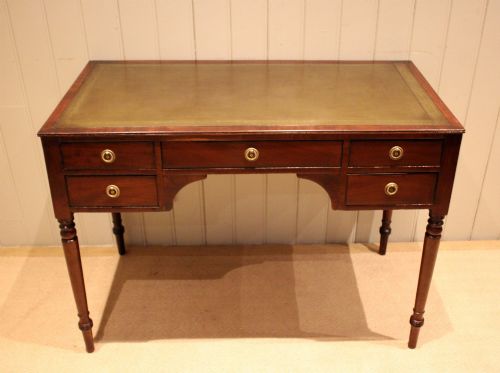


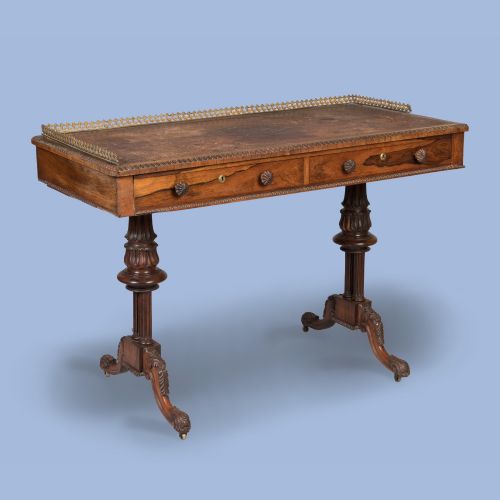


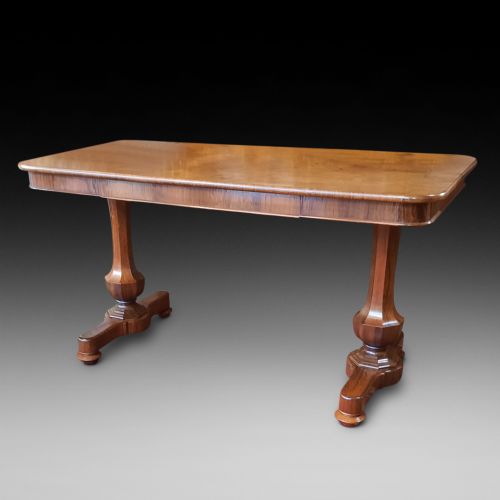
Late Regency Library Table
A late regency library table is a substantial writing and reading surface built for serious study, offering enduring utility and refined proportions for the home.
Late Regency Library Table
A late regency library table sits at the intersection of practical utility and formal design, serving as a dedicated surface for reading, writing, and study in domestic spaces. These pieces emerge primarily from the Georgian, Regency, and nineteenth century periods, carrying the classical restraint and structural balance characteristic of those eras.
The forms span from pedestal desks and partners writing tables to compact centre tables, showing versatility in scale. Makers of the period drew upon Regency neoclassical design principles, producing pieces that function as practical desks while acting as architectural focal points in a room.
How they were made
Cabinet makers constructed these tables using dense hardwoods such as mahogany and rosewood, selected for their stability and grain pattern. Surfaces frequently incorporate supple leather writing pads framed by fine wood inlay and marquetry.
Structural hardware relies on brass for castors, key escutcheons, and mounts, adding subtle metallic contrast to the timber. Joinery techniques ensured that large library tables and pedestal desks could bear weight while maintaining graceful proportions.
The furniture spans desks, sofa tables, and library tables across the Georgian and Regency periods.
What varies in quality
The distinction between standard examples and top tier pieces rests upon timber selection and the precision of decorative details. Figured mahogany and richly grained rosewood elevate a table, particularly when matched across expansive writing surfaces.
Execution of marquetry, brass inlay, and neoclassical carving marks the difference in craftsmanship. Master workshops invested greater labour in secondary woods, structural framing, and the integration of fitted drawers designed for architects and scholars.
Gillows·Thomas Myers
The Late Regency Library Table Glossary
- Library table
- A large freestanding table designed for the storage and consultation of books, typically finished on all sides so it can float in the centre of a room.
- Marquetry
- Decorative patterns formed by the insertion of small pieces of veneer into a fitted wood ground, creating pictorial or geometric designs.
- Pedestal desk
- A heavy desk supported by two distinct stacks of drawers or pedestals flanking a central kneehole.
- Partners desk
- A double sided writing table built to accommodate two users sitting opposite one another, featuring opposing banks of drawers.
- Sofa table
- A rectangular occasional table traditionally placed against the back of a sofa, equipped with drop leaves on either end.
Late Regency Library Table: Frequently Asked Questions
Where should a library table go?
These tables are traditionally designed to sit in the centre of a room rather than pushed against a wall. Because many examples are finished on all sides, they create a strong visual anchor in studies, libraries, or spacious sitting rooms.
Ensure there is enough clearance around the piece to pull out chairs and access any drawers comfortably. Their substantial presence makes them natural focal points for interior layouts.
How do I care for leather tops?
The leather inserts found on many writing tables require gentle maintenance to prevent drying and cracking. Dust the surface regularly with a soft, dry cloth and avoid placing hot cups or direct heat sources nearby.
Condition the leather periodically using specialised balms recommended for antique bookbindings and desk surfaces. Keep moisture to a minimum during cleaning to protect the surrounding wood framing.
Can I use a library table for daily work?
These pieces were built for active scholarship and correspondence, making them well suited for contemporary writing and computer work. Their generous surface area and sturdy timber construction provide a stable platform for daily use.
Consider the height and knee clearance of specific models, as nineteenth century proportions can occasionally differ from modern desk standards. Adding a protective blotter helps safeguard antique leather during intensive writing tasks.
How do I distinguish Regency from George III styles?
George III pieces typically display heavier classical proportions and robust mahogany construction, drawing heavily on Palladian architectural motifs. Decoration often includes restrained carving and bracket feet.
Regency and late Regency pieces introduce lighter neoclassical lines, more frequent use of rosewood, and exotic wood inlay. Brass mounts and sabots become more prominent, reflecting an evolving aesthetic influenced by French taste.