
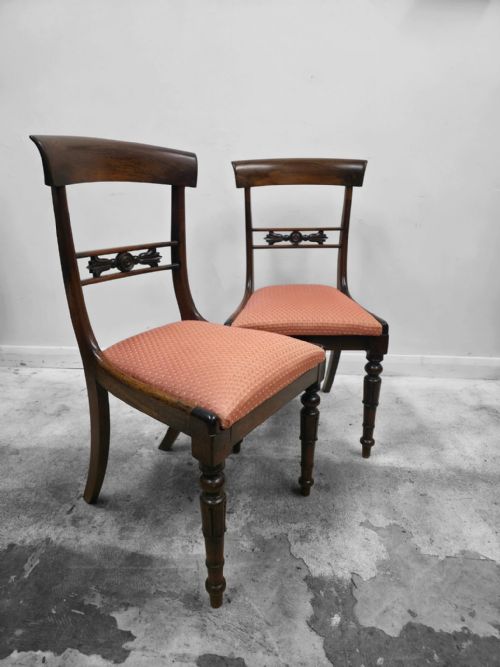
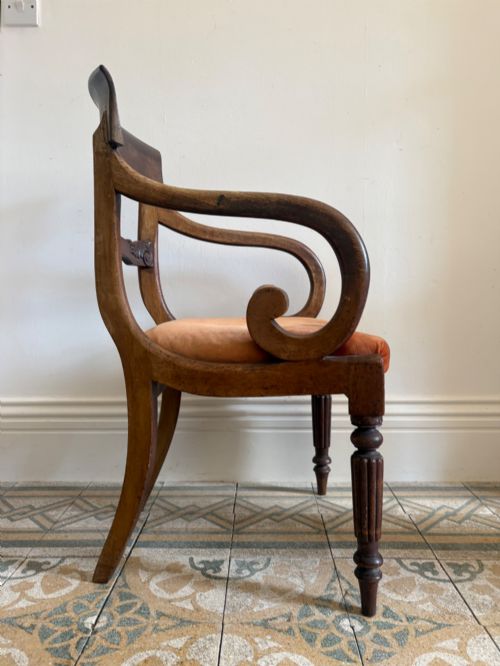


Late Regency Chairs
Late regency chairs bring robust mahogany and warm rosewood frames into the room, offering sturdy seating with distinct period presence.
Late Regency Chairs
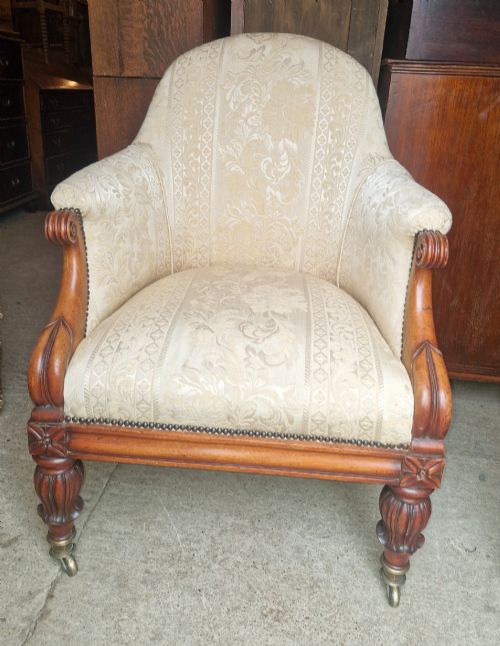
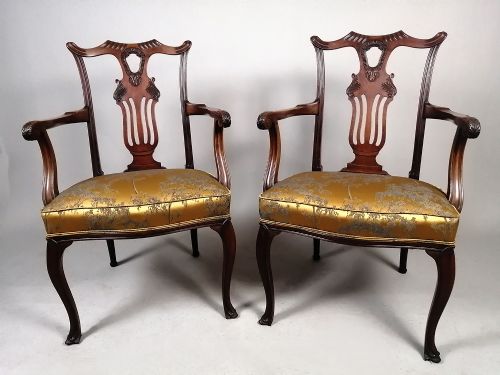
Late regency chairs encompass a variety of seating forms spanning dining chairs, library armchairs, desk chairs, and occasional bedroom chairs. These pieces originate primarily from the Regency and Georgian periods, alongside later Victorian interpretations.
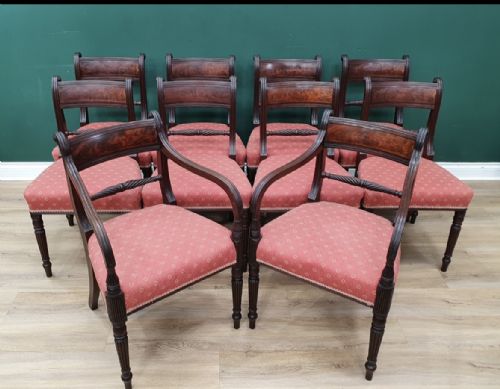
Dining chairs appear frequently in sets ranging from pairs to groups of twelve, while larger sets of armchairs and single chairs cater to formal dining spaces. Library and desk chairs offer heavier frames, occasional inclusion of leather or velvet, and specialised forms such as X-frame structures or metamorphic library steps.
Makers and workshops of the era utilised native and exotic timbers to construct seating that bridged late Georgian classical restraint and early Victorian ornamentation. Buyers encounter these chairs in diverse regional English and Scottish variations, reflecting the cabinetmaker output of the early nineteenth century.
How they were made
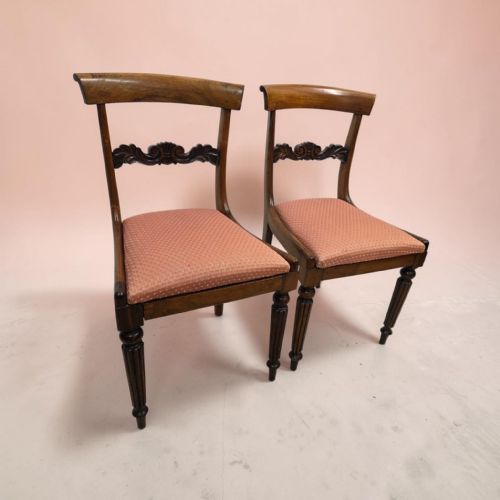
Makers constructed late regency chairs predominantly from solid mahogany, flame mahogany, and rosewood, frequently employing brass inlay and painted surfaces to mimic finer grains such as simulated rosewood or simulated bamboo. Timber selection dictated the structural integrity of the frame, particularly in slender components like lyre backs and curved side rails.
Upholstery techniques involved drop-in seats and fixed pads upholstered in leather, velvet, needlepoint, and various traditional fabric textiles. Joinery relied on traditional mortise and tenon methods to support weight across dining chairs and heavy library armchairs alike.
Listings feature extensive sets of dining chairs alongside single library armchairs in mahogany, rosewood, and simulated rosewood finishes.
What varies in quality
The degree of carving, timber selection, and the presence of documented attribution to prominent makers like Gillows or Robert Daws distinguish exceptional pieces from standard production. Superior examples display denser mahogany or figured rosewood, crisply carved decorative motifs, and intact brass inlay work.
Structural retention and originality of components govern the overall standard of surviving seating. Pieces retaining their original drop-in frames, uncompromised timber joints, and period upholstery materials hold distinct technical merit over heavily altered examples.
Gillows·Morgan and Sanders·Robert Daws
The Late Regency Chairs Glossary
- Drop-In Seat
- A removable seat frame upholstered separately and dropped into a rebated opening in the chair rails. This construction method facilitated easier reupholstering over subsequent generations of use.
- Lyre Back
- A chair backrest featuring a central splat shaped in the outline of an ancient Greek lyre. Cabinetmakers favoured this classical motif during the Regency and late Regency periods.
- Simulated Rosewood
- A paint finishing technique applied to common hardwoods to imitate the grain and colour of expensive rosewood. Painters achieved this effect using specialised glazes and feather brushes.
- Metamorphic Chair
- A dual-purpose piece of furniture engineered to transform from a chair into another functional object such as library steps. These clever mechanical designs suited compact nineteenth-century interiors.
- X-Frame
- A structural chair design utilising crossed intersecting members for the legs and supports. This ancient form reappeared in Regency library and desk chairs for added rigidity.
Late Regency Chairs: Frequently Asked Questions
What defines late regency chairs?
Late regency chairs are seating pieces produced during the transitional decades around the early nineteenth century, bridging classical Regency design and early Victorian styles. They utilise timbers such as mahogany and rosewood with distinct decorative elements like lyre backs and brass inlay.
These pieces include dining sets, library armchairs, and hall chairs designed for formal domestic interiors. Their construction reflects the cabinetmaking standards of the Georgian and William IV eras.
How do I identify a library chair?
Library chairs feature robust proportions, enclosed armrests, and materials chosen for sustained reading comfort such as leather upholstery and sturdy mahogany frames. They often incorporate specialised functions like swivelling mechanisms, desk attachments, or metamorphic steps.
These heavier seats were built for studies and libraries rather than dining rooms. Their substantial frames accommodate prolonged sitting and frequent daily use.
Are these chairs suitable for daily dining?
Dining chairs from this period were built with solid timber frames and traditional joinery designed for regular domestic service. Many survive in large sets precisely because they were manufactured to withstand heavy household use.
Modern users can seat guests comfortably on these antique chairs provided the structural joints remain sound. Periodic checks of the frame and upholstery ensure they endure continued daily use.
How do I care for rosewood furniture?
Rosewood requires stable indoor humidity levels and protection from direct sunlight to prevent timber drying and surface fading. Regular dusting with a soft, dry cloth preserves the polished finish without chemical buildup.
Avoid placing these chairs near heat sources or damp areas. Gentle maintenance preserves the natural grain and historic patina of the wood.