




Rose Upholstered Chairs
These rose upholstered chairs bring nineteenth-century comfort and traditional woods into modern drawing rooms.
Rose Upholstered Chairs
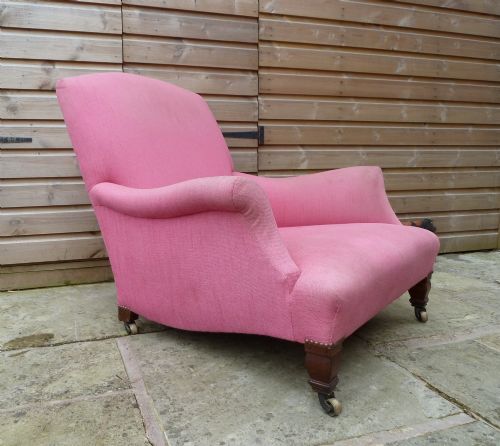
When you search for rose upholstered chairs, you encounter a varied selection of nineteenth-century and early twentieth-century seating. These pieces range from compact bedroom chairs and slipper chairs to substantial library armchairs and dining sets.
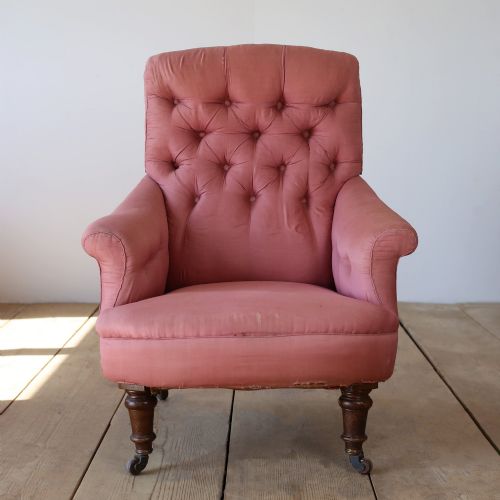
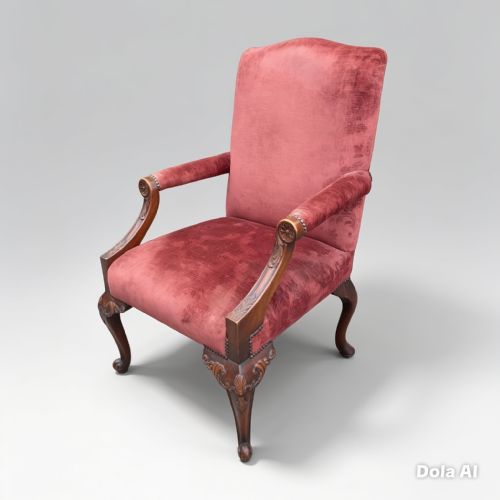
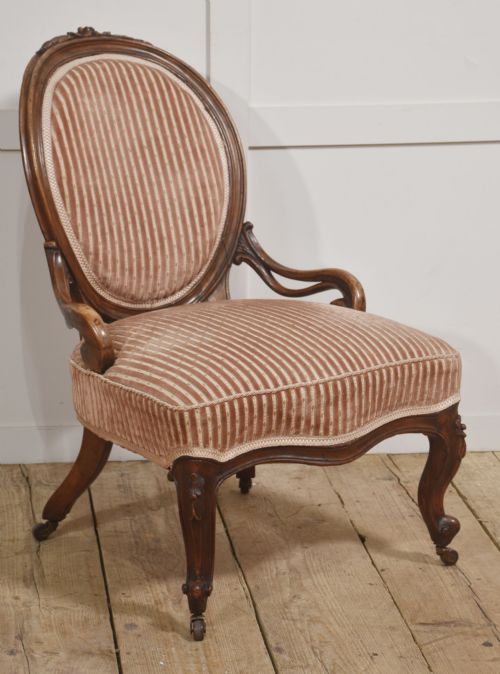
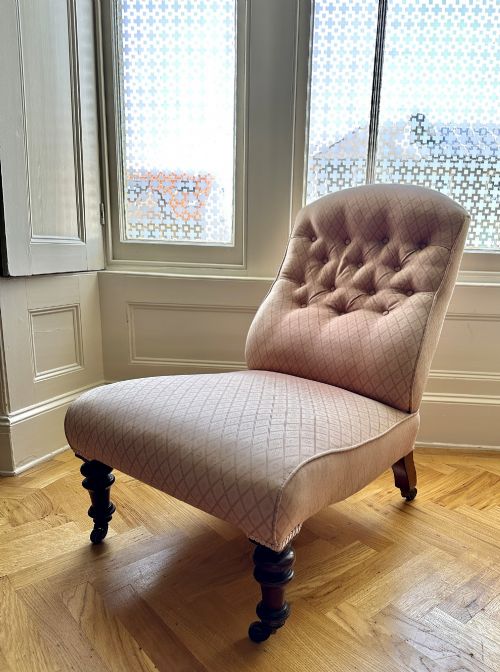
Victorian examples dominate the listings, frequently framed in walnut or mahogany with characteristic button backs or spoon backs. You also find Edwardian pieces alongside earlier Regency and George III style revivals.
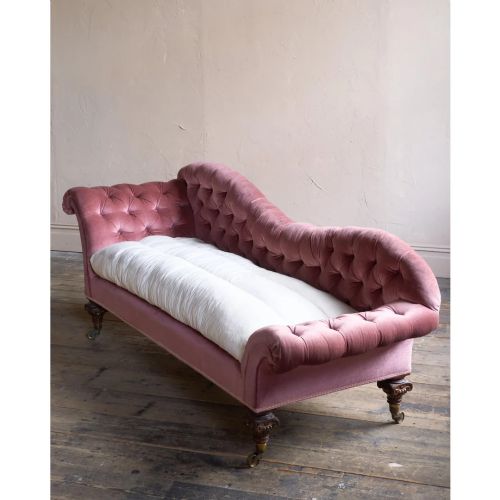
Forms include chaise longues, piano stools, and settee suites, reflecting the diverse domestic seating requirements of past eras. Walnut frames with carved details appear frequently across the current selection.
Materials and construction methods
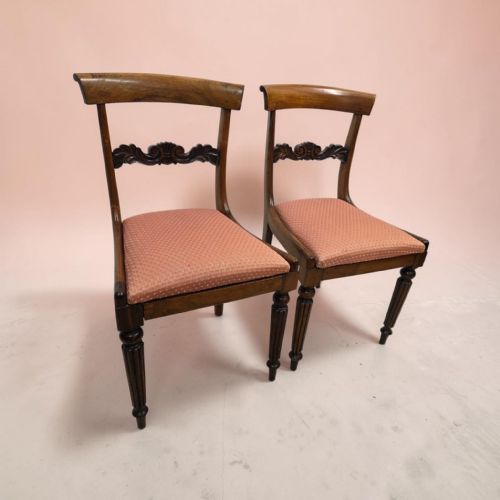
Makers utilised dense hardwoods such as walnut and mahogany for structural frames, frequently employing carved details and turned legs. Rosewood also appears in polished frames and marquetry inlaid salon suites.
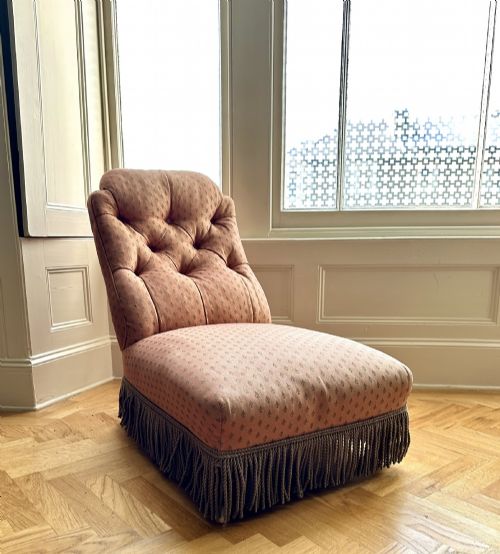
Upholstery techniques involve traditional fabric coverings paired with brass elements and fringe trim. Frames often incorporate internal iron components or sturdy timber foundations to support buttoned velvet and patterned textiles.
Rise and fall mechanisms let nineteenth-century pianists adjust their seating height with a simple spin.
Distinctions in craftsmanship
Quality rests upon the crispness of timber carving and the architectural proportion of the frame. Superior examples demonstrate balanced woodwork, such as finely shaped walnut armchairs and crisply turned mahogany legs.
The integration of the upholstery relative to the wooden framework defines the overall finish. Better pieces display harmonious textile choices that respect the original period aesthetic of the chair.
Howard and Sons·Gillows·Holland and Sons
The Rose Upholstered Chairs Glossary
- Spoonback
- A chair back curved in a concave oval shape resembling the bowl of a spoon. This form gained popularity during the Victorian period for fireside and bedroom seating.
- Button back
- An upholstery style where depressions are formed in the padding by sewing buttons through to the frame. It provides structural tautness and decorative depth to armchairs.
- Rise and fall
- A mechanical mechanism allowing seat height adjustment. This device typically appears on Victorian piano stools and swivel chairs.
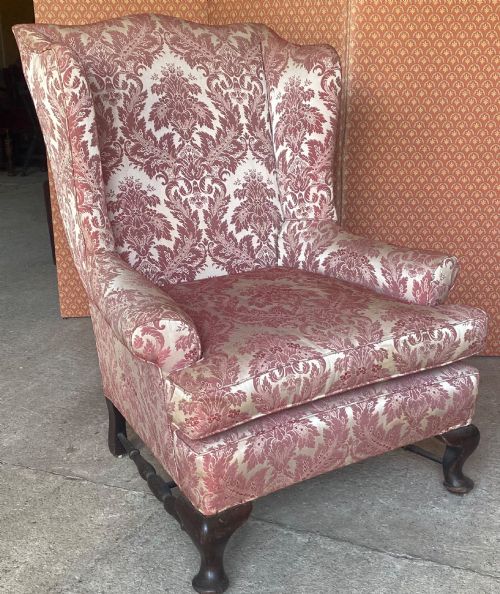
- Wingback
- An armchair featuring protective side panels attached to the back. These projections originally blocked drafts in traditional rooms.
- Slipper chair
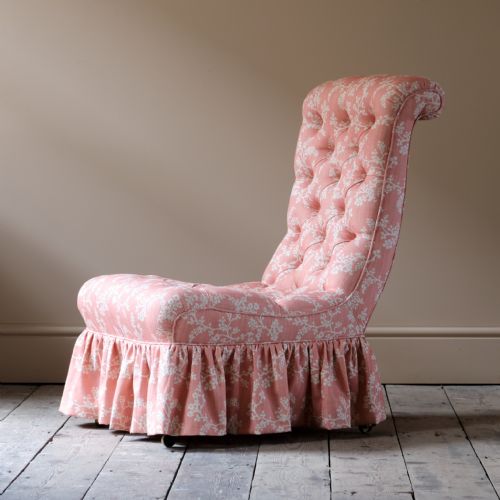
- A low-seated bedroom chair designed originally for ladies to sit while putting on shoes. They usually feature short legs and upholstered frames.
Rose Upholstered Chairs: Frequently Asked Questions
How do I identify a Victorian armchair?
Victorian armchairs are typically identified by their use of walnut or mahogany frames, often featuring carved ornamentation and upholstered button backs. Styles span from spoonback fireside chairs to heavier library seating.
Evidence from listings shows these pieces frequently date between 1850 and 1900, incorporating traditional fabric and velvet upholstery alongside timber construction.
What is a slipper chair used for?
Slipper chairs are low-seated bedroom chairs traditionally used for dressing and putting on shoes. Their compact height makes them practical for intimate spaces.
Listings demonstrate these chairs often feature button backs and occasional fringe trim, dating predominantly from the nineteenth century.
Are these chairs suitable for daily use?
These antique chairs function well in modern domestic interiors for seating in living rooms, bedrooms, or studies. Their sturdy hardwood frames provide reliable structural support.
When selecting a piece, consider the specific form, such as a sturdy library armchair or a smaller bedroom chair, to match your intended room.
What woods were used for these frames?
Frames are constructed primarily from traditional hardwoods including walnut, mahogany, and rosewood. Timber choice often reflects the specific period and style of the seating.
Listings also record generic hardwood and wood descriptions, occasionally enhanced with brass details or marquetry inlay.