




Late Meiji Oriental Vase
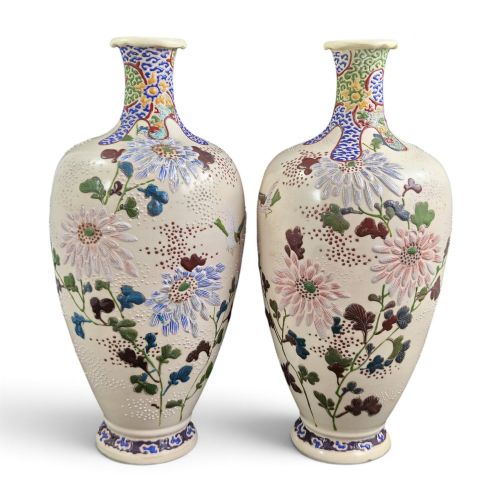
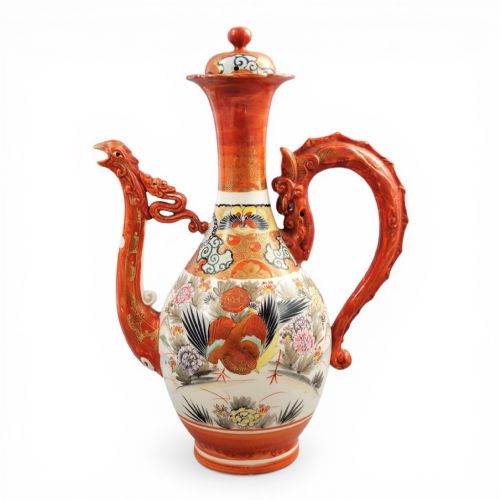
A late meiji oriental vase brings complex hand-painted narrative scenes and heavy gilding into a room.
Late Meiji Oriental Vase
When you search for a late meiji oriental vase, you encounter Japanese ceramic and metalwork vessels created during the final decades of the nineteenth century and the early years of the twentieth. These pieces encompass Satsuma earthenware, Kutani and Imari porcelain, and cast bronze vessels intended for both export and domestic display.
The selection on this page centres upon Satsuma earthenware decorated with moriage figures, cobalt grounds, and intricate gold leaf work, alongside bronze floor vases and blue and white porcelain ginger jars. Makers such as Kinkozan, Hododa, and Maruni Kobe appear frequently among the ceramic works from Kyoto and surrounding regions.
Forms range from miniature cabinet pieces to large floor-standing urns and ewers with intricate handles shaped as dragons, birds, or elephants. Dating spans from the Victorian and Edwardian eras down to nineteen ten, capturing the height of Japanese Meiji period craftsmanship.
How they were made
Potters shaped earthenware and porcelain by hand or wheel, applying complex mineral glazes and cobalt underglaze pigments before firing at high temperatures. Artisans then added raised moriage details and extensive gilding over the glaze, requiring secondary low-temperature firings to fix the gold leaf.
Metalworkers cast bronze using traditional techniques, frequently incorporating applied handles in the form of egrets or elephants, and finished surfaces with patination or inlaid lacquer panels. Cloisonné examples utilised thin metal wires soldered to a base to create cells filled with coloured enamel paste prior to firing and polishing.
Late Meiji Oriental Vase Retail Price Guide 2026
Typical asking prices for late meiji oriental vase among the pieces listed under this phrase on Sellingantiques today, from the lower quarter to the upper quarter. They describe what is for sale here now, not the wider market.
Some bronze vases feature egret handles perched attentively beside the rim.
What varies in quality
Quality rests upon the precision of the brushwork in the figural processions and landscapes, the density and crispness of the gilt moriage relief, and the structural balance of cast bronze handles. Finer examples display meticulous control over miniature details across complex religious or court scenes.
The presence of recognised workshop signatures, potter marks, or the Shimazu crest distinguishes exceptional items from standard export wares. Heavier porcelain bodies, rich cobalt grounds, and exhibition-quality execution separate the upper tier of pieces from simpler decorative items.
Maruni Kobe·Kinkozan·Hododa·Nanzan·Hayakawa·Fukagawa
The Late Meiji Oriental Vase Glossary
- Satsuma
- A type of Japanese earthenware featuring an ivory-coloured, crackled glaze that serves as a canvas for elaborate enamel and gilt decoration.
- Moriage
- A decorative technique using piped clay slip to build up raised designs and textures on ceramic surfaces before painting and gilding.
- Imari
- A traditional style of Japanese porcelain decorated in underglaze blue, iron red, and gold, named after the port of export.
- Cloisonné
- A metalwork technique where thin wires form compartments filled with enamel paste, which are fired and polished smooth.
- Mon
- A Japanese heraldic badge or crest used to identify families, clans, or governmental authorities.
- Ewer
- A large jug with a wide spout, designed for pouring liquids or used purely for decorative display.
Late Meiji Oriental Vase: Frequently Asked Questions
Where were Satsuma vases made?
Satsuma wares originated in Satsuma Province on the island of Kyushu, though during the Meiji period production expanded significantly to Kyoto and other major artistic centres to supply foreign demand.
Kyoto workshops became particularly renowned for highly detailed export pieces decorated with court figures and landscapes under artists and firms such as Kinkozan.
How do I identify a Meiji period piece?
Meiji period items date from eighteen sixty-eight to nineteen twelve, coinciding with the reign of Emperor Meiji. Look for characteristic artistic motifs, exhibition marks, and signatures from known workshops.
Stylistic markers include dense moriage gilding, export-oriented aesthetics, and traditional Japanese crests alongside Victorian influences.
What is the Shimazu mon?
The Shimazu mon is a heraldic crest depicting a circle enclosing a cross, associated with the powerful Shimazu clan of Satsuma Province. Its presence on pottery indicates a direct connection to the region's heritage or high-grade export production.
This crest frequently appears on exhibition-quality pieces alongside detailed enamel and gilt panels.