






Late Georgian Tripod Table
A late georgian tripod table brings compact agility to a room, offering a stable three-legged stance and a top that often tilts for storage.

Late Georgian Tripod Table
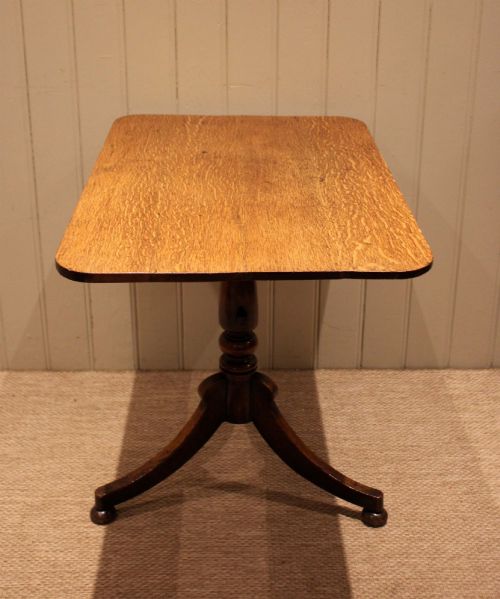
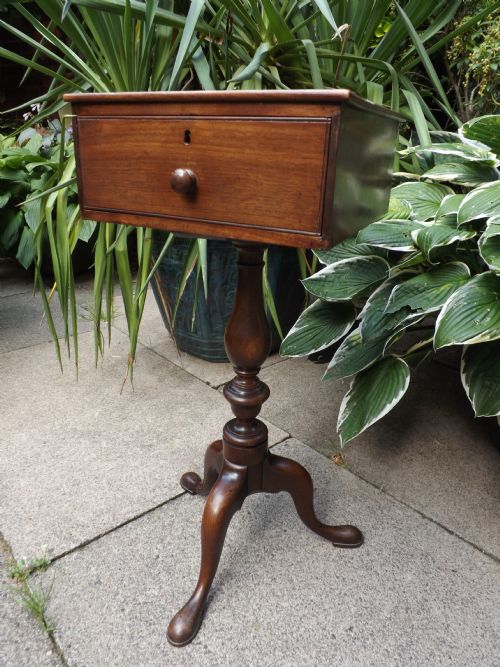
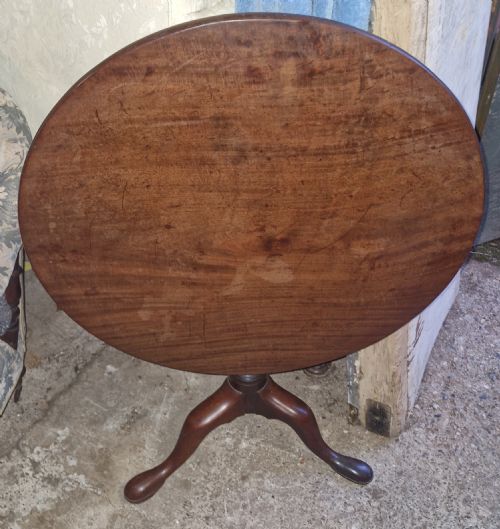
A late georgian tripod table is a versatile standalone piece designed to move easily about the home, functioning as an occasional table, wine table, or supper table. Most examples seen here date from the late eighteenth century into the early nineteenth century, aligning with the Georgian and George III periods.
The format relies on a central pedestal supported by three legs, which leaves ample floor clearance and avoids the leg-room clashes of four-legged tables. You will encounter smaller wine and occasional tables alongside larger breakfast and dining formats, including multi-tiered dumb waiters.
Mahogany dominates the selection, accompanied by occasional pieces in oak, burr elm, and elm. Tops range from simple circular boards to octagonal, square, and pie-crust edges, with several featuring tilt mechanisms.
How they were made
Makers relied on dense hardwoods like mahogany and oak, turning pedestals on lathes and cutting slender legs to fit neatly into a central block. Timber selection mattered for the top, where single-piece boards or figured burr elm veneers provided a smooth surface for dining or serving.
Tilt-top actions used a clever catch mechanism of brass or wood, allowing the surface to fold vertically against the pedestal when not in use. Tripod bases were shaped for stability, often terminating inpad feet, spade feet, or castors.
Late Georgian Tripod Table Retail Price Guide 2026
Typical asking prices for late georgian tripod table among the pieces listed under this phrase on Sellingantiques today, from the lower quarter to the upper quarter. They describe what is for sale here now, not the wider market.
Some tables retain the scars of spilled port from Georgian supper parties long finished.
What varies in quality
Quality rests in the proportion between the slender pedestal and the spread of the legs, ensuring the table stands firm without wobbling. Timber choice also sets pieces apart, distinguishing plain planks from richly figured mahogany or burr elm.
Joinery execution defines the finer pieces, particularly the snug fit of the birdcage or tilt mechanism and the crispness of turned details on the column. Original brass catches and uncompromised leg attachments command attention over later replacements.
The Late Georgian Tripod Table Glossary
- Tripod table
- A small movable table supported by three legs radiating from a central pillar. This format allowed the piece to be shifted easily beside a chair or pushed against a wall.
- Tilt-top
- A table top mounted on a hinge mechanism that pivots to a vertical position. This design saved floor space when the table was stored.
- Dumb waiter
- A multi-tiered revolving or folding stand used for serving food and wine without servants present. These pieces feature stacked circular trays on a central column.
- Pie crust edge
- A carved raised rim shaped with undulating curves resembling pastry work. This decorative border stopped items from sliding off supper tables.
- Birdcage
- A revolving wooden framework beneath the table top that permits both rotation and tilting. It connects the top to the central pillar.
Late Georgian Tripod Table: Frequently Asked Questions
What is a tilt top used for?
A tilt top allowed owners to fold the table flat against a wall when the room needed to be cleared for dancing or other activities.
This mechanism also saved space during storage in hallways or corners between meals.
How do I tell oak from mahogany pieces?
Oak pieces generally present a paler, more visible grain structure and tend to appear in country or regional furniture from the eighteenth century.
Mahogany offers a darker reddish-brown tone with a tighter, finer grain suited to more formal urban interiors.
Where were these tables placed?
These tables sat beside seating areas to hold candles, books, or tea equipment, and served dining functions in smaller rooms.
Wine tables and smaller occasional versions moved freely from the parlour to the dining room as needed.
What is a dumb waiter?
A dumb waiter is a tiered stand with two or three rotating circular trays used for holding dishes and bottles during a meal.
Some examples feature folding tiers or drop-leaf actions to compress the footprint further.