





Late Georgian Tea Table
A late georgian tea table brings folding leaves and rich timbers into a room, offering both a compact surface and an expansive top when opened.

Late Georgian Tea Table
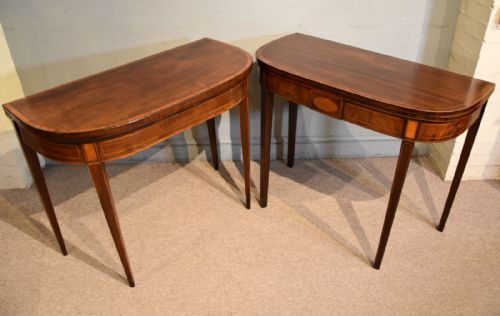
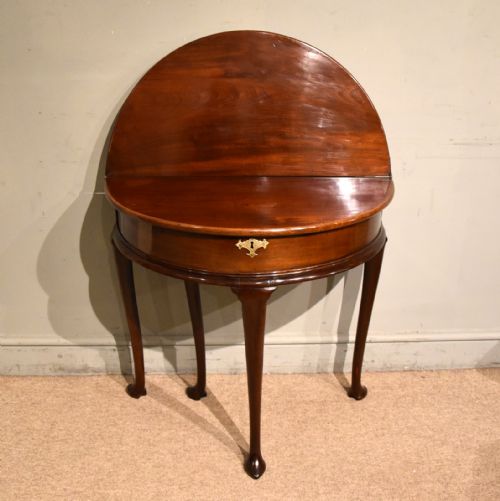
When you search for a late georgian tea table, you encounter practical folding furniture designed to stand against a wall until evening socialising begins. These pieces appear primarily in mahogany, alongside rosewood, amboyna, and satinwood, spanning the eighteenth and nineteenth centuries.
The selection includes fold-over tea tables, card tables, and occasional tables reflecting Georgian, Regency, and Chippendale styles. Many examples feature hinged tops that rotate or open to reveal a surface once used for serving tea or playing games.
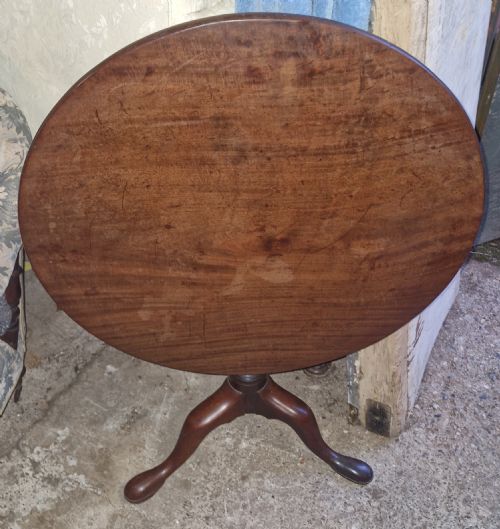
Makers of this era utilised sturdy timbers and clever pivoting frames to support the extra leaf without strain. Surviving specimens range from simple tripod stands to inlaid Pembroke tables with drop leaves.
How they were made
Cabinetmakers built these tables using dense timbers such as mahogany and rosewood, often accented with stringing, satinwood, boxwood, and ebony veneers. Frames relied on traditional joinery to ensure stability when the heavy folding tops were opened.
Brass fittings and iron brackets frequently reinforced the pivoting mechanisms and corner joints underneath. Hand-painted inlays and carved details completed the surfaces of finer examples.
Late Georgian Tea Table Retail Price Guide 2026
Typical asking prices for late georgian tea table among the pieces listed under this phrase on Sellingantiques today, from the lower quarter to the upper quarter. They describe what is for sale here now, not the wider market.
Some nineteenth-century card tables managed to double as secretive dining surfaces long after the tea leaves had been swept away.
What varies in quality
The grade of timber and the precision of the veneer work largely determine the standing of an individual piece. Finer examples display carefully matched grain patterns and crisp inlay work rather than rushed construction.
Mechanism fluidity and structural integrity also separate standard pieces from superior ones. A well-made table operates smoothly on its hinges and retains its balance without excessive play in the joints.
The Late Georgian Tea Table Glossary
- Fold-over top
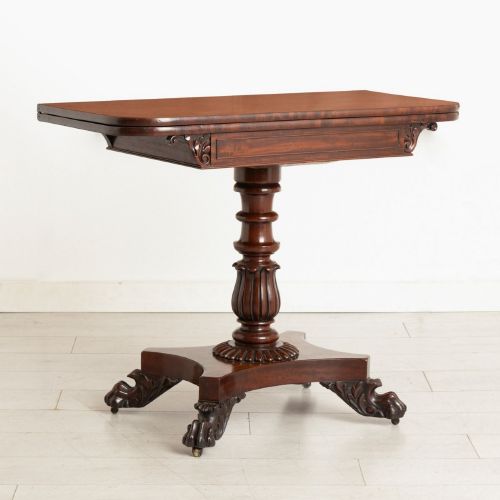
- A hinged table surface that doubles in area when unfolded and laid flat upon the extended frame. This design allowed the furniture to occupy less space during the day.
- Stringing
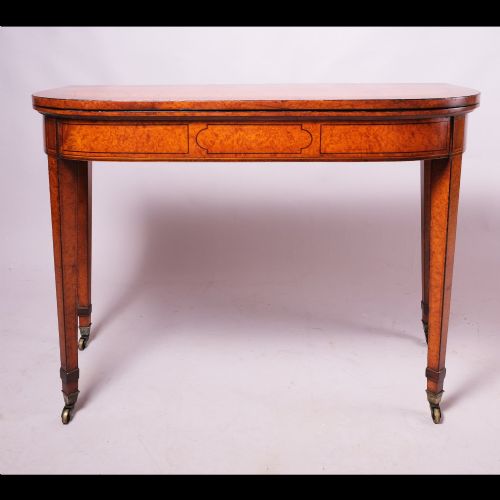
- Thin inlaid lines of contrasting timber used to outline panels, drawer fronts, and table edges. This decorative technique highlights the geometric lines of late Georgian cabinetwork.
- Pembroke table
- A small rectangular table featuring two hinged drop leaves on opposing sides. It often includes a single drawer and slender legs.
- Tripod table
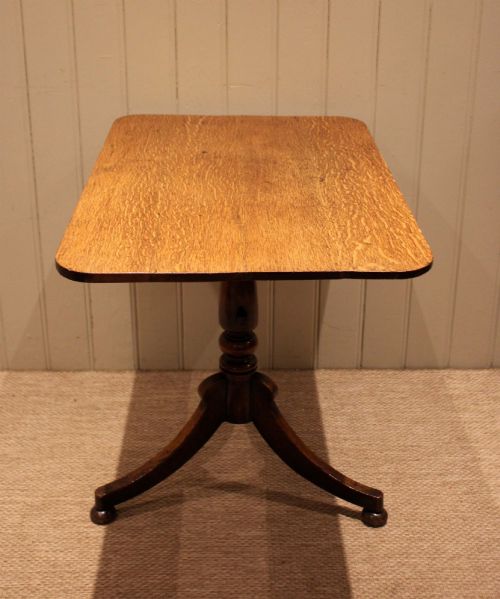
- A small freestanding table supported by a central pillar above three splayed legs. These were easily moved around a room for holding tea equipment or lamps.
- Galleried top
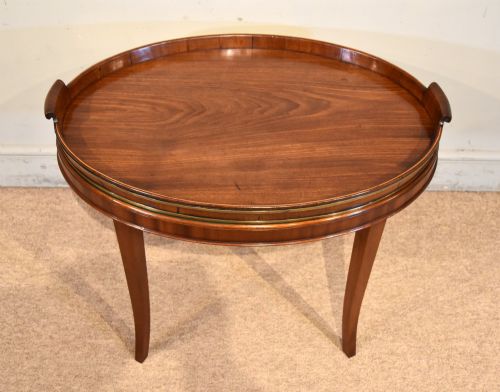
- A raised wooden border surrounding the edge of a table top to prevent items from rolling off. This feature is commonly found on occasional and silver display tables.
Late Georgian Tea Table: Frequently Asked Questions
What is a late georgian tea table used for?
These tables served primarily to hold tea service equipment during evening gatherings in the home. The hinged top folded back against the wall when not in use to save space.
Over time, many of these pieces also accommodated card games and social activities. Today, they function as console surfaces or decorative centrepieces in traditional interiors.
How do I identify a late georgian tea table?
Look for characteristic timber choices like mahogany and rosewood combined with folding top mechanisms. Stylistic details often include tapered legs, stringing, and Georgian or Regency proportions.
Dates generally cluster around eighteen hundred, bridging the late eighteenth and early nineteenth centuries. Construction methods such as hand-cut joints and original brass fittings further indicate the period.
Can I use a tea table every day?
These tables handle normal decorative placement and light surface use quite well. Opening the hinged leaf requires care to avoid placing undue weight on the pivoting wooden or brass supports.
Placing coasters beneath hot cups or damp items protects the historical polish and timber veneer. Gentle dusting keeps the polished wood surfaces in good condition.
Where should I place a tea table at home?
A closed tea table sits well against a hallway wall or beneath a window as a side table. Opening the leaf allows it to function as a serving surface or compact dining spot in a living room.
Keeping the piece away from direct sunlight and strong heat sources protects the fragile veneers and polished finishes. Position the table where its folded or open profile complements the surrounding room layout.