


Late Georgian Buffet Table
These late georgian buffet table selections comprise formal dining room sideboards, serving pieces and dumb waiters designed for aristocratic service.
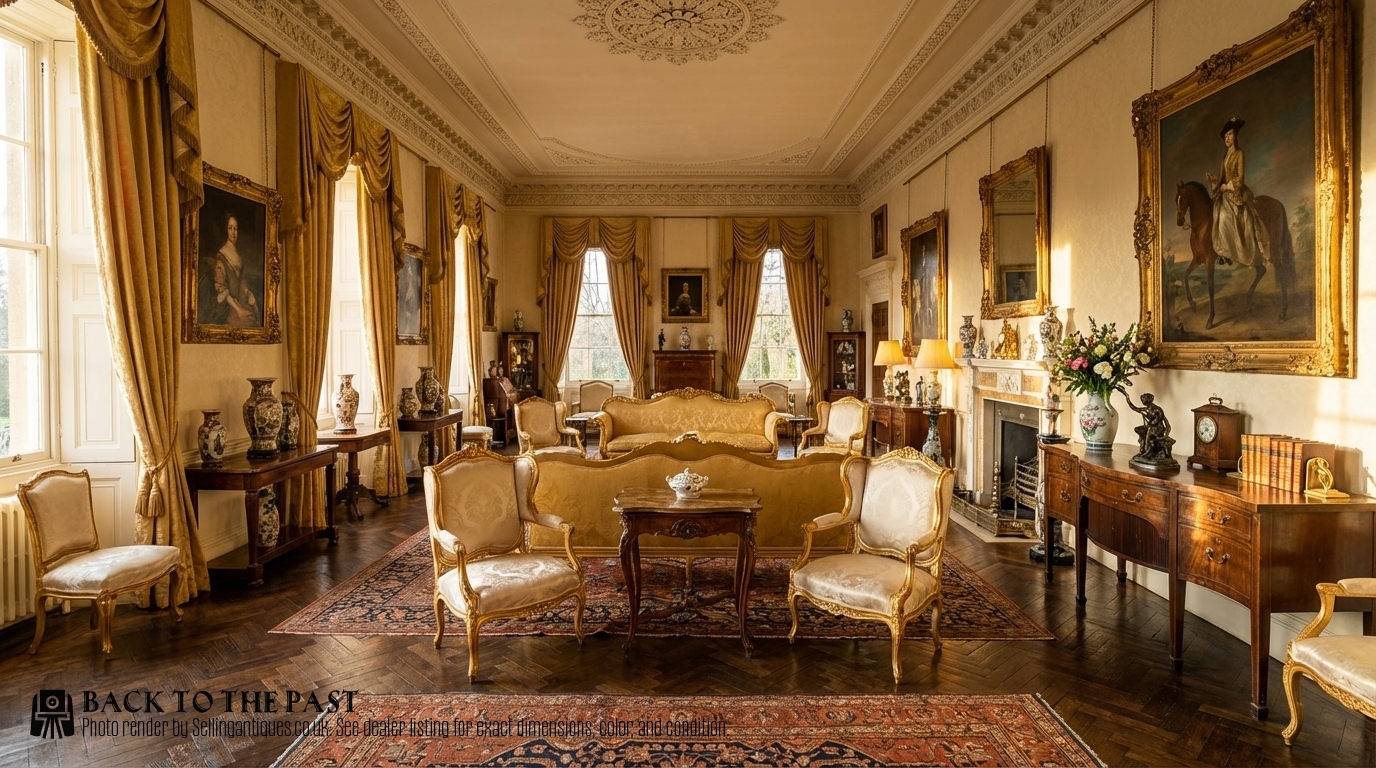
Late Georgian Buffet Table
A late georgian buffet table most frequently appears in the inventory as a mahogany sideboard, serving table, or dumb waiter originating from the late eighteenth century and the early nineteenth century. These items served dining rooms by holding silver, glassware, and dishes during large meals.
The assortment includes geometric forms such as bow front, serpentine, and demi-lune shapes alongside folding and revolving dumb waiters. Pieces span the Georgian period, George III era, and later Sheraton revival iterations.
How they were made
Cabinet makers utilised solid timber and veneers, primarily relying on mahogany and flame mahogany for primary surfaces. Carpenters integrated boxwood and satinwood inlay to define drawer fronts and borders.
Structural elements incorporated brass handles and fittings alongside hinged mechanisms for drop-leaf and folding dumb waiter tiers. Joinery methods matched the heavy demands of daily domestic service in grand households.
Dumb waiters earned their name because they silently held the dishes, allowing diners to converse without servants listening in.
What varies in quality
Selection of timber grain dictates the visual impact, with figured flame mahogany and crisp boxwood stringing marking superior cabinet work. The sharpness of inlaid details and the proportion of curved surfaces separate standard production from master craftsmanship.
Original hardware and functional folding mechanisms on dumb waiters preserve historical integrity. Later revivals from the Edwardian period demonstrate different manufacturing standards compared to eighteenth-century originals.
The Late Georgian Buffet Table Glossary
- Bow front
- A convex curved cabinet front that swells outward in the centre. This shape softens the rigidity of formal dining room furniture.
- Serpentine
- A front contour characterised by a convex centre flanked by concave curves. It requires advanced woodworking skill to execute properly.
- Demi-lune
- A half-moon shape used for console and serving tables designed to sit flush against a wall. The form gained popularity during the Sheraton period.
- Dumb waiter
- A tiered stand with revolving or folding circular trays used to hold food and utensils without servants present. These pieces collapse for storage.
- Cross-banded
- A decorative border technique where veneer strips are laid perpendicular to the grain of the central panel. This frames the primary timber surface.
Late Georgian Buffet Table: Frequently Asked Questions
What is a late georgian buffet table used for?
These pieces functioned as sideboards, serving tables, and dumb waiters in grand dining rooms. They held heavy serving dishes, silver, and glassware before and during meals.
In modern interiors, they serve similar practical roles in dining spaces or hallways as console surfaces and storage units.
How do I identify a Sheraton style piece?
Sheraton style pieces feature straight tapering legs, delicate proportions, and contrasting geometric inlay work. Cabinet makers utilised satinwood and boxwood stringing on mahogany surfaces.
They appear in bow front and demi-lune configurations typical of the late eighteenth century.
What is a folding dumb waiter?
A folding dumb waiter is a multi-tiered stand with hinged shelves that drop down when not in use. They allowed dining rooms to function efficiently with fewer attendants.
Craftsmen built these with circular or octagonal revolving trays mounted on central pillars.
Where should I place a serpentine sideboard?
Serpentine sideboards require a prominent wall space in a dining room or large hallway to display their curved facades. Their sweeping front lines need clearance to be fully appreciated.
Ensure the surrounding floor space complements the substantial depth of these eighteenth-century forms.
How do I care for antique mahogany furniture?
Keep mahogany furniture away from direct sunlight and heat sources to prevent the timber and veneer from drying out. Consistent indoor humidity protects the original polish and boxwood inlay.
Dust regularly with a soft dry cloth and avoid harsh chemical polishes that damage aged surfaces.