


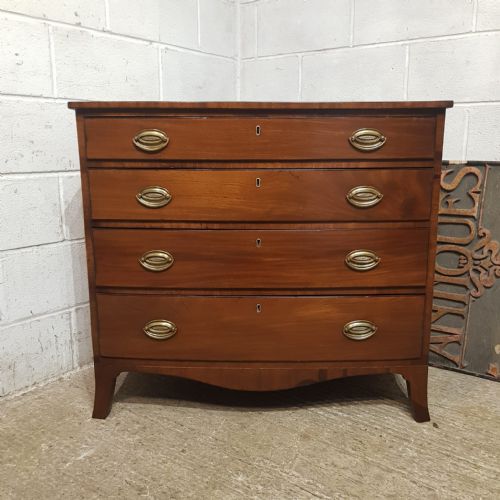


Late Georgian Bowfront
These late georgian bowfront pieces bring curved mahogany surfaces and period proportion directly into your rooms.
Late Georgian Bowfront
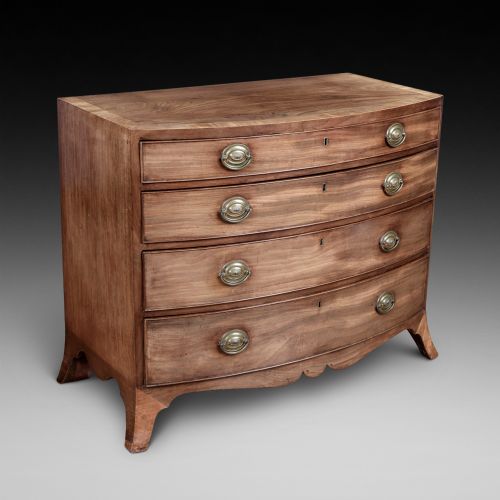
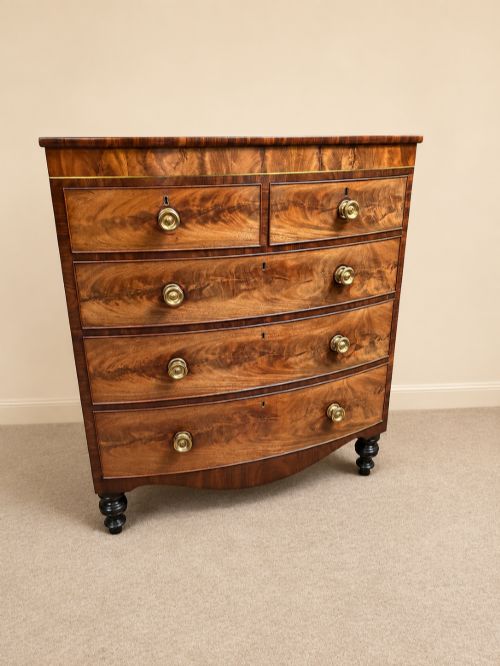
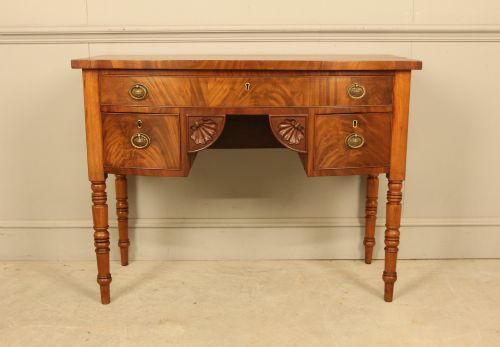
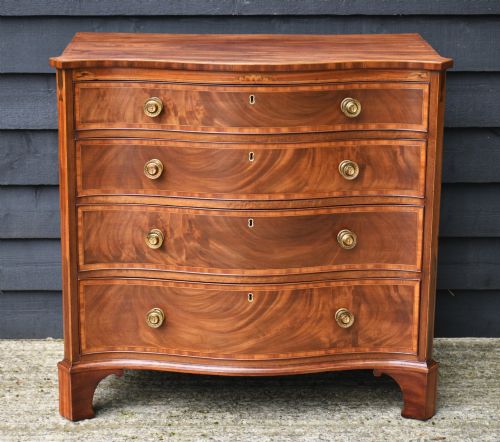
When you search for late georgian bowfront, you encounter case furniture defined by a rounded, convex front projecting forward from the corners. The examples on this page span the eighteenth century and the nineteenth century, taking forms such as chests of drawers, sideboards, side tables, wall cabinets, and miniature furniture. These pieces originate from the Georgian and George III eras, alongside Sheraton and Sheraton Revival designs.
The chests of drawers and sideboards dominate the selection, frequently utilising solid timber and matched veneers. Alongside these large items, you find more compact forms including side tables, serving tables, and washstands. Each piece shares that characteristic curved profile designed to soften room corners and catch the light.
How they were made
Cabinet makers built these pieces using mahogany as the primary timber, often selecting flame mahogany for figured grain patterns on drawer fronts and doors. They integrated contrasting woods such as boxwood and satinwood for stringing and inlaid details. Brass hardware, including drop handles and escutcheons, completed the construction.
Joinery relied on traditional techniques to accommodate the curved bow front without warping. Cabinet makers shaped solid timbers or applied fine veneers over secondary woods, incorporating hand-painted enamel details on later Sheraton Revival examples.
Late Georgian Bowfront Retail Price Guide 2026
Typical asking prices for late georgian bowfront among the pieces listed under this phrase on Sellingantiques today, from the lower quarter to the upper quarter. They describe what is for sale here now, not the wider market.
What varies in quality
The distinction between tiers of quality rests upon timber selection and the precision of the cabinet work. Superior pieces display carefully matched flame mahogany veneers and crisp, fine stringing in boxwood or satinwood. Poorer examples utilise plain timber without the same depth of patina or grain movement.
Proportion and decorative restraint also separate the finer items from standard production. Well-executed pieces maintain balanced proportions across their curved drawer fronts and side cabinets, while retaining original brass hardware and surface patination.
The Late Georgian Bowfront Glossary
- Bowfront
- A furniture front that curves outward in a convex shape. This profile softens the angles of case furniture.
- Flame mahogany
- Mahogany timber exhibiting a distinct, flamelike grain pattern. Cabinet makers used these figured veneers on prominent surfaces.
- Stringing
- Thin inlay lines of contrasting wood used to outline panels and drawers. Boxwood and satinwood frequently serve this purpose.
- Patina
- The surface sheen and mellowing developed by wood over decades of use and polishing. Good patina indicates age and care.
- Sheraton
- A neoclassical furniture style characterised by elegant proportions and classical motifs. Named after the designer Thomas Sheraton.
Late Georgian Bowfront: Frequently Asked Questions
What rooms suit a bowfront chest?
These chests fit well in bedrooms or hallways where floor space benefits from softened corners. Their curved fronts project into the room while maintaining generous internal drawer capacity.
The varied sizing, from standard drawer units to miniature furniture, allows them to function as primary storage or surface display.
How do I care for mahogany surfaces?
Maintenance requires regular dusting with a soft, dry cloth and occasional application of appropriate beeswax. Avoid placing timber pieces in direct sunlight or near heat sources.
Proper care preserves the natural patina and protects the underlying mahogany and delicate veneer work.
How can I tell Sheraton from George III?
George III spans a broad British reign encompassing several stylistic phases, whereas Sheraton represents a specific neoclassical design vocabulary. Sheraton pieces often feature lighter woods, delicate stringing, and tapered supports.
Both styles overlap chronologically during the late eighteenth century.
Were bowfront sideboards used for dining?
Dining rooms utilised these sideboards to serve food, store silverware, and display ceramics. The curved front provided easy access around the piece during busy gatherings.
Their substantial timber construction ensured they could support heavy serving dishes and tableware.