



Late Georgian Bedroom Furniture
Late georgian bedroom furniture offers solid timber chests and presses built to last, providing both practical storage and handsome presence.
Late Georgian Bedroom Furniture
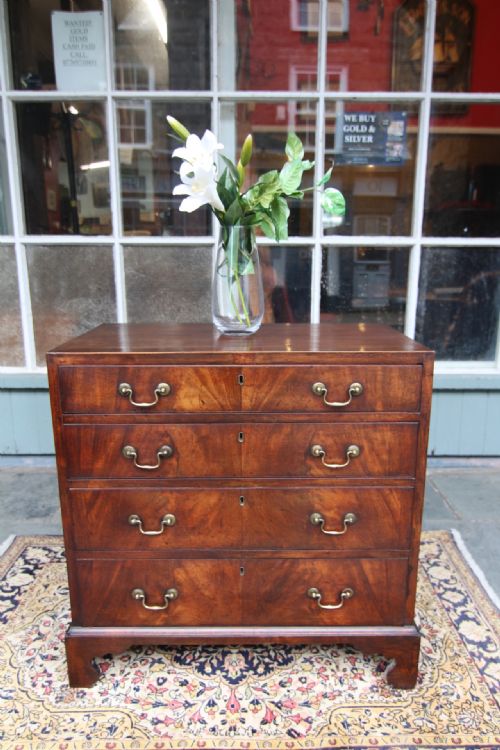
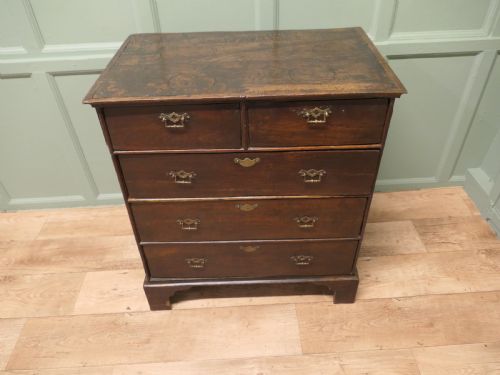
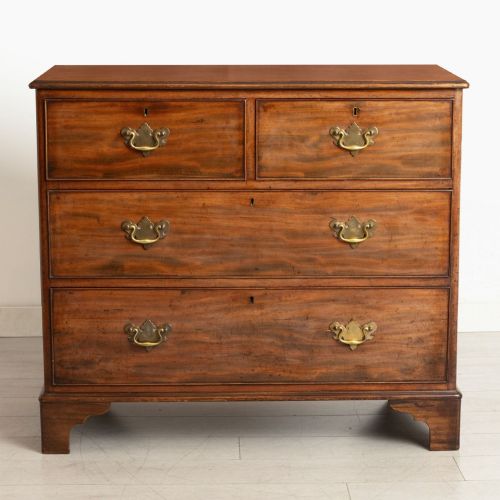
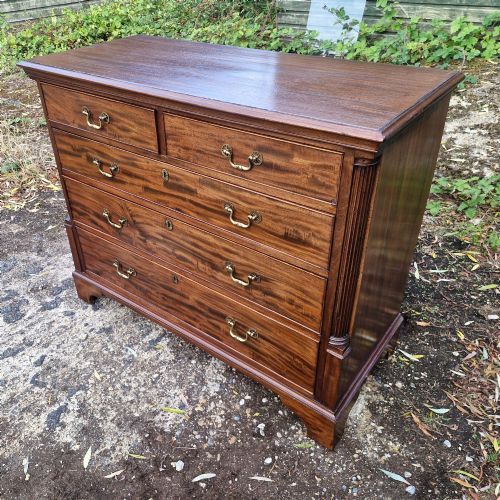
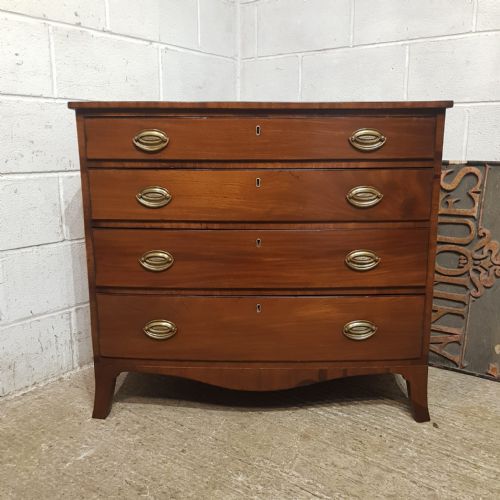
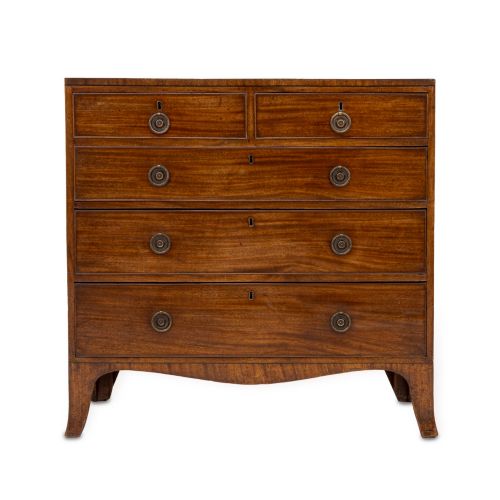
Late georgian bedroom furniture consists largely of sturdy timber chests of drawers, tallboys, linen presses, and dressing tables designed for the bedroom. The pieces on this page lean heavily towards mahogany, alongside walnut and oak, dating from the late eighteenth and early nineteenth centuries.
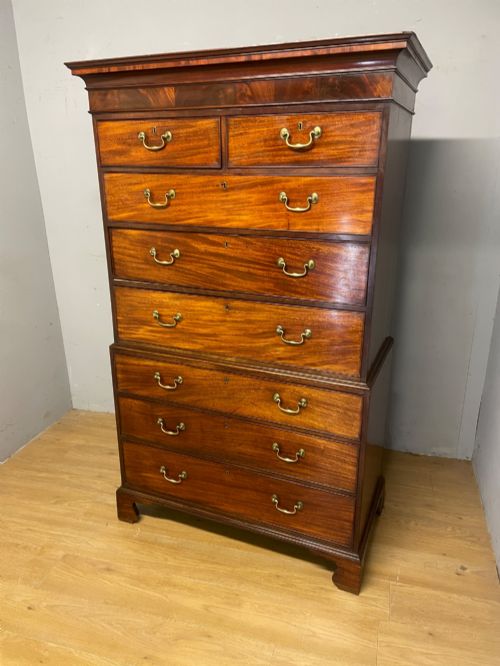
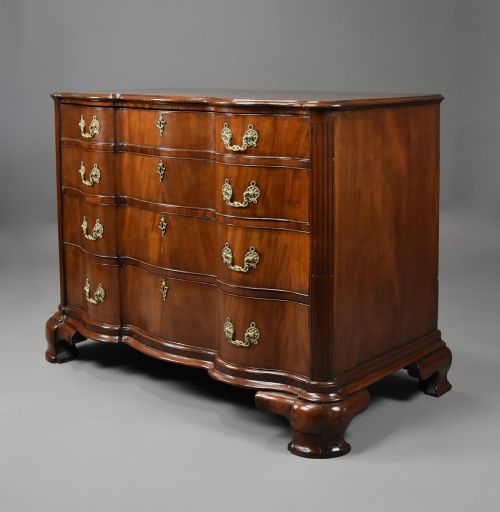
You will encounter straightforward bow-front and straight-front chests of drawers most frequently. More elaborate examples include serpentine commodes, tall chests on chests, and Gentleman's dressing tables equipped with mirrors and fitted compartments.
How they were made
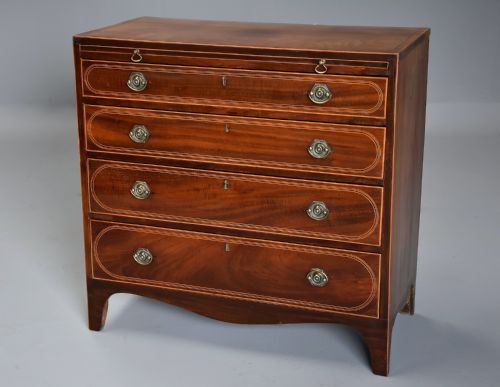
Cabinet makers built these pieces using solid timbers like mahogany, oak, and walnut, often applying flame mahogany veneers to drawer fronts for visual depth. They frequently utilised boxwood and satinwood inlay to create crisp contrasting borders along drawer edges and top surfaces.
Brass handles and escutcheons secured the drawer fronts, while pine often served as a secondary wood for internal drawer linings and carcass backs. Joinery relied on tight dovetailing for the drawer construction to ensure enduring strength through daily use.
Listings feature mahogany as the predominant timber, supplemented by walnut and oak across chests of drawers and dressing tables.
What varies in quality
Quality rests heavily on the selection of timber and the crispness of the secondary inlays. Superior examples display carefully matched flame mahogany veneers and intricate satinwood stringing that remain flush with the surrounding wood.
The depth of the surface patina and the integrity of the original brass hardware separate ordinary utility pieces from finer items made for affluent country houses. Heavier proportions and simpler oak or pine carcasses generally indicate more utilitarian workshop origins.
Druce & Co
The Late Georgian Bedroom Furniture Glossary
- Tallboy
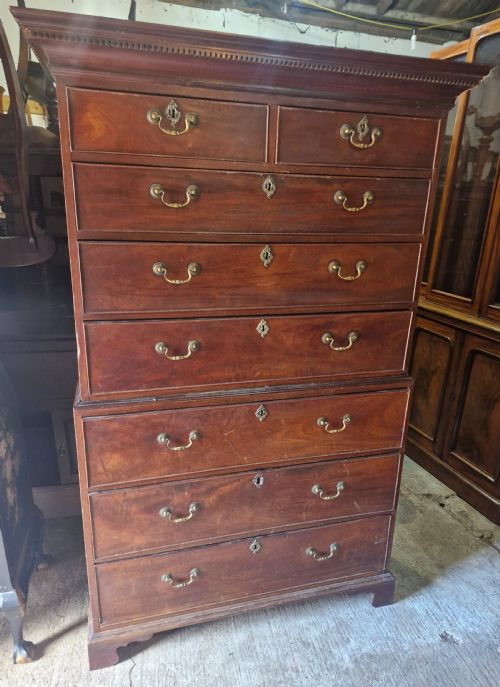
- A tall chest of drawers built in two stacked sections, often combining a lower chest with an upper chest or wardrobe compartment. This form maximises vertical storage space in smaller bedrooms.
- Bow front
- A convex curved front profile typical of many chests of drawers from this period. This shape softens the room's geometry while retaining internal storage capacity.
- Linen press
- A large storage cabinet featuring upper sliding trays or shelves enclosed by panelled doors, set above a base of lower drawers. Families used these to store household linen and folded garments before fitted wardrobes became common.
- Commode
- A low standing chest of drawers or cabinet, often of Continental origin in this selection. These pieces served both decorative and practical functions in principal bedchambers.
- Patina
- The deep surface sheen and warm colour developed by timber over decades of polishing and handling. A good patina reflects the age and continuous care of the wood.
Late Georgian Bedroom Furniture: Frequently Asked Questions
How do I identify a tallboy?
A tallboy consists of a larger chest of drawers positioned directly beneath a second, slightly smaller chest or cupboard section. This stacked configuration provides generous vertical storage without taking up excess floor space.
Cabinet makers during the late georgian period constructed these units to hold substantial wardrobes of clothing and linens for the principal bedroom.
Where were linen presses used?
Linen presses stood in bedrooms and dressing rooms to store household textiles and freshly laundered garments. The internal sliding trays kept folded linen neat and accessible.
Lower drawer sections provided additional space for bulkier items, combining wardrobe and chest functions into a single substantial piece of furniture.
How do I care for mahogany furniture?
Keep mahogany furniture away from direct sunlight and heat sources to prevent the timber from drying out and the veneers from lifting. Regular dusting with a soft, dry cloth preserves the finish.
Applying a traditional beeswax polish occasionally helps maintain the depth of the surface patina without building up heavy residue.