





Late 19th Century Boat
These late 19th century boat pieces capture maritime history through paintings, models, and decorative objects.
Late 19th Century Boat
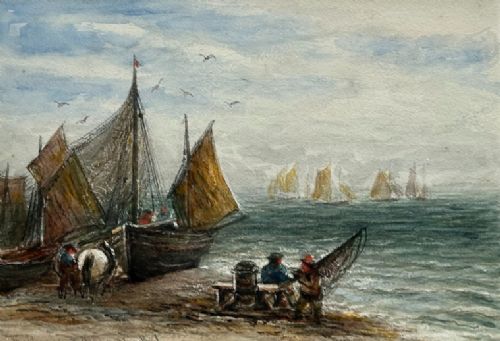
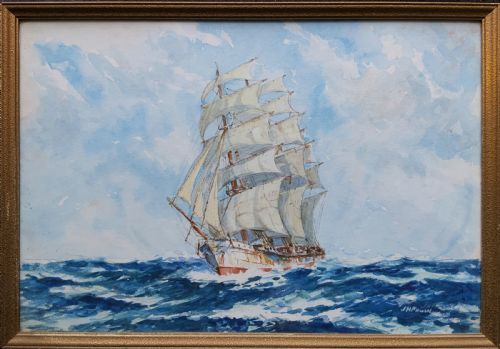
When you search for a late 19th century boat, you encounter a diverse range of items including watercolour and oil paintings, scale models, and decorative centrepieces. The paintings frequently depict coastal scenes, stormy seas, and working vessels in British, French, Dutch, and Italian waters.
Beyond fine art, the selection encompasses practical and decorative objects from the period such as scratch-built pond yachts, shipwrights' half hull models, lanterns, and carved chairs. These pieces reflect the prominent maritime culture and craftsmanship of the Victorian era.
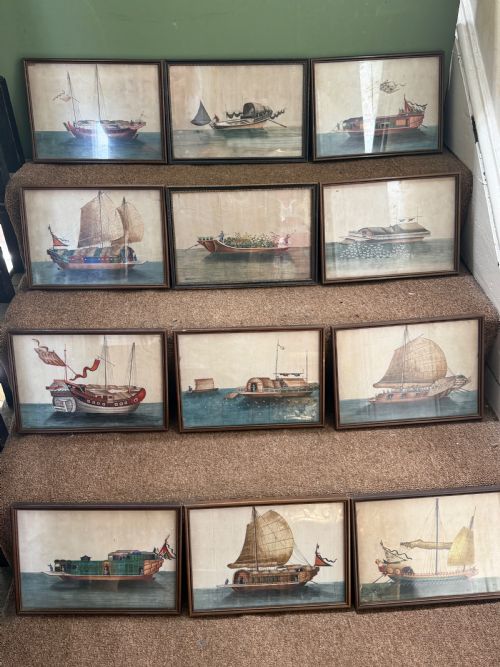
The most commonly met examples on this page are framed watercolours and oils on canvas or card, alongside detailed wooden model boats and ships. Chinese export gouache sets and Asian pagoda boat models also appear among the international varieties.
Materials and construction methods
Paintings from the period utilise watercolour pigment, gouache, and oil paints applied to paper, card, canvas, or wood panels. Artists achieved tonal depth and atmospheric effects through layered washes and visible brushwork.
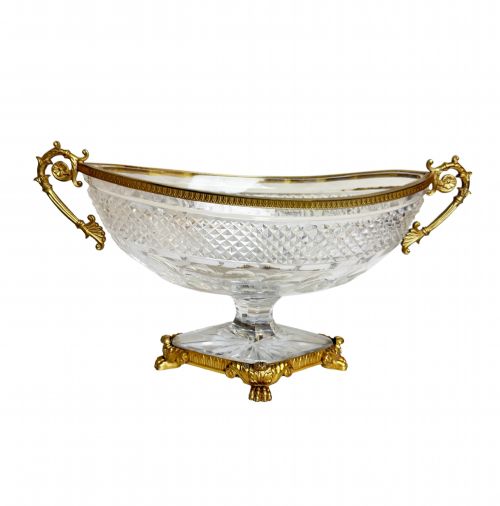
Three-dimensional pieces employ wood, paper, cut crystal, and ormolu. Scratch-built model boats feature carved wooden hulls, while centrepieces combine heavy crystal bowls with cast ormolu mounts.
Late 19th Century Boat Retail Price Guide 2026
Typical asking prices for late 19th century boat among the pieces listed under this phrase on Sellingantiques today, from the lower quarter to the upper quarter. They describe what is for sale here now, not the wider market.
Listings feature paper, canvas, wood, glass, and cut crystal across paintings, models, and centrepieces.
Factors influencing quality
The refinement of execution separates superior works from simpler decorative items. In paintings, this is evident in the control of light, water movement, and anatomical accuracy of figures and rigging. In models, quality rests upon the precision of the hull construction and the scale fidelity of the masted rigging.
Provenance and documentation also distinguish the pieces. Signed works by recognised artists or items retaining original mounts and patination command greater attention than unsigned or heavily restored examples.
James Orrock·Clara Montalba·Consalvo Carelli·Carleton Grant·Louis Van Staaten·Jan Van Couver
The Late 19th Century Boat Glossary
- Carvel hull
- A shipbuilding method where hull planks are laid edge-to-edge flush against each other, creating a smooth surface. This technique appears on scale models from the period.
- Ketch-rigged
- A two-masted sailing vessel configuration where the smaller mizzenmast is stepped forward of the rudder post. Pond yachts of the era often used this configuration for stability.
- Gouache
- An opaque water-based paint consisting of pigment, water, and a binding agent such as gum, often used in Chinese export paintings for vibrant colour.
- Ormolu
- Gilded bronze ornamentation applied to decorative objects and centrepieces. It provides a metallic contrast to cut crystal components.
- School of Posillipo
- A 19th-century group of artists based near Naples who focused on en plein air landscape and coastal painting. Their works capture local light and topography.
Late 19th Century Boat: Frequently Asked Questions
What subjects do these paintings show?
The paintings predominantly depict coastal scenes, fishing boats in choppy seas, harbours, and river landscapes. Locations range from British coastal towns like Brighton and Whitby to Dutch waterways and Italian bays.
Artists captured both calm anchorages and dramatic storms, frequently including figures such as fishermen, sailors, or townspeople along the shoreline.
How were model boats used?
Some model boats, such as the scratch-built pond yachts, were functional sailing toys tested on park ponds by hobbyists. Other models served as decorative display pieces or technical demonstrations.
Shipwrights also produced half hull models to plan vessel designs or showcase their woodworking skills to prospective clients.
How do I care for watercolour paintings?
Watercolour pigments are sensitive to direct sunlight and high humidity, which can cause fading and paper degradation. They require framing behind protective glass using acid-free mounts.
Display these artworks away from direct sunlight and sources of moisture to preserve the integrity of the paper and pigment.
How can I distinguish periods within the 19th century?
Distinguishing specific decades relies on stylistic cues, framing materials, and documentation such as dates inscribed by the artist. Late 19th-century works often reflect Victorian maritime romanticism or the looser brushwork associated with late-century plein air painting.
Examine the reverse of paintings and the construction methods of models for maker marks, gallery labels, or handwritten signatures.