


Late 18th Century Mirror
A late 18th century mirror brings the candlelit glow of Georgian and Neoclassical interiors straight onto a modern wall.
Late 18th Century Mirror
A late 18th century mirror encompasses wall-hanging pier glasses, girandoles, overmantels, and tabletop dressing boxes designed during the Georgian and Neoclassical periods. These pieces reflect the sophisticated interior tastes of the late seventeen-hundreds, emerging in forms ranging from grand Italian rococo frames to restrained French provincial designs.
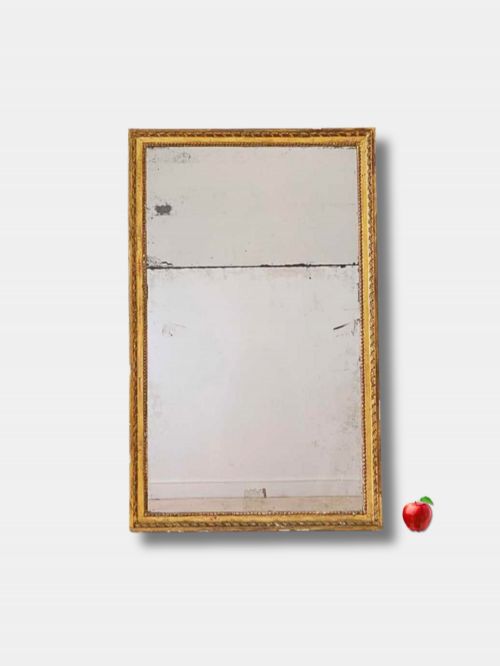
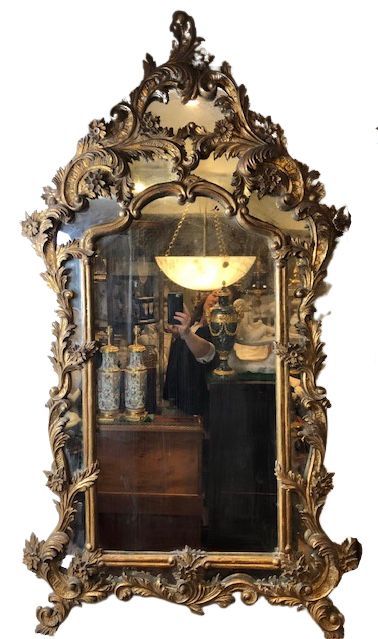
The version most commonly met on this page is the giltwood wall mirror, frequently featuring carved ornamentation, symmetrical or asymmetrical foliage, and original mercury glass plates. Buyers also encounter smaller mahogany and boxwood toilet mirrors equipped with fitted box bases for personal grooming.
Continental pieces from France and Italy appear alongside English interpretations, showcasing regional variations like Florentine carvings, Chinese export styles, and Normandy painted finishes. Each surviving object bears the marks of manual construction typical of the period before mass manufacturing took hold.
How they were made
Makers constructed the foundational frames using timber such as pine, oak, and mahogany, applying layers of gesso to carved wooden elements before laying down gold leaf or paint. Giltwood surfaces required meticulous application of leaf onto a prepared bole, creating a rich metallic sheen that aged with distinct character.
Reflecting surfaces relied on mercury glass, where a tin and mercury amalgam was swept onto the rear of the glass plate to create the reflective layer. These handmade plates frequently display foxing, minor distortions, and dark speckling resulting from the historical silvering process.
Late 18th Century Mirror Retail Price Guide 2026
Typical asking prices for late 18th century mirror among the pieces listed under this phrase on Sellingantiques today, from the lower quarter to the upper quarter. They describe what is for sale here now, not the wider market.
The archive records frequent examples of mercury glass plates housed within carved pine and giltwood frames originating from England, France, and Italy.
What varies in quality
The depth and definition of the wood carving dictate the upper tiers of craftsmanship, separating sharply chiselled foliage and scrolls from softer, shallower moulded details. Master carvers produced intricate openwork frames with crisp undercutting that catch ambient light differently from simpler, flatter profiles.
The preservation of original components significantly alters the character of a piece, particularly whether the mirror plate retains its historical mercury backing rather than a later replacement. Frames keeping their initial gilding, original pine or gesso substrates, and early backboards hold a distinct integrity.
The Late 18th Century Mirror Glossary
- Mercury glass
- A reflective glass plate created using a tin and mercury amalgam poured behind the glass. This early technique produces characteristic dark spots and soft foxing over centuries.
- Giltwood
- Wood that has been coated with thin leaves of gold. It provides a brilliant metallic finish that defines many fine period frames.
- Gesso
- A plaster-like mixture applied to wooden frame bases to provide a smooth surface for carving or gilding. It allows intricate relief ornamentation to be sculpted before finishing.
- Pier glass
- A tall mirror specifically designed to hang on the narrow pier of wall space between windows. These pieces often feature matching console tables placed beneath them.
- Girandole
- A decorative wall mirror fitted with candle sconces attached to the frame. The polished glass and gold leaf multiplied the flickering candlelight in evening rooms.
- Trumeau
- A decorative wall mirror incorporating an oil painting or panel within the upper section of the frame. It forms an integrated architectural element of period interior design.
Late 18th Century Mirror: Frequently Asked Questions
How do I spot original glass?
Original mercury glass plates display characteristic foxing, uneven dark speckling, and slight distortions in the reflection caused by historical manufacturing techniques. Modern replacement plates present a uniform, flat silver surface without the mottled depth of eighteenth-century glass.
Examining the edges of the glass plate often reveals bevels or thickness variations distinct from modern machine-cut equivalents. The backboards and securing pins also offer clues to whether the plate has remained undisturbed in its frame since the seventeen-hundreds.
Where should I hang these mirrors?
These mirrors suit placement above a mantelpiece, across from a window to maximise natural light, or above a console table in a hallway. Their reflective qualities brighten darker spaces while adding period architectural presence to a room.
Due to the weight of solid timber, gesso, and glass, secure wall fixings rated for heavy loads are essential. Wall placement should avoid areas prone to dampness or direct, intense heat sources that might affect the historic giltwood and gesso surfaces.
How do I clean an antique frame?
Dusting antique giltwood frames requires a soft, dry brush to gently remove particles from deep within the carved recesses without disturbing the delicate gold leaf. Moisture and chemical cleaning agents must be avoided entirely, as they strip water-soluble gesso and lift fragile gilding.
Mirror plates can be cleaned sparingly using a soft microfibre cloth dampened slightly with distilled water. Care must be taken to prevent any liquid from seeping behind the glass edge where it could damage the historical backing.
What styles existed in this period?
The late eighteenth century encompassed overlapping styles including Neoclassical, Louis XVI, Georgian, and various regional Rococo interpretations from Italy and France. Neoclassical designs favoured symmetry, urn motifs, swags, and classical architectural proportions, moving away from earlier asymmetrical curves.
Chinoiserie and Japanned finishes also gained popularity, introducing hand-painted oriental scenes and lacquered surfaces to European drawing rooms. Each regional style utilised local woods and carving traditions to interpret contemporary aesthetic trends.