

Large Wooden Trestle
A large wooden trestle serves as the anchoring centrepiece for a dining room or kitchen, bringing enduring timber character and generous proportions to the space.
Large Wooden Trestle
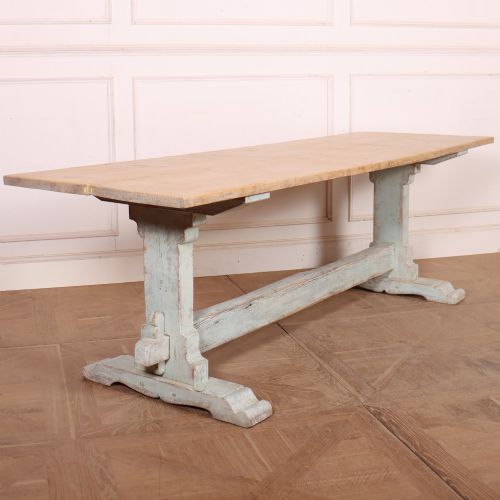
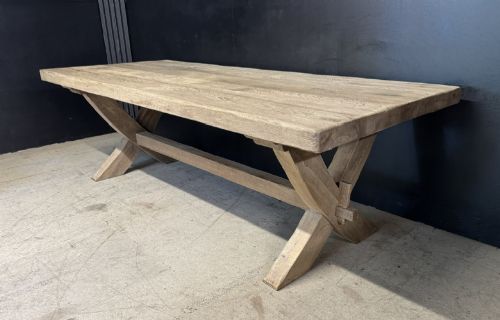
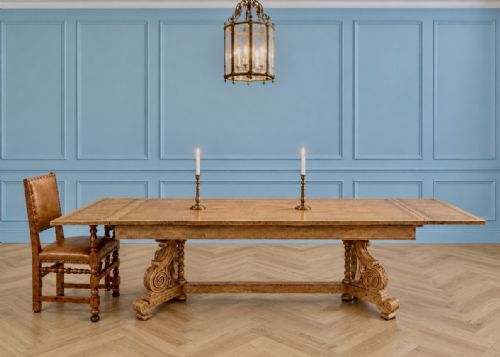
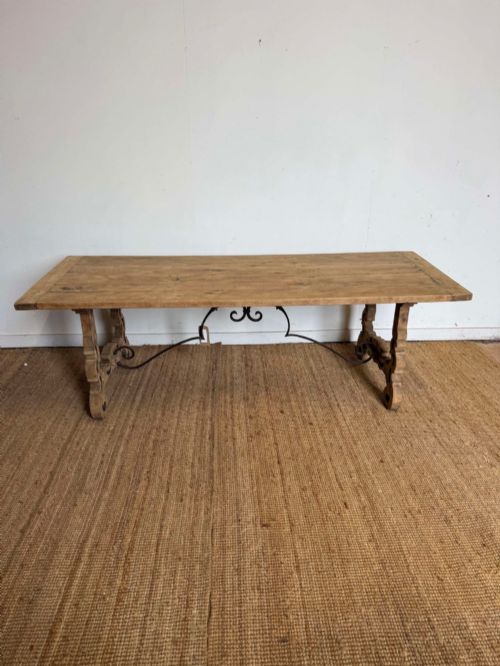
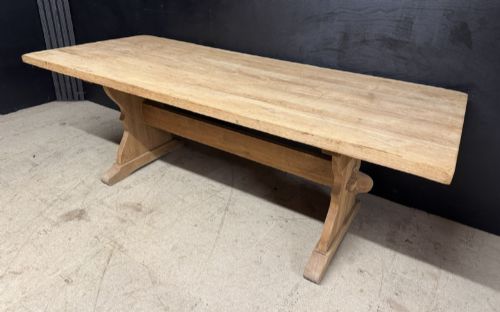
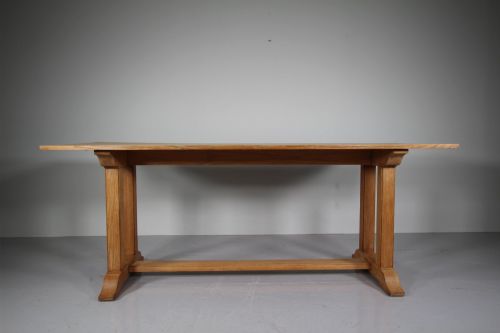
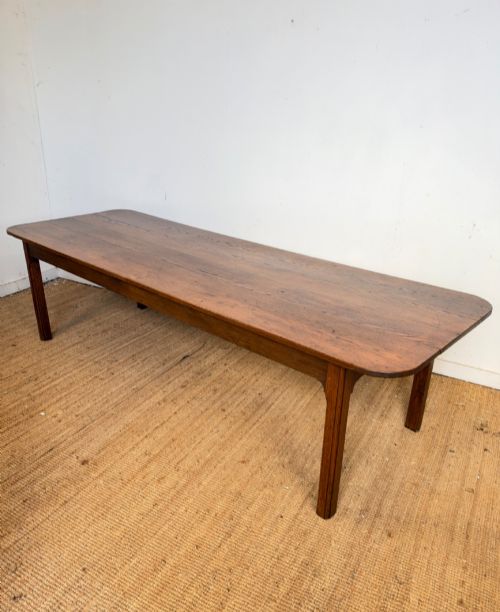
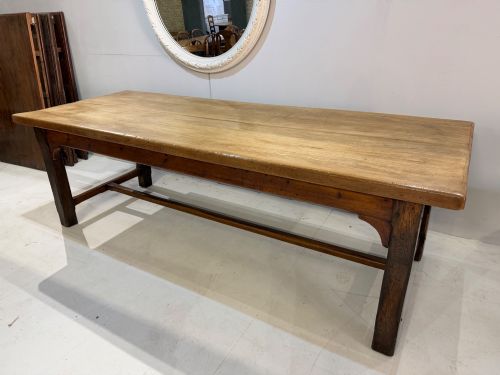
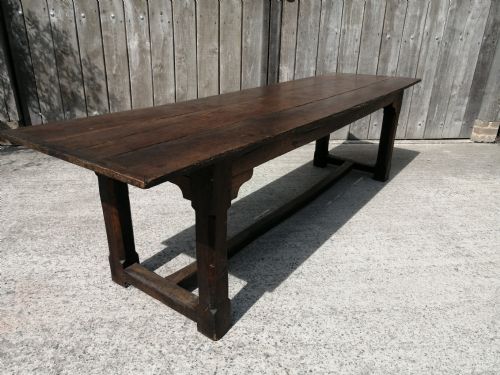
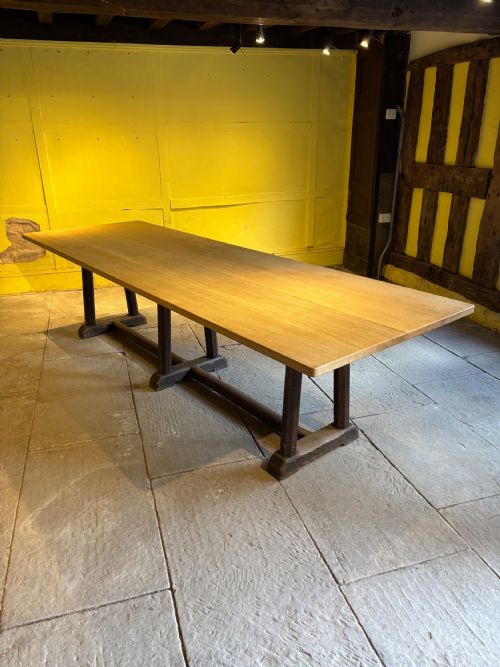
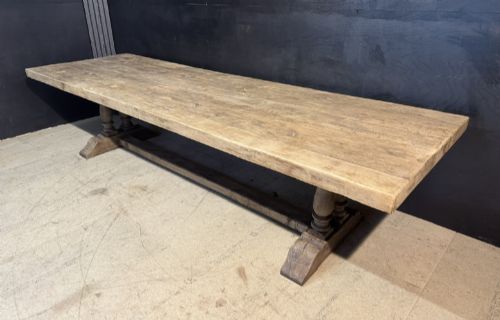
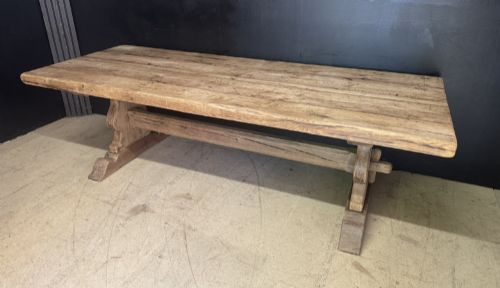
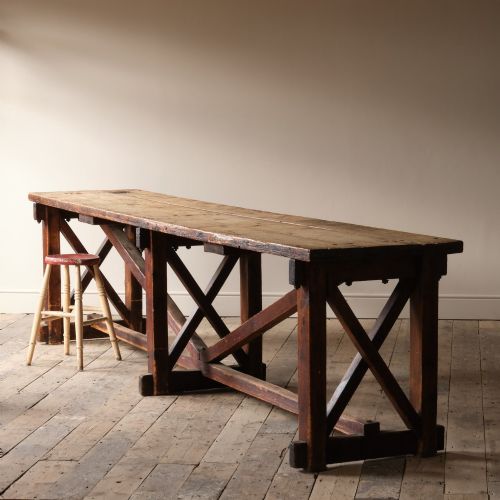
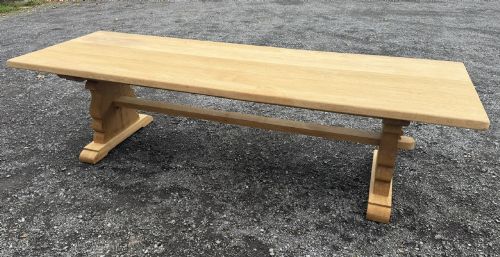
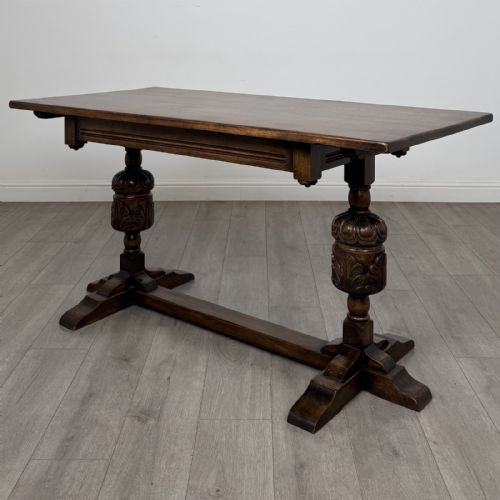
A large wooden trestle typically manifests as a substantial dining table, refectory table, or library table designed to seat multiple people comfortably for communal meals and work. When searching for a large wooden trestle, buyers encounter robust surfaces built for heavy daily use.
The pieces on this page span several centuries, reaching from the seventeenth century through the Edwardian era up to the 1940s. Most examples date from the nineteenth and early twentieth centuries, reflecting enduring traditions of British, French, and European farmhouse furniture.
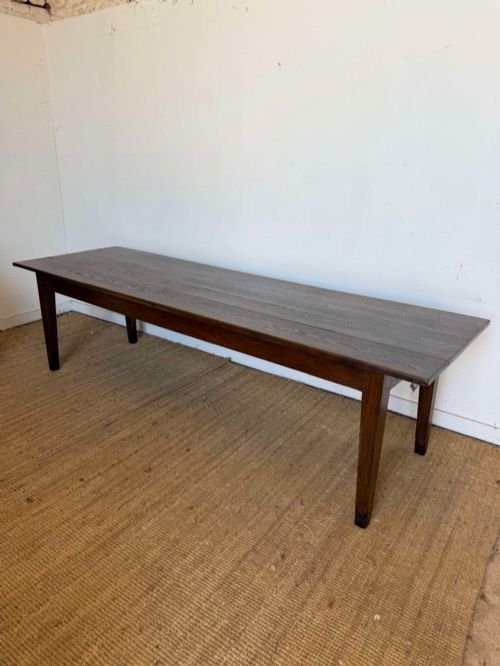
Forms vary from rustic farmhouse and refectory styles to library tables, monastery tables, and tavern tables. These items accommodate various interior settings, functioning as kitchen dining tables, coffee tables, or grand dining room focal points.
How they were made
Carpenters constructed these tables using a variety of sturdy timbers, most notably oak, elm, pine, beech, walnut, chestnut, poplar, and cherrywood. Many feature thick single plank or two-board tops supported by substantial legs and base structures.
Makers utilised traditional joinery techniques suitable for heavy-duty furniture, incorporating solid timber construction designed to withstand decades of practical use in homes, schools, and community halls.
Large Wooden Trestle Retail Price Guide 2026
Typical asking prices for large wooden trestle among the pieces listed under this phrase on Sellingantiques today, from the lower quarter to the upper quarter. They describe what is for sale here now, not the wider market.
Listings feature timbers including oak, elm, pine, beech, walnut, chestnut, poplar, and cherrywood spanning the seventeenth to twentieth centuries.
What varies in quality
Quality in these tables rests primarily on the integrity and thickness of the timber used for the top and the stability of the supporting frame. Single plank or two-board tops demonstrate superior material selection compared to multi-plank assemblies.
The depth of character in the wood grain, the presence of original patination acquired through decades of service, and the balance of proportions distinguish finer examples from standard utility pieces.
The Large Wooden Trestle Glossary
- Refectory table
- A long, narrow dining table traditionally used in monastic refectories and large halls. These tables provide ample seating along both sides.
- Plank top
- A table surface constructed from distinct boards joined together. Single plank or two-board variants are especially prized by collectors.
- Trestle
- A structural support consisting of a horizontal beam or bar supported by two pairs of sloping legs. This design maximises legroom along the length of the table.
- Jacobean Revival
- A nineteenth or twentieth-century style imitating seventeenth-century English furniture. These pieces often feature carved decoration and dark oak finishes.
- Farmhouse table
- A utilitarian wooden table designed for everyday kitchen or dining use. They display practical construction and honest materials.
Large Wooden Trestle: Frequently Asked Questions
How do I care for a wooden refectory table?
Maintain the timber by cleaning spills promptly with a damp cloth and avoiding harsh chemical cleaners. Periodic application of natural wax helps preserve the finish and nourishes the wood.
Keep the table away from direct heat sources and drastic humidity changes to prevent the timber from warping or splitting over time.
What is the difference between a refectory table and a farmhouse table?
Refectory tables originate from communal dining halls and typically feature long, narrow proportions with recessed supports to allow seating along the entire length. Farmhouse tables evolved from domestic rural settings and frequently incorporate drawers, thicker legs, or standard apron framing beneath the top.
Both forms utilise robust timbers like oak, elm, and pine, but their underlying framing structures reflect different historical traditions of domestic and institutional use.
Can I use a library table for dining?
Library tables provide stable, spacious surfaces that adapt well to dining use, provided the height and knee clearance match your chairs. Many historic library tables share similar dimensions with large dining tables.
Consider checking the underclearance of the table skirt or drawers to ensure comfortable seating positions for guests before arranging them for meals.
How do I identify the age of an oak table?
Examine the underside and joints of the table for hand-cut joinery marks, peg construction, and tool signatures that indicate period manufacturing methods. Variations in the timber grain and the presence of natural wear patterns also offer clues regarding age.
Stylistic details such as Jacobean revival carvings or plain nineteenth-century farmhouse profiles help narrow down the decade or century of origin.