
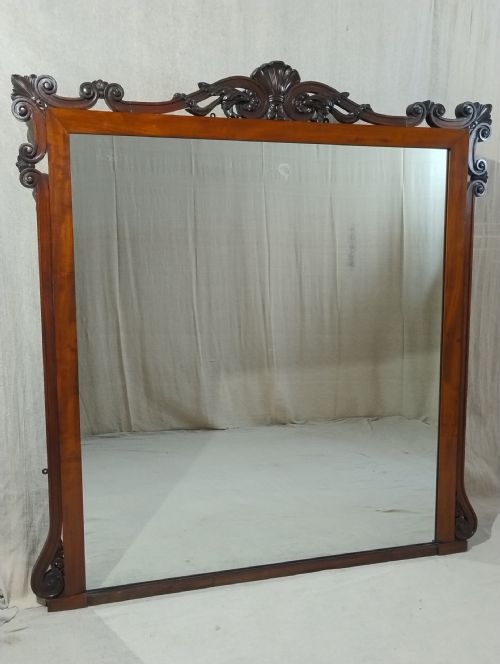
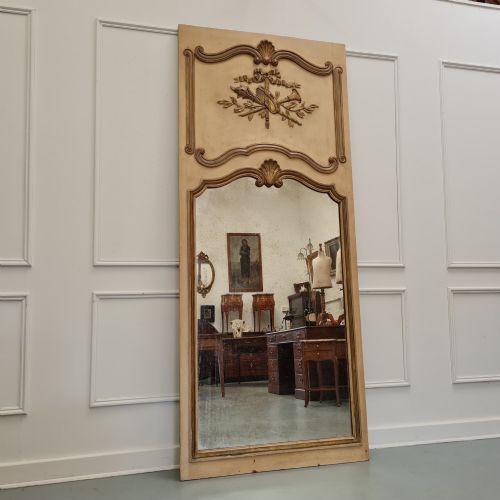


Large Wooden Mantel Mirror
A large wooden mantel mirror grounds a room with scale and presence, bringing architectural weight to a chimney breast.
Large Wooden Mantel Mirror
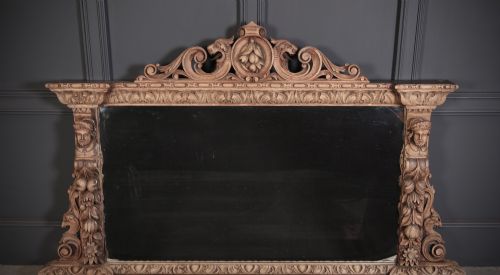
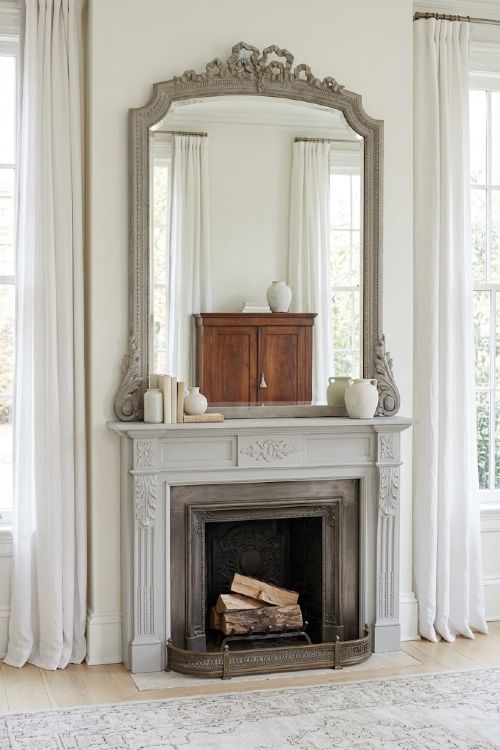
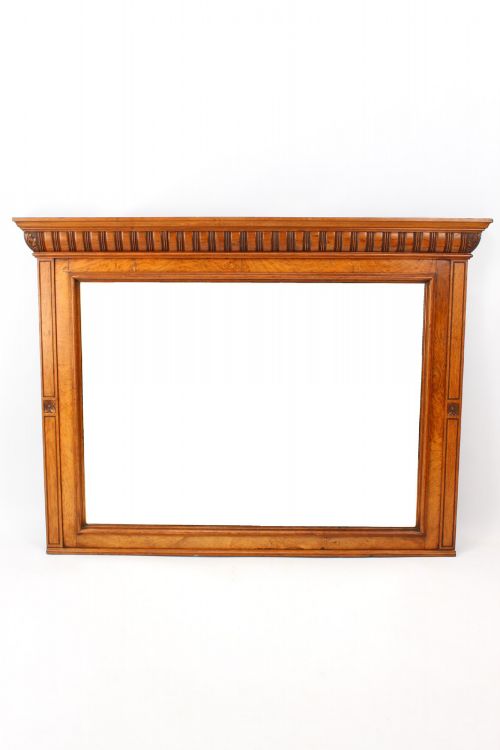
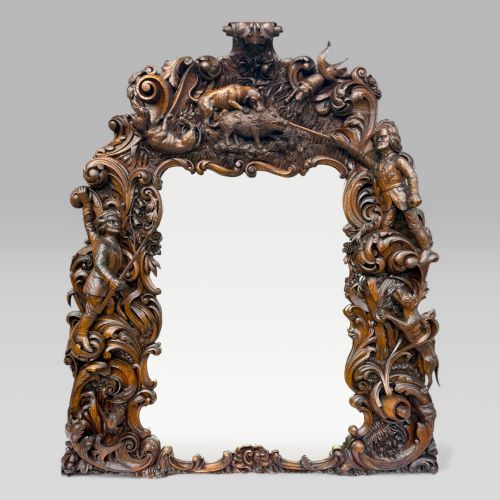
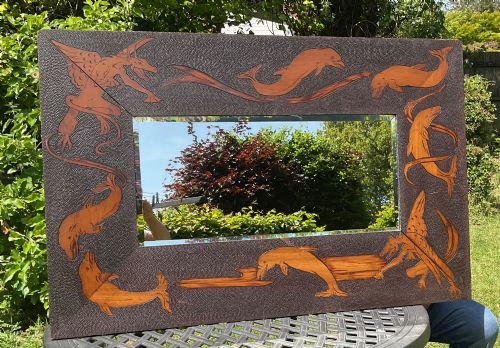
When searching for a large wooden mantel mirror, you encounter substantial overmantel and wall-hanging glasses designed to sit above a fireplace. The selection draws heavily from Victorian and nineteenth-century English and French workshops, encompassing styles from Chippendale Revival to Arts and Crafts and French Provincial.
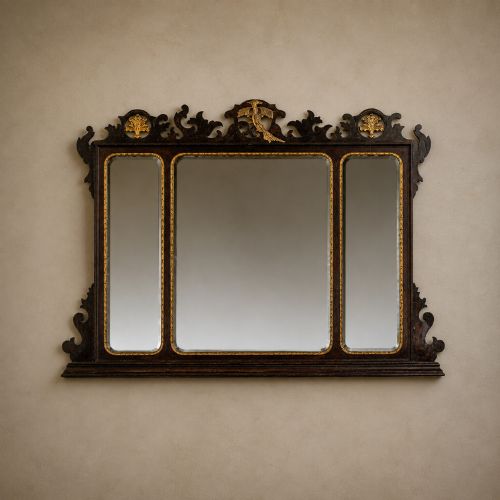
The primary forms include architectural triptychs with cresting, arched and domed top frames, and rectangular trumeau panels. Oak, mahogany, walnut, and burr yew-wood dominate the timber framing, often combined with painted finishes, gesso, or giltwood detailing.
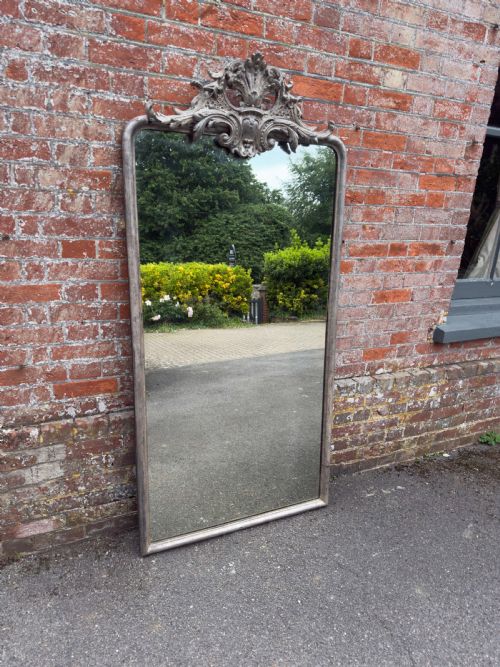
English examples tend to favour solid dark woods like mahogany and oak with classical proportions, while French pieces frequently employ carved wood and gesso with painted or silvered surfaces in Louis Philippe or chateau styles.
Materials and construction techniques
Carpenters joined substantial timber frames using traditional mortise and tenon construction to support heavy reflective glass plates. Woods such as mahogany, oak, and walnut provided the structural skeleton, sometimes veneered with decorative grains like burr yew or birds-eye maple.
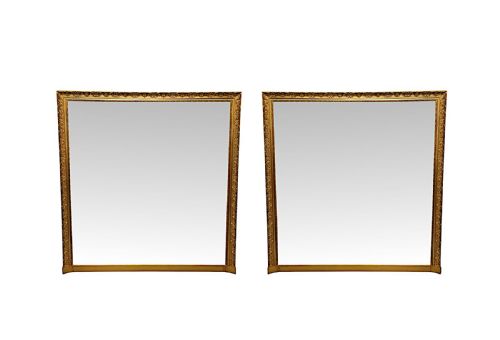
Ornate surface decoration relied on applied gesso moulded over carved wooden bases, subsequently finished with gold leaf, silvering, or multi-layered paint. Gilding and ebonising techniques added contrast, while brass detailing and ormolu mounts provided structural accents.
Keep an eye out for carved wooden birds perched atop the frames, watching over the mantelpiece with steady nineteenth-century indifference.
Distinctions in quality and execution
The standard of a large wooden mantel mirror rests upon the depth of the carving and the integrity of the original surface finish. Hand-carved details, such as cresting or floral motifs, demonstrate superior artisan skill compared to mass-produced moulded composition ornaments.
The preservation of original gilding, silvering, and paint layers defines the desirability of the piece. Superior examples retain their original mirror plates and backing boards, showing harmonious ageing across both frame and glass.
The Large Wooden Mantel Mirror Glossary
- Overmantel mirror
- A large wall mirror specifically proportioned to hang on the wall directly above a fireplace mantelpiece. These frames often feature landscape orientations or arched tops designed to mirror the opening below.
- Gesso
- A plaster-like mixture applied to wooden frames as a base for painting or gilding. Skilled artisans carved intricate relief details directly into this layer.
- Trumeau mirror
- A decorative wall mirror incorporating a painted panel or artwork within the upper section of the frame. Originating in France, these pieces served as permanent wall fixtures between windows or above mantelpieces.
- Chippendale Revival
- A decorative style popular in the nineteenth century that reinterpreted eighteenth-century English designs. These pieces often feature asymmetrical scrolling, pierced fretwork, and avian motifs such as the Ho-Ho bird.
- Giltwood
- Timber that has been coated with a thin layer of gold leaf or gold paint. The technique creates a luminous metallic finish that reflects candlelight and daylight within a room.
Large Wooden Mantel Mirror: Frequently Asked Questions
How do I hang a heavy wooden mirror safely?
These substantial frames require secure fixing directly into masonry or structural wall studs using heavy-duty brackets. Weight distribution must be calculated carefully before mounting above a heat source.
Professional installation is recommended due to the combined weight of dense hardwood frames and thick historical glass plates.
Were these mirrors always meant for mantelpieces?
While the majority were constructed specifically for placement over fireplaces, many functioned as principal wall mirrors in reception rooms. Their grand scale allowed them to bounce light across large nineteenth-century parlours.
Proportions often dictate their original placement, with wider formats suiting chimney breasts and taller rectangular shapes functioning as pier glasses.
How do I distinguish French and English styles?
French examples from this period typically showcase carved wood and gesso with painted, silvered, or gilt finishes, often featuring curved arched or shaped tops. English pieces more frequently display exposed hardwood grains in mahogany, oak, or walnut with structural architectural lines.
Regional preferences also appear in decorative motifs, with French frames favouring fluid provincial curves and English versions drawing on revivalist furniture traditions.
Should I replace foxed or aged mirror glass?
Original mirror plates displaying age spots, known as foxing, or light oxidation are generally valued by collectors for authenticity. They confirm the age of the piece and provide a softer, more atmospheric reflection than modern glass.
Replacement is usually reserved for instances where the glass is structurally compromised or visibility is entirely obscured.