


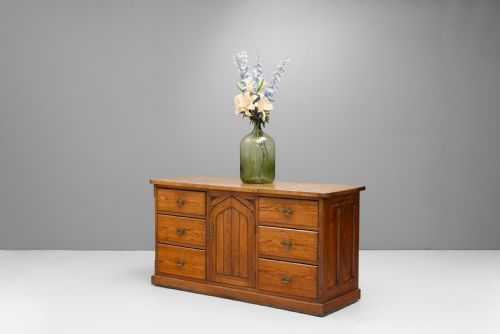
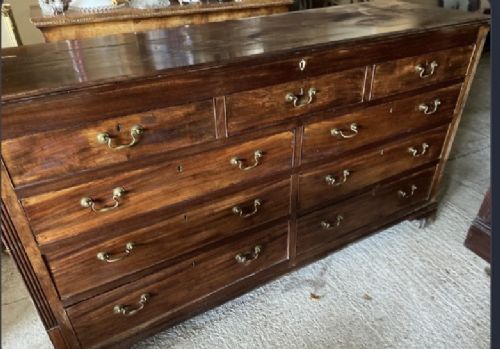
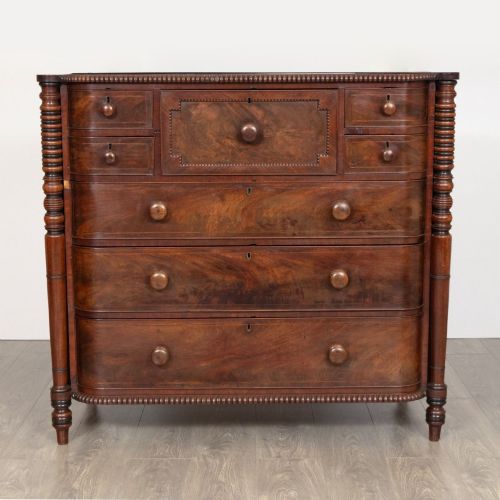
Large Wooden Drawers
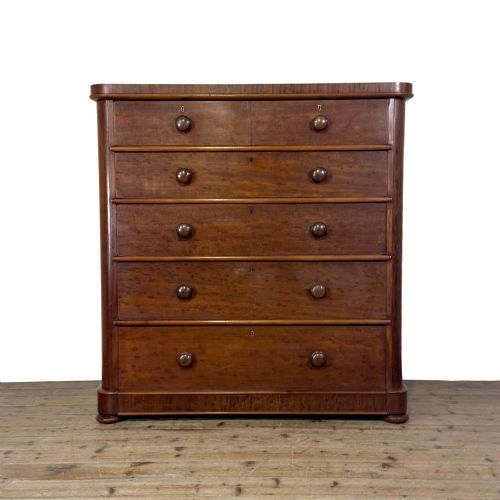
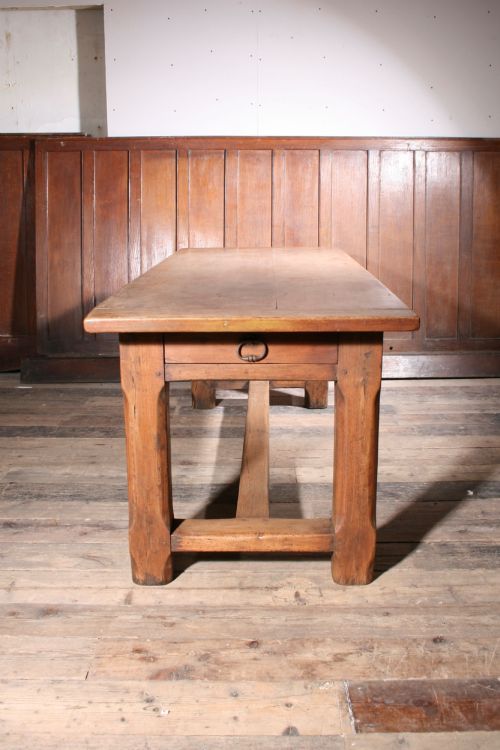
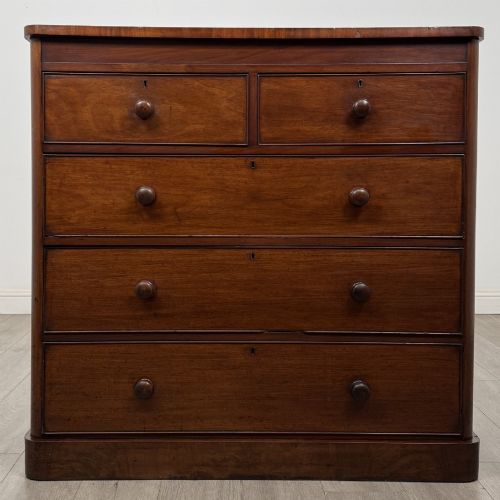
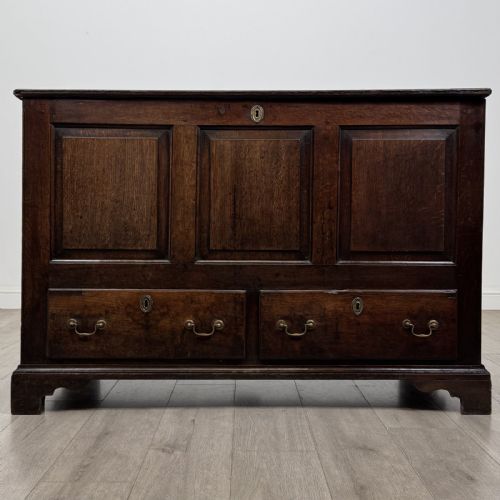
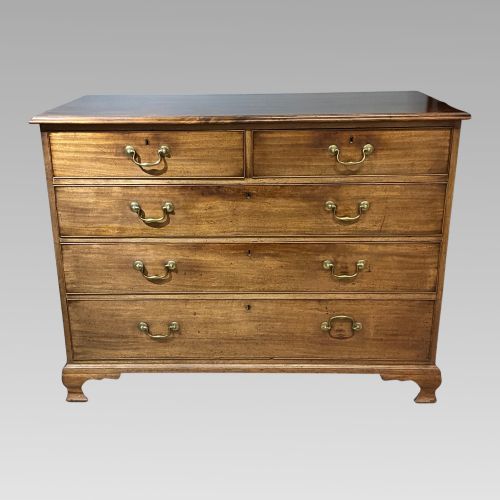
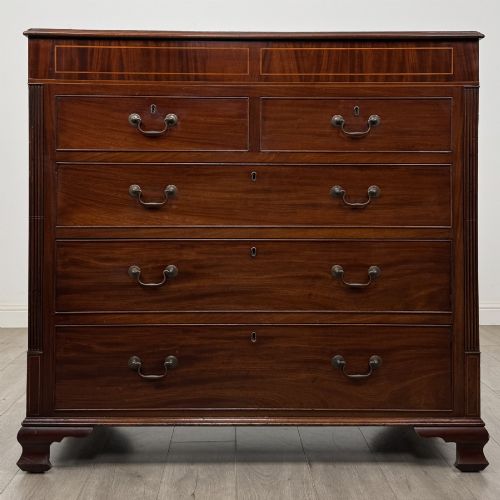
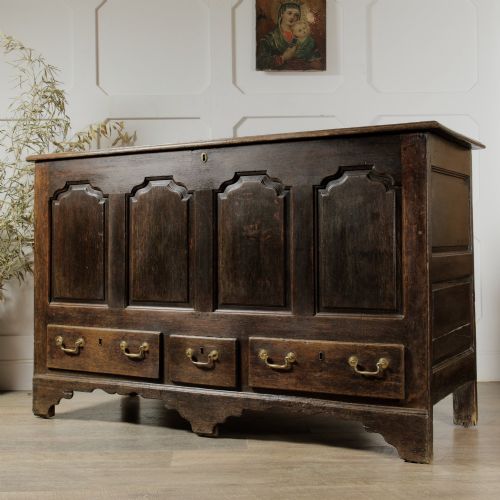
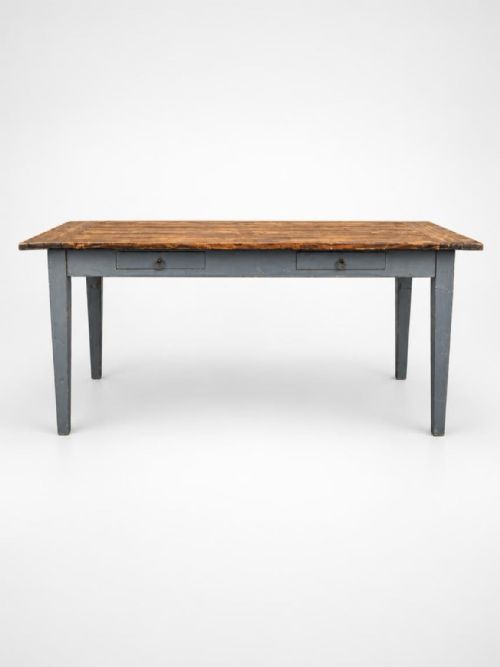
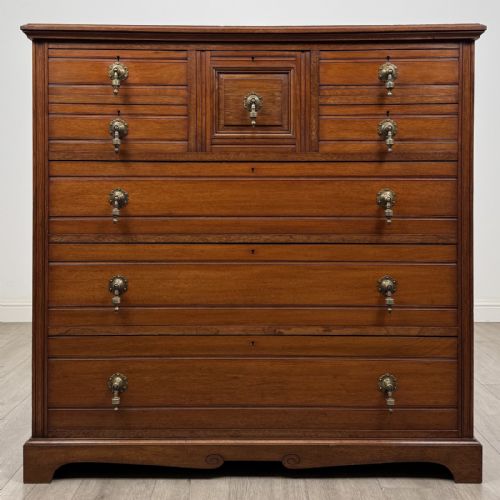
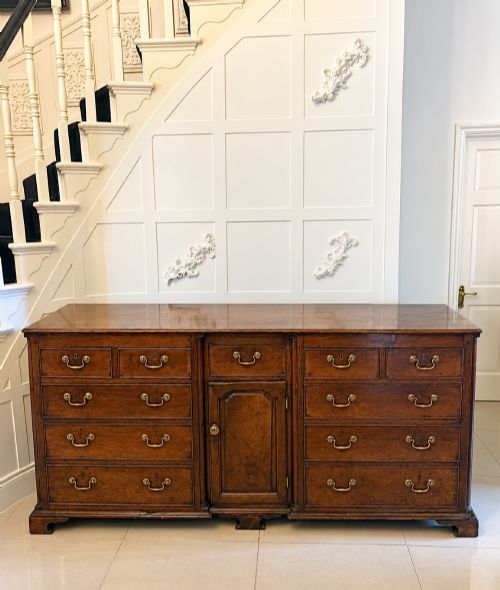
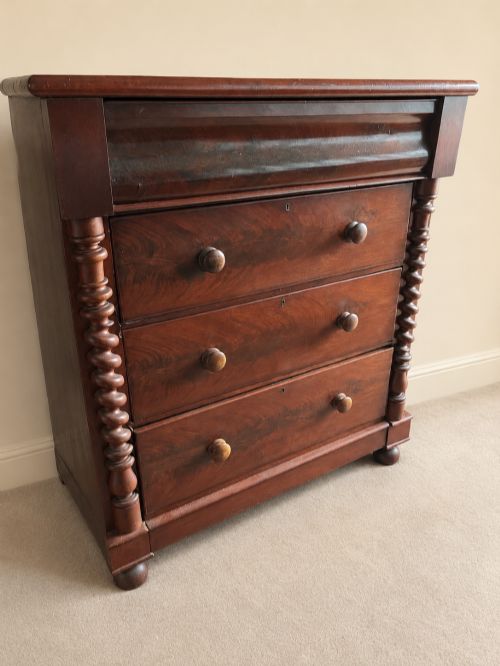
Large wooden drawers offer immense storage capacity and character, spanning robust pine farmhouse pieces to stately mahogany chests.
Large Wooden Drawers
Large wooden drawers encompass practical storage units designed to house substantial quantities of household goods, linens, or clothing. When searching for large wooden drawers, buyers typically encounter classic chests of drawers, banks of drawers, and linen presses originating from the eighteenth, nineteenth, and early twentieth centuries.
Materials and construction
Cabinet makers utilised dense hardwoods such as mahogany, walnut, and oak for formal domestic furniture, whilst employing pine for utilitarian and provincial items. Veneers like flame mahogany and burr walnut added decorative surface patterns to higher status pieces.
Hardware such as brass handles and key escutcheons complemented the timber construction. Joinery techniques varied from simple nailed joints in utility pine boxes to precise dovetail joints in hardwood drawer construction.
Large Wooden Drawers Retail Price Guide 2026
Typical asking prices for large wooden drawers among the pieces listed under this phrase on Sellingantiques today, from the lower quarter to the upper quarter. They describe what is for sale here now, not the wider market.
Listings span the eighteenth, nineteenth, and early twentieth centuries, incorporating Georgian, Victorian, and Edwardian eras.
Markers of quality
Quality rests upon the selection of timber and the precision of the construction. Finer pieces demonstrate figured veneers, matched grain patterns, and robust internal framing that supports heavy loads without sagging.
The refinement of secondary details distinguishes the tiers of manufacture. Smoothly operating drawer runners, original brass hardware, and carefully cut dovetailing separate workshop-produced furniture from basic utility boxes.
Whytock And Reid·Jas Shoolbred
The Large Wooden Drawers Glossary
- Bank of drawers
- A multi-drawer storage unit typically containing numerous smaller compartments for sorting items. Such pieces originate from workshops, haberdashers, and storerooms.
- Dovetail joint
- An interlocking wood joint formed by wedge-shaped fingers that resist being pulled apart. This technique secures drawer corners and frame structures in quality cabinet making.
- Flame mahogany veneer
- A thin slice of mahogany timber displaying a distinctive swirling, flame-like grain pattern. Cabinet makers applied this to drawer fronts and surfaces for decorative effect.
- Linen press
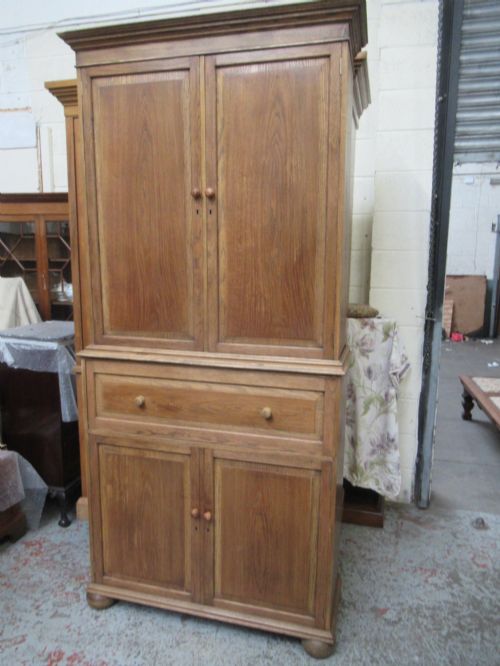
- A tall storage cabinet featuring upper shelving enclosed by doors and lower drawers. These items were designed to store household textiles flat.
- Serpentine commode
- A chest of drawers featuring a wavy, undulating front profile with a convex centre flanked by concave curves. This sophisticated shape appears on formal eighteenth and nineteenth-century pieces.
Large Wooden Drawers: Frequently Asked Questions
How do I date a large wooden chest of drawers?
Dating relies upon observing timber types, handle styles, and construction methods. Earlier eighteenth-century pieces frequently display fine mahogany with hand-cut dovetails, whilst nineteenth-century items often utilise pine or flame mahogany veneer.
Secondary woods inside drawers also offer clues, as does the presence of original brass hardware or locks. Comparing these physical traits with known historical periods helps narrow down the decade of manufacture.
What is the difference between a chest of drawers and a bank of drawers?
A standard chest of drawers is designed for domestic bedroom use, featuring a stacked arrangement of wide drawers for clothing. A bank of drawers usually contains a greater number of smaller, shallower compartments intended for commercial, industrial, or workshop storage.
Banks of drawers often appear heavier in construction and served functional purposes in haberdashers, artists' studios, or offices rather than formal living quarters.
How do I care for antique pine furniture?
Antique pine benefits from regular dusting with a soft, dry cloth to prevent dirt accumulation. Wax-finished surfaces require occasional application of a suitable beeswax polish to nourish the wood and maintain a protective barrier.
Keep wooden furniture away from direct heat sources and drastic humidity changes to prevent the timber from warping or splitting over time.
Can I use a large chest of drawers in a hallway?
Large chests of drawers function effectively in hallways and entrance spaces for storing seasonal accessories, post, and household items. Their generous top surfaces also provide a convenient platform for displaying lamps or decorative objects.
Ensure you measure the available floor space and clearance for opening drawers fully before placing a large item in a narrow corridor.