


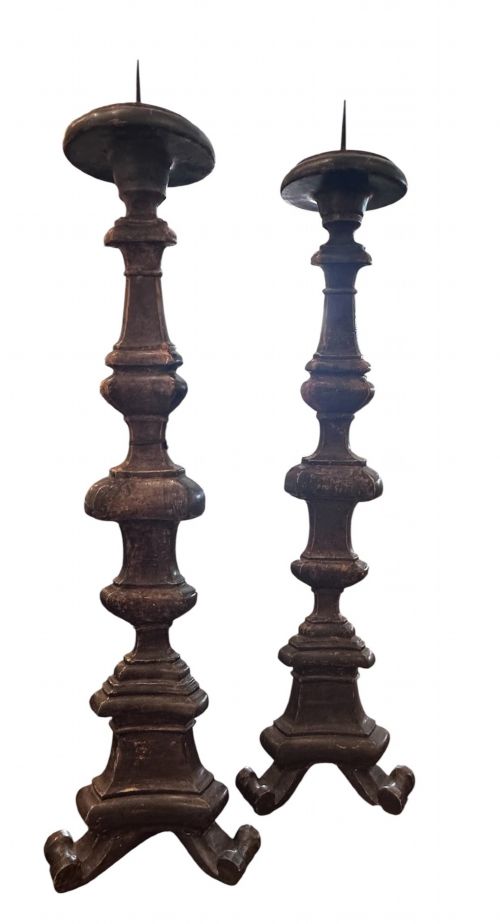

Large Wooden Candle Stands
Large wooden candle stands bring scale and texture to a room, drawing the eye with their commanding height and rich patination.
Large Wooden Candle Stands
Large wooden candle stands encompass monumental candlesticks, prickets, and torchieres designed to elevate light within a space. When searching for large wooden candle stands, buyers encounter substantial altar-style pieces and floor-standing supports dating from the eighteenth century through to the twentieth century.
The selection ranges from Italian giltwood and silvered altar candlesticks to French chateau holders and carved Chinese dragon torchieres. Pairs dominate the offerings, often displaying baroque, neoclassical, or provincial characteristics rooted in European and Asian traditions.
Many of these substantial objects began their lives in ecclesiastical settings or grand residences where height and presence were paramount. Today, they serve as dramatic focal points in domestic interiors, whether displayed on large tables or resting directly on the floor.
How they were made
Makers shaped these tall supports from solid timbers, frequently employing carved wood enhanced with gesso to create a smooth surface for subsequent decoration. Artisans then applied layers of giltwood, silver leaf, or polychrome paint to achieve rich surface finishes that caught candlelight.
Metal components such as brass sconces and iron prickets were integrated to safely hold large candles in place atop the wooden columns. These mixed-media constructions combined structural timber with refined surface gilding and functional metalwork.
Large Wooden Candle Stands Retail Price Guide 2026
Typical asking prices for large wooden candle stands among the pieces listed under this phrase on Sellingantiques today, from the lower quarter to the upper quarter. They describe what is for sale here now, not the wider market.
Listings feature wooden candle stands incorporating materials such as gesso, giltwood, iron, silver leaf, paint, and brass across various historical periods.
What varies in quality
The distinction between standard and exceptional pieces rests upon the depth and finesse of the hand-carving evident across the wooden shaft and base. Crisp details in floral motifs, scrolling foliage, or figurative elements indicate skilled craftsmanship from periods such as the eighteenth century.
Surface preservation significantly influences character, with original giltwood, silver leaf, and polychrome finishes retaining more aesthetic appeal than later repainting. The proportion between the turned or carved column and the supporting base also dictates the visual balance of the stand.
The Large Wooden Candle Stands Glossary
- Pricket
- A sharp metal spike on a candlestick designed to secure a large candle. This traditional form is frequently found on altar sticks.
- Torchiere
- A tall standing candlestick or pedestal used to elevate a light source. These floor-standing supports often feature elaborate carved decoration.
- Giltwood
- Timber coated with a thin layer of gold leaf or gold paint. This technique creates a luminous surface that reflects ambient light.
- Gesso
- A plaster-like mixture applied to wood as a base for paint or gilding. It provides a smooth ground for intricate carved details.
- Altar-style
- Descriptive of candlesticks originating from church interiors where scale and ornate styling denoted religious devotion. These pieces possess impressive proportions.
Large Wooden Candle Stands: Frequently Asked Questions
How were large wooden candle stands used?
These tall stands originated primarily in churches and grand European houses to illuminate large spaces during ceremonies or gatherings. Their substantial height ensured that candlelight cast a wide glow across the room.
In modern interiors, they function as sculptural floor pieces or statement table ornaments. They continue to provide ambient lighting while adding architectural presence to a corner or sideboard.
Are these candle stands safe to burn candles on?
Many historical pieces feature metal prickets or brass sconces designed to hold wax tapers securely. However, modern users often choose to fit dummy candles or LED alternatives to preserve fragile antique surfaces.
If burning real wax, protective measures are recommended to prevent drips from damaging the underlying wood, gesso, or gilt finish. Regular monitoring ensures the safety of both the candle and the stand.
How do I date an antique wooden candle stand?
Dating relies on examining the wood type, tool marks left by the maker, and the composition of the gesso and gilding layers. Stylistic indicators, such as baroque scrolls or neoclassical symmetry, also point toward specific historical eras.
Comparing construction methods with documented examples from the eighteenth and nineteenth centuries helps confirm the age of the piece. Subtle signs of wear and shrinkage in the timber further attest to historical origin.
Where should I place a torchiere in a room?
Floor-standing torchieres work exceptionally well in empty corners, flanking large doorways, or framing a fireplace. Their vertical lines draw the eye upward and add height to rooms with low ceilings.
Smaller table candlesticks suit sideboards, console tables, or wide mantelpieces where their proportions can be appreciated. Positioning them away from high-traffic walkways protects their delicate carved details.