
Large Wood Bookcase
A large wood bookcase commands a room, holding centuries of collected volumes within substantial timber frames.
Large Wood Bookcase
When you search for a large wood bookcase, you encounter substantial library pieces designed to hold extensive collections of books and display fine objects. These items originate predominantly from the nineteenth century, including Victorian and Edwardian examples, alongside Regency and Georgian pieces.
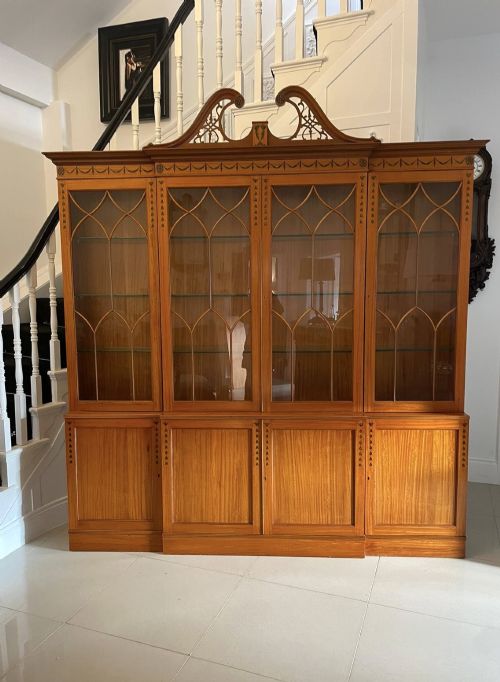
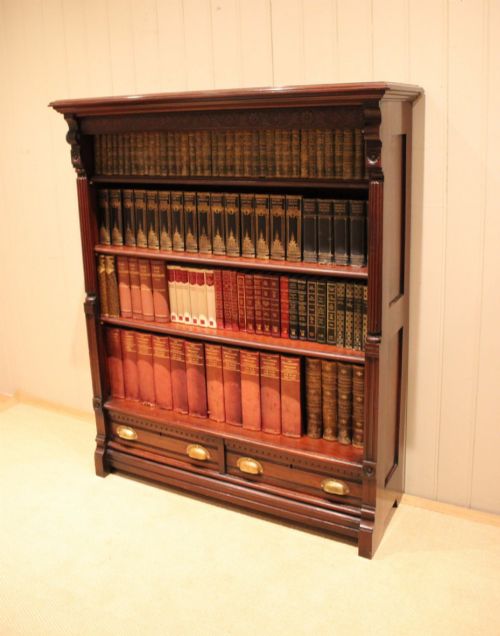
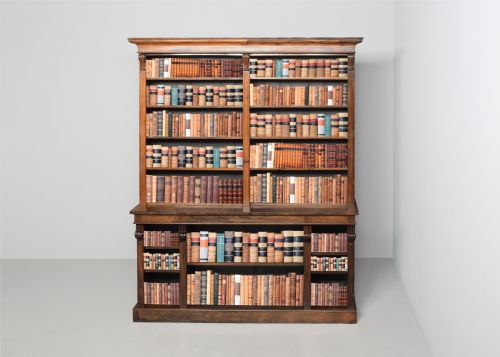
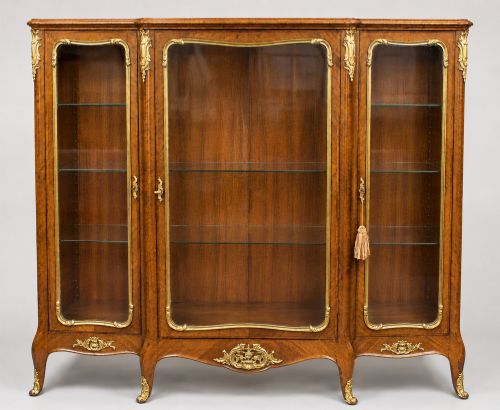
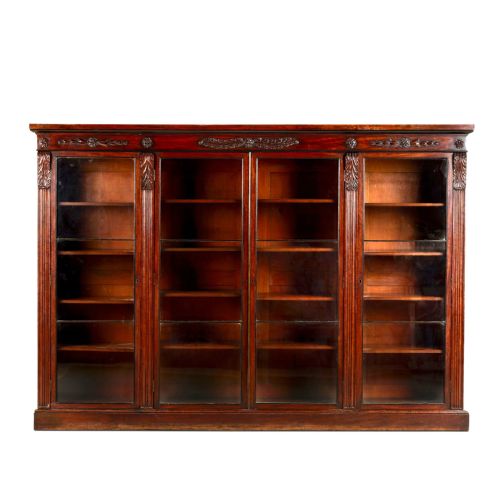
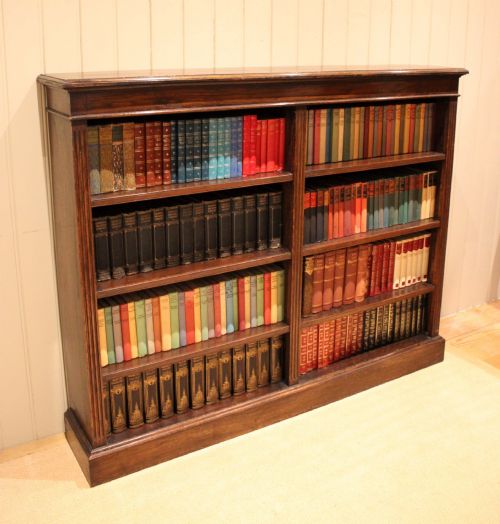
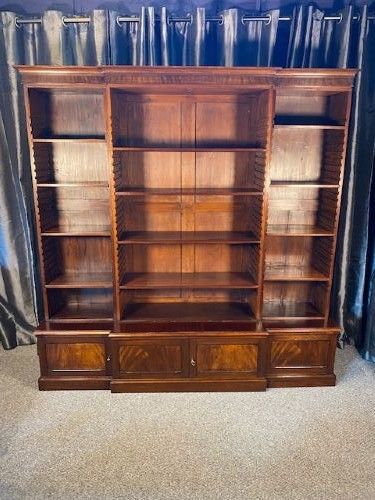
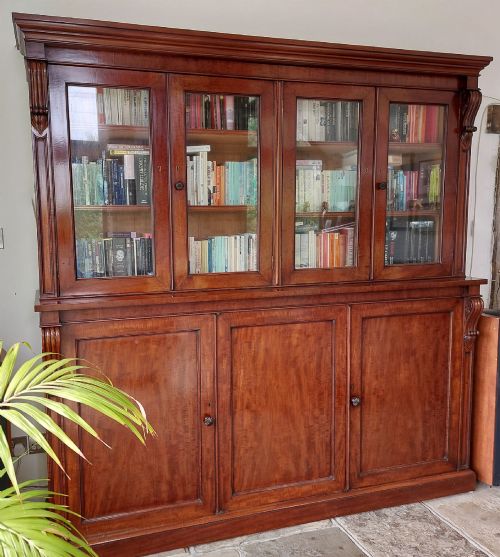
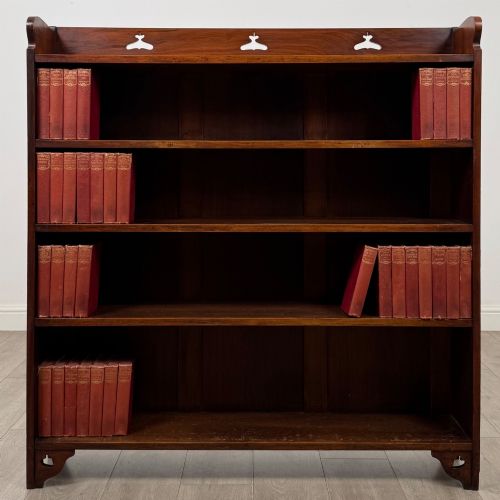
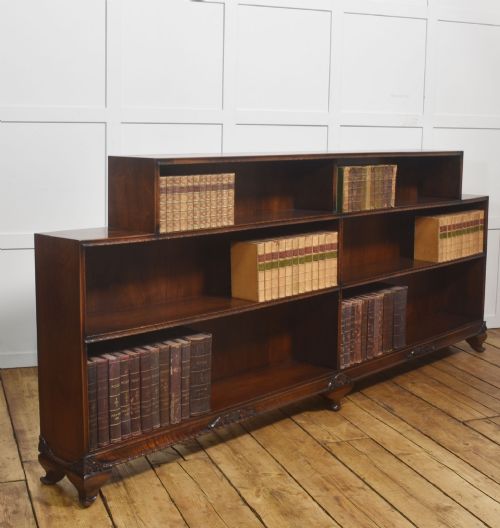
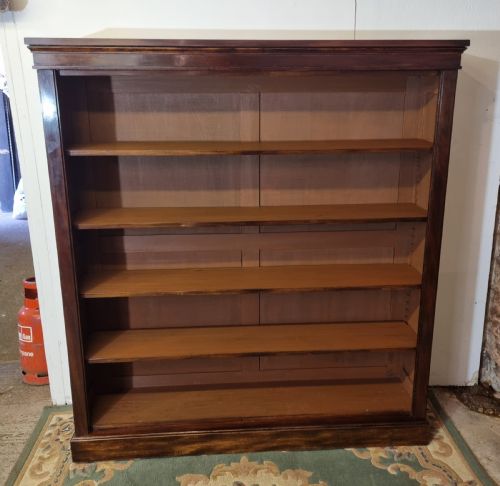
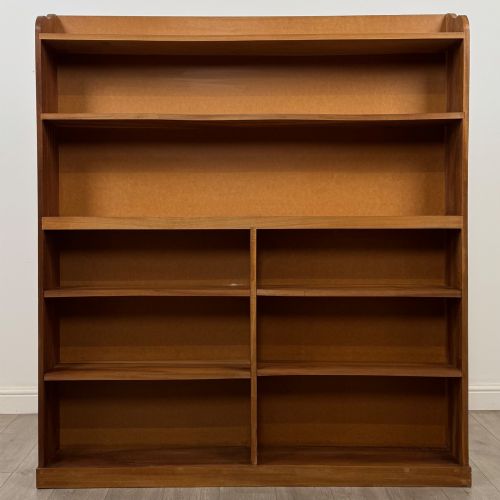
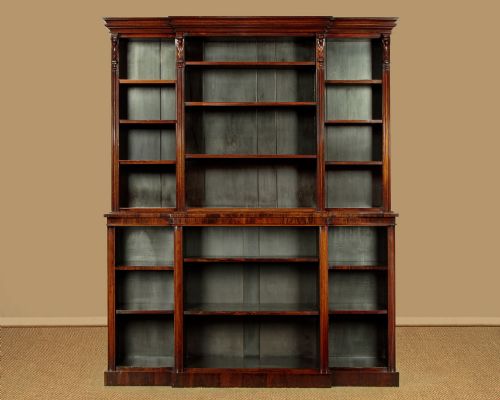
The versions you meet most frequently on this page are open bookcases in mahogany and walnut, often constructed with adjustable shelves and breakfront configurations. Alongside these open library shelves, enclosed glazed display cabinets and vitrines appear regularly across the listings.
How they were made
Cabinet makers utilised dense hardwoods such as mahogany, rosewood, walnut and oak, selecting figured veneers and flame mahogany for prominent surfaces. Solid timber forms the structural carcases, whilst finer pieces incorporate satinwood banding and intricate inlaid decoration.
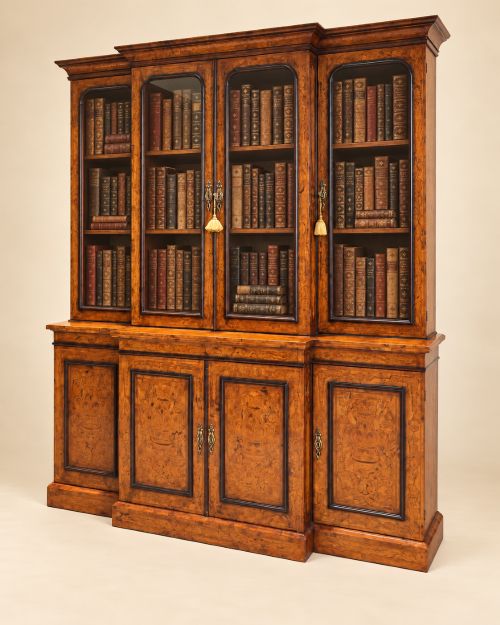
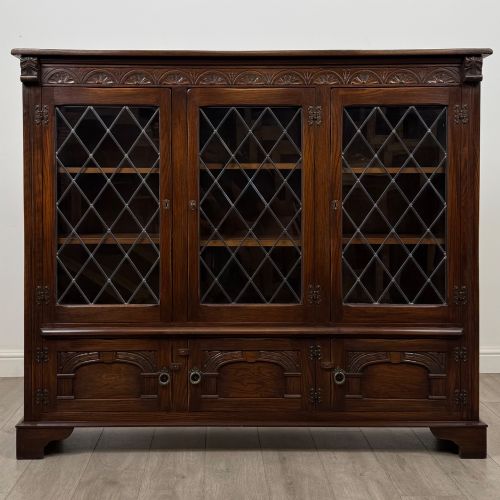
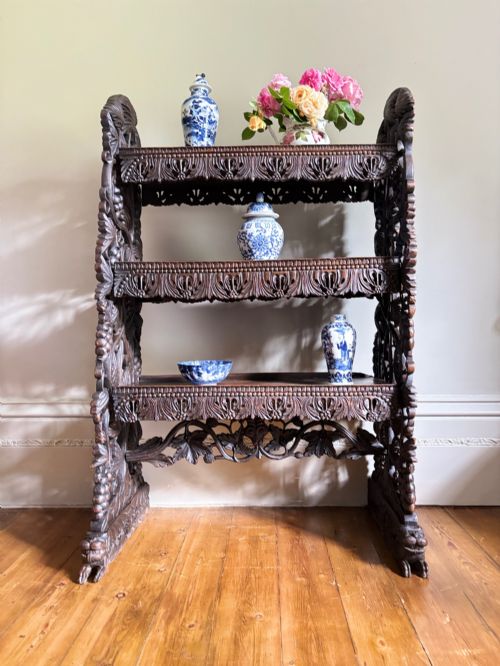
Glazed doors utilise brass fittings and astragal bars to divide the glass panes, while open library pieces often feature carved details and adjustable wooden shelving supported by peg systems. Metal ormolu mounts and carved wooden ornamentation finish the architectural facades of larger breakfront examples.
Listings feature eighteenth to twentieth-century pieces, spanning Georgian, Regency, Victorian, and Edwardian periods in mahogany, walnut, oak, and rosewood.
What varies in quality
The distinction between tiers rests upon timber selection and joinery execution, where figured grain matching and symmetrical veneer placement elevate a piece significantly. High quality examples demonstrate precise dovetail construction in the drawer boxes and uniform thickness across the adjustable shelving.
Proportion and architectural harmony define the superior pieces, particularly in breakfront forms where the central projection balances the flanking wings. Original surface patination and retention of period brass hardware further separate standard utility furniture from exceptional cabinet work.
Gillows·Wylie and Lochhead
The Large Wood Bookcase Glossary
- Breakfront
- A cabinet design where the central section projects forward from the flanking wings, creating a layered architectural facade. This configuration adds depth and visual rhythm to large library furniture.
- Astral glazing
- Wooden or brass bars that divide glass panes into geometric patterns within cabinet doors. These delicate frameworks support the glass whilst contributing to the overall decorative style.
- Vitrine
- An enclosed glass display cabinet designed primarily for the exhibition of porcelain, curiosities and fine objects rather than heavy book storage. They frequently incorporate mirrored backs and velvet-lined interiors.
- Flame mahogany
- A veneer cut from the branch junction of a mahogany tree, producing a distinctive rippled, flame-like pattern. Cabinet makers reserved this highly decorative timber for prominent drawer fronts and panel centres.
- Adjustable shelves
- Shelving supported by movable pegs or ratchets allowing the height between tiers to be altered. This practical mechanism appeared frequently in nineteenth-century library bookcases to accommodate varying book sizes.
Large Wood Bookcase: Frequently Asked Questions
How do I adjust the shelves?
Most period bookcases use wooden support pegs or metal rack strips set into the interior vertical sides. You simply lift the shelf clear of its supports and reposition the pegs into alternative holes at your preferred height.
Ensure you support the shelf evenly during removal to avoid damaging the interior veneer or straining the upright supports.
Are these bookcases suitable for heavy books?
Large library pieces constructed from solid mahogany, oak or walnut offer immense structural strength designed specifically for heavy volumes. The thick timber shelves resist sagging over long spans, particularly in open nineteenth-century library bookcases.
Overloading any antique shelf beyond its natural capacity can cause warping, so distribute heavier folios across the lower, deeper sections.
How do I distinguish Victorian from Regency pieces?
Regency bookcases, dating from the early nineteenth century, typically exhibit clean classical proportions, rosewood or mahogany timbers, and restrained brass inlay or grilles. Victorian examples from later in the century often display heavier proportions, darker patination, and more elaborate carving or breakfront massing.
Examining the construction methods inside the carcase and drawer interiors helps confirm the manufacturing era when stylistic indicators overlap.
Can glazed cabinets protect books from dust?
Enclosed glass doors create a barrier against dust, atmospheric moisture and direct sunlight, preserving delicate bindings over decades. This makes glazed breakfront cabinets ideal for housing leather-bound volumes and antiquarian books.
Ensure the door seals close evenly and the original glass remains intact within its astragal frame for optimal environmental protection.