





Large Vintage Mirror Plate
Large vintage mirror plate pieces bring deep historical reflection into a room, offering expansive glass surfaces framed in period timber and gilt.
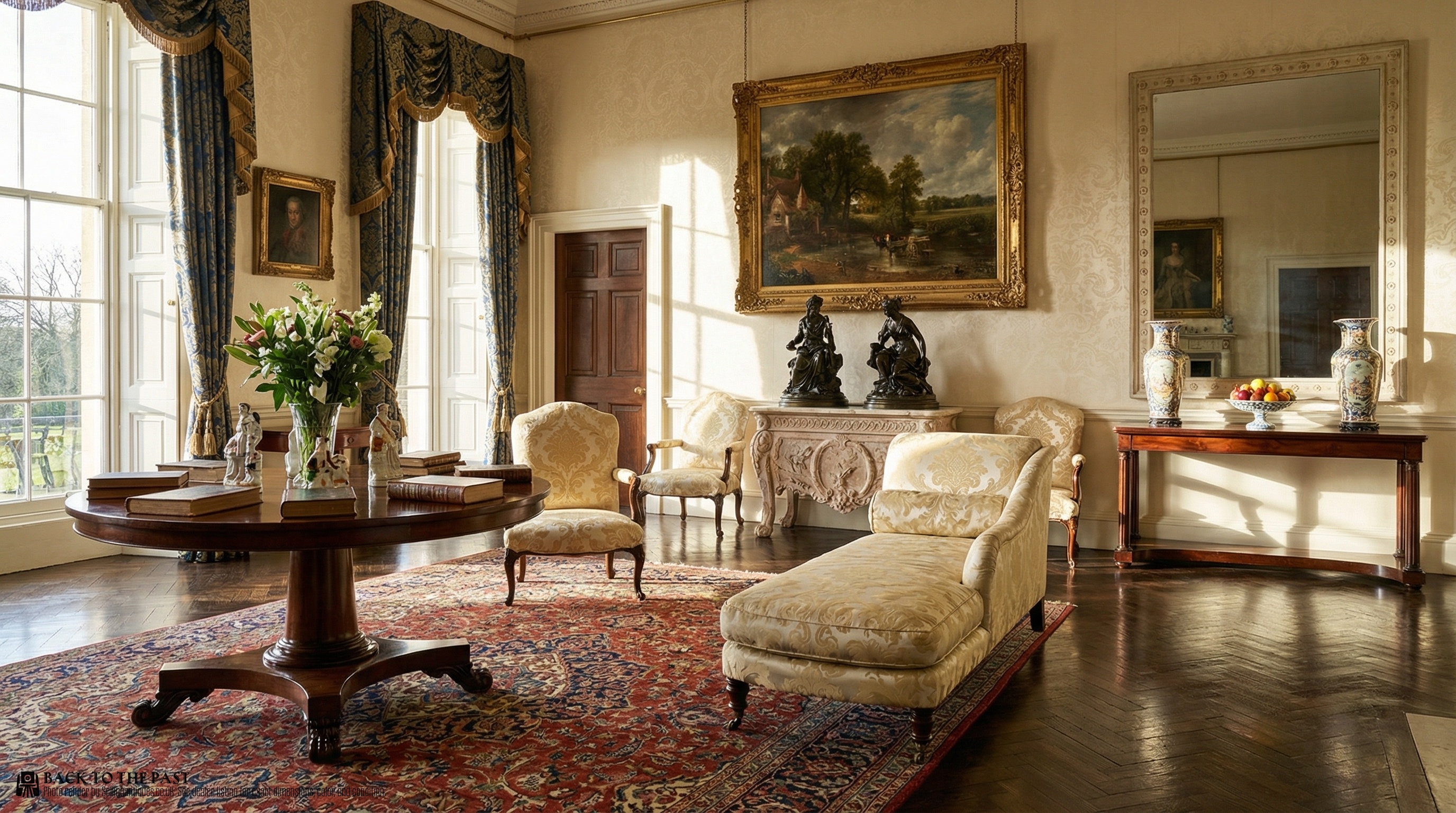
Large Vintage Mirror Plate
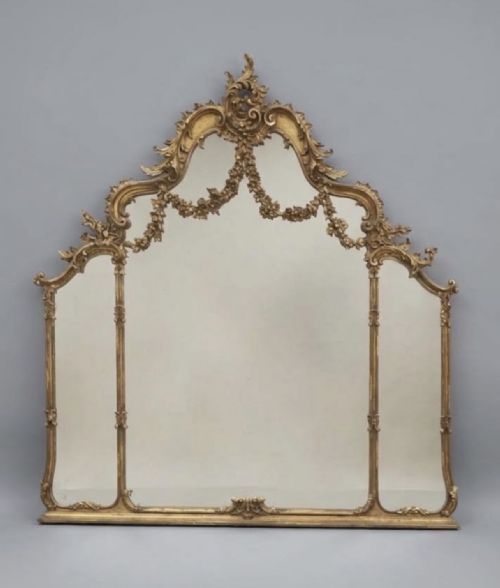
When you search for large vintage mirror plate, you are looking at substantial reflective pieces spanning the eighteenth century through to the early twentieth century. The selection encompasses wall mirrors, overmantel mirrors, and coat racks designed to anchor a room.
The versions you are most likely to meet on this page include nineteenth-century French and English designs, particularly overmantel mirrors and wall mirrors shaped by Regency, Victorian, and Rococo Revival aesthetics. These pieces combine substantial scale with period framing techniques.
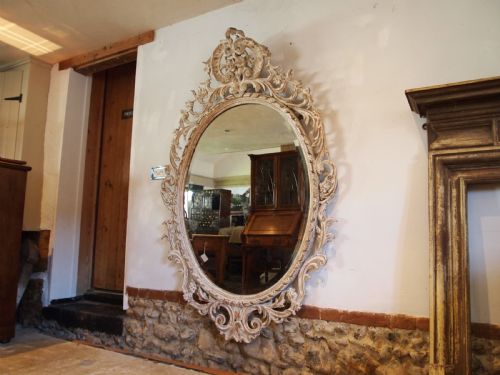
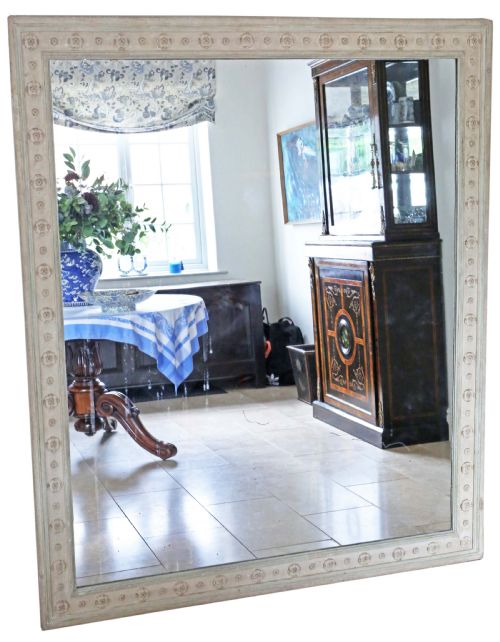
Origin and form vary across the inventory, ranging from Italian carved eighteenth-century plates to late Victorian gesso ovals and painted French bistro mirrors. Each object demonstrates the distinct proportions and framing methods characteristic of its specific period.
How they were made
Makers constructed the frames using woods such as pine, rosewood, and carved giltwood, often applying gesso layers to build up ornamental detail and relief work. Parcel-gilt and painted finishes were then applied to achieve the desired decorative appearance.
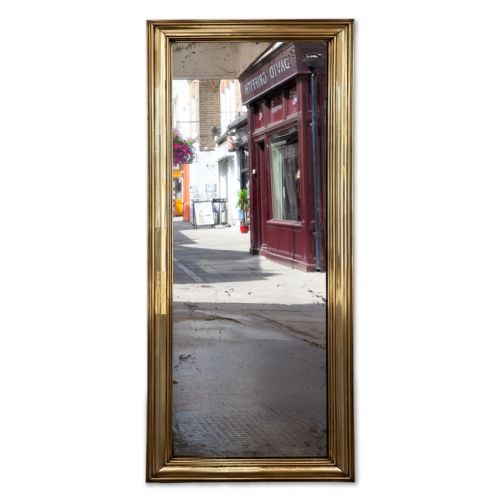
The reflective components utilise original plate glass and bevelled glass, sometimes showing the distinct patination of distressed plates over time. Brass elements occasionally appear on portmanteaus and coat racks as structural or decorative fixings.
A solitary silver plate cake stand sneaks into the archive, proving that even mirrors sometimes fancy a sweet treat.
What varies in quality
The standard of carving and the crispness of the gesso application separate finer frames from simpler examples, reflecting the skill of the original workshop. Deeply carved wood and intricate giltwood detailing indicate higher artisanal input.
The condition and originality of the mirror plate itself define the character of the piece, with original plates and bevelled edges holding distinct interest compared to later replacements.
The Large Vintage Mirror Plate Glossary
- Giltwood
- Wood that has been coated with gold leaf or a similar gilt finish. This technique was widely utilised on Regency and Victorian frames to create a luminous appearance.
- Gesso
- A plaster-like mixture applied to wood frames and sculpted into relief ornamentation before gilding or painting. It allows for intricate decorative mouldings.
- Overmantel mirror
- A large mirror specifically designed to hang above a fireplace mantelpiece. These pieces often feature horizontal proportions suited to architectural settings.
- Bevelled glass
- Glass with an edge that has been cut and polished to an angle thinner than the rest of the pane. This creates a prismatic framing effect around the perimeter.
- Pier mirror
- A tall, narrow mirror designed to fit on the wall space between windows. They frequently appeared in nineteenth-century interiors to maximise light.
Large Vintage Mirror Plate: Frequently Asked Questions
How do I hang a heavy overmantel mirror?
Substantial pieces require professional wall fixings secured directly into structural studs or masonry to support the weight safely.
Ensuring the hanging wire or brackets match the mass of the timber frame prevents movement over time.
Are the mirror plates original?
Many examples retain their original glass, which often exhibits gentle foxing, light oxidation, and surface variation.
Original plates contribute historical depth and distinguish period pieces from later replacements.
How do I clean antique glass?
Wipe the surface gently with a soft microfibre cloth and a mild, ammonia-free glass cleaner applied to the cloth rather than directly to the glass.
Avoid spraying liquid near the edges where it might seep behind the plate and damage the silvering.
What defines a French Chateau style mirror?
French Chateau style pieces typically feature ornate carved woodwork, crestings, and painted or parcel-gilt finishes suited to grand interiors.
Their proportions often lean towards the tall and decorative, reflecting nineteenth-century continental tastes.
Can these mirrors be used in a hallway?
Large reflective surfaces function effectively in entrance halls by bouncing natural light into narrower spaces.
Overmantel and wall mirrors both adapt well to hallway placements depending on the available wall dimensions.