





Large Victorian Garden Urns
Large victorian garden urns anchor an outdoor space with classical proportion, bringing nineteenth-century presence to modern terraces and lawns.
Large Victorian Garden Urns
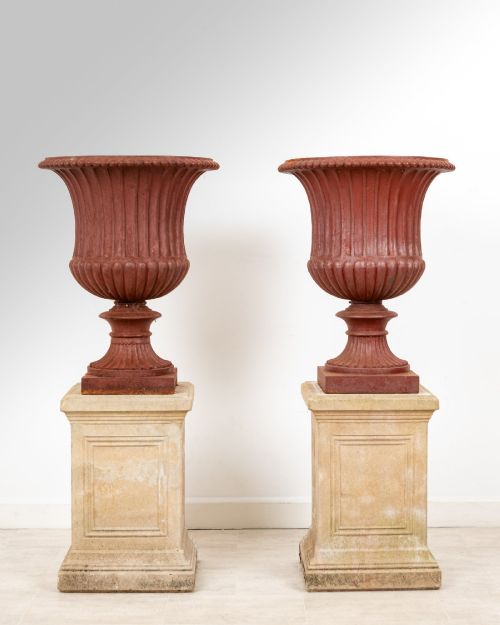
Large victorian garden urns are classical garden vessels shaped for planting and display across nineteenth-century grounds, orangeries, and patios. They draw on neoclassical and classical revival designs, often standing upon matched pedestals to elevate the planting above ground level.
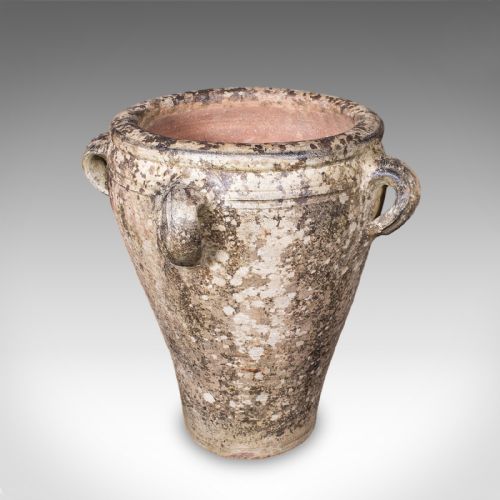
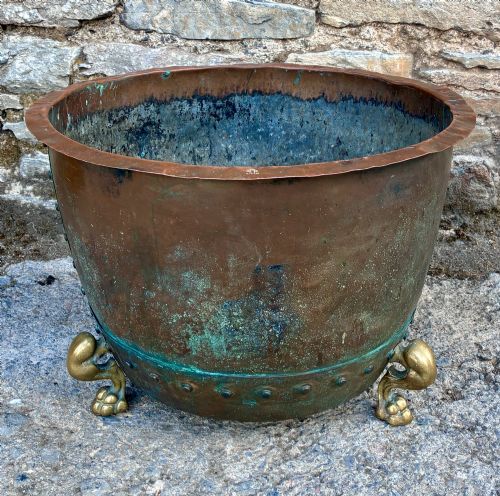
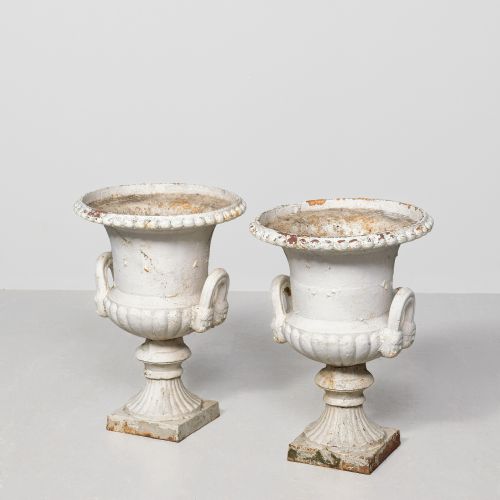
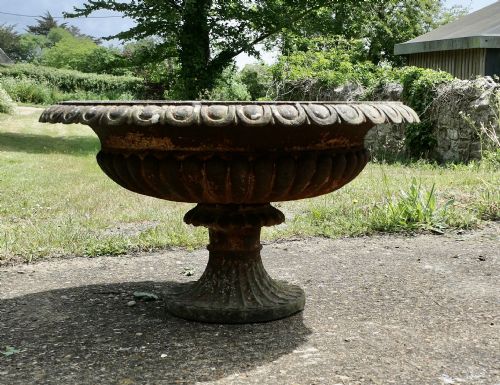
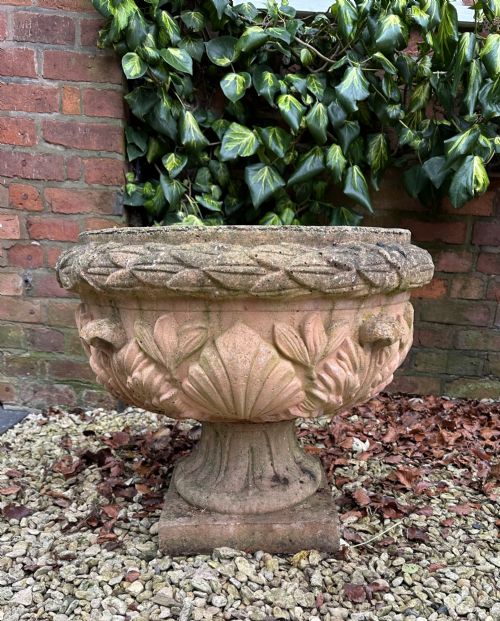
The most common forms on this page are cast iron Campana urns and tazza urns, alongside terracotta planters and copper vessels. These pieces span the nineteenth century and later periods, capturing the architectural ambitions of Victorian landscape design.
How they were made
Foundries cast these heavy garden urns in iron using moulds, producing thick walls capable of withstanding weathering and frost. Other pieces employ terracotta, shaped and fired to create porous planters suited to traditional garden cultivation.
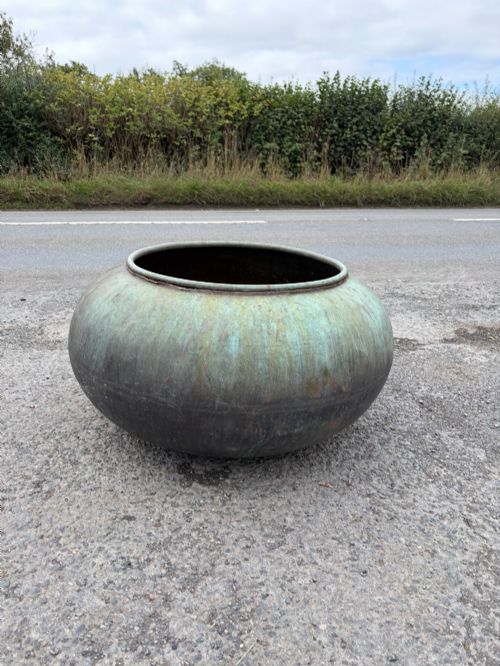
Metal vessels often feature riveted construction, particularly in copper boilers and pots, whilst stone and reconstituted stone provide alternative durable bodies. Surface treatments include paint finishes and natural weathering developed over decades outdoors.
Large Victorian Garden Urns Retail Price Guide 2026
Typical asking prices for large victorian garden urns among the pieces listed under this phrase on Sellingantiques today, from the lower quarter to the upper quarter. They describe what is for sale here now, not the wider market.
Several large vessels originally served as industrial copper boilers before retiring to quiet garden service as ornamental planters.
What varies in quality
The distinction between ordinary and exceptional pieces lies in the crispness of the casting and the classical proportion of the handles, rims, and footed bases. Foundry work from established makers yields sharper botanical and classical relief detail.
Durability and material integrity separate robust survivors from heavily degraded examples. Uniformity in pairs, original pedestals, and honest weathering without structural compromise command greater appreciation among collectors.
Dunfermline Clay Company·Andrew Handyside·Lipscombe and Co
The Large Victorian Garden Urns Glossary
- Campana urn
- A bell-shaped garden vessel with an everted rim and footed base. This form dominates nineteenth-century cast iron production.
- Tazza
- A shallow bowl-shaped vessel elevated on a stem and foot. These pieces function as wide planters or decorative centrepieces.
- Jardiniere
- An ornamental pot or stand designed for holding plants or flowers. They appear in cast iron, terracotta, and copper forms.
- Reconstituted stone
- A durable material made from crushed stone and binding agents moulded into classical garden ornaments. It mimics natural stone whilst offering consistent structural strength.
Large Victorian Garden Urns: Frequently Asked Questions
Can large garden urns stay outside all winter?
Most cast iron and stone vessels tolerate frost well, though terracotta requires monitoring during hard freezes to prevent cracking.
Elevating pots on pot feet or brick supports prevents moisture from freezing at the base and splitting the material.
How do I pair urns with pedestals?
Matching the weight and material of the urn to its pedestal ensures stability on lawns and gravel paths. Stone or concrete plinths support heavy cast iron Campana urns securely.
Proportion guides the pairing, ensuring the base does not overwhelm the vessel or leave it top-heavy.
What is the difference between an urn and a planter?
Urns typically feature a footed stem and classical bell or bowl profile, often serving a purely ornamental role alongside planting. Planters encompass broader rectangular or tub-like forms intended mainly for botanical display.
Victorian makers frequently used the terms interchangeably for garden vessels.
How do I clean an antique cast iron urn?
Gentle brushing removes surface dirt and loose debris without disturbing the historic paint or aged patina underneath. Avoid harsh chemical strippers that strip protective oxide layers from the metal.
Applying a light coat of oil or wax protects exterior iron surfaces from active rust.