
Large Victorian Clothes Press
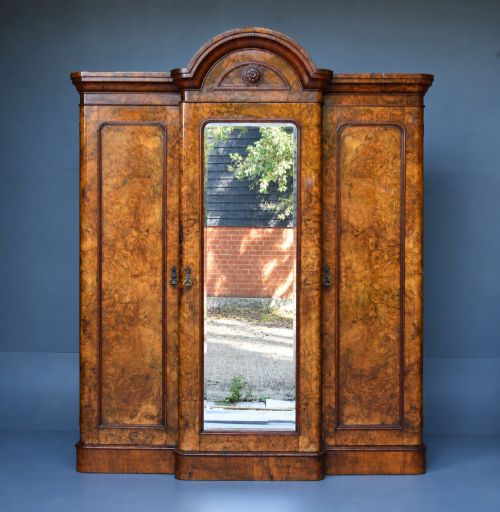
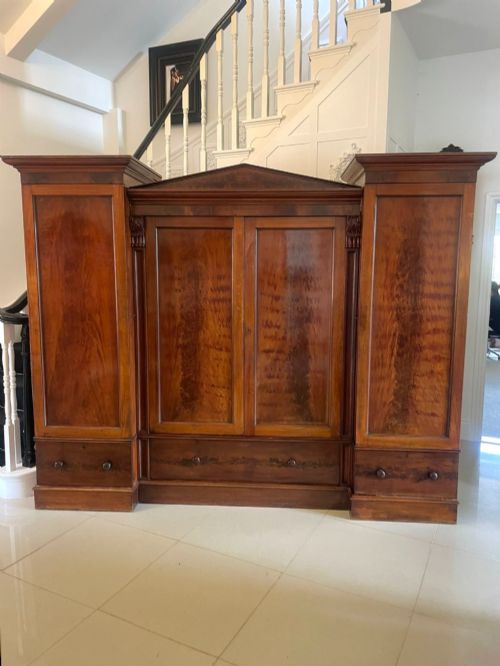
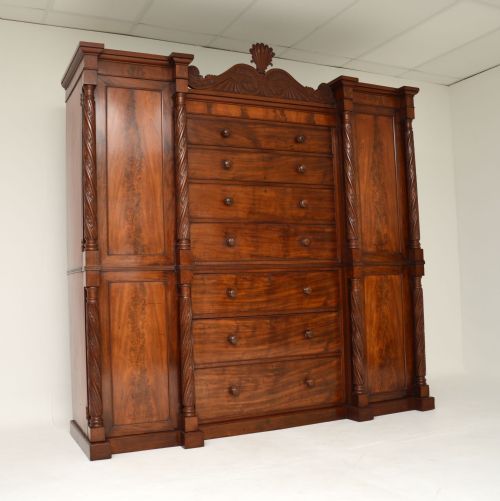
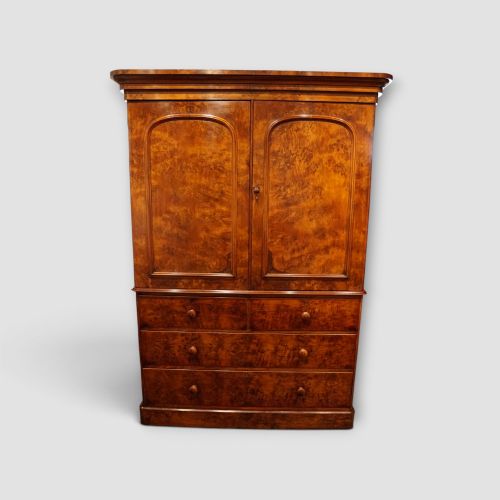
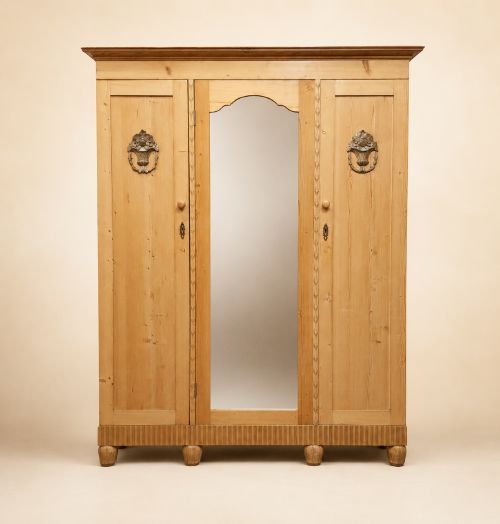
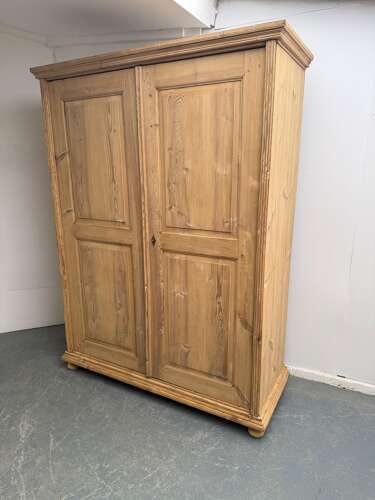
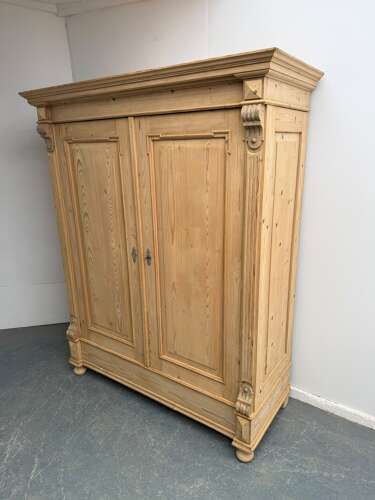
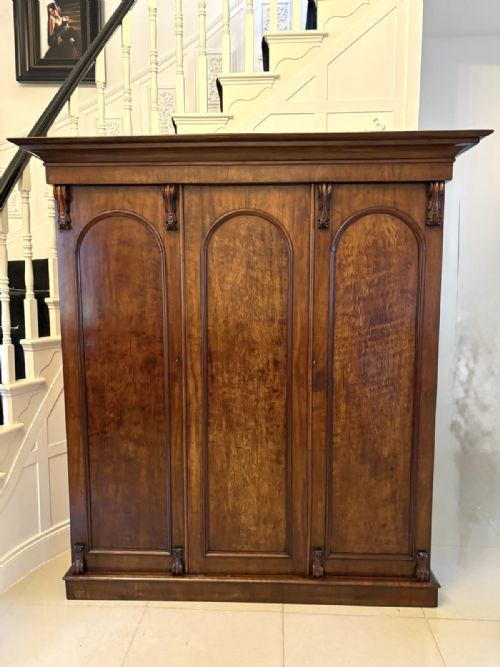
A large victorian clothes press provides substantial domestic storage, taking the form of tall wardrobes and linen cabinets built to house historical garments.
Large Victorian Clothes Press
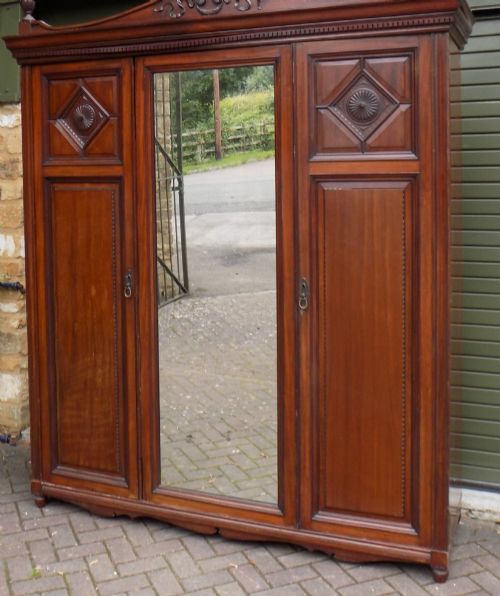
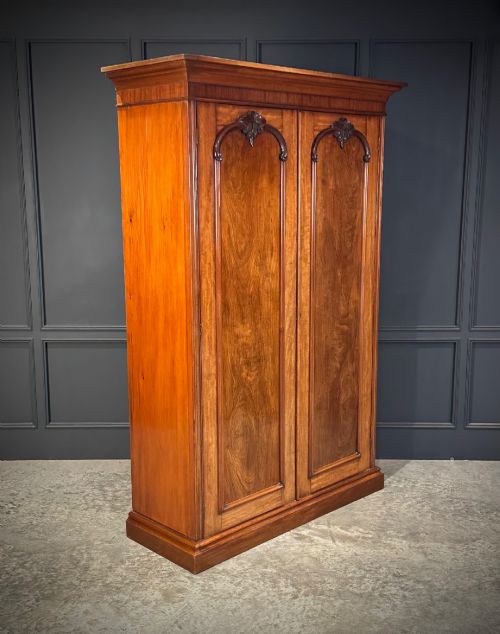
A large victorian clothes press appears primarily as a grand wardrobe or linen press, originating mainly from the nineteenth century across periods such as the Victorian and William IV eras. These substantial pieces serve to store garments and household textiles in domestic bedrooms and dressing rooms.
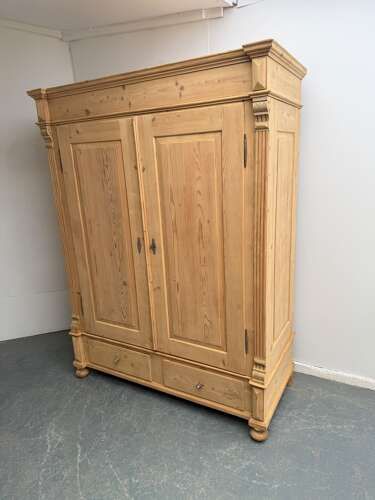
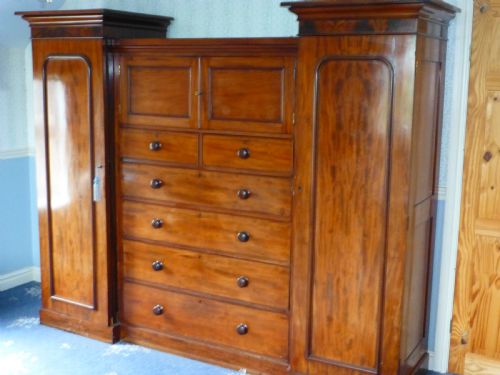
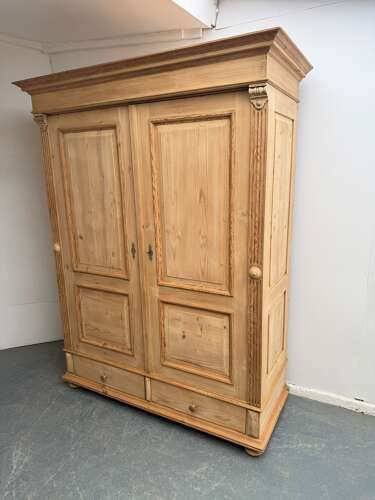
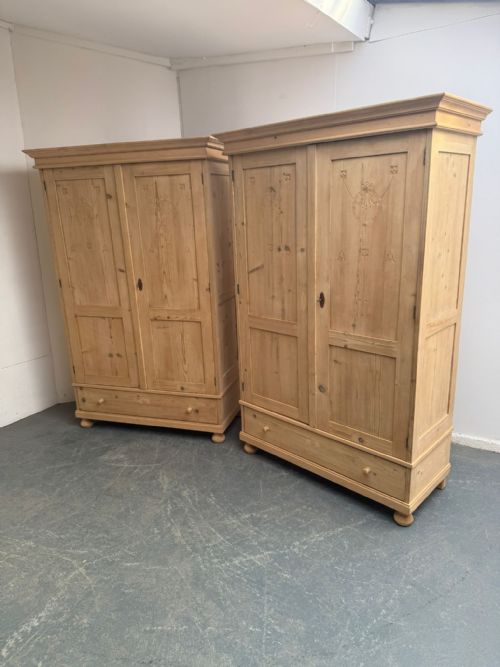
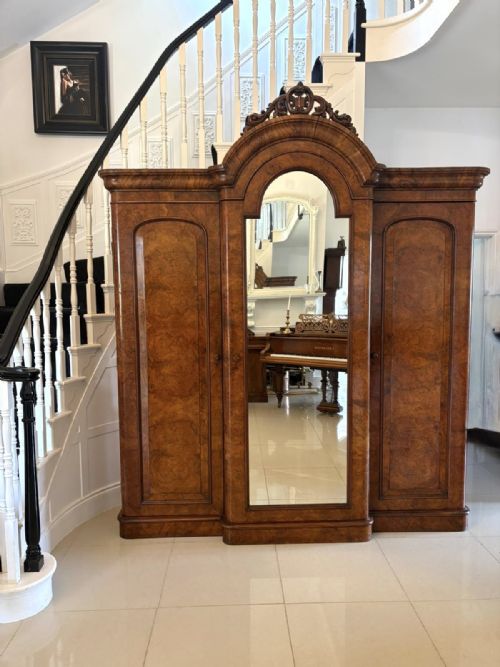
Buyers meet multiple structural variants on this page, including double and triple wardrobes, breakfront compactums, and knockdown pine cabinets designed for straightforward transport. Woods such as mahogany, walnut, burr walnut, and pine dominate the selection, occasionally supplemented by specialised fixtures.
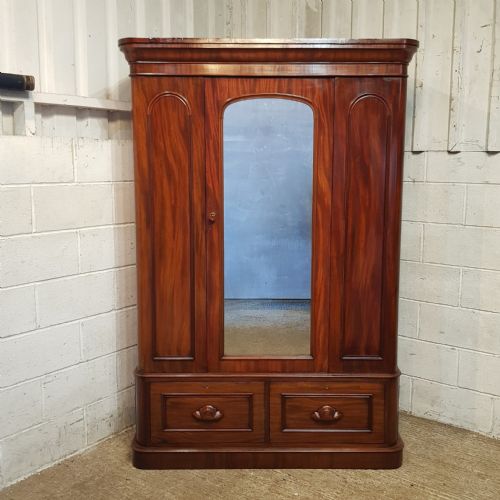
Originating from English country houses and urban residences alike, these items range from simple painted pine storage units to heavily figured mahogany and burr walnut masterworks. Certain examples incorporate mirrored doors, internal drawers, and fitted sliding trays for linen.
Materials and Construction
Carpenters utilised dense hardwoods like mahogany, walnut, and rosewood, alongside softer timbers such as pine and pitch pine, selecting each for its structural strength and grain pattern. Figured veneers and burr walnut added decorative surface movement to prominent door panels and cornices.
Many large pine examples were constructed as knockdown pieces, allowing dismantling through pegged or bolted joints for movement between rooms. Brass hardware, iron fittings, and glass mirror plates completed the assembly of these heavy nineteenth-century cabinets.
Listings feature woods spanning mahogany, walnut, burr walnut, rosewood, satinwood, pollard oak, and pine.
Markers of Quality
Gradations in quality depend heavily on the selection of timber, such as highly figured flame mahogany or carefully matched burr walnut veneers rather than plain secondary woods. Cabinetmaking finesse shows in tight joinery, balanced proportions, and the inclusion of original internal fittings like sliding linen trays.
The presence of sophisticated stylistic details - such as breakfront facades, columned pilasters, and inlaid rosewood or satinwood stringing - separates standard utility furniture from high-status architectural pieces. Original hardware, intact mirrored glass, and functional knockdown mechanisms further elevate the standing of an individual wardrobe.
Gillows·Robert Strahan of Dublin
The Large Victorian Clothes Press Glossary
- Compactum
- A multi-section wardrobe combining hanging space, drawers, and shelving within a single large carcass. This form maximises storage efficiency in nineteenth-century bedrooms.
- Knockdown
- A piece of furniture designed to dismantle into separate panels and sections for ease of transport and assembly. This method was particularly common in large pine wardrobes.
- Breakfront
- A cabinet facade where the central section projects forward from the flanking wings. This architectural arrangement creates depth and visual interest on large triple wardrobes.
- Linen Press
- A tall storage piece containing sliding trays in the upper section and drawer storage below, originally intended for folded textiles. They often share similar proportions to large wardrobes.
- Burr Walnut
- Timber taken from the warted growths on walnut trees, yielding complex, swirling grain patterns used for decorative veneer. Cabinetmakers applied it selectively to primary display surfaces.
Large Victorian Clothes Press: Frequently Asked Questions
How do I assemble a knockdown wardrobe?
Knockdown wardrobes dismantle into separate panels, cornices, bases, and internal modules to facilitate movement through narrow hallways and up stairs. Sections typically lock together using internal bolts, wooden pegs, or sliding brackets rather than permanent glue.
Buyers should inspect the original jointing mechanisms and alignment slots upon delivery to ensure stable reassembly. Having an extra pair of hands assists greatly in supporting the heavy timber panels during the process.
What is a compactum wardrobe?
A compactum is a specialised multi-compartment wardrobe designed to offer comprehensive clothing storage within a single unified case. These interiors commonly combine hanging space, linen drawers, and vertical shelving units.
Originating during the nineteenth century, they provide an alternative to separate wardrobes and chests of drawers. Their larger footprint suits spacious Victorian bedrooms and dressing rooms.
How do I care for antique mahogany furniture?
Antique mahogany surfaces benefit from regular dusting with a soft, dry cloth to prevent the accumulation of airborne particles. Avoid placing timber pieces near direct heat sources or strong sunlight to prevent veneer lifting and wood drying.
Occasional application of traditional beeswax helps nourish the grain and maintain the natural sheen of the polished wood. Avoid modern silicone-based sprays, which can penetrate and damage historic finishes.
Can I paint a pine wardrobe?
Many nineteenth-century pine wardrobes survive in raw or stripped states explicitly prepared for waxing or painting. Applying a breathable paint finish allows owners to adapt these versatile storage pieces to contemporary interior colour schemes.
Preparation involves lightly sanding the pine surface and applying an appropriate primer to seal any resin knots in the wood. Historic hardware should be removed prior to painting to ensure a clean finish.