

Large Upholstered Stool
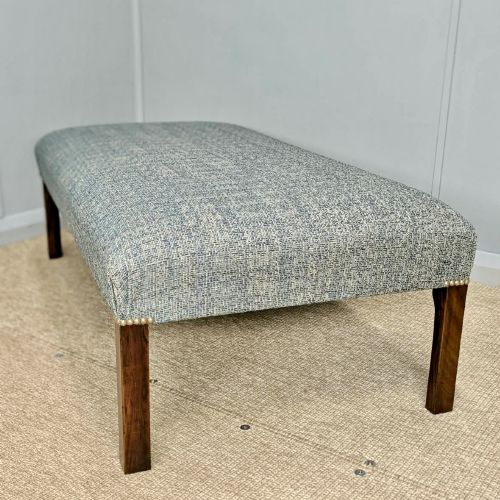
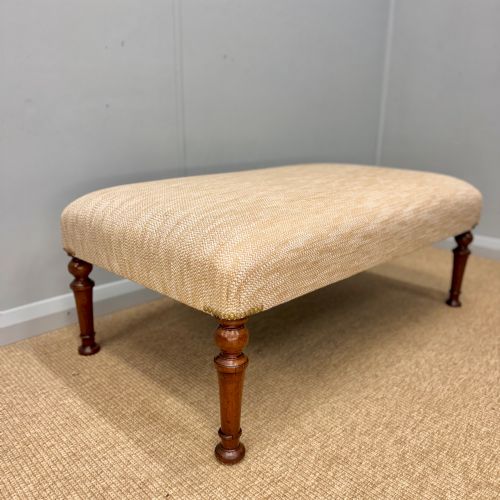
A large upholstered stool brings substantial presence and comfort to a room, offering versatile seating or a place to rest feet.
Large Upholstered Stool
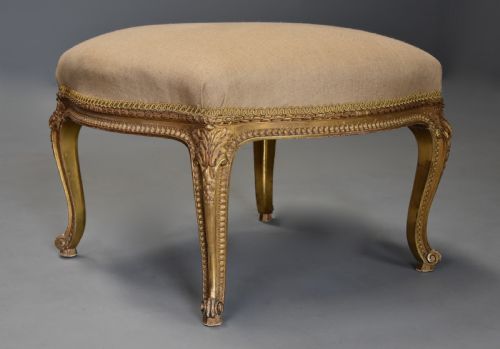
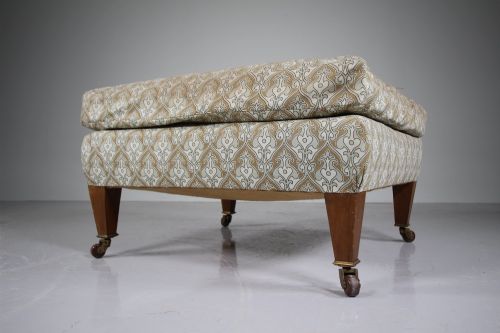
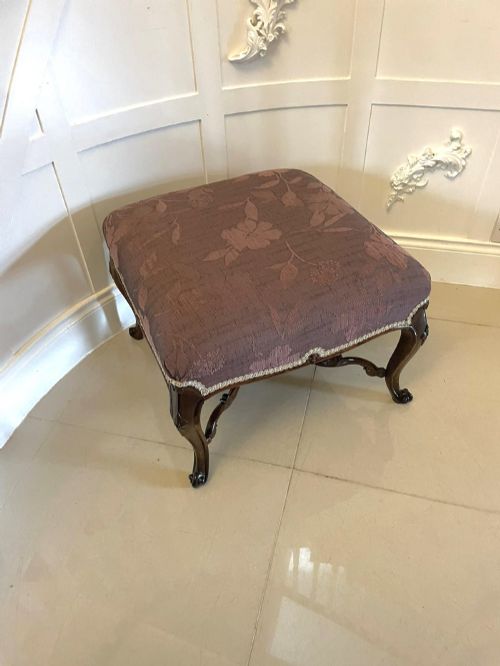
A large upholstered stool serves multiple functions within a home, appearing as a footstool, ottoman, centre stool, or window seat depending on its proportions and placement. When you search for a large upholstered stool, you encounter pieces originating primarily from the nineteenth century, including Victorian, Regency, and William IV periods.
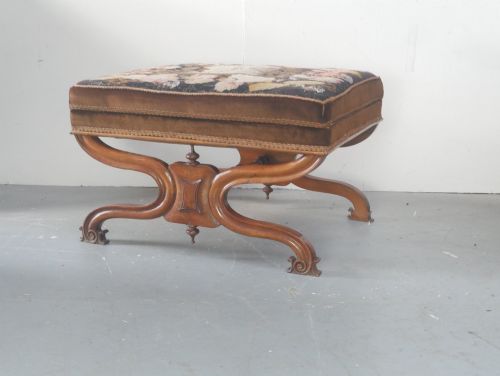
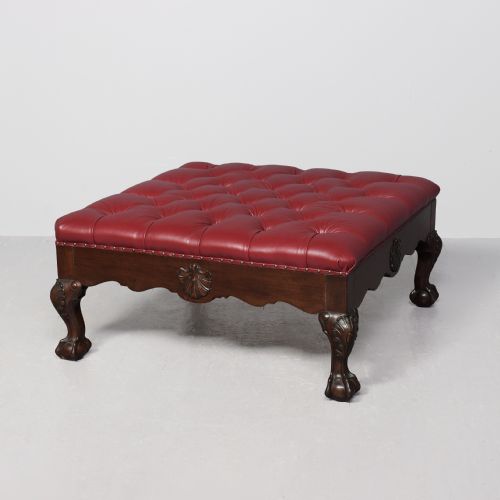
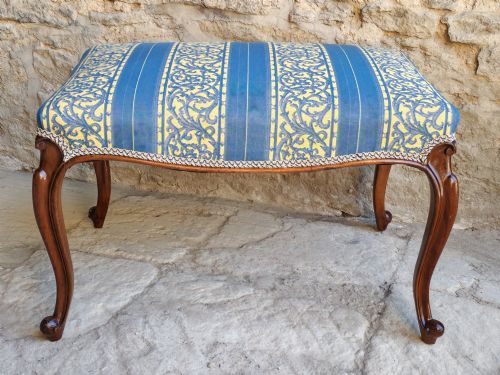
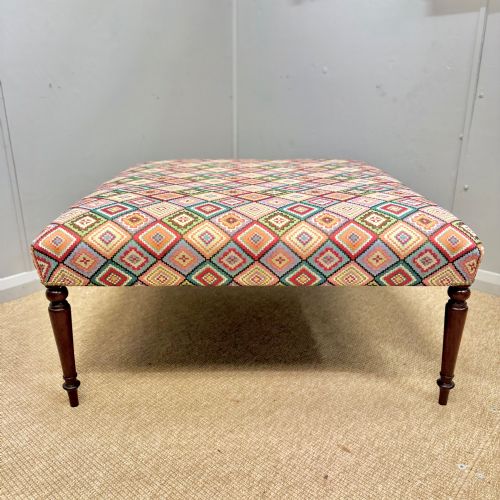
The forms span various regional and stylistic influences, ranging from English country house seating and Scottish baronial designs to French rococo revival and Anglo-Indian creations. Many pieces feature substantial timber frames paired with textiles such as velvet, leather, chenille, or needlework tops.
Makers and workshops of the era produced these stools on grand scales for domestic interiors, utilising robust hardwoods. You find both low fireside models and larger centre stools designed to anchor a room.
How they were made
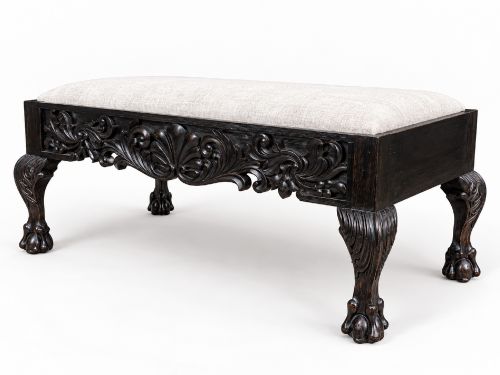
Frames rely on timbers such as mahogany, rosewood, walnut, oak, and calamander, often shaped with carved details or giltwood finishes. Joinery traditions of the period ensured these heavy frames could support substantial weight.
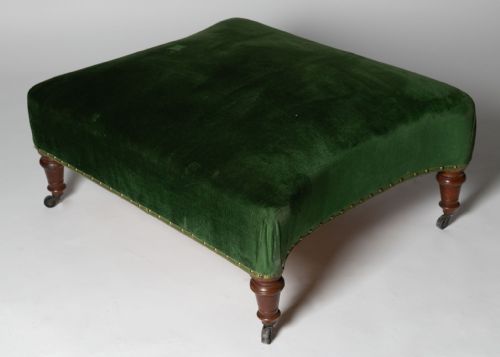
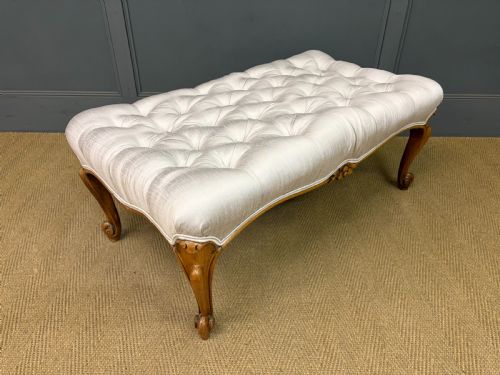
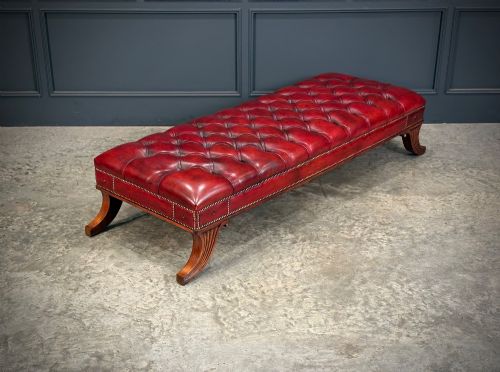
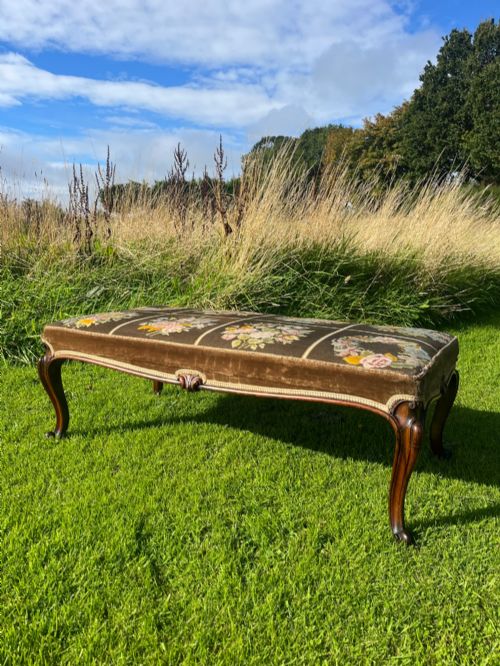
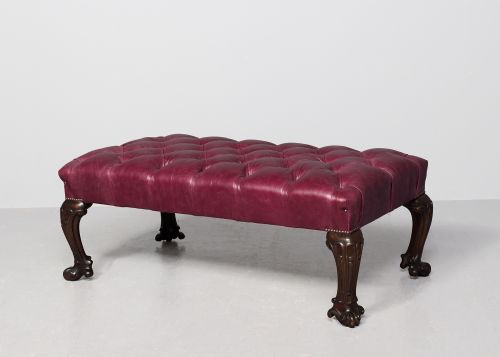
Upholstery techniques involved buttoning, hide coverings, and needlework such as gros-point, supported by internal webbing and stuffing. Brass castors frequently appeared on the feet to allow movement across heavy carpets.
Large Upholstered Stool Retail Price Guide 2026
Typical asking prices for large upholstered stool among the pieces listed under this phrase on Sellingantiques today, from the lower quarter to the upper quarter. They describe what is for sale here now, not the wider market.
Several stools hide modest brass wheels on their feet, proving that even Victorian ancestors preferred to roll their heavy furniture rather than lift it.
What varies in quality
Quality rests in the crispness of the frame carving, the selection of dense timbers like rosewood or mahogany, and the structural integrity of the joinery. Pieces carrying maker or retailer stamps indicate higher workshop provenance.
The standard of the upholstery work and the choice of covering materials, from red hide to original needlework, distinguish standard production from exceptional examples.
LOIDRAULT FRERES PARIS·Hallett & Sons
The Large Upholstered Stool Glossary
- Centre stool
- A large stool designed to stand freestanding in the middle of a room rather than against a wall. These pieces often feature finished woodwork on all sides.
- Gros-point
- A type of durable needlepoint embroidery executed on coarse canvas, frequently seen on historical stool and ottoman tops. It provides a heavily textured surface.
- Cabriole leg
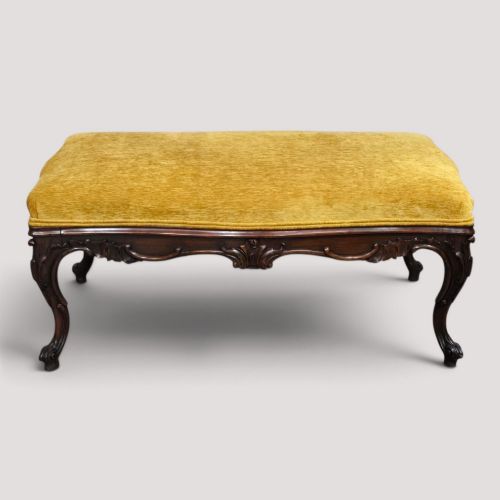
- A furniture leg that curves out and then in, resembling the leg of an animal. This form appears frequently on walnut and mahogany frames.
- Giltwood
- Timber that has been coated with a thin layer of gold leaf. It is common on French revival seating from the nineteenth century.
- Hide
- Untanned or tanned heavy cattle leather used for upholstery. Red and burgundy hide variations feature on nineteenth-century footstools.
Large Upholstered Stool: Frequently Asked Questions
Where do I place a large upholstered stool?
A large upholstered stool sits comfortably in the centre of a living room to function as a coffee table substitute or extra seating. It also works effectively at the end of a bed or positioned beneath a large window.
Because these pieces have substantial proportions, ensure adequate floor clearance around them for comfortable movement through the room.
How do I identify a Victorian stool?
Victorian stools often feature dense timbers like rosewood or walnut, combined with deep buttoning and turned or cabriole legs. Many examples incorporate brass castors on the feet to assist with manoeuvring.
Construction methods from this era typically involve robust hardwood frames designed to carry heavy fabric or leather upholstery.
Can I use a stool as a coffee table?
Many large upholstered stools function well as coffee tables by placing a solid tray on top of the fabric or leather surface. This provides a stable platform for drinks while maintaining soft seating nearby.
Leather and durable hide surfaces cope particularly well with daily living demands when utilised in this manner.
What is the difference between an ottoman and a footstool?
Ottomans generally offer larger proportions and sometimes include internal storage compartments beneath the top. Footstools tend to focus purely on height and surface area for resting feet or sitting.
Both forms utilise similar timber framing and upholstery techniques across nineteenth-century examples.