




Large Upholstered Bench
A large upholstered bench offers deep seating and substantial presence, bringing period character and practical comfort to any room.
Large Upholstered Bench
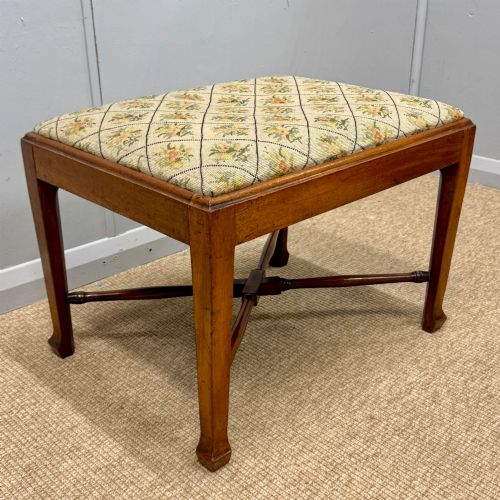
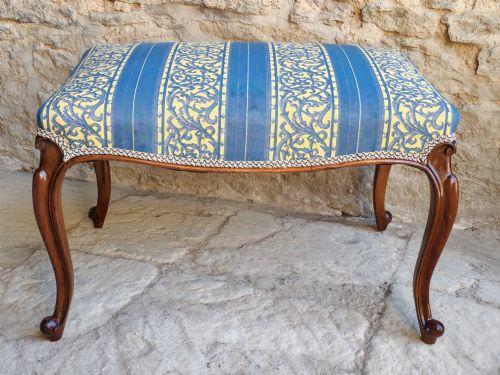
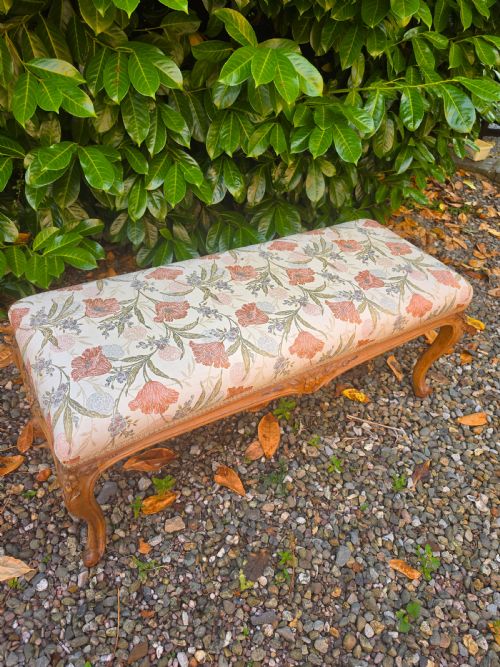
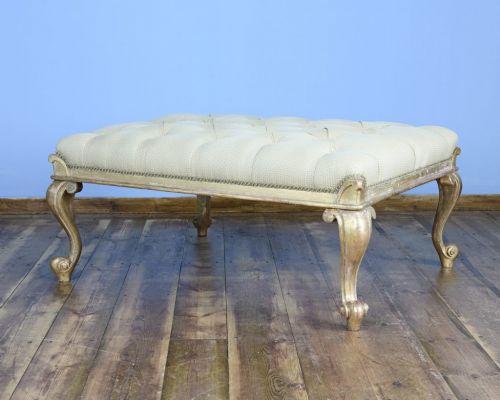
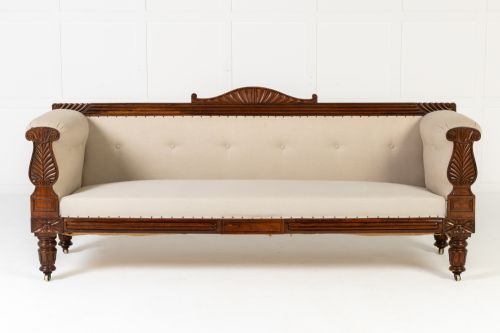
A large upholstered bench encompasses a variety of substantial seating forms, including generous footstools, ottomans, centre stools, window seats and spacious sofas spanning the eighteenth century through to the early twentieth century. When searching for a large upholstered bench, buyers frequently encounter pieces shaped by Victorian, Regency, William IV and Georgian sensibilities, alongside robust English country house styles.
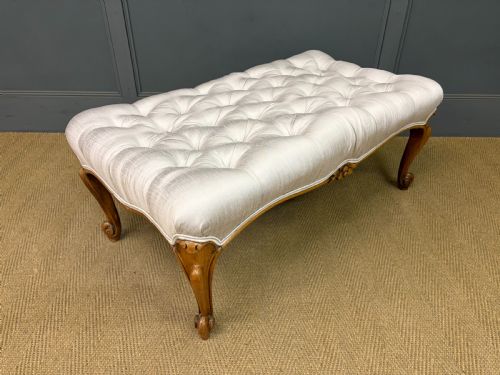
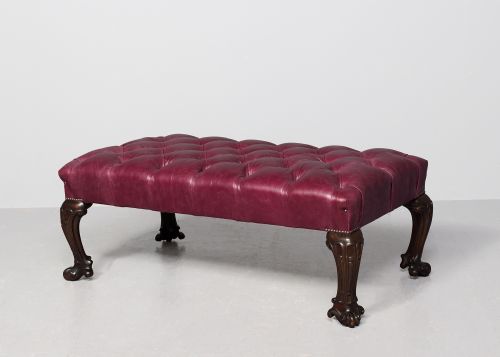
The selection ranges from low footstools on brass castors to grand scale parcel gilt footstools and carved mahogany hall seats, reflecting diverse domestic uses across different eras. Walnut, rosewood, mahogany and giltwood frame these textiles, creating focal points designed for prominent placement in reception rooms, dressing areas and hallways.
Materials and construction
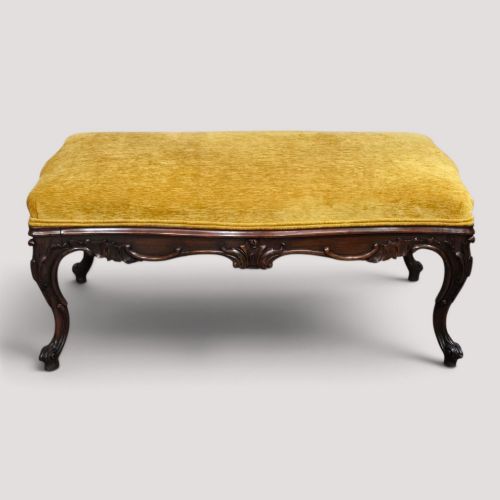
Frames rely on dense timbers such as mahogany, walnut and rosewood, frequently shaped with cabriole legs, cross stretchers or elaborate carving characteristic of Regency and Victorian workshops. Giltwood and parcel gilt finishes appear on pieces intended for formal interiors, while brass castors provide mobility to heavier frames.
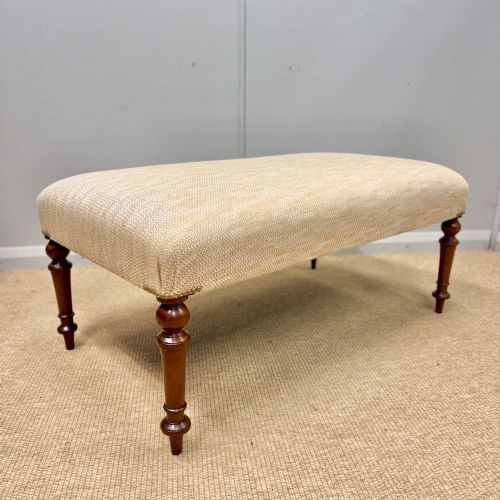
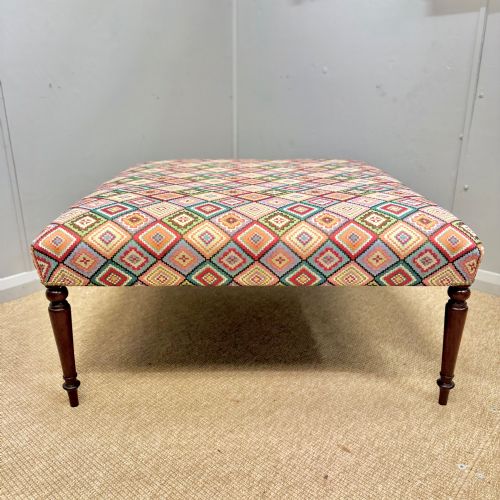
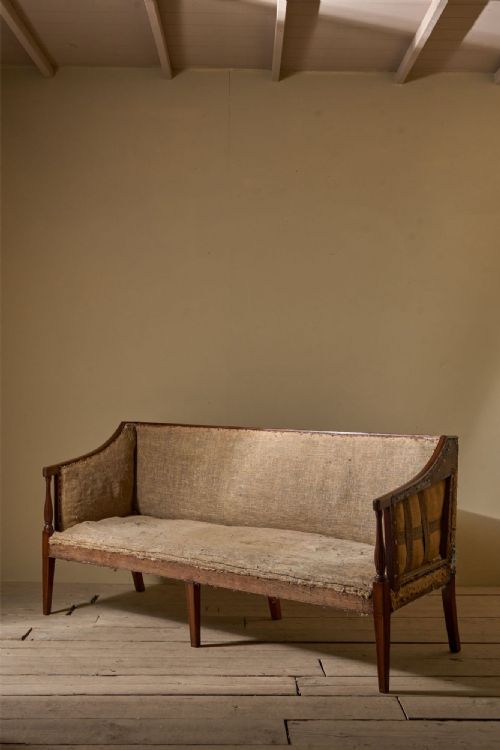
Upholstery materials span buttoned red hide, leather, Hessian and various decorative fabrics, supported by traditional internal stuffing and springing. Selected pieces retain earlier upholstery or arrive prepared for reupholstering.
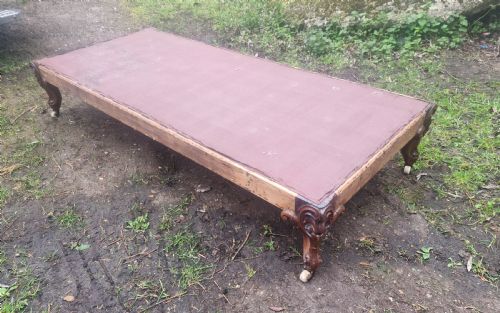
Several generous ottomans arrive ready for a fresh coat of fabric, having spent over a century supporting weary feet in English country houses.
Distinctions in quality
The architectural integrity of the wooden frame dictates the baseline of quality, separating robustly joined mahogany and rosewood structures from lesser or heavily altered timber carcases. Carving depth and precision, particularly on cabriole legs or giltwood surfaces, reveal the skill invested by the original maker.
The retention of original show wood, sophisticated framing geometry, and sympathetic upholstery choices elevate certain pieces above standard utility seating, distinguishing formal centre furniture from simpler country house items.
Hallett & Sons
The Large Upholstered Bench Glossary
- Centre stool
- A large freestanding stool designed to be viewed from all sides, frequently placed in the middle of a spacious room.
- Ottoman
- A padded seat or footstool without a back or arms, often incorporating internal storage or substantial dimensions.
- Cross stretcher
- An intersecting wooden brace connecting the legs of a stool or table to provide structural stability and visual balance.
- Giltwood
- Timber treated with gold leaf or gilt finish, commonly utilised on formal nineteenth-century and revival seating frames.
- Cabriole leg
- A furniture leg featuring a double curve, curving outward at the knee and inward at the ankle, typical of finer period designs.
Large Upholstered Bench: Frequently Asked Questions
Where should I place a large upholstered bench?
These substantial pieces anchor large reception rooms, serving as coffee table alternatives or generous footrests before a sofa. They also suit the foot of a bed or a spacious hallway.
Their substantial footprint requires adequate clearance around the perimeter to maintain comfortable movement and proper visual balance within the room.
How do I identify a Regency period bench?
Regency examples often feature dark rosewood or mahogany timbers, with clean architectural lines, brass castors, and restrained classical ornamentation reflecting early nineteenth-century taste.
Pay attention to leg turning, stretcher configuration, and timber density, which distinguish genuine period production from later revival pieces.
Can I use an ottoman as a coffee table?
Sturdy upholstered benches and ottomans with firm padding accommodate trays easily, making them functional surfaces for books and decorative objects.
Leather and tight-woven fabric upholstery tolerate everyday placement of household items better than delicate silks or loose textiles.
What is the difference between a centre stool and a footstool?
Centre stools are designed for prominent placement in the middle of a room and often possess decorative finish on all four sides. Footstools are typically lower and scaled to accompany specific seating arrangements.
Both forms share robust wooden framing beneath textile upholstery, though centre stools frequently display more ambitious carving and joinery.