


Large Storage Drawers
Large storage drawers offer substantial capacity for holding household goods, uniting practical utility with period character across diverse timber finishes.
Large Storage Drawers
Large storage drawers encompass an array of robust forms designed for domestic and commercial organisation. When searching for large storage drawers, buyers meet pieces spanning the eighteenth, nineteenth, and early twentieth centuries, originating from British, European, and regional workshops.
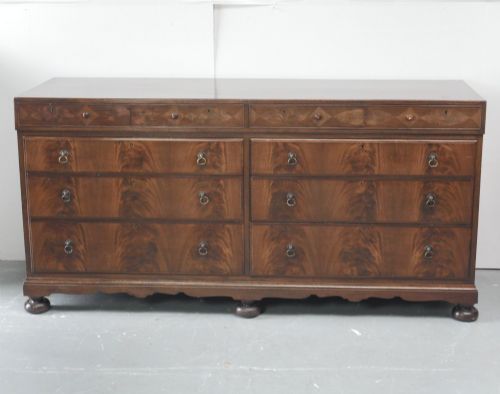
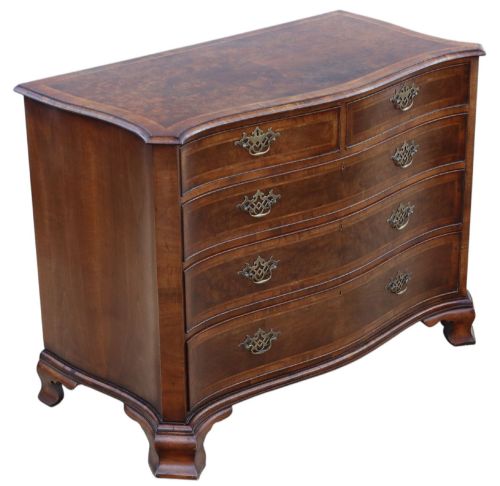
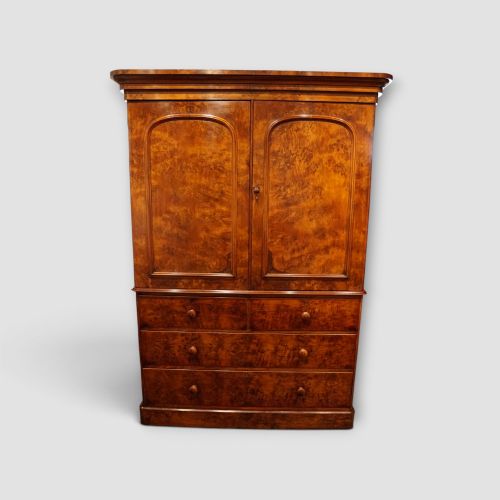
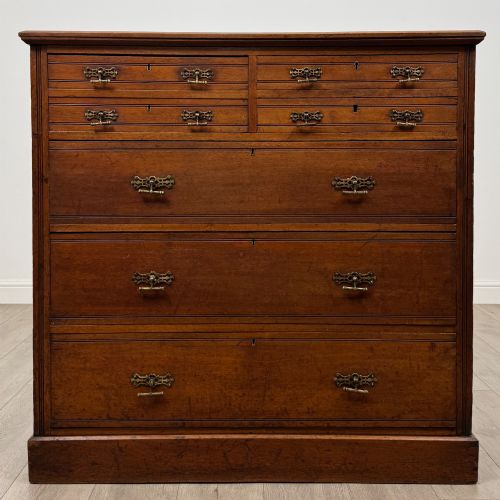
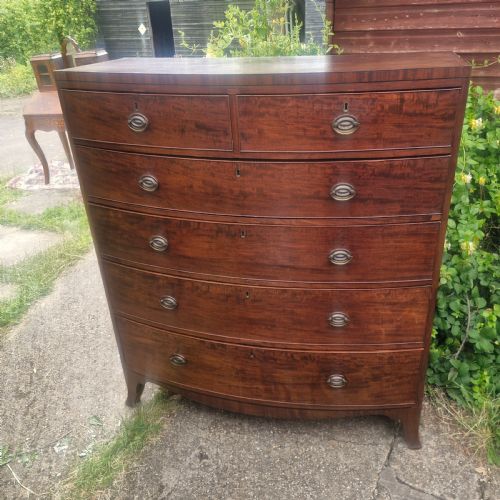
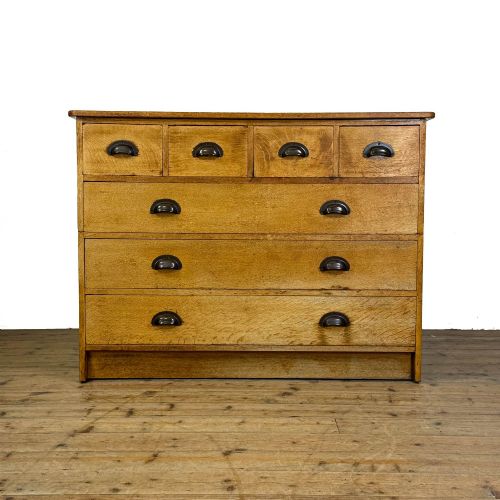
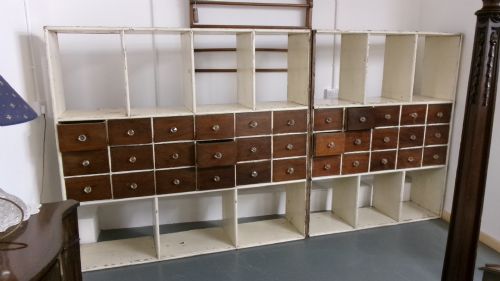
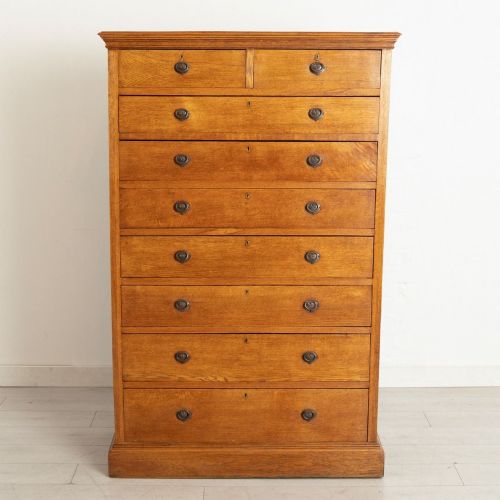
The selection ranges from classic mahogany and walnut chests to utilitarian pine shop fittings, bank of drawers, and linen presses. Pieces such as Georgian mule chests, Victorian dressers, and Edwardian plan chests populate the range, reflecting shifting domestic needs for capacity and display.
Regional variations appear frequently, including Scottish scotch chests and Lancashire dresser bases in oak and mahogany. These forms demonstrate how makers adapted standard storage requirements to local aesthetic preferences and spatial demands.
Materials and Construction
Construction relies heavily on solid native and imported timbers, including pine, mahogany, oak, walnut, and flame mahogany veneers. Cabinet makers utilised traditional joinery techniques, mounting drawer boxes with dovetailed joints and incorporating brass hardware for pulls and escutcheons.
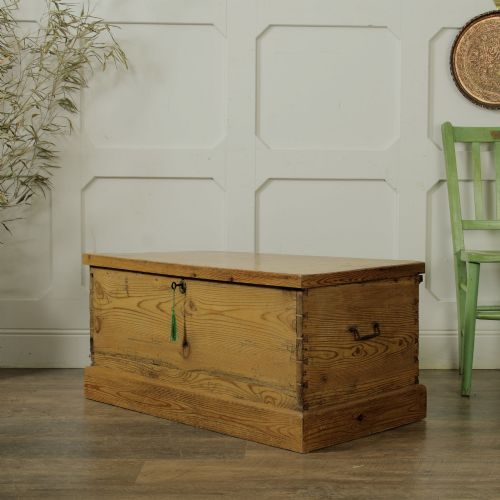
Secondary timbers support primary facades, while crossbanding and burr walnut veneers add decorative contrast to high-status pieces. Utility items like chemists' shop fittings and carpenters' chests employ durable pine and iron hardware to withstand heavy daily use.
Secret drawers lurk within several nineteenth-century cabinets, waiting for future letters.
Standards of Execution
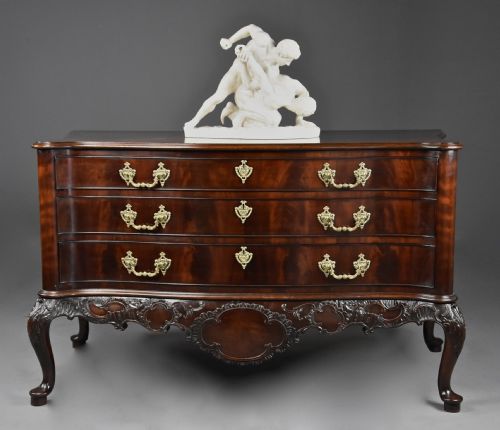
Quality rests upon the selection of timber figures, such as matched flame mahogany or burr walnut veneers, and the precision of dovetail joints. Superior examples exhibit balanced proportions, original brass handles, and secondary linings that remain intact and smooth-running.
Secondary workshop pieces display simpler construction in pine or oak, where utility dictated the finish rather than decorative veneers. The presence of original paint surfaces or polished patination separates utilitarian storage from fine cabinet work.
Whytock & Reid·Jas Shoolbred
The Large Storage Drawers Glossary
- Mule chest
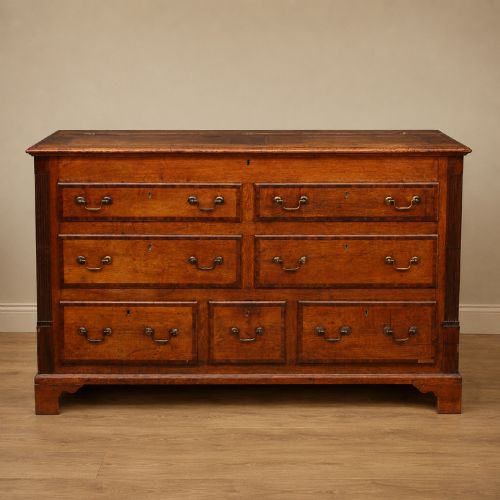
- A storage trunk featuring one or more drawers at the base beneath a hinged lid compartment. This form bridges the evolution from the traditional blanket chest to the modern drawer unit.
- Linen press
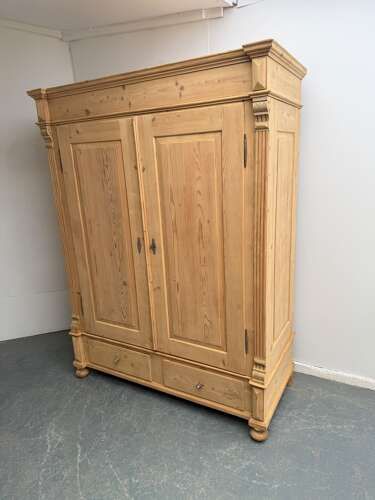
- A tall storage cabinet enclosing sliding trays or shelves in the upper section above a bank of drawers below. They were traditionally used for storing household textiles flat.
- Bank of drawers
- A multi-drawer unit originally built for commercial, apothecary, or workshop storage. These pieces contain numerous small or medium compartments arranged for efficient sorting.
- Crossbanding
- A decorative border technique where thin strips of veneer are laid perpendicular to the grain of the primary panel. It frames drawer fronts and tabletops on refined period furniture.
- Wellington chest
- A tall, narrow chest of drawers secured by a hinged locking side stile that fastens with a key. This design originated in the nineteenth century for secure document storage.
Large Storage Drawers: Frequently Asked Questions
How do I date a chest?
Dating relies on observing construction methods, timber choices, and hardware styles across the piece. Hand-cut dovetails and native woods typically point towards earlier periods.
Secondary indicators include drawer linings, backboards, and the presence of makers' stamps or labels. Comparing the overall proportion and decorative veneer work helps narrow down the decade.
Where should I place a bank of drawers?
These large units require substantial floor space and strong structural support due to their heavy timber construction. They suit hallways, kitchens, or studies where high-capacity storage is needed.
Ensure adequate clearance for drawer extension and allow room for doors to open fully if the piece includes upper cupboards.
Are pine chests antique?
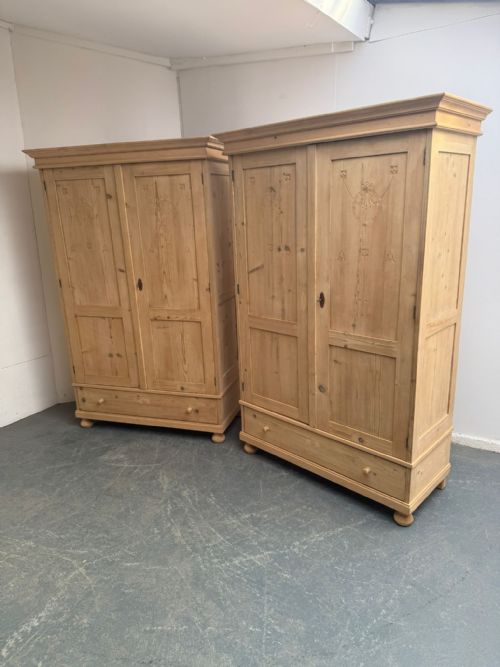
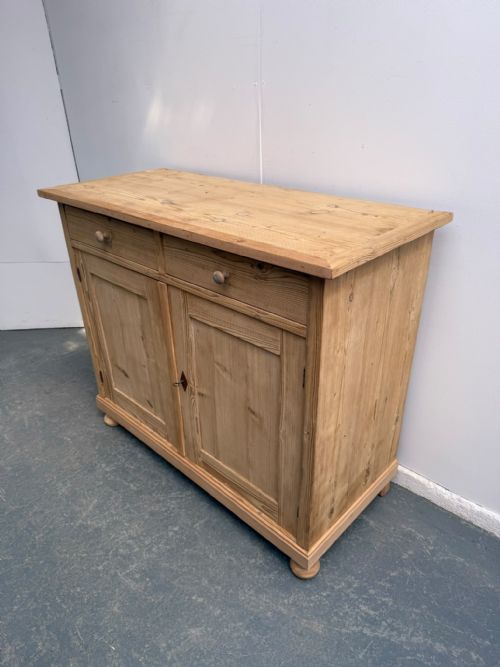
Many pine storage pieces date from the Victorian and Edwardian eras, constructed for domestic or workshop utility. While often painted or waxed later, the structural timber remains period.
Carpenters' chests and shop fittings in pine demonstrate the robust utilitarian craftsmanship of the nineteenth century.
What is a mule chest?
A mule chest combines a traditional lift-top blanket chest with lower storage drawers built into the base. This design allowed access to linens without disturbing items stacked on top.
They appear primarily in oak and mahogany from the Georgian period onwards.