

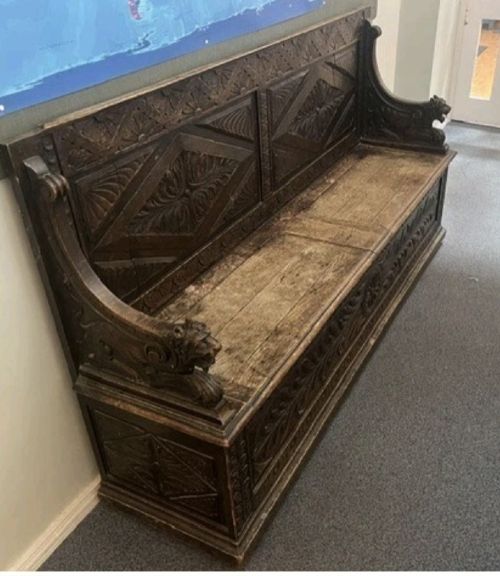
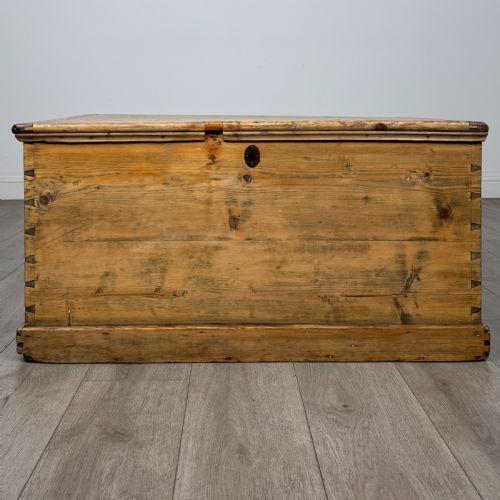
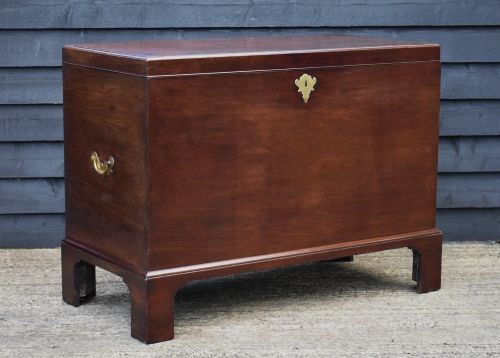

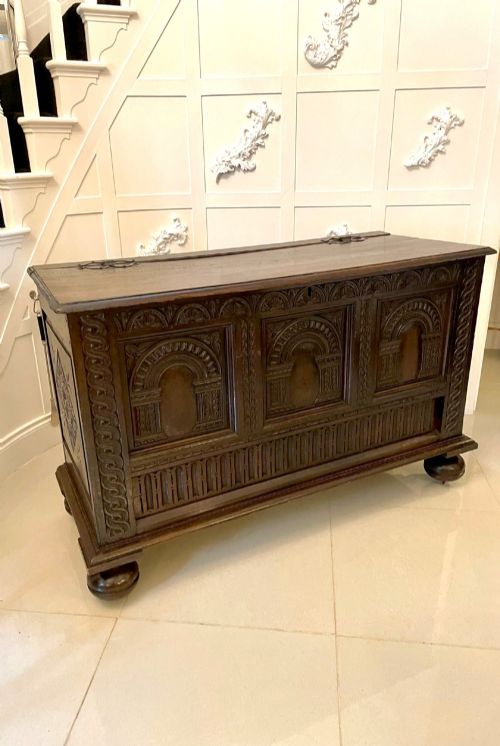
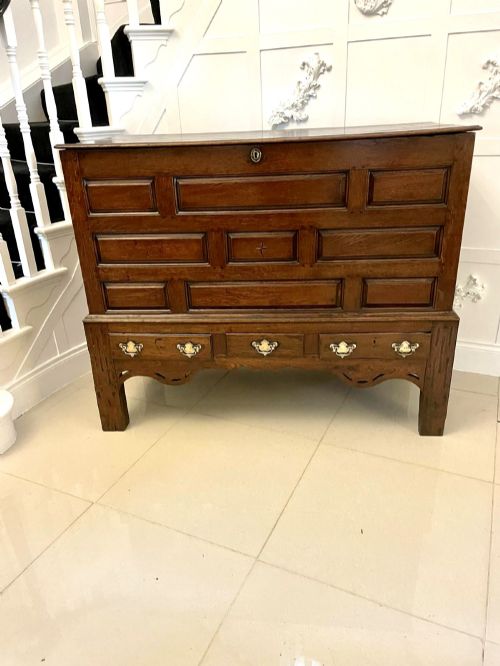
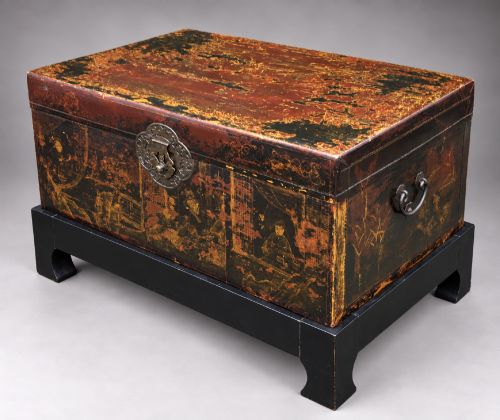
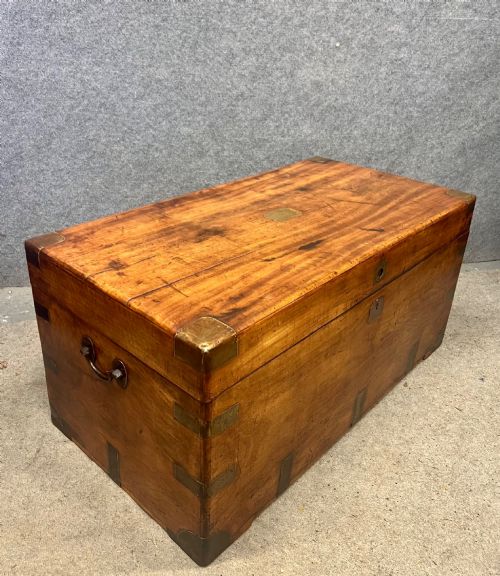
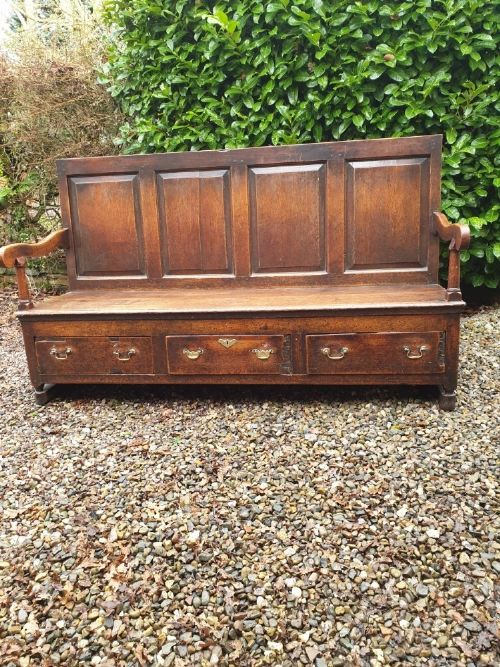
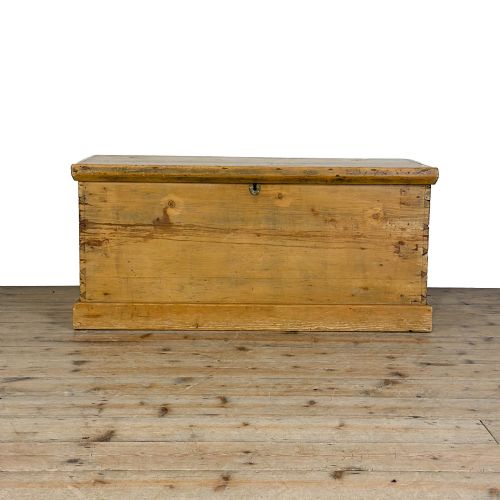
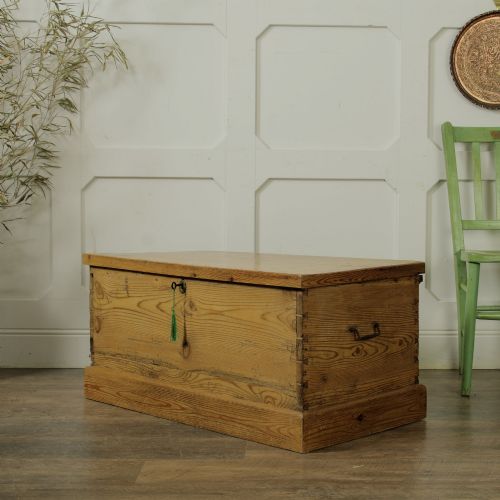
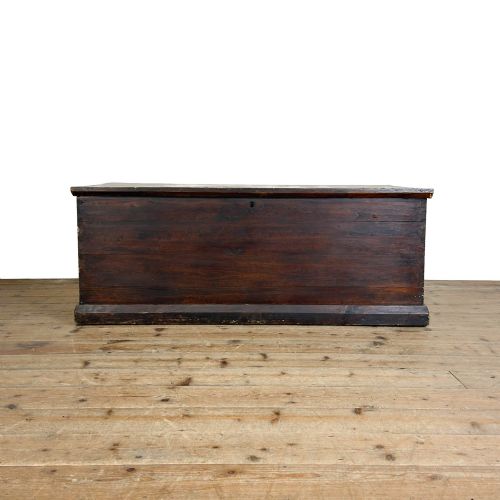
Large Storage Coffer
A large storage coffer anchors a room while hiding bulk, bringing centuries of robust timber and iron directly into daily service.
Large Storage Coffer
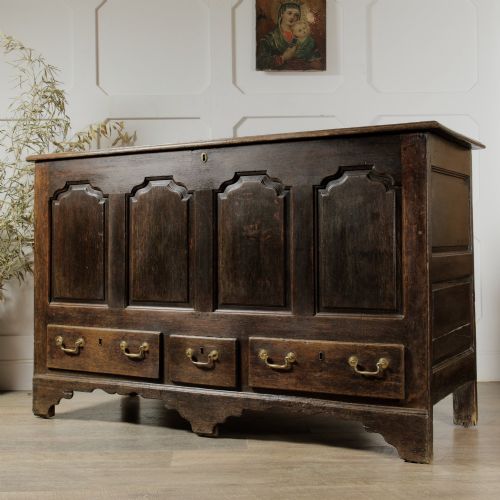
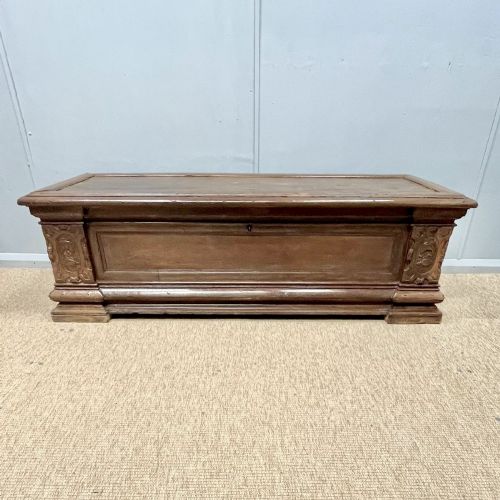
A large storage coffer is a heavy, deep box designed to hold household goods, textiles, and valuables securely. When searching this phrase, buyers encounter substantial vessels built for domestic utility across the centuries.
The pieces appearing here span the seventeenth century through to the Victorian era and the end of the nineteenth century. Oak, pine, mahogany, teak, and camphor wood form the primary bodies of these trunks and chests.
Domestic country houses, colonial outposts, and workshops produced these forms in styles ranging from rustic farmhouse and folk art to Georgian and Jacobean revival. Pine and oak examples from the eighteenth and nineteenth centuries dominate the selection.
How They Were Made
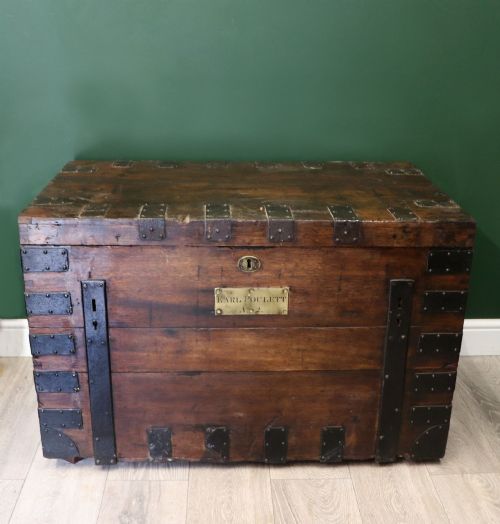
Carpenters constructed these large storage coffers using solid hardwoods and softwoods joined with dovetails, panel framing, or pegged joints. Iron hinges, brackets, and heavy brass bindings reinforced the lids and corners for secure transit and daily lifting.
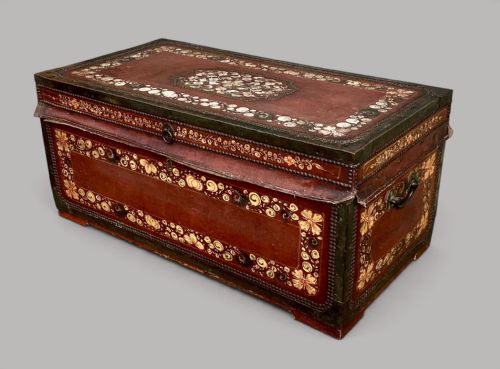
Surface treatments varied from clear wax and natural patination to applied paint finishes, leather coverings, and carved detailing. Teak and camphor wood relied on their natural oils for preservation, while pine often received coats of colour or protective stain.
Large Storage Coffer Retail Price Guide 2026
Typical asking prices for large storage coffer among the pieces listed under this phrase on Sellingantiques today, from the lower quarter to the upper quarter. They describe what is for sale here now, not the wider market.
Listings feature woods spanning oak, pine, mahogany, teak, and camphor wood across centuries of domestic and colonial production.
What Varies in Quality
Construction integrity separates standard utility boxes from exceptional pieces, visible in the tightness of corner joints and the weight of internal timber. Thick, unwarped planks and original metalwork indicate superior workshop standards.
The depth of carved decoration and the choice of timber elevate certain pieces well beyond simple utility. Fine grain selection in oak and mahogany, alongside untouched original paint or patination, defines the upper tier.
The Large Storage Coffer Glossary
- Coffer
- A heavy wooden chest traditionally used for storing valuables or dry goods. These sturdy boxes often served as furniture or travel containers.
- Mule chest
- A storage chest featuring one or more drawers built into the base beneath the main compartment. This form bridges the traditional trunk and the modern chest of drawers.
- Campaign chest
- A portable box or chest made in sections with recessed brass handles for military travel. These pieces allowed officers to transport personal effects across regions.
- Cassone
- An Italian marriage chest designed to hold a bride's trousseau. These large receptacles frequently display elaborate hand-painted decoration or carved panels.
- Camphor wood
- An aromatic timber prized for campaign and maritime trunks. Its natural scent deters insects and protects stored textiles.
Large Storage Coffer: Frequently Asked Questions
What did people store inside a large storage coffer?
Households relied on these deep vessels to store heavy woolen blankets, household linens, and winter clothing away from dust and pests. Valuables, legal documents, and silverware also found secure shelter beneath their heavy lids.
Travellers and military officers packed uniforms and personal equipment inside specialised trunks for long journeys. Dowry chests held textiles and wedding gifts for newly established homes.
How can I use a large storage coffer at home?
These pieces function effectively at the foot of a bed to hold spare duvets and pillows. Their flat lids also allow them to double as coffee tables or window seats in living areas.
Entryways benefit from the volume these trunks provide for boots, bags, and outdoor gear. Placed in a hallway, they offer both surface display space and concealed storage.
How do I tell an 18th-century coffer from a Victorian one?
Eighteenth-century examples frequently employ hand-carved solid oak with pegged frame construction and deep, organic patination. They often feature simple strap hinges and heavier proportions built for rural domestic life.
Victorian versions make frequent use of pine, applied iron or brass bindings, and occasional internal compartments or drawers. Machine-cut elements and standardised hardware begin to appear more regularly in these later nineteenth-century pieces.
Did campaign chests travel with the military?
Officers commissioned specialised chests built in separate modular sections with brass corner brackets and flush handles. This design facilitated stacking and mule transport during extended campaigns.
The sturdy construction protected contents from moisture and rough handling on the road. Brass fittings allowed easy dismantling when camp relocated.