


Large Silver Inkwell
A large silver inkwell sits heavy on the desk, holding weight and presence from the Regency through the Edwardian years.
Large Silver Inkwell
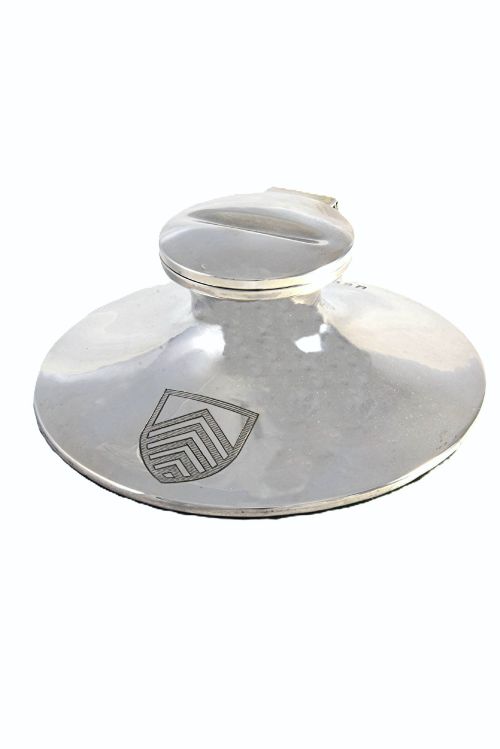
A large silver inkwell provides a substantial focal point for the desk, drawing together function and display in one weighty desk accessory. These pieces span periods from the nineteenth century into the twentieth, taking the form of capstan inkwells, desk stands, and novelty bells.
Capstan shapes and heavy glass bodies mounted with silver collars dominate the selection found in this category. Buyers frequently encounter Edwardian and George V examples alongside earlier Victorian and Regency pieces.
Desk stands often incorporate matching accessories like chambersticks, match holders, or pen trays alongside the ink reservoir. The larger formats frequently display crests, military associations, or presentation inscriptions from their original owners.
How they were made
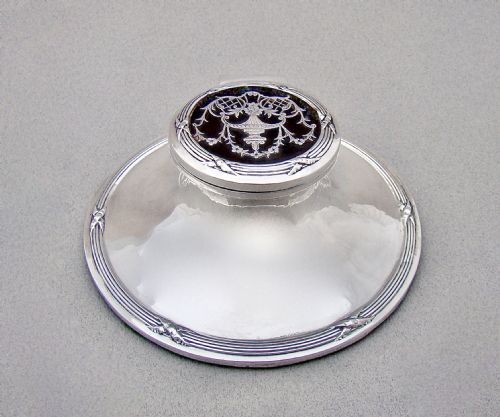
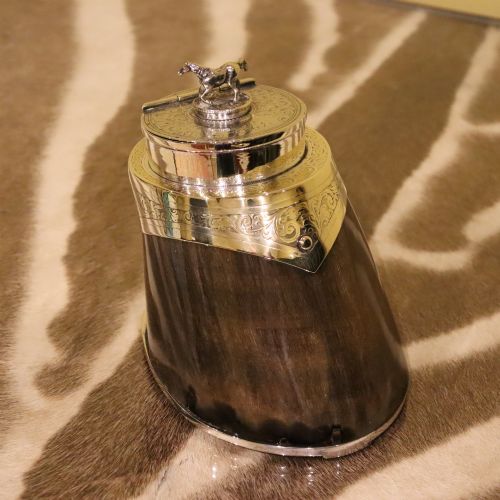
Silversmiths utilised sterling silver, Sheffield plate, and silver plate to form the bodies and mounts, frequently combining metal with heavy cut glass, crystal, or tortoiseshell. Taxidermy elements such as horse hooves and rams horns also appear as structural mounts.
Techniques ranged from traditional hand-beating and casting for solid silver stands to precision cutting for glass reservoirs. Component parts like hinged lids and collars were soldered or fitted securely to withstand daily use.
Materials in these records include tortoiseshell, horse hoof, cut glass, Sheffield plate, and sterling silver across multiple eras.
What varies in quality
Weight and gauge of the metal separate heavier solid pieces from lighter plated alternatives. Substantial gram weights and thick glass bases indicate higher manufacturing standards.
The crispness of hallmarks, the quality of cut glass facets, and the integration of secondary materials like tortoiseshell determine the distinction between standard production items and presentation pieces.
Henry Matthews·A & J Zimmerman·John Grinsell & Sons·Hukin & Heath·Goldsmiths & Silversmiths Company·Thomas Webb & Sons·Walker & Hall·William Comyns
The Large Silver Inkwell Glossary
- Capstan inkwell
- A desk accessory shaped like a nautical capstan, featuring a wide circular base tapering upwards to a hinged silver lid. This design provided stability on ship or desk.
- Inkstand
- A larger desk tray holding one or more inkwells, often accompanied by spaces for pens, match holders, or a chamberstick. These stationary suites anchored the nineteenth-century writing table.
- Sheffield plate
- A fused composite material made by melting a sheet of sterling silver onto a copper base, prevalent in earlier desk wares before electroplating emerged.
- Guilloche enamel
- A decorative technique involving precise mechanical patterns engraved beneath translucent enamel layers, seen on select twentieth-century desk pieces.
- Novelty inkwell
- A desk piece shaped to resemble an unrelated object, such as a table bell, a tennis racket trophy, or a military item, concealing the ink reservoir within.
Large Silver Inkwell: Frequently Asked Questions
What periods do large silver inkwells come from?
These pieces date from the nineteenth and twentieth centuries, covering Regency, Victorian, Edwardian, and Art Deco eras.
Maker marks and hallmarks stamped on the silver provide precise dating for individual items.
How were desk inkstands used?
Desk stands held ink reservoirs for dipping quill or steel nib pens during correspondence and record keeping.
Larger stands combined inkwells with trays for pens, stamps, and lighting tapers.
What materials are combined with the silver?
Cut glass and crystal formed the heavy reservoirs that held the liquid ink securely beneath silver collars.
Tortoiseshell, enamel, and taxidermy mounts like horse hooves appear on decorative variants.
How do I identify a capstan inkwell?
The shape mimics a ship capstan with a broad weighted base tapering towards the top lid.
This low profile prevented the inkwell from tipping over during use.