
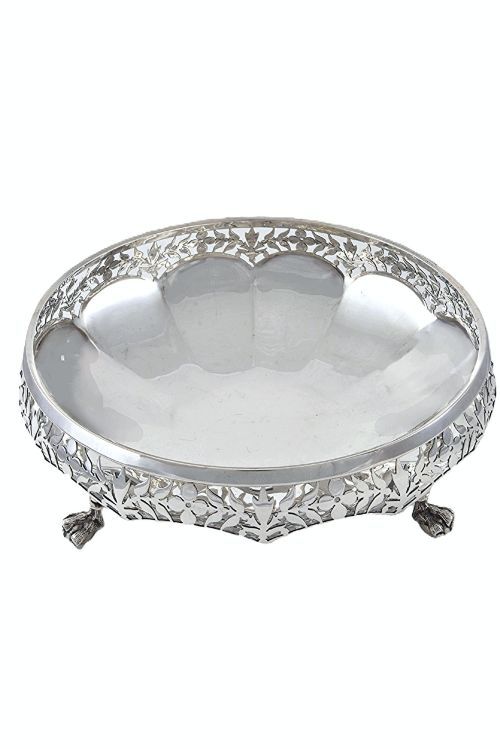


Large Silver Centrepiece Bowl
A large silver centrepiece bowl anchors a dining table with substantial presence, holding fruit, flowers or presentation punch.
Large Silver Centrepiece Bowl
A large silver centrepiece bowl serves as a dramatic focal point on a dining table, originating in various periods from Georgian to the twentieth century. When searching for a large silver centrepiece bowl, buyers encounter forms ranging from heavy sterling silver presentation pieces to silver plate punch bowls and pedestals.
The selection includes specific regional work, such as German 800 silver with cobalt glass liners, Irish Georgian vessels, and Indian Colonial soup tureens adapted for display. Silver plated examples from makers like Mappin and Webb sit alongside solid sterling iterations from major makers.
Most pieces date from the nineteenth century and the Edwardian era, reflecting formal dining traditions where impressive tableware dominated the room. Forms vary from simple deep bowls to elaborate pedestal dishes and monteiths with scalloped rims.
How they were made
Craftsmen utilised sterling silver, silver plate, and 800 silver, frequently combining metal bodies with applied copper, brass, wood, or cobalt glass liners. Heavy gauge metals provided the structural integrity required for expansive vessels.
Techniques relied heavily on hand-hammering, casting, and detailed repoussé work, creating floral, bird, and fruiting vine decorations directly into the metal. Piercing and chasing added intricate openwork patterns to rims and borders.
Components were soldered or riveted together, particularly on pedestal feet, handles, and scalloped rims, ensuring stability for large forms like punch bowls and jardinières.
Listings feature sterling silver, silver plate, and 800 silver, alongside copper, brass, and cobalt glass components from the nineteenth century onward.
What varies in quality
The distinction between standard items and exceptional pieces rests upon the crispness of the hand-chased repoussé decoration and the weight of the silver used in construction. Substantial metal thickness prevents flexing across wide spans.
Makership elevates a piece significantly, with output from documented firms and silversmiths demonstrating superior finishing on rims, handles, and internal gilding where present. The integration of original liners, such as cobalt glass, preserves the integrity of the design.
Barker Ellis·Joseph Rodgers·Alexander Clarke and Co·S Kirk and Son Company·Walker and Hall·Mappin and Webb
The Large Silver Centrepiece Bowl Glossary
- Monteith
- A bowl featuring a scalloped or notched removable rim designed to hold wine glasses by their stems to chill in ice. This form dates back to the late seventeenth century and persists into later periods.
- Repoussé
- A metalworking technique where the artisan hammers the design from the reverse side to raise high relief ornamentation on the front. Floral and avian motifs frequently emerge through this method.
- Comport
- A shallow dish or bowl raised on a high pedestal, utilised for serving fruit or sweetmeats at formal meals. These pieces add verticality to a table setting.
- Jardiniere
- An ornamental container designed to hold potted plants or cut floral arrangements on a table or sideboard. These often feature waterproof liners or heavy silver plated walls.
- Punch bowl
- A large vessel intended for mixing and serving communal drinks during social gatherings. They typically possess deep, rounded bodies capable of holding substantial liquid volumes.
Large Silver Centrepiece Bowl: Frequently Asked Questions
How were large silver centrepiece bowls originally used?
These bowls occupied the middle of the dining table during formal meals, functioning as vessels for fruit, floating flowers, or iced punch. They were designed to catch the eye and anchor the tablescape.
In domestic settings, they transitioned between dining rooms and sideboards, doubling as presentation pieces or cooling vessels for wine glasses when fitted with appropriate inserts.
How do I care for silver plated and solid silver bowls?
Maintenance requires regular, gentle cleaning with non-abrasive silver polish and a soft cloth to remove tarnish without scratching the soft metal surface. Avoiding harsh chemical dips preserves the original chased detail.
When fitted with glass liners, such as cobalt inserts, remove the glass for washing to prevent moisture trapping against the silver or silver plate over time.
How can I tell the period of a bowl?
Hallmarks stamped into the metal provide the most reliable indicator of age and origin for solid silver pieces, pointing directly to assay offices and date letters. Stylistic clues like Art Nouveau whiplash lines or Victorian repoussé florals help narrow down unmarked items.
Heavier cast ornamentation and specific construction seams also reveal the manufacturing era, distinguishing nineteenth-century work from later twentieth-century interpretations.
What is the difference between sterling silver and silver plate?
Sterling silver consists of a solid precious metal alloy containing a set proportion of pure silver, ensuring the material remains valuable throughout its entire thickness. It carries official hallmarks confirming its standard.
Silver plate involves a thin layer of silver bonded to a base metal substrate, such as copper or brass. This method allowed makers to produce large, decorative vessels at a lower cost.