


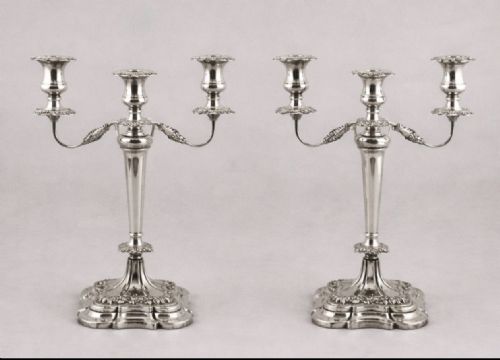


Large Silver Candelabrum
A large silver candelabrum commands the dining table, bringing weight and illumination from centuries past to any serious room.
Large Silver Candelabrum
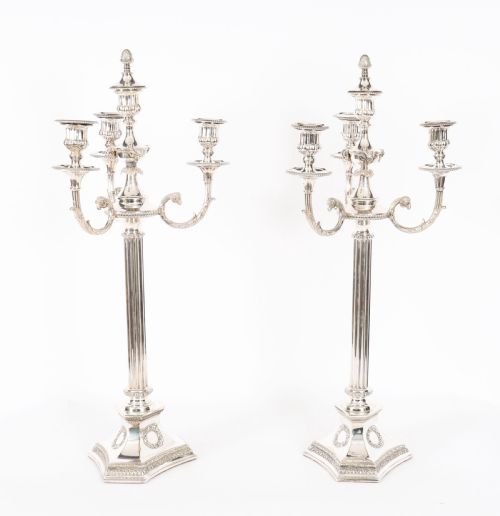
A large silver candelabrum is a significant dining table centrepiece designed to hold multiple branches of candles. These pieces emerge in styles ranging from George III Neoclassical designs to ornate Victorian Rococo revival forms.
Buyers on this page most frequently encounter silver plated and sterling silver examples spanning the eighteenth century through to the mid-twentieth century. Many items arrive as matched pairs or complete suites with detachable sconces.
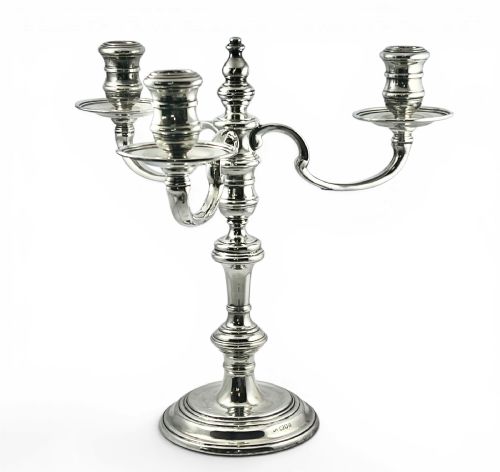
The forms vary from simple three-branch lights to monumental six-light centrepieces featuring cherubs and heavy cast detailing. Origins stretch from Georgian workshops in London through to Victorian manufacturing houses.
Materials and construction
Makers utilised sterling silver, Old Sheffield plate, and later silver plate over copper cores to build these substantial table lights. The heavier pieces required solid casting methods to support multiple branching arms without tipping.
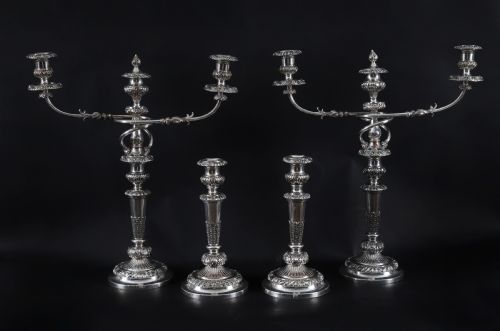
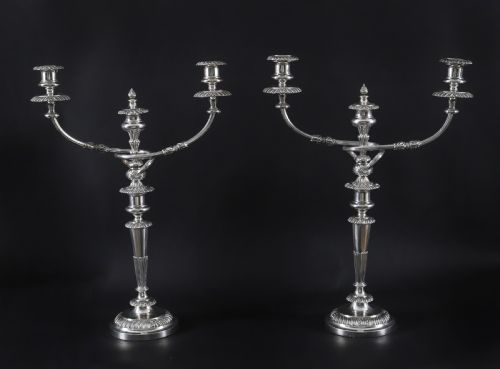
Old Sheffield plate combined copper and silver through a thermal fusion process, creating durable surfaces that aged with a soft glow. Skilled silversmiths soldered branching sockets and cast decorative details by hand.
Listings feature sterling silver, silver plate, and Old Sheffield plate across Georgian and Victorian periods.
Judging quality and execution
Quality rests in the crispness of the cast ornament and the integrity of the structural joints where the branches meet the stem. Superior examples display sharply defined scrollwork, fruit, or cherub motifs rather than softened, worn relief.
The weight of the piece and the balance of the branching arms dictate the standard of manufacture. Finer pieces retain their original detachable sconces and show maker marks that confirm their provenance.
Matthew Boulton·Elkington
The Large Silver Candelabrum Glossary
- Sconce
- The small pan or nozzle at the top of a candelabrum that catches melting wax. These components are often detachable for easier cleaning.
- Branch
- An arm extending from the central shaft to hold an individual candle. Candelabra typically feature three, four, or six branches.
- Old Sheffield plate
- An early form of plated metal made by fusing a thin sheet of silver to a thicker copper ingot. This technique was widely utilised before the invention of electroplating.
- Centrepiece
- A large decorative object placed in the middle of a dining table. Many large candelabras served this exact architectural function during formal dinners.
- Sterling silver
- An alloy consisting of silver and other metals, usually copper, to increase durability. Items made to this standard carry official hallmarks verifying their metal purity.
Large Silver Candelabrum: Frequently Asked Questions
How do I clean a large silver candelabrum?
Use a soft cloth and a gentle, non-abrasive silver polish formulated specifically for plated or sterling surfaces. Avoid aggressive rubbing that might wear through thin plating layers.
Take extra care around soldered joints and intricate cast details where polish can accumulate and harden in the recesses.
Can I use real candles on these?
Standard taper candles fit most historical sconces, provided the diameter matches the nozzle opening. Ensure the candles sit straight to prevent hot wax from dripping onto the metal or the table below.
Keep burning candles away from draughts to maintain an even flame and protect the surrounding surfaces from smoke damage.
How do I date a silver candelabrum?
Examine the hallmarks stamped on the base or sconces, which often indicate the assay office, city, and year of production. Sterling silver pieces generally offer precise date letters.
Stylistic cues such as Neoclassical urns or Victorian Rococo curves help narrow down the period when official hallmarks are absent or take the form of maker marks on plated wares.
Are these pieces usually sold as pairs?
Many large candelabras survive as matched pairs or larger suites to maintain symmetry on a formal dining table. Single pieces also appear independently as focal points.
Pairs often command greater interest from collectors seeking balanced arrangements for sideboard or table displays.