


Large Rustic Wooden Trunk
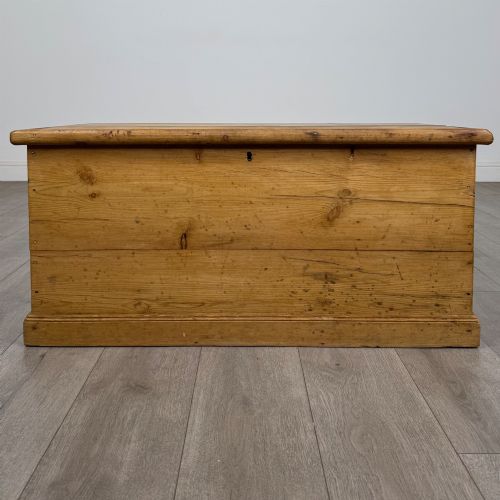
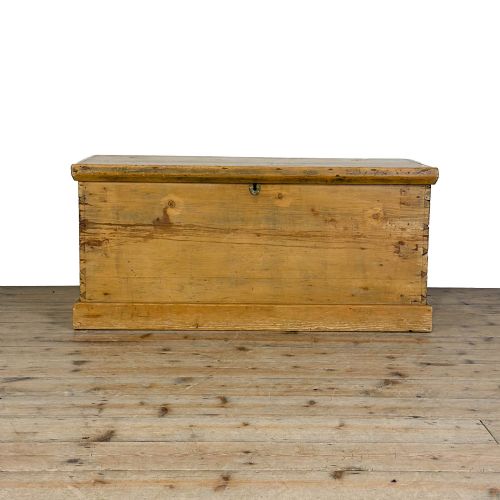
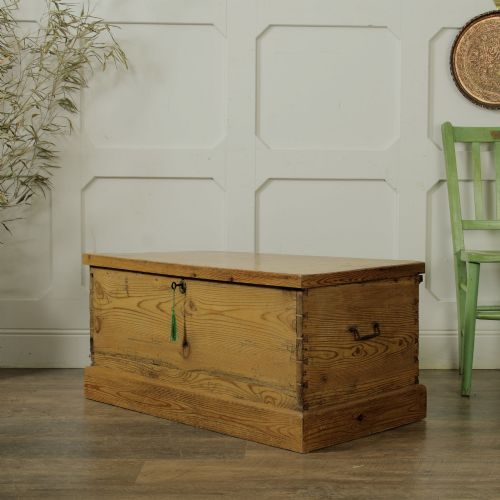
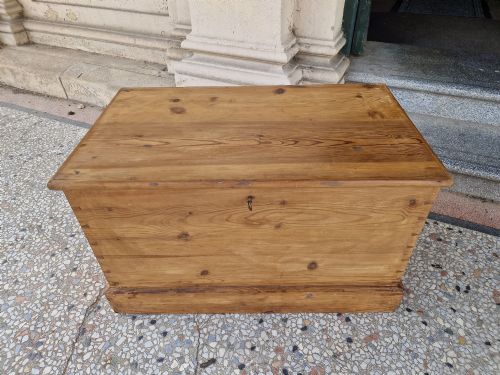
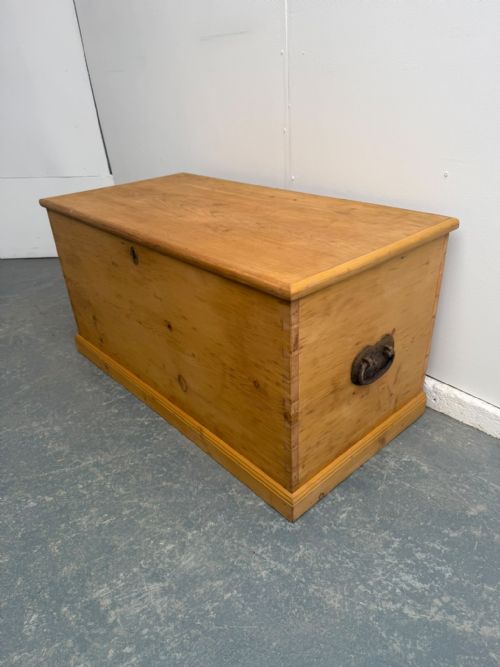
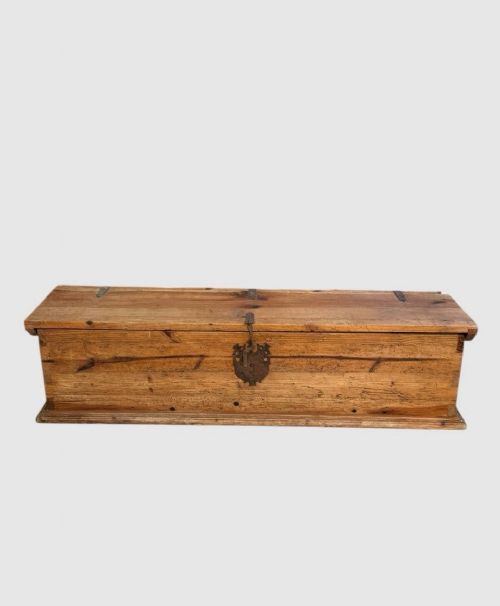
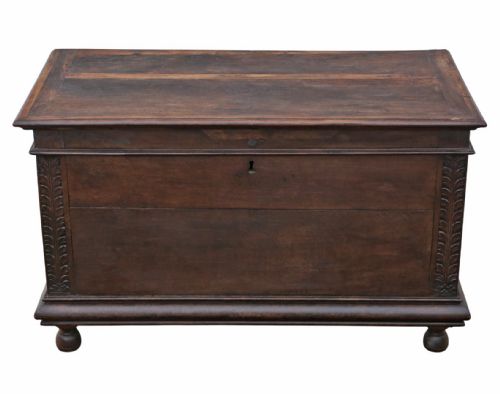
A large rustic wooden trunk offers robust utilitarian storage, bringing substantial historical character and enduring timber grain into domestic interiors.
Large Rustic Wooden Trunk
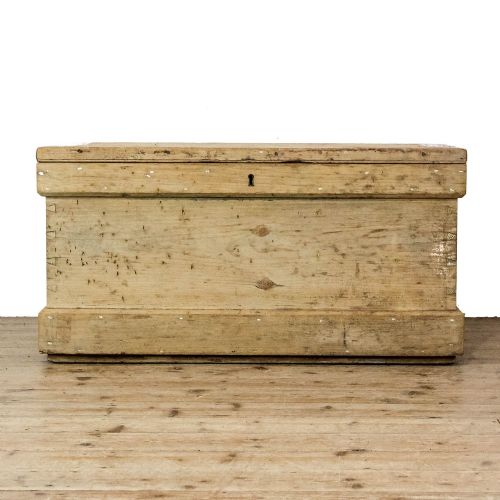
A large rustic wooden trunk serves as a capacious storage vessel, functioning historically as a blanket box, tool chest, dowry chest, or merchant repository. When searching for a large rustic wooden trunk, buyers encounter substantial containers designed for domestic utility and transport.
The pieces appearing on this page span several centuries, with a strong representation of Victorian examples alongside Georgian, eighteenth-century, and nineteenth-century specimens. Forms include blanket boxes, coffers, storage trunks, and mule chests constructed from robust timbers.
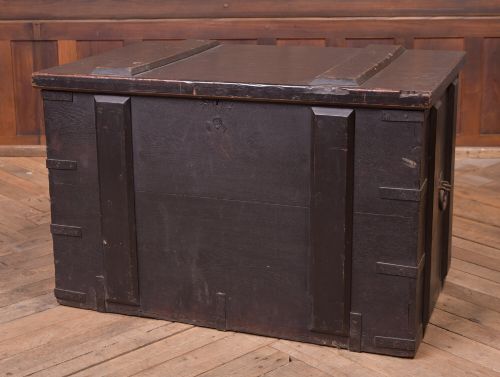
Origins vary from British country workshops to continental Europe, Scandinavia, India, and Africa. Many examples display the honest wear of agricultural, mercantile, or domestic service, shaped by decades of functional use.
How they were made
Construction relies primarily on solid timbers such as pine, pitch pine, oak, teak, and mixed hardwoods joined with dovetailed corners, panelled framing, or heavy pegged joints. Makers selected these durable woods to withstand heavy domestic or travel demands.
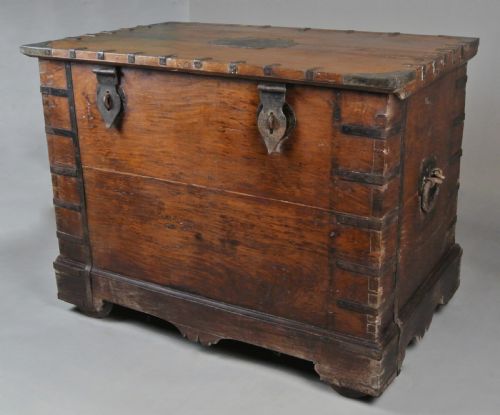
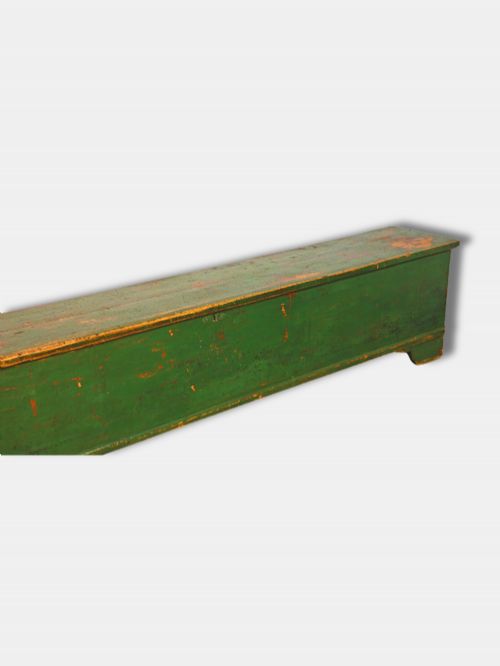
Metal reinforcement is common, utilising forged iron bands, brass brackets, and strap hinges to secure corners and lids against heavy impact. Surface treatments range from clear wax and scumble paint to raw stripped timber and deep historic polish.
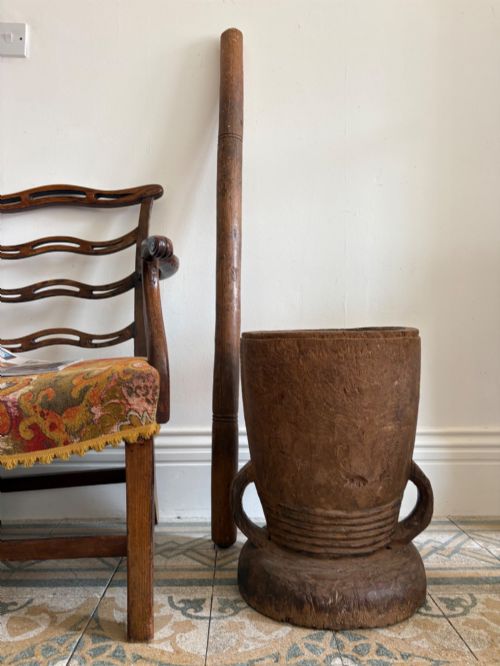
An African hand-carved tree trunk mortar and pestle sits alongside the European blanket boxes as an unexpected sculptural relative.
What varies in quality
The standard of a trunk depends on the integrity of its original construction, the thickness of the timber, and the preservation of authentic surface finishes. Superior examples retain their original ironmongery, working locks, and internal compartments such as till boxes or small drawers.
Proportion and scale dictate distinction, particularly in exceptionally wide Georgian mule chests or monumental nineteenth-century dowry trunks. Quality rests on whether the timber retains its honest patination and structural soundness without excessive modern intervention.
The Large Rustic Wooden Trunk Glossary
- Mule chest
- A traditional storage chest featuring one or more drawers built into the base beneath the main compartment. This form bridges the gap between a standard blanket box and a chest of drawers.
- Coffer
- A heavy, sturdy chest traditionally used for storing valuables, documents, or high-value textiles. These pieces often feature robust panelled oak construction and secure locking mechanisms.
- Scumble
- A decorative paint technique used to simulate the grain of more expensive woods over a simpler timber base. Artisans applied a translucent top glaze over a lighter ground coat.
- Dowry chest
- A large ceremonial container prepared for a bride to hold household linen and personal possessions for her marriage. These trunks often exhibit heavy iron banding and regional decorative carving.
- Pitch pine
- A dense, resinous softwood sourced primarily from North America and utilised for heavy-duty furniture and trunk construction. The timber is prized for its pronounced grain pattern and durability.
Large Rustic Wooden Trunk: Frequently Asked Questions
What were large rustic wooden trunks used for originally?
These chests served primarily for storing household textiles, blankets, winter clothing, and personal valuables in domestic settings. Many functioned as travel trunks, merchant repositories, or dowry containers for transporting goods.
Heavier versions often doubled as sturdy furniture pieces, acting as benches or tables within modest rural homes and workshops before finding a permanent place in hallways and living spaces.
How do I care for a waxed pine trunk?
Maintain the finish by applying a natural beeswax polish sparingly once or twice a year, buffing gently with a soft cloth. Avoid placing the timber near direct heat sources or in damp environments to prevent splitting or warping.
Keep the surface free from excess moisture by using coasters and wiping spills immediately to preserve the historic patina developed over generations.
How can I tell a Georgian chest from a Victorian one?
Georgian pieces, dating from the eighteenth and early nineteenth centuries, frequently employ solid oak or early pine with hand-cut dovetailing, pegged joints, and panelled construction. Their proportions often reflect traditional cabinetmaking techniques of the period.
Victorian trunks tend to utilise pine or pitch pine with machine-sawn elements, heavier iron strapwork, and occasional scumble paint or polished finishes suited to nineteenth-century domestic interiors.
Can I use a large trunk as a coffee table?
A large wooden trunk makes an ideal coffee table, providing a stable surface alongside substantial internal storage for living room items. The flat top accommodates books and decorative objects while keeping clutter concealed inside.
Ensure the height matches your seating and check that the lid remains stable and level when closed to function comfortably in a modern reception room.