
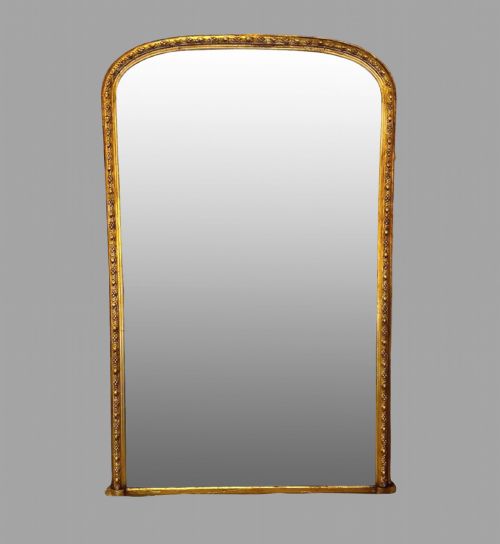
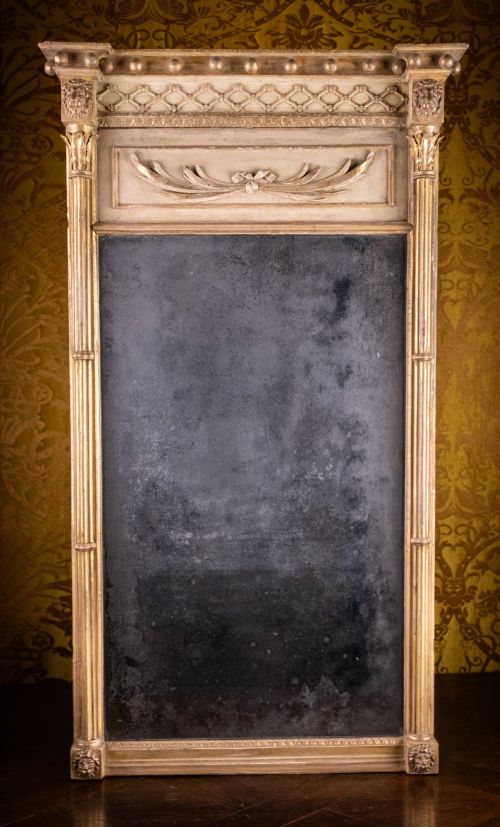
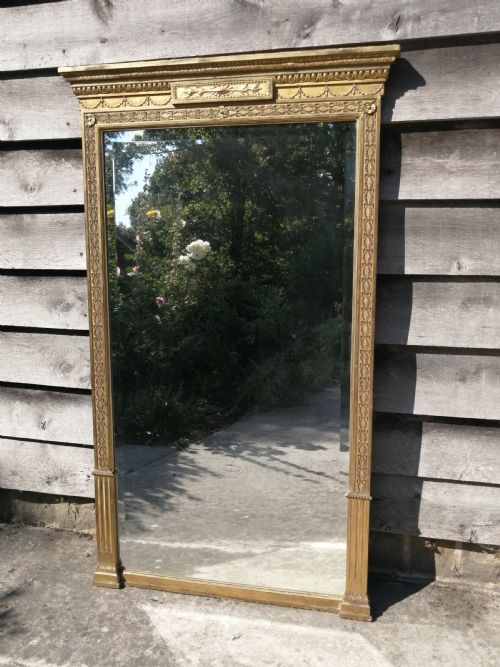
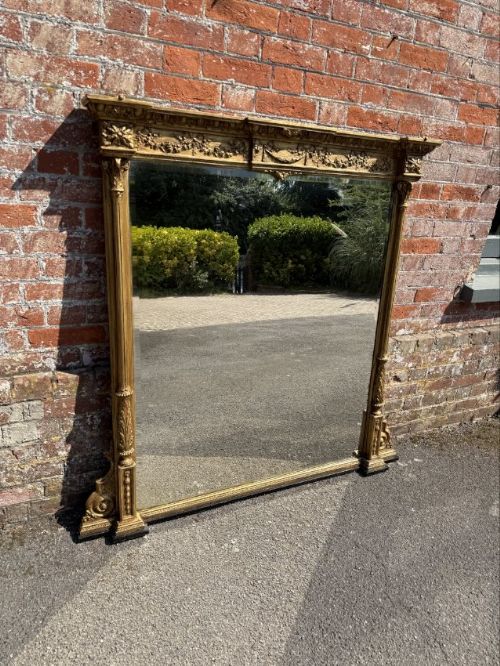
Large Regency Gilded Overmantel
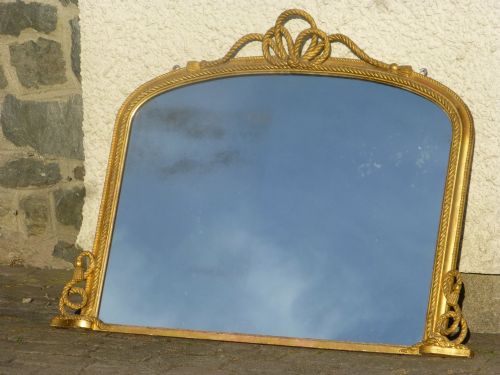
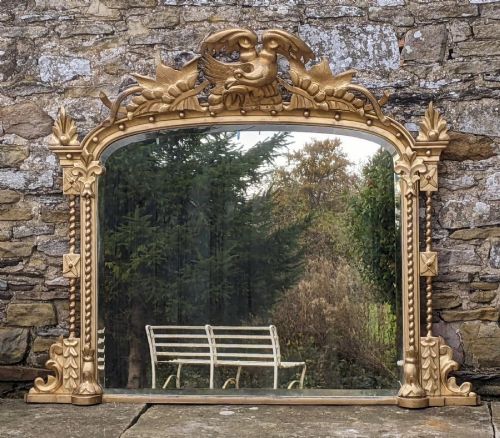
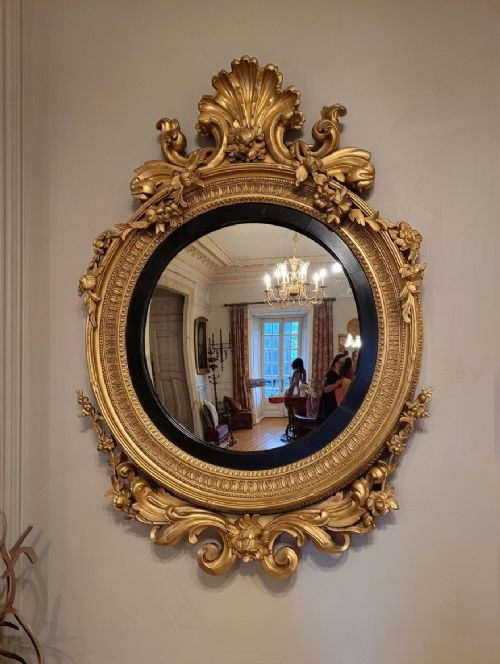
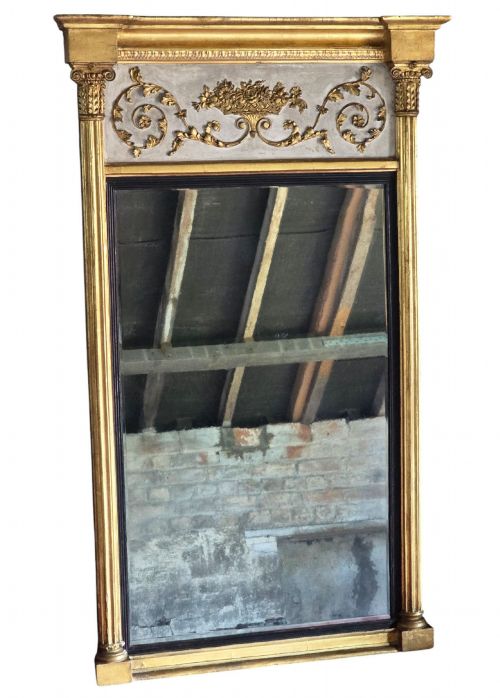
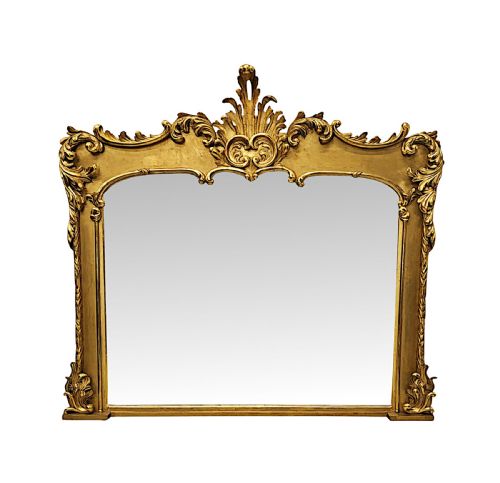
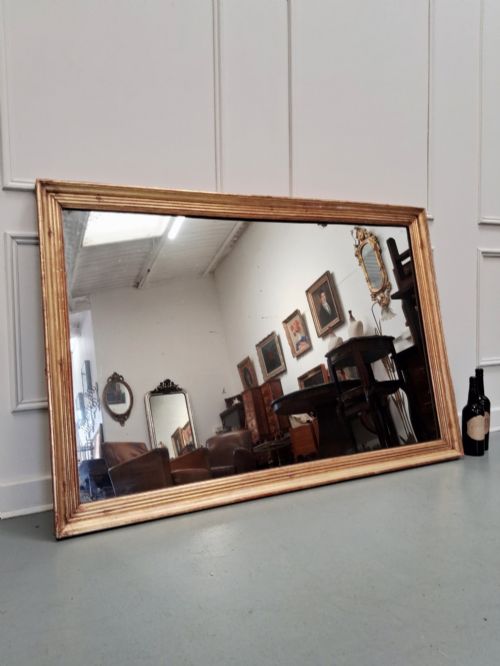
A large regency gilded overmantel brings dramatic scale, reflecting light across a room with classic architectural framing.
Large Regency Gilded Overmantel
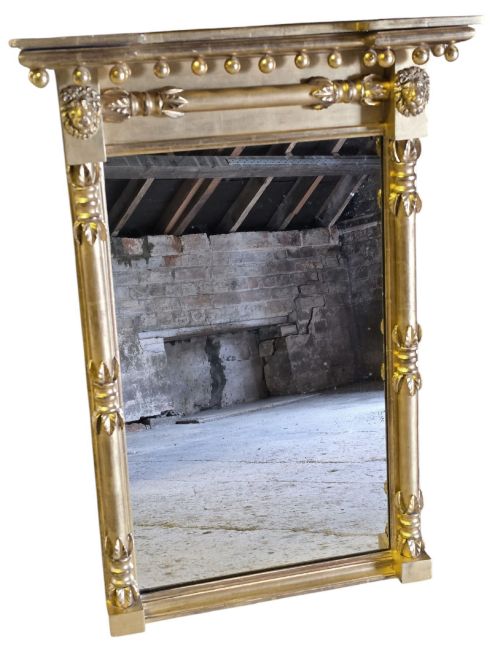
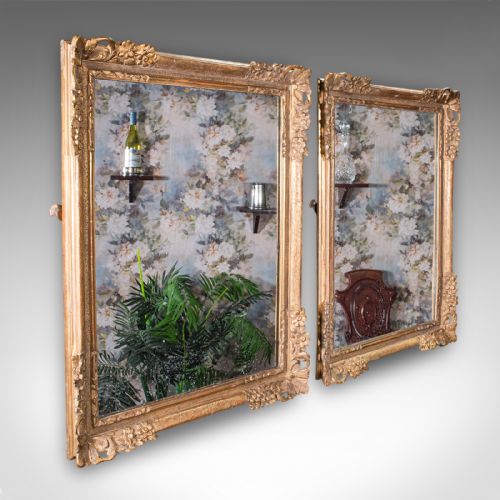
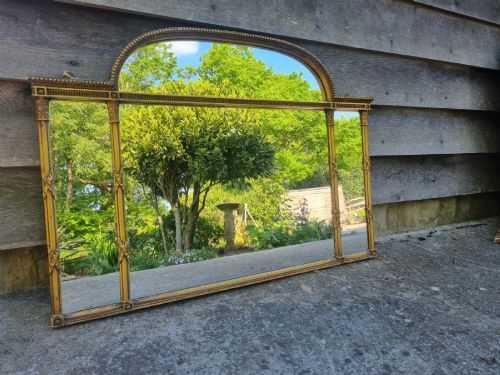
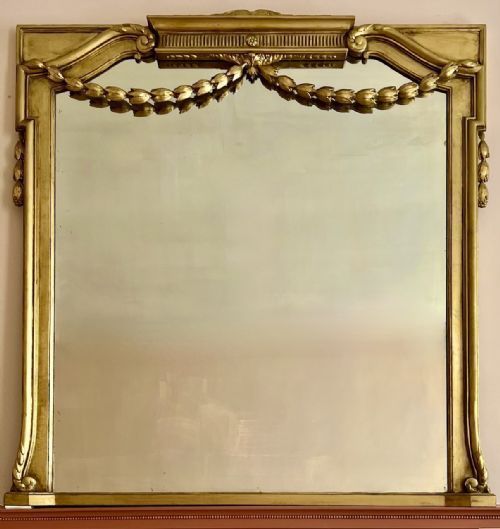
These architectural looking glasses are designed to sit directly above a fireplace hearth, dominating the main wall of a principal reception room. Most examples found on this page date from the nineteenth century, encompassing genuine Regency periods as well as later Victorian revivals.
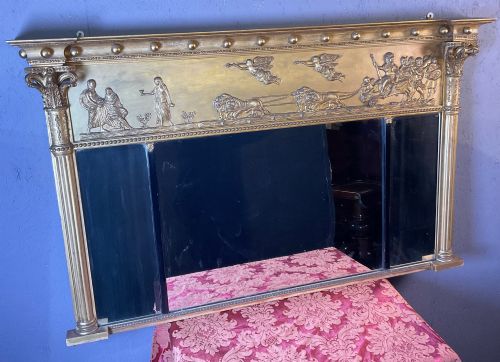
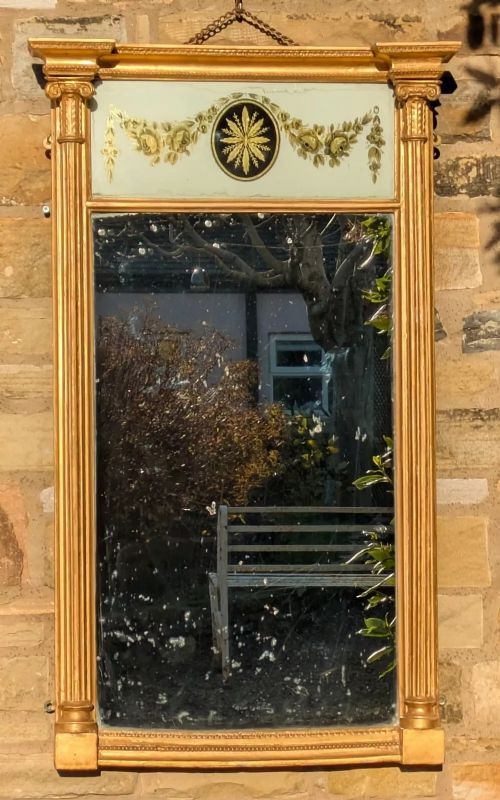
The primary forms include wide horizontal overmantels and taller pier mirrors, frequently featuring columned frames, classical ornamentation, and triple plate configurations designed to maximise reflected light.
How they were made
Carved wooden foundations of pine or hardwood receive layers of fine gesso, which takes crisp neoclassical motifs and rope twist detailing before the application of gold leaf or surface gilding.
Many incorporate original mirror glass plates, sometimes showing foxing or paired with decorative verre eglomise panels above the main reflective surface.
Listings feature nineteen-century timber and gesso frames alongside Edwardian and later interpretations.
What varies in quality
The crispness of the gesso mouldings and the depth of the original wood carving distinguish high workshop standards from simpler commercial production.
The survival of untouched mirror plates with authentic foxing patterns rather than modern replacements alters the historical integrity and visual depth of the piece.
Ciceri and Co
The Large Regency Gilded Overmantel Glossary
- Gesso
- A plaster mixture applied to wood frames to create a smooth surface for subsequent gilding. It allows for intricate low-relief decorative moulding.
- Overmantel
- A large mirror specifically proportioned to hang on the wall space immediately above a fireplace mantelpiece. They often feature horizontal formats to span the chimney breast.
- Verre eglomise
- A cold decoration technique where designs are painted and gilded onto the reverse side of glass panels. These frequently appear above the primary mirror plate in Regency pieces.
- Foxing
- Small dark spots and gradual discolouration within the mirror plate caused by age and chemical interaction. Many collectors prize this sign of genuine antiquity.
Large Regency Gilded Overmantel: Frequently Asked Questions
How do I hang a heavy overmantel mirror securely?
These substantial frames require fixing directly into wall studs or masonry using heavy-duty brackets suited to the weight of wood, gesso, and glass.
Professional installation is strongly advised to distribute the load evenly across the structure of the wall.
Are original mirror plates usually retained?
Many surviving examples retain their original glass, which often exhibits light foxing and minor imperfections developed over generations.
While some pieces have received replacement plates during their history, original glass remains desirable for authenticity.
Can these mirrors be placed in rooms other than living rooms?
Historically positioned above fireplaces in principal reception rooms, their scale suits grand hallways, dining rooms, and spacious bedrooms.
Their reflective properties successfully amplify natural light in any large domestic space.
How do I distinguish Regency period from Victorian revival?
Genuine Regency examples date from the early nineteenth century and typically display restrained neoclassical proportions and crisp joinery.
Later Victorian revival pieces often incorporate heavier gesso decoration and alternative framing techniques.