






Large Porcelain Charger
A large porcelain charger serves as a commanding wall centrepiece or table display, bringing centuries of skilled ceramic artistry into a room.
Large Porcelain Charger
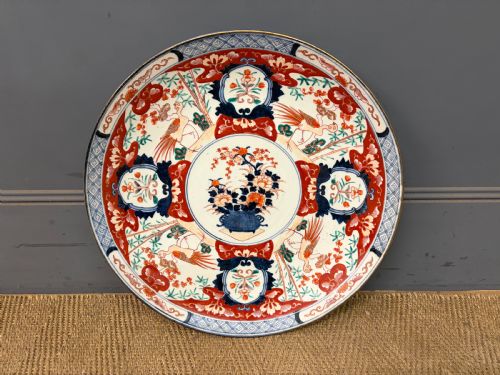
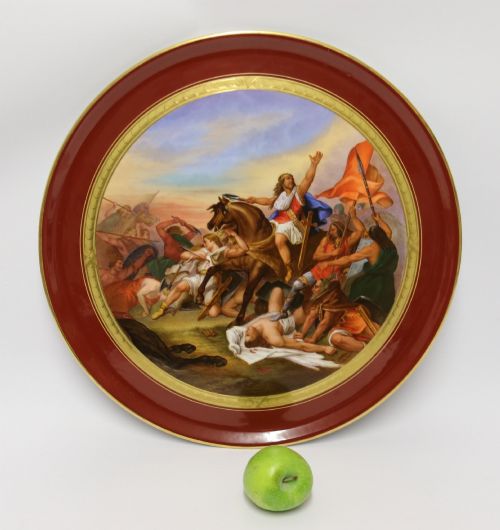
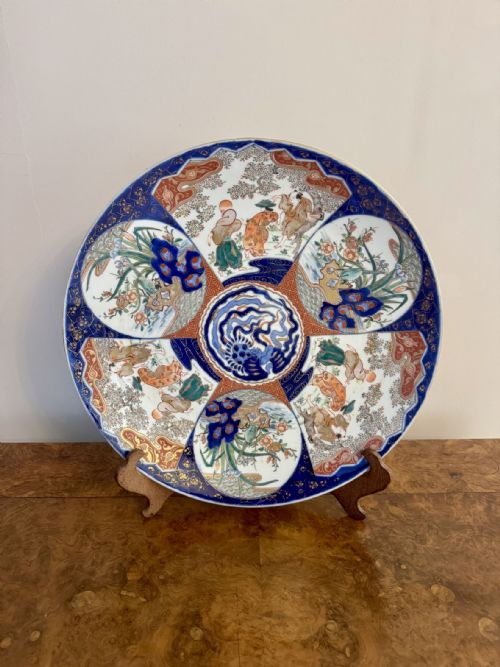
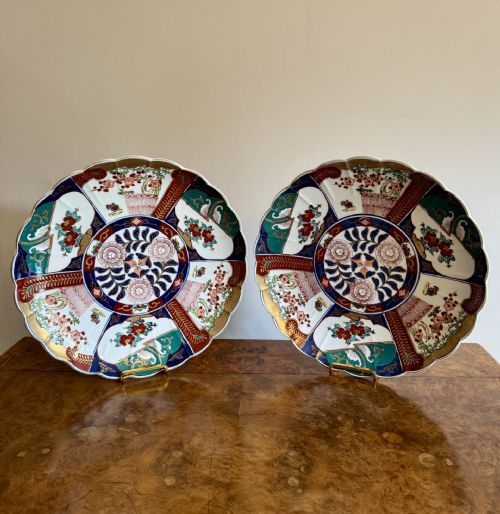
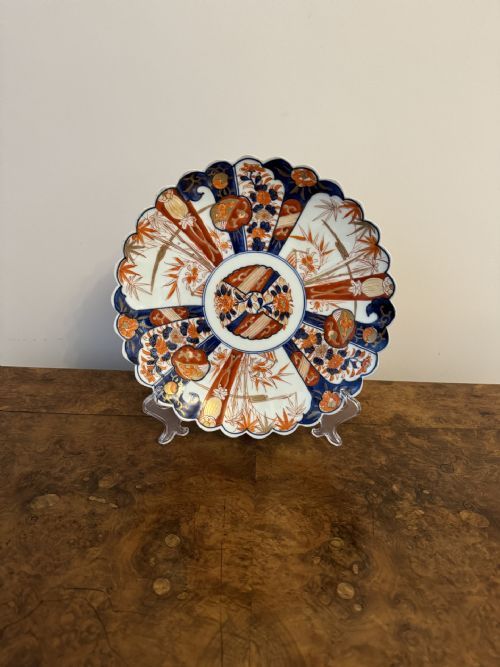
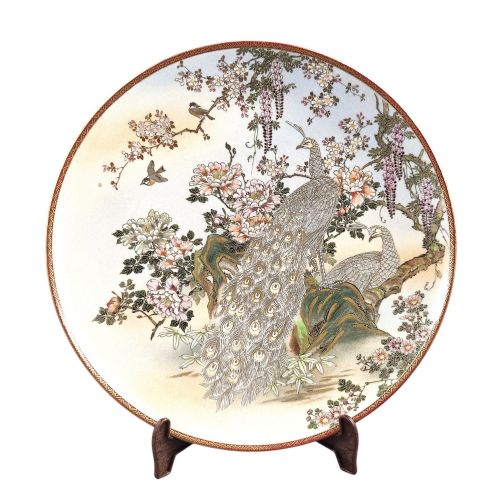
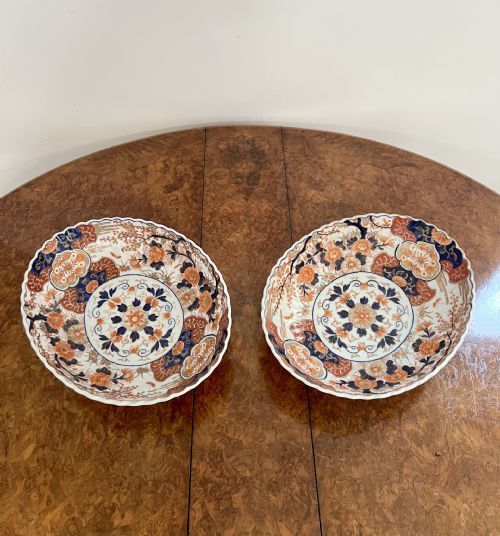
A large porcelain charger is a broad, shallow vessel originally designed for ceremonial dining or grand display, measuring substantially wider than a standard dinner plate. When browsing a selection of large porcelain charger pieces, buyers encounter diverse traditions ranging from Japanese Imari wares to Chinese export ceramics and European porcelain.
The objects span multiple centuries, with notable representation from seventeenth-century Chinese dynasties, the Victorian era, and the late nineteenth century. Forms include scalloped-edge bowls, circular dishes, and square plates intended primarily for visual impact rather than daily utility.
Origin points cluster heavily around East Asian kilns, particularly Japanese Arita and Kutani workshops, alongside Chinese Kangxi and Ming periods. European interpretations, such as French Paris porcelain and English delftware, also appear within the ceramic lineage.
How they were made
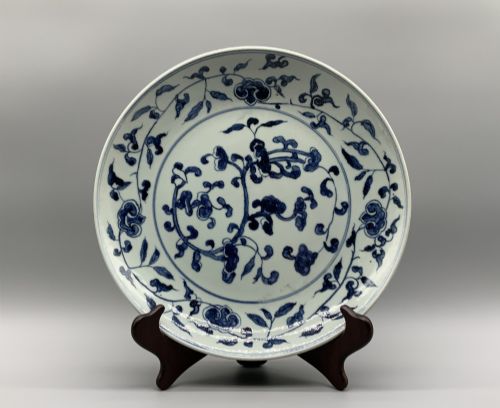
Potters shaped these wide ceramic bodies by throwing clay on large wheels or pressing them into moulds, followed by high-temperature kiln firing to vitrify the porcelain paste. Cobalt blue pigment under the glaze provides the deep foundation for many traditional designs before secondary firings.
Overglaze enamels, gold leaf, and intricate gilt detailing were frequently applied after the initial glaze firing to achieve vibrant colour palettes. Artisans employed hand-painted brushwork, moriage relief decoration, and cloisonné-style techniques on specialised ceramic and Totai Shippo surfaces.
Large Porcelain Charger Retail Price Guide 2026
Typical asking prices for large porcelain charger among the pieces listed under this phrase on Sellingantiques today, from the lower quarter to the upper quarter. They describe what is for sale here now, not the wider market.
Listings feature porcelain pieces spanning from fourteenth-century Chinese dynasties to twentieth-century Japanese kilns, utilising cobalt glaze, gold leaf, and enamel.
What varies in quality
The precision and fluidity of the hand-painted brushwork dictate the artistic merit of each piece, distinguishing hurried production from master execution. Details such as facial expressions in figural scenes and the crispness of floral scrolls reveal the artisan's control.
Kiln stability during high-temperature firing determines structural integrity, evidenced by surface smoothness and the absence of distortion across broad spans. The richness and durability of applied enamels, cobalt blue depth, and intact gold leaf further separate standard wares from exceptional examples.
Shozo
The Large Porcelain Charger Glossary
- Imari
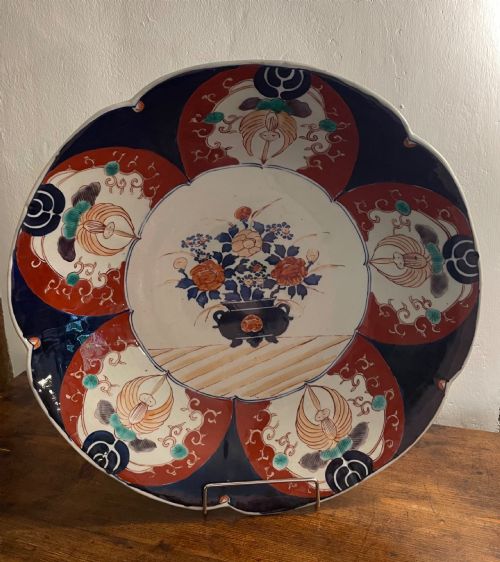
- A style of Japanese porcelain featuring a distinct palette of underglaze blue, iron red, and gold, named after the port from which these goods were shipped. The tradition flourished across the Edo and Meiji periods.
- Famille Verte
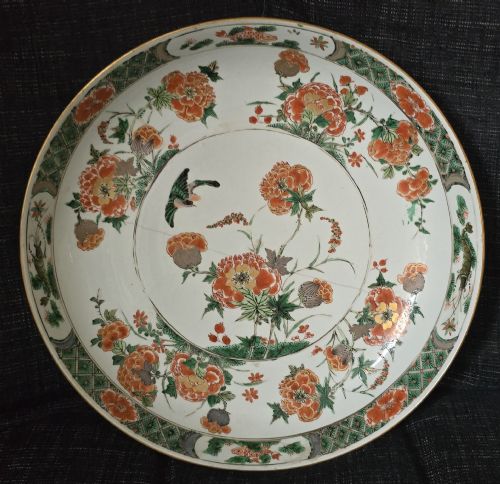
- A Chinese porcelain classification dominated by green enamel pigments, developed primarily during the Kangxi reign. This palette often depicts court scenes, flora, and fauna.
- Moriage
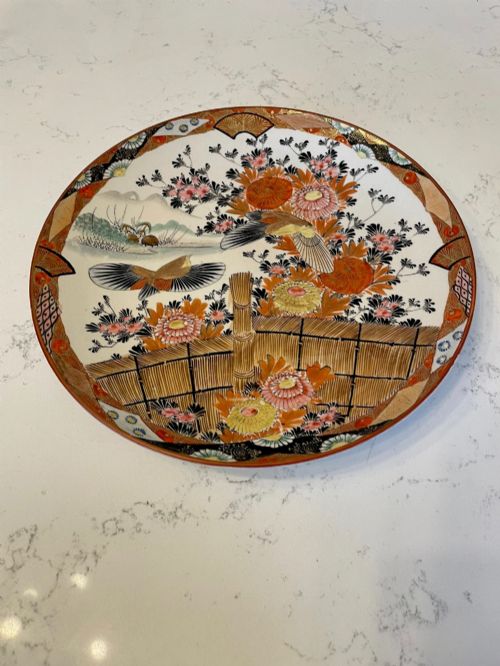
- A decorative technique using slip trailing to create raised, textured patterns on ceramic surfaces. Artisans frequently applied this method to highlight floral and avian motifs.
- Celadon
- A type of transparent green glaze applied to porcelain, mimicking the appearance of jade. Longquan kilns produced notable examples with carved or moulded floral designs.
- Kraak
- A style of Chinese export porcelain characterised by panelled borders and central medallion designs, widely shipped to Europe during the seventeenth century. These plates typically feature deep, sturdy bodies.
Large Porcelain Charger: Frequently Asked Questions
How were large porcelain chargers used historically?
These wide vessels originally served ritual dining functions or held grand food presentations in wealthy households. Over time, their decorative potential took precedence, leading to display on walls, sideboards, and specialised plate stands.
Craftsmen often incorporated hanging holes into the foot rings of earlier chargers to facilitate wall mounting. They remained status symbols that reflected the global trade networks connecting Asian kilns with European collectors.
How do I identify Japanese Imari pieces?
Japanese Imari pieces are immediately recognizable by their saturated palette of cobalt blue underglaze combined with rust red and gold accents over the glaze. Motifs frequently include floral arrangements, landscapes, and traditional figures.
The porcelain body tends to be dense and heavy, designed to support the broad expanse of the charger. Later nineteenth-century examples often display denser, more complex compositions than their earlier counterparts.
What is the difference between Chinese Famille Verte and Famille Rose?
Famille Verte relies primarily on a spectrum of green enamel tones, often augmented with iron red, blue, and black. This style dominated Chinese porcelain decoration during the seventeenth-century Kangxi period.
Famille Rose, introduced later in the eighteenth century, incorporates an opaque pink or rose enamel derived from colloidal gold. This palette allowed artists to render softer tonal gradations in portraits and floral displays.
How should I display a large antique charger safely?
Displaying a heavy porcelain charger requires robust, professional hardware designed to distribute weight evenly across the base and rim. Avoid wire hangers that bite directly into the ceramic body.
Wall mounting should utilise padded bracket hangers fixed securely into wall studs rather than plaster alone. For tabletop display, choose stable, weighted stands with protective coating to prevent friction damage.