




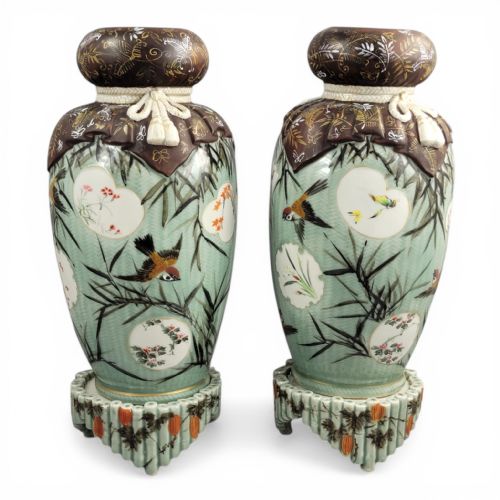


Large Porcelain Birds
These large porcelain birds bring colour and sculptural presence to a room, ranging from vibrant Meissen figures to hand-painted decorative chargers.
Large Porcelain Birds
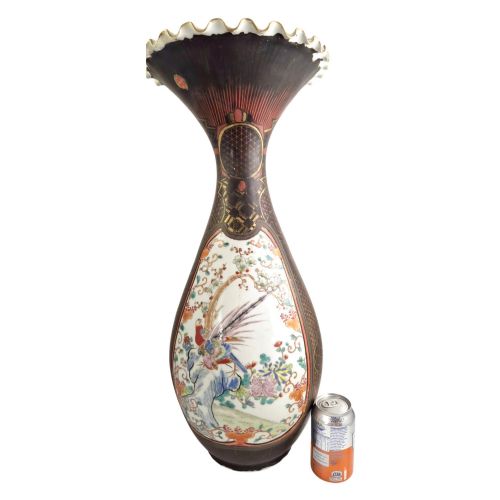
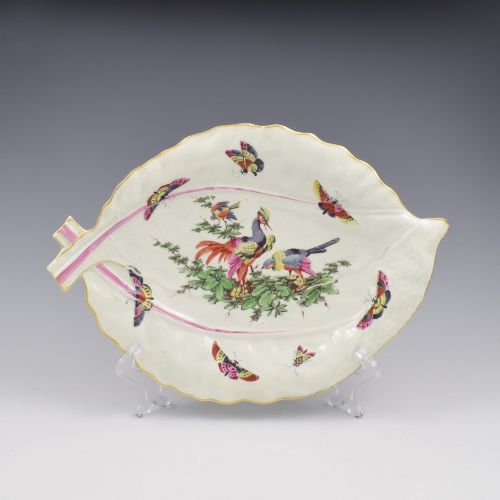
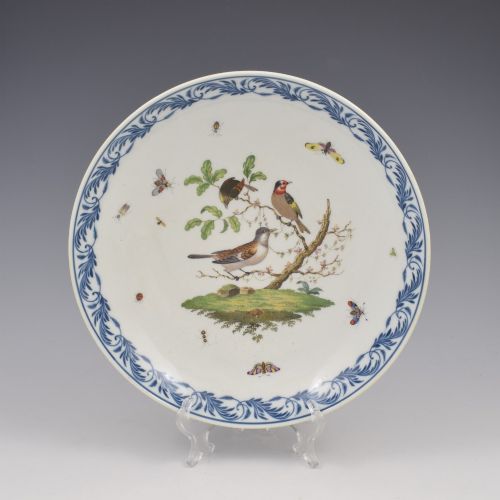
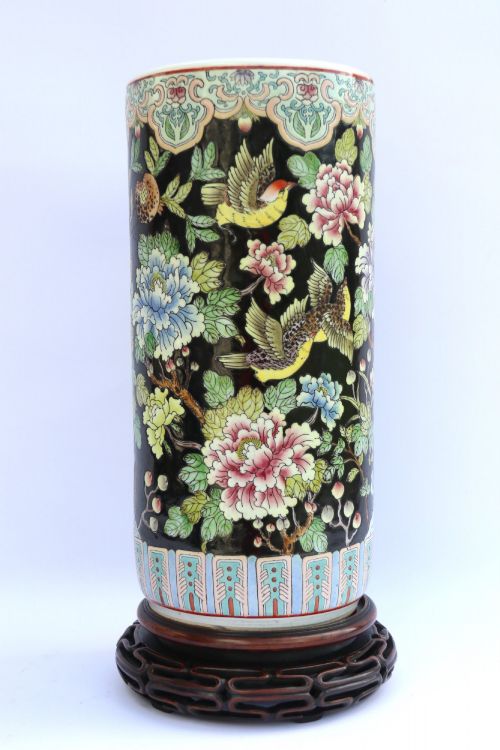
Large porcelain birds encompass freestanding figures, decorative dishes, and painted chargers that portray avian subjects across various centuries and traditions. When searching for large porcelain birds, buyers frequently encounter intricately modelled figures such as multi-coloured parrots alongside platters and vases decorated with ornithological motifs.
The selections span European factories like Meissen and Royal Dux, alongside Asian works including Japanese Arita Imari and Chinese Ming-style ducks. These objects serve primarily as display centerpieces, combining sculptural forms with detailed enamel painting and glaze techniques.
How they were made
Potters utilised hard-paste and soft-paste porcelain shaped into avian forms or thrown on the wheel for vases and chargers. Kiln firing fixed the body before artisans applied intricate enamel work, gold leaf highlights, and coloured glazes.
Many Japanese and Chinese examples incorporated specialised surface treatments such as totail shippo cloisonne and sancai glazes. European figures relied on careful hand-painting over white glaze to render realistic feather patterns and naturalistic hues.
Large Porcelain Birds Retail Price Guide 2026
Typical asking prices for large porcelain birds among the pieces listed under this phrase on Sellingantiques today, from the lower quarter to the upper quarter. They describe what is for sale here now, not the wider market.
The selection spans pieces from the 16th century through to the 1930s, originating from European and Asian workshops.
What varies in quality
Quality rests upon the precision of the hand-painting, the complexity of the moulding, and the depth of the glaze. Superior pieces exhibit fine brushwork in the feather details and crisp definition in moulded forms rather than flat, uniform colouration.
The presence of original elements, such as matched hardwood or porcelain stands, elevates the integrity of the piece. Workshops with established histories, including Meissen or Fukagawa, demonstrate higher execution standards in both body preparation and surface decoration.
Meissen Porcelain·Royal Dux·Fukagawa·Kato Sanhei
The Large Porcelain Birds Glossary
- Hard-paste porcelain
- A dense, vitrified ceramic material fired at high temperatures using kaolin and petuntse. It provides a durable base for detailed enamel painting.
- Imari
- A style of Japanese export porcelain characterised by a palette of underglaze blue, iron red, and gold. These pieces often feature complex floral and avian motifs.
- Sancai glaze
- A three-colour ceramic glaze technique commonly associated with Chinese pottery. It utilises lead-based glazes in amber, green, and cream or white.
- Charger
- A large decorative plate or platter intended for display rather than table service. They frequently serve as canvases for elaborate painted scenes.
- Totai shippo
- A Japanese technique where cloisonne enamels are applied directly to a porcelain body rather than a metal base. This creates a textured surface resembling metalwork.
Large Porcelain Birds: Frequently Asked Questions
How should I display a large porcelain bird?
Position freestanding figures on sturdy consoles or mantelpieces where adequate lighting highlights the hand-painted glazes. Ensure they sit safely away from heavy foot traffic to prevent accidental knocks.
Chargers and platters work well mounted on specialist wall hangers or displayed upright on sturdy plate stands. Pairing them with original stands where provided maintains the correct historic context.
Are these pieces suitable for everyday use?
Most items function primarily as decorative objects rather than utilitarian tableware. The delicate enamel work and gold leaf on many antique surfaces require careful handling.
Displaying them securely protects the historic glazes and painted details from unnecessary wear. Dust them gently with a soft, dry brush to maintain the finish.
How do I identify the period of a porcelain bird?
Examine the base for factory marks, painted signatures, or impressed numbers that correspond to known production eras. Stylistic indicators, such as the palette used in Imari chargers or the modelling style of Meissen figures, provide further dating clues.
Compare the glaze texture and body weight with established examples from the same tradition. Consulting reference books on specific potteries helps verify the likely decade of manufacture.
What is the difference between hard-paste and soft-paste porcelain?
Hard-paste porcelain uses natural clay and stone fired at extremely high temperatures, resulting in a dense, vitrified body that resists scratching. It forms the basis of many fine European and Asian figures.
Soft-paste porcelain incorporates glass frit or other substitutes, fired at lower temperatures to produce a slightly warmer tone and a softer glaze surface. Both types require careful handling to preserve their decorative enamel layers.