
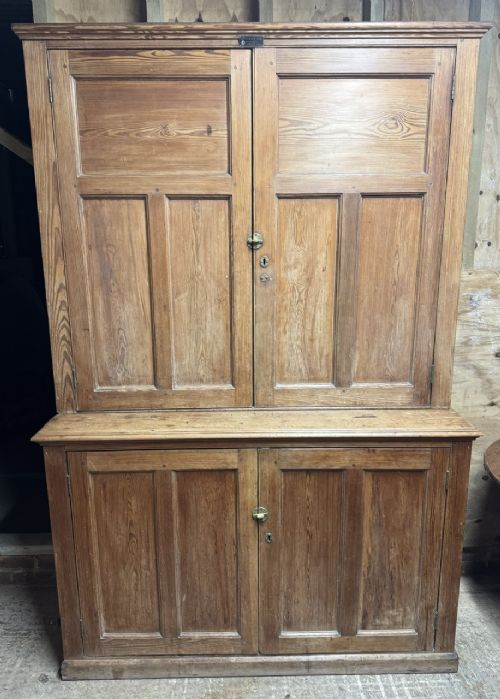
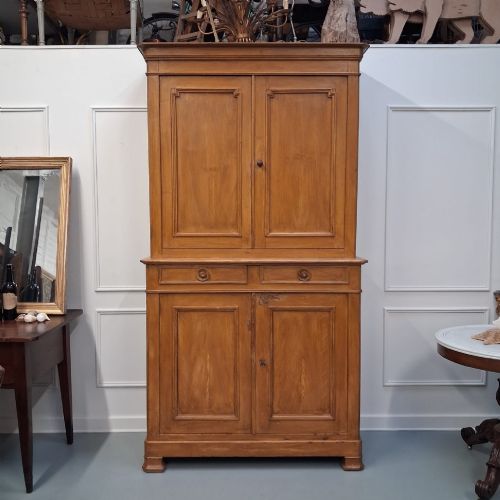

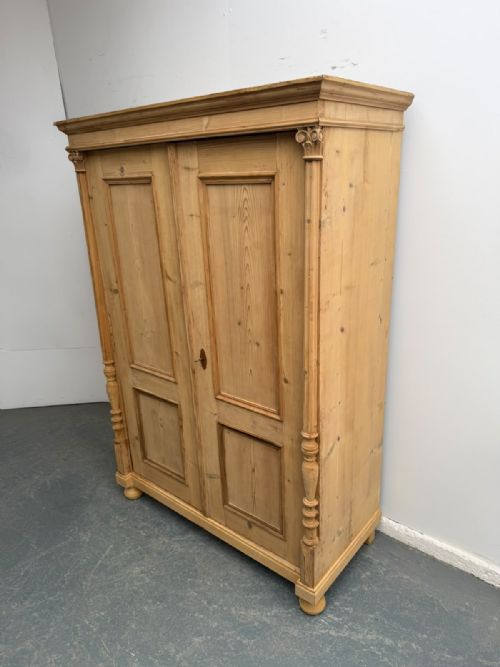
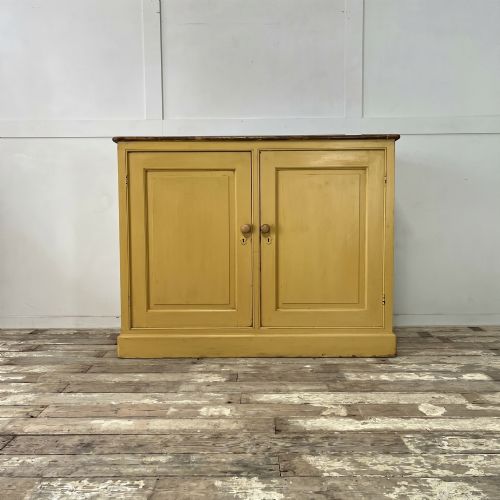


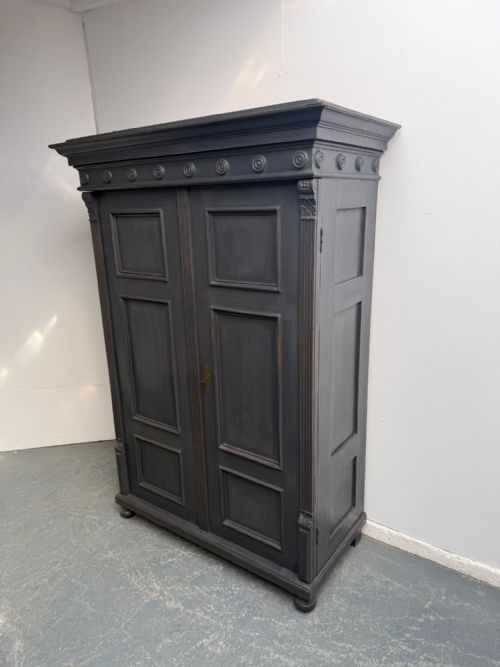


Large Pine Larder Cupboard
A large pine larder cupboard is a substantial storage piece built to hold provisions, offering generous capacity and honest utility for any home.
Large Pine Larder Cupboard
A large pine larder cupboard represents the backbone of traditional domestic storage, originating from periods such as the Georgian and Victorian eras. These pieces often take the form of housekeepers cupboards, kitchen dressers, or scullery cupboards designed to organise food and household stores. Buyers searching for a large pine larder cupboard will find substantial examples built for heavy utility in English, French, and Danish country settings.
The pieces on this page span the 18th century, the 19th century, and the early 20th century, capturing various regional vernacular traditions. One frequently meets variants such as four-door configurations, single-door storage units with internal drawers, and tall architectural cupboards reaching up to eight feet in height. These functional items reflect the changing needs of large households across rural and provincial communities.
How they were made
Carpenters constructed these cupboards primarily from solid pine, utilising iron and brass for hinges, latches, and internal hardware. Construction methods relied on sturdy tongue-and-groove joints, beaded framing, and pegged assemblies capable of supporting heavy loads of provisions and linen. Many surfaces were left as raw timber to be waxed, while others received coats of paint or weathered finishes over time.
Regional workshops built these utilitarian cabinets with adjustable shelving and functional compartments to suit the specific storage demands of domestic life. Glazed panels occasionally appeared on upper doors, alongside solid timber paneling and integrated drawer banks situated beneath the main storage cavity.
Listings feature pine storage pieces spanning the Georgian, Victorian, and early twentieth-century periods, alongside painted and waxed finishes.
What varies in quality
The standard of a large pine larder cupboard rests on the integrity of its timber selection, the heaviness of its construction, and the preservation of its original surface treatment. Pieces featuring uncompromised structural proportions, deep mouldings, and intact period hardware stand apart from simpler utility builds. The presence of early or original paint finishes also distinguishes more characterful regional examples from later utilitarian alterations.
Proportion and scale dictate the visual weight of these substantial cabinets within a room. Well-balanced door alignment, sound drawer construction, and clean internal shelving arrangements separate sturdy vernacular craftsmanship from ordinary utility furniture.
The Large Pine Larder Cupboard Glossary
- Housekeeper's cupboard
- A large storage cabinet traditionally used in country houses for linen, dry goods, and household provisions. These tall pieces often feature multiple doors and internal shelving.
- Scullery cupboard
- A utility cabinet designed for auxiliary kitchen work and food preparation storage. They reflect the practical demands of nineteenth-century domestic service areas.
- Beaded cupboard
- A cabinet featuring decorative edge moulding around the door panels or framing members. This subtle detail adds definition to the pine construction.
- Original paint
- A surface coating applied during the period of manufacture that has survived largely unaltered. Collectors value this historical layer for its authentic patina and depth of colour.
- Linen cupboard
- A dedicated storage unit built to hold household textiles and bedding. They frequently incorporate internal shelving and lower drawers for organisation.
Large Pine Larder Cupboard: Frequently Asked Questions
How were larder cupboards used originally?
These cupboards served as the primary food and provision stores for large households before modern refrigeration. They kept dry goods, baking supplies, and kitchen utensils organised and protected within the kitchen or scullery.
The deep shelving and tall compartments allowed cooks to store bulk provisions close at hand. Lower drawers provided additional space for linens, cloths, and smaller culinary tools.
How do I live with a large pine cupboard?
Integrating a tall storage piece into a modern interior requires careful consideration of wall space and ceiling height. These substantial cupboards offer exceptional storage capacity for contemporary kitchens, dining rooms, or hallways.
Ensure the piece is anchored securely to the wall, particularly when dealing with tall antique proportions. The internal shelves can be adapted for modern storage needs while retaining the historic exterior character.
How can I tell the period of a pine cupboard?
Dating relies on examining construction techniques, timber characteristics, and hardware styles across the piece. Georgian examples often display finer proportions and fielded panel doors, whereas Victorian variants tend to be heavier and more utilitarian.
Original hinges, key escutcheons, and fastener types offer further clues to the manufacturing date. Tool marks and joint construction hidden inside the cabinet also point toward specific regional traditions.
What is the difference between a larder and a housekeepers cupboard?
A larder cupboard was specifically designed for storing food provisions, often featuring ventilation or specialised internal compartmentalisation. A housekeeper's cupboard served a broader domestic purpose, storing linens, dry goods, and general household items.
In practice, surviving examples often overlap in form due to centuries of re-use in domestic settings. Both types share the same robust pine construction and impressive vertical scale.