



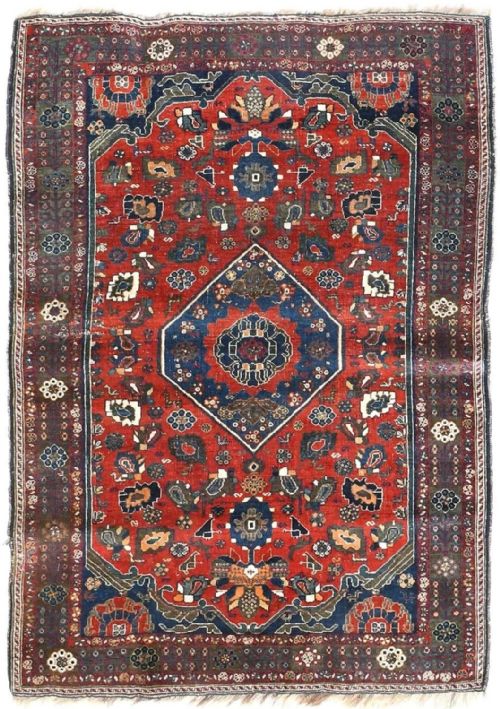
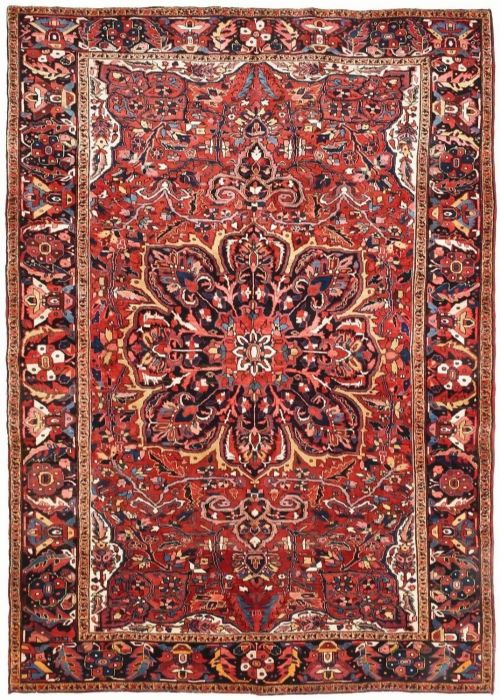


Large Persian Heriz Carpet
A large persian heriz carpet brings robust architectural geometry and rich earthy tones into a room, offering enduring floor coverings woven in the villages of north-west Persia.
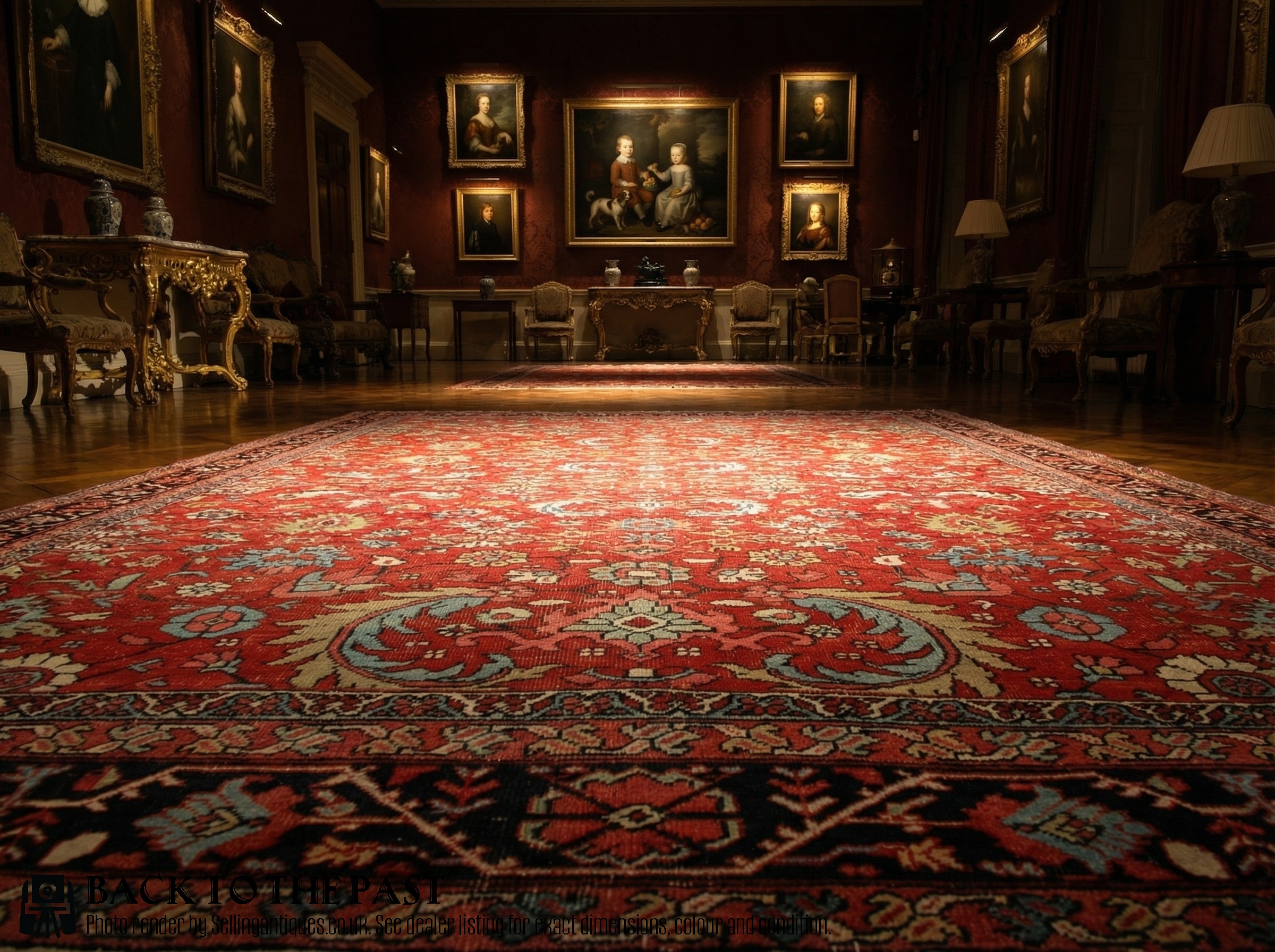
Large Persian Heriz Carpet
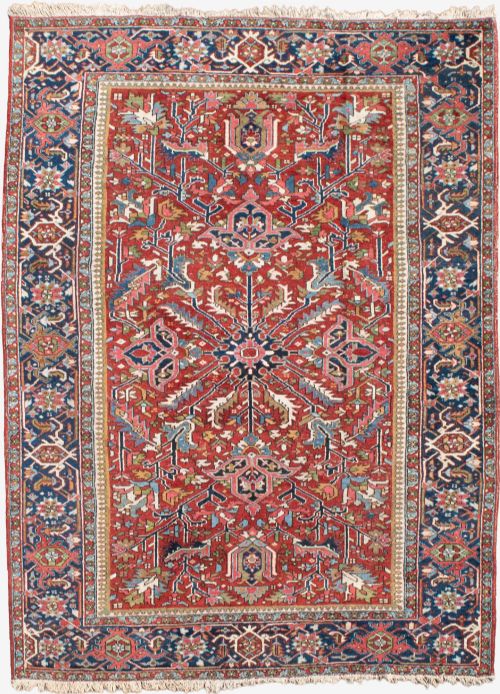
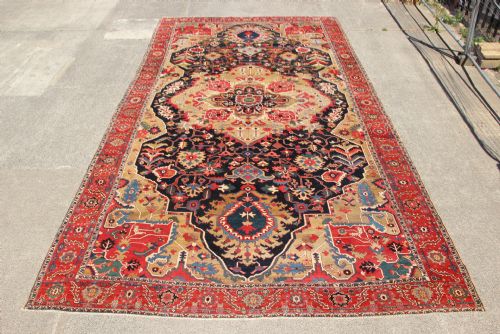
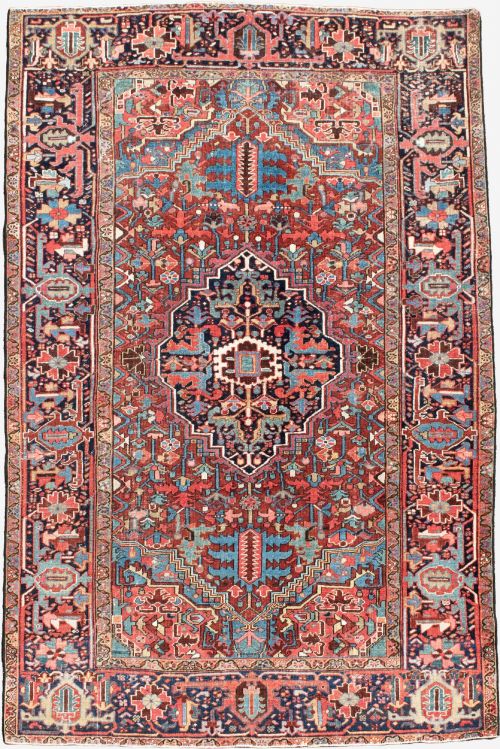
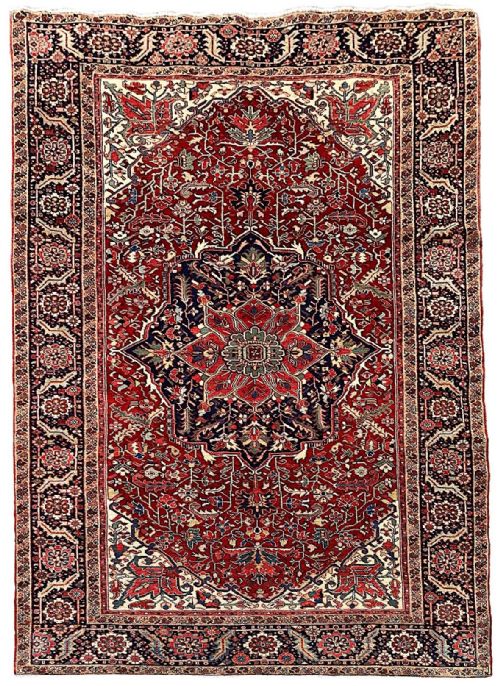
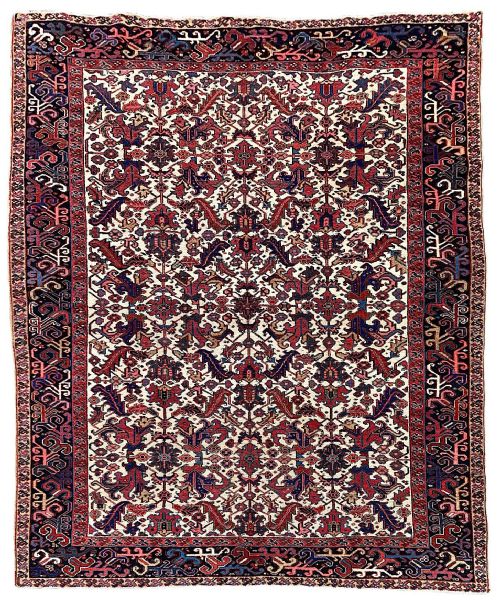
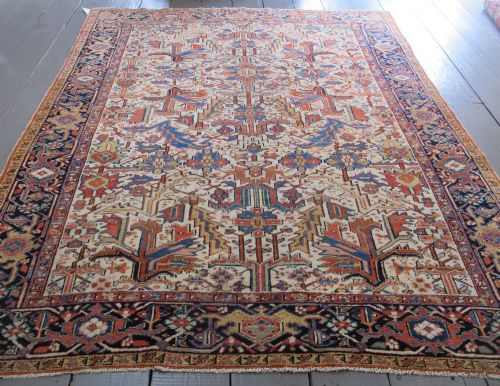
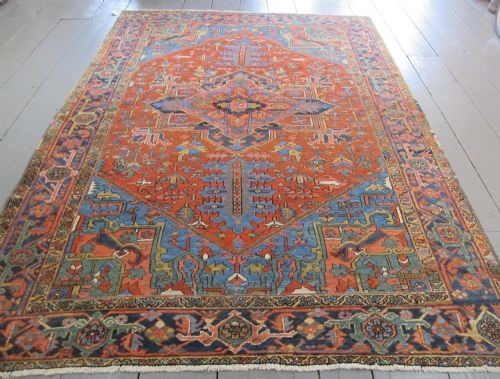
A large persian heriz carpet is a substantial room-sized floor covering originating from the Heriz region and surrounding districts in north-west Persia. These pieces typically display bold central medallions supported by angular corner spandrels and geometric lattice work.
Buyers browsing this selection will frequently encounter carpets dating from the late nineteenth century through to the early decades of the twentieth century. These room-scale textiles served heavy domestic use in country houses and town residences alike, adapting well to spacious interiors.
The regional weaving tradition encompasses closely related local variants such as Serapi, Bakshaish, Bakshiash, Karaja, and Ahar pieces. Each variant shares the characteristic sturdy handle and durable construction rooted in the local rug-weaving settlements.
How they were made
These carpets rely on a sturdy foundation of cotton warps andwefts combined with thick wool pile knotted by hand. The heavy wool supplies the dense, hardwearing texture required for large-scale floor use.
Dyers utilised natural vegetable dyes to achieve deep terracotta grounds, rich blues, and ivory accents. This palette developed a mellow patina across decades of exposure to light and wear.
Country house weavers sometimes ran short of matching dyed wool yarn halfway through a border, leaving charming tonal shifts across the corners.
What varies in quality
Knot density and structural crispness distinguish finer examples from standard village production. Tighter knotting allows sharper definition within the geometric medallions and intricate border bands.
The balance of the natural colour palette and the preservation of the original wool pile determine the overall visual impact of the piece. Well-balanced dyes and minimal restoration elevate the standing of an individual carpet.
The Large Persian Heriz Carpet Glossary
- Medallion
- The prominent central ornament set within the field of the carpet. Heriz weavers often rendered these motifs in large, angular geometric forms.
- Spandrel
- The triangular design elements positioned in the corners of the main field. They frame the central medallion and balance the overall composition.
- Warp
- The vertical foundation threads running the length of the carpet fringe to fringe. Cotton serves as the primary material for these structural elements.
- Weft
- The horizontal threads passed across the warps to bind the knots in place. They contribute to the firm, substantial handle typical of north-west Persian weaving.
- Serapi
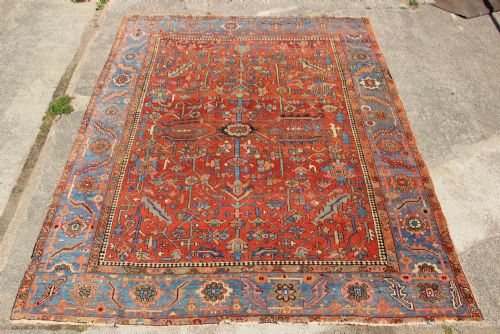
- A sub-style associated with older Heriz carpets, generally characterised by more open designs and softer, muted colour palettes.
Large Persian Heriz Carpet: Frequently Asked Questions
How do I care for a large antique carpet?
Vacuum gently without a rotating brush roll to remove grit from the wool pile. Professional cleaning should be undertaken periodically by specialists in antique oriental textiles.
Keep the carpet out of direct, harsh sunlight to protect the natural vegetable dyes from fading unevenly. Rotating the rug every year ensures even wear across high-traffic areas.
Are these carpets suitable for heavy foot traffic?
The dense wool pile and sturdy cotton foundation make these floor coverings exceptionally durable. They were originally built to withstand generations of daily household use.
Placing a quality underlay beneath the carpet prevents slipping and cushions the foundation fibres against hard subfloors. This simple step extends the working life of the textile significantly.
How can I tell a Serapi from a standard Heriz?
Serapi carpets generally date to the nineteenth century and feature more spacious, open field designs with softer colour integration. Standard Heriz pieces often display denser, more intricate geometric patterning.
Both types share the same regional origin in north-west Persia and utilise similar durable knotting techniques. The distinction lies primarily in the rhythm of the drawing and the age of the weave.
What is Bakshaish and how does it relate to Heriz?
Bakshaish refers to an adjoining weaving district that produced room-sized carpets with free-flowing, archaic geometric designs. These pieces often predate standard Heriz production of the early twentieth century.
The colour palette in Bakshaish examples tends toward warm terracotta and soft blues with abrash colour variations. They represent an earlier phase of the same north-west Persian village tradition.