


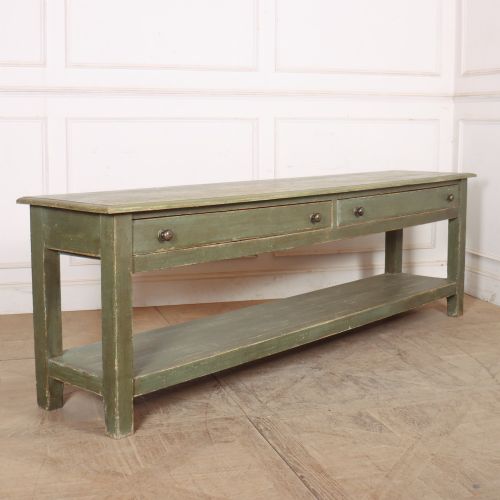


Large Painted Console Table
A large painted console table brings architectural presence and enduring colour to a hallway or reception room.
Large Painted Console Table
A large painted console table provides a substantial surface anchored by decorative painted timber, pine, or gesso surfaces. These furnishings appear across nineteenth-century English country, French rococo, and Italian country origins, often taking the form of serving tables, dresser bases, or traditional console formats.
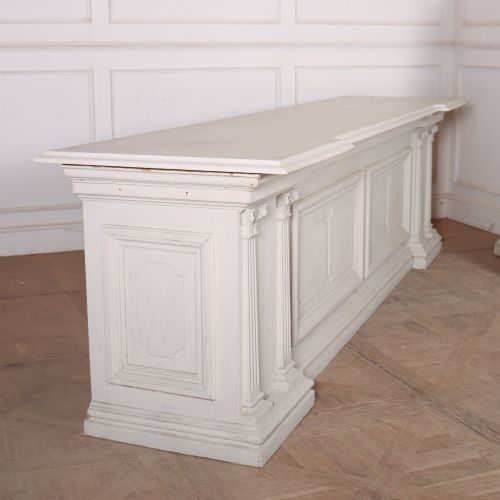
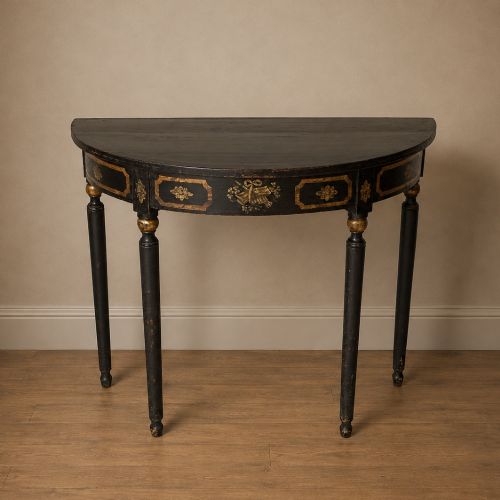
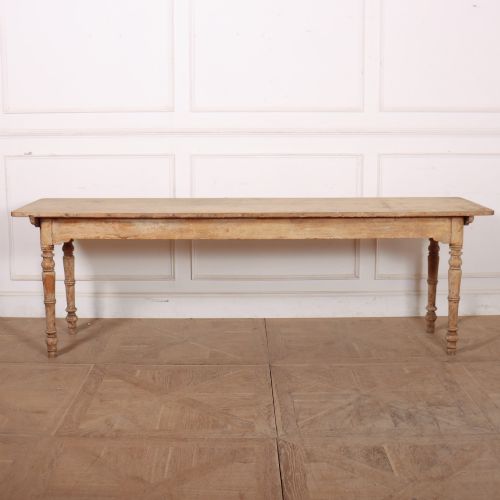
The most common examples on this page span the nineteenth century, including regional English serving tables with potboards alongside ornate French and Italian pieces finished in original paint and parcel gilt. Forms range from demi-lune shapes to rectangular prep tables and shop counters, offering robust proportions for interiors.
Materials and construction
Makers built these tables primarily using pine, walnut, and assorted painted timbers, often applying layered gesso and gold leaf to enrich carved mouldings. Surface decoration relied heavily on original paint schemes, which unified the timber structure and provided durable finishes for utilitarian or formal domestic settings.
Structural elements such as potboards, brass mounts, and carved wooden details reflect regional workshop traditions from England, France, and Italy. The application of pigment over wood created robust surfaces designed to endure daily service in large country houses and provincial interiors.
Many historic prep tables still bear faint flour dust and ink stains embedded deep within the pine boards from past centuries of honest toil.
Judging quality and character
Quality rests primarily in the integrity of the original painted surface and the crispness of any carved gesso or parcel gilt detailing. Tables retaining untouched nineteenth-century surface patination hold superior decorative presence compared to those with later repainting.
Proportion and structural honesty separate standard utility pieces from finer architectural console and serving tables. Well-balanced timber frames with authentic brass hardware and minimal structural intervention represent the upper tier of surviving examples.
The Large Painted Console Table Glossary
- Demi-lune
- A half-moon shape used frequently for console tables designed to sit flush against a wall. This format allowed formal tables to occupy narrower hallways without obstructing circulation.
- Parcel gilt
- A technique where selective areas of a wooden or gessoed surface are highlighted with gold leaf. It draws the eye to carved details and mouldings against a contrasting painted background.
- Potboard
- An open slatted lower shelf found on traditional English serving tables and dresser bases. Originally intended for storing heavy earthenware pots and kitchen utensils.
- Gesso
- A plaster-like mixture applied to wood surfaces to create a smooth base for painting and gilding. Skilled artisans carved intricate relief decorations directly into this dried preparation.
Large Painted Console Table: Frequently Asked Questions
Where should I place a large painted console table?
These large tables suit wide entrance halls, drawing rooms, or dining spaces where their extended proportions provide both surface utility and visual impact.
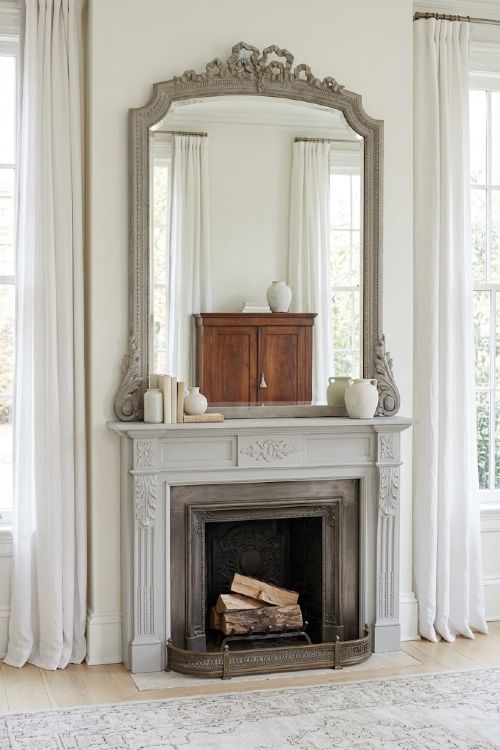
Positioning them against a principal wall allows them to anchor the room, often paired with a mirror or significant artwork above.
How do I care for original painted wood surfaces?
Preserving historic paint requires gentle dusting with a soft dry cloth, avoiding modern chemical polishes or excessive moisture.
Keeping the table away from direct heat sources and strong sunlight protects the underlying timber and prevents the original pigment from drying out.
What is the difference between a console table and a serving table?
Console tables were traditionally designed to stand against a wall, frequently supported by brackets or legs, serving a largely decorative function in reception rooms.
Serving tables and dresser bases originated in domestic dining and kitchen spaces, built with sturdier timber frames and lower shelves to handle heavy provisions.
How can I tell if the paint is original?
Original paint exhibits natural craquelure, subtle surface wear, and pigment integration consistent with nineteenth-century handling and age.
Examination under natural light often reveals layered build-ups and authentic patination that modern repainting attempts struggle to replicate convincingly.