



Large Ornate Mantle Mirror
A large ornate mantle mirror commands attention above a fireplace, reflecting light and amplifying the proportions of a room with historic presence.
Large Ornate Mantle Mirror
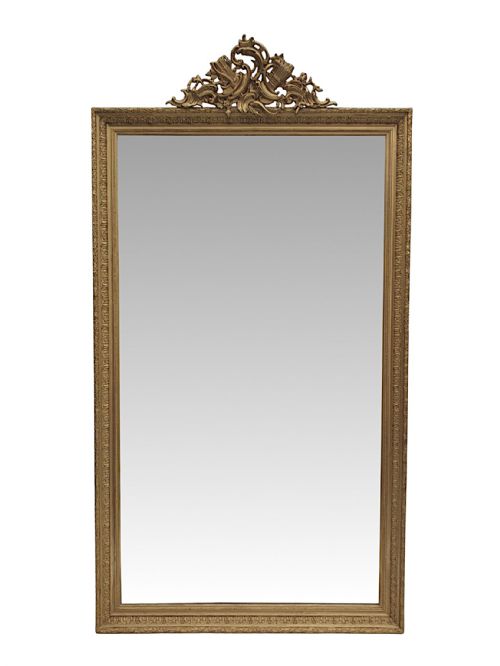
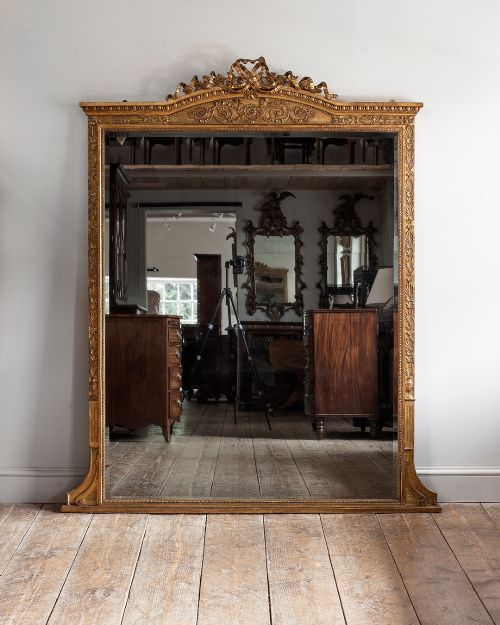
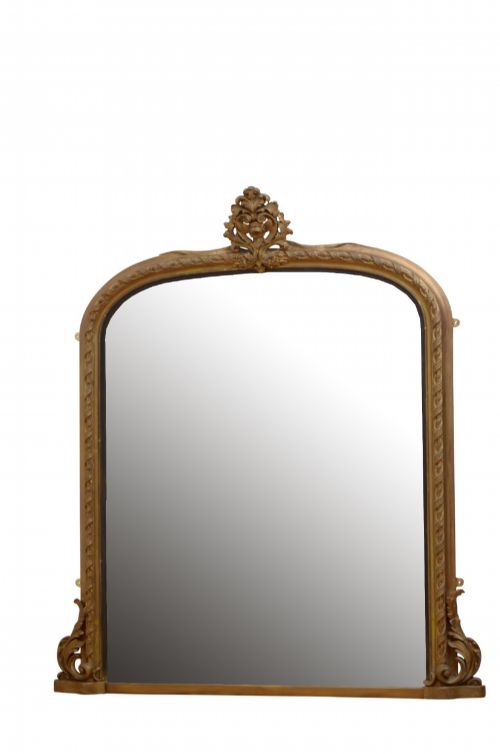
A large ornate mantle mirror is a substantial architectural glass designed to rest upon a fireplace mantelpiece or hang directly above it. These pieces primarily date from the nineteenth century, including Regency, Victorian, and Edwardian eras, alongside earlier Georgian and eighteenth-century examples.
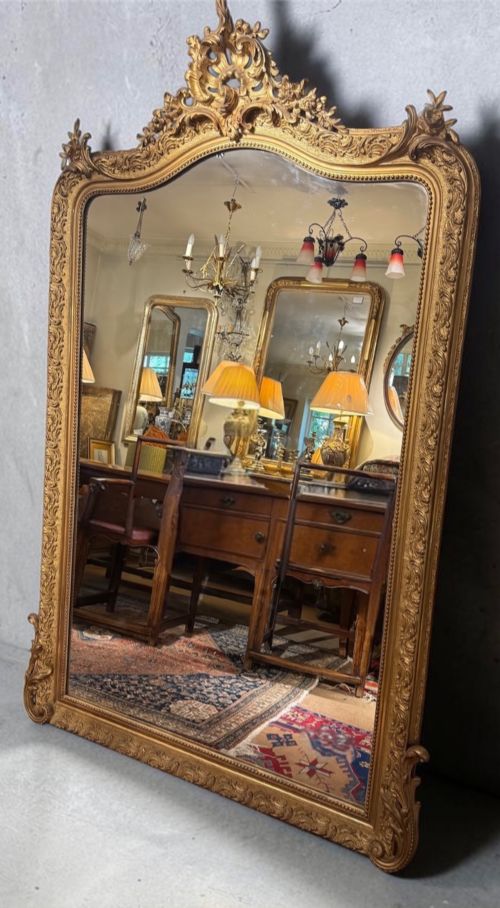
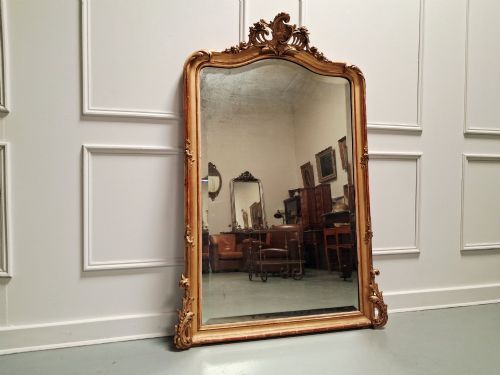
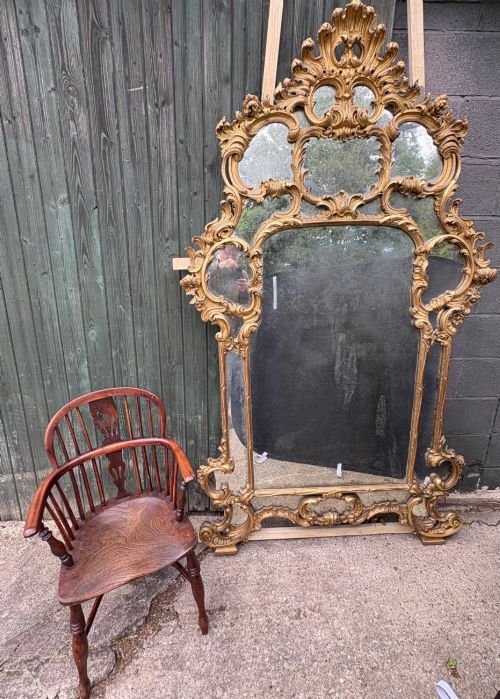
The form encompasses overmantel mirrors, arched wall mirrors, and leaner mirrors with elaborate frames shaped for grand domestic interiors. Most options encountered here display robust giltwood, carved wood, and gesso construction reflecting French and English revival styles.
How they were made
Makers constructed the foundational frames from timber, often utilising carved wood or layered composition and plaster to build up intricate relief ornaments. Artisans then applied gesso as a smooth preparatory ground before finishing the surface with gold leaf or gilding.
Mirrors of this scale relied on heavy plate glass fitted securely into the wooden rabbet at the back. Traditional silvering techniques and hand-beveled edges frequently accompany these period frames, showing subtle variations from manual production.
Several mirrors carry the invisible echoes of grand country houses, having spent centuries watching generations practice their ballroom bows.
What varies in quality
Depth and crispness of the carved ornamentation separate standard decorative frames from superior examples. Hand-carved wooden details and meticulously layered gesso hold sharper relief and finer definition than mass-moulded composition substitutes.
The preservation of the original gilding and the clarity of the antique mirror plate dictate the tier of a piece. Original mercury silvering or early polished plate glass displaying authentic tonal variation indicates higher desirability among collectors.
The Large Ornate Mantle Mirror Glossary
- Overmantel mirror
- A glass specifically proportioned to sit on a fireplace mantel or hang on the chimney breast above it. These horizontal or arched formats visually anchor the hearth within the room.
- Gesso
- A plaster-like mixture applied to wooden frame foundations to create a smooth surface for gilding. Artisans mould or carve intricate relief patterns directly into this layer.
- Giltwood
- Timber that has been coated with gold leaf or gold paint. This finish provides the characteristic metallic brilliance seen on period frames.
- Rococo Revival
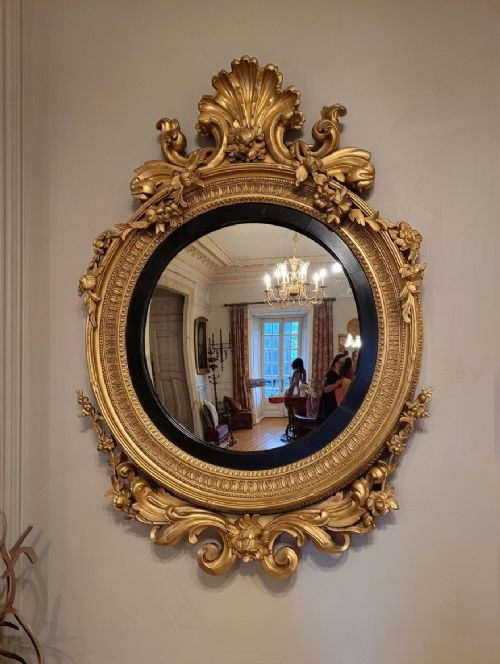
- A nineteenth-century design movement emulating the asymmetrical C-scrolls, floral motifs, and shellwork of the French eighteenth century. This style dominates many ornate mirror frames.
- Regency
- An English design period spanning the early nineteenth century characterised by classical restraint, elegant proportions, and often convex or oval formats.
Large Ornate Mantle Mirror: Frequently Asked Questions
Where should a large ornate mantle mirror be hung?
These mirrors are traditionally positioned directly above a fireplace mantel to reflect light and balance the vertical volume of a chimney breast. They also function successfully as leaner mirrors placed on the floor against a principal wall.
Securing such heavy frames requires appropriate wall fixings or weight-bearing brackets to support the substantial combination of wood, gesso, and thick glass safely.
How do I identify a Victorian overmantel mirror?
Victorian examples frequently display exuberant Rococo Revival styling, heavy gesso ornamentation, and arched or shaped tops designed for mid-nineteenth-century domestic spaces. They often combine moulded composition decoration over a sturdy wooden carcase.
Examining the construction methods at the reverse, including the type of timber backing boards and joining nails, helps confirm the nineteenth-century production period.
Are these mirrors suitable for modern interiors?
The scale and reflective surface of a nineteenth-century glass introduce dramatic architectural presence and natural light into contemporary rooms. Placing an antique frame against neutral walls creates a deliberate contrast between historic craftsmanship and minimalist decor.
Their substantial proportions allow them to serve as the primary focal point in a living room, hallway, or bedroom without requiring additional wall adornment.
What distinguishes French chateau styles from English pieces?
French designs from the nineteenth century, including Louis Philippe and Rococo Revival forms, often feature softer gilt tones, rounded arched shoulders, and delicate cartouche crestings. English counterparts tend to emphasise robust carved wood structures and architectural symmetry.
Both traditions utilised high-quality gesso and gilding, but regional moulding profiles and decorative motifs reflect the distinct aesthetic preferences of London and Parisian workshops.