


Large Open Shelving
Large open shelving brings architectural depth and accessible display to a room, uniting utility with formal presence.
Large Open Shelving
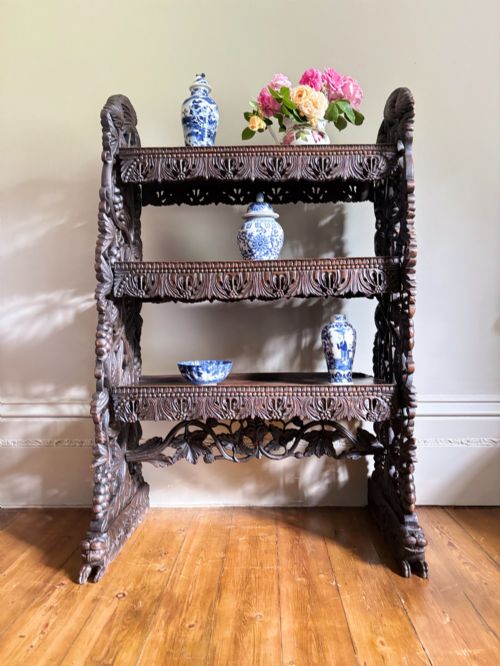
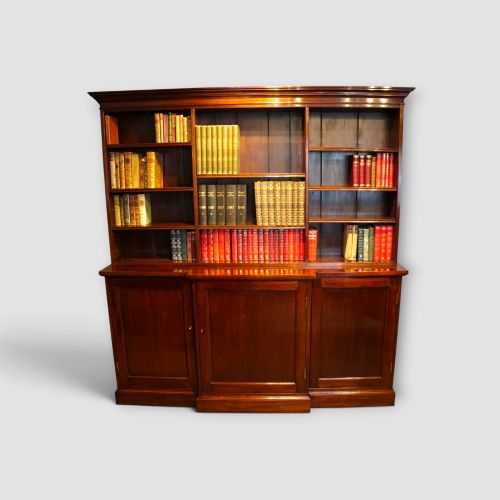
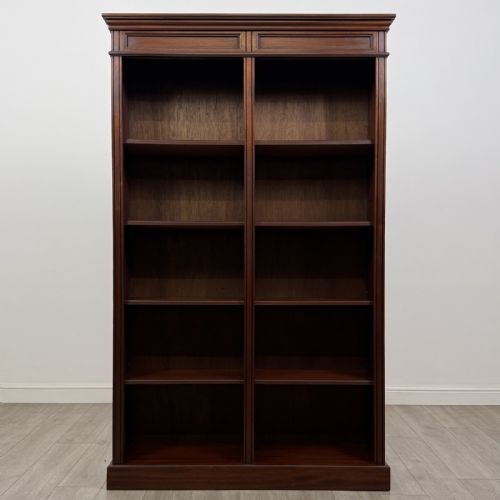
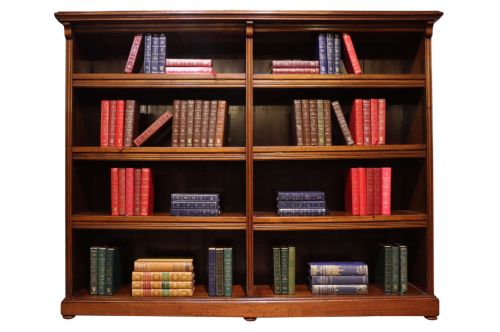
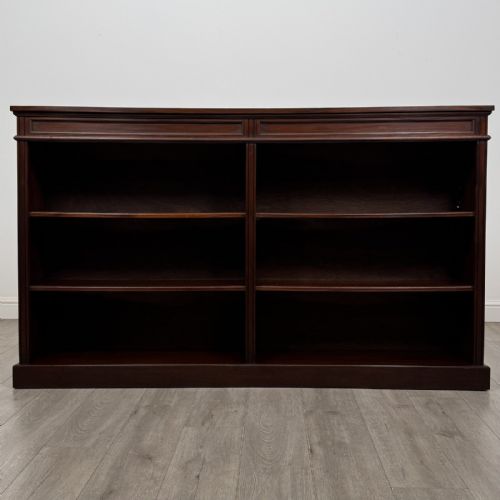
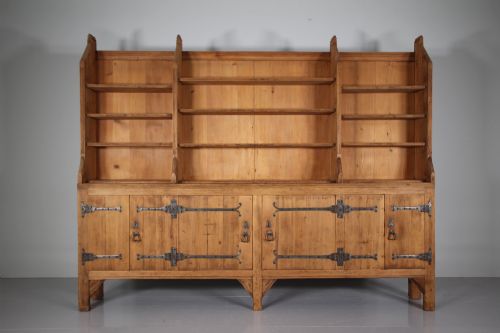
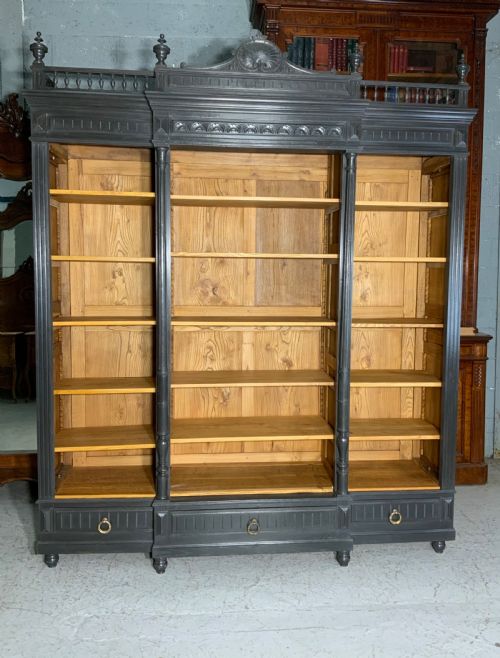
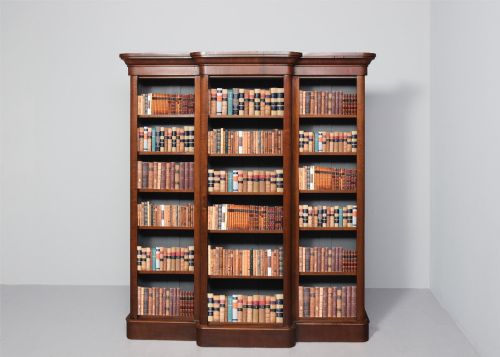
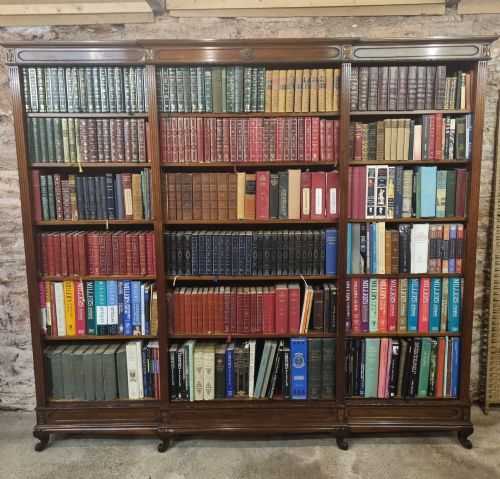
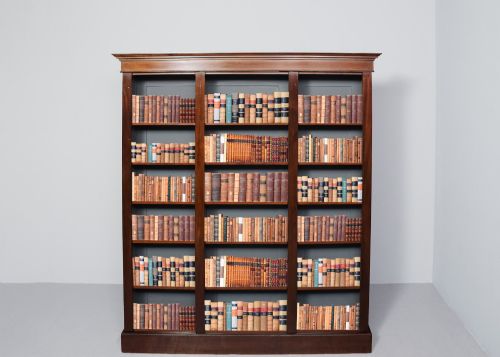
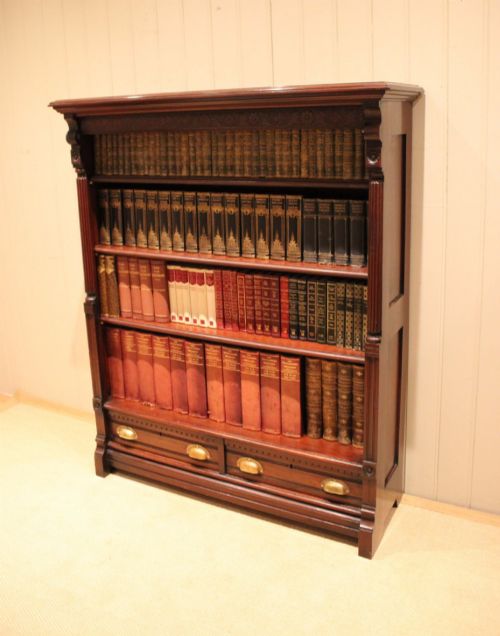
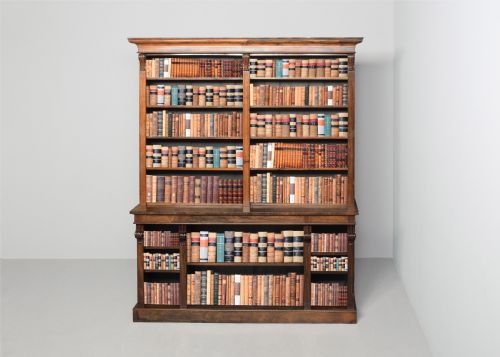
Large open shelving primarily takes the form of expansive bookcases, library units, and breakfront display pieces intended for substantial wall spaces. These items originate predominantly from the nineteenth and early twentieth centuries, spanning Victorian, Edwardian, and William IV eras.
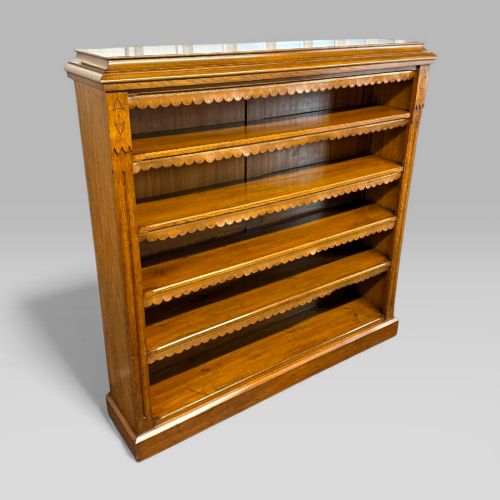
The versions most commonly met on this page are multi-section mahogany, oak, and walnut bookcases designed with adjustable tiers. Pieces range from austere, clean-lined utility forms to ornate Continental and Sheraton-style variations.
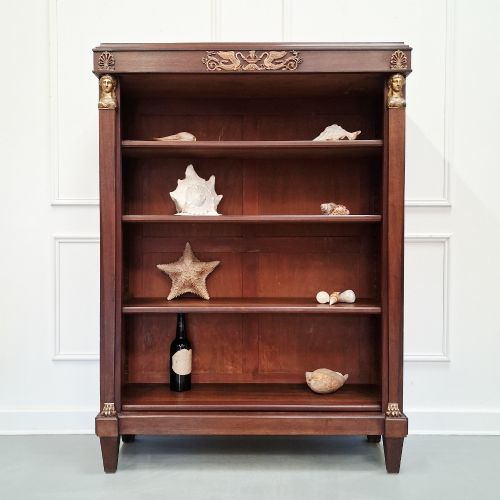
Buyers also encounter specialised furniture types such as credenzas, buffets, and bakers racks that share the characteristic unobstructed storage format. Origins stretch from English workshops to French provincial and Anglo-Indian makers.
Materials and construction
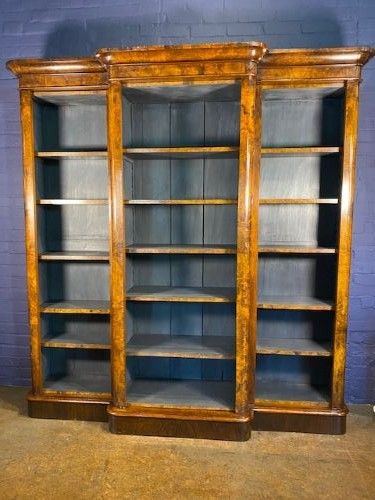
Cabinet makers utilised dense hardwoods including mahogany, rosewood, walnut, and burr walnut, alongside golden oak, pine, and padauk. Solid timber construction underpins the structural integrity of these large upright units.
Surface ornamentation relied on sophisticated techniques such as contrasting wood veneers, intricate carving, inlaid stringing in the Sheraton manner, and applied ormolu mounts. Shelving tiers were frequently engineered with adjustable mechanisms to accommodate varying volume heights.
Large Open Shelving Retail Price Guide 2026
Typical asking prices for large open shelving among the pieces listed under this phrase on Sellingantiques today, from the lower quarter to the upper quarter. They describe what is for sale here now, not the wider market.
Some nineteenth-century makers evidently expected historians to read by candlelight, incorporating cunning pull-out ledges to rest heavy volumes upon.
Distinctions in quality
Quality rests upon the selection of timber figure, such as flame mahogany or burr walnut, and the precision of the cabinet work in breakfront configurations. Finer examples display meticulous attention to timber grain continuity and balanced proportions across multiple sections.
Decoration also dictates standing, where restrained architectural mouldings contrast with skilled hand-carving or brass ormolu mounts. The inclusion of functional refinement, such as smoothly operating adjustable shelving systems, separates standard workshop production from high-tier library furniture.
The Large Open Shelving Glossary
- Breakfront
- A piece of furniture where the central section projects forward from the flanking wings. This architectural arrangement creates depth and shadow across large cabinet fronts.
- Ormolu
- Gilt bronze mounts applied as decorative highlights on fine cabinetry. The technique involves mercury gilding cast bronze elements.
- Padauk
- A heavy, durable tropical timber with a distinct reddish-brown tone. It appears frequently in Anglo-Indian furniture production of the nineteenth century.
- Inlay
- The technique of embedding pieces of contrasting wood, shell, or metal into a solid wood surface to form decorative patterns. Sheraton-style pieces often utilise delicate linear stringing.
- Adjustable shelves
- Shelving supported by pegs or racks that allow the vertical spacing to be altered. This adaptation proved essential for large library bookcases.
Large Open Shelving: Frequently Asked Questions
Where should I place large open shelving?
These substantial units demand considerable wall space and structural support, making them ideal for studies, libraries, and principal living rooms. Position them away from direct heat sources to protect historic timbers.
Ensure the floor surface is level to maintain the stability of tall breakfront bookcases and multi-section shelving assemblies.
How do I care for antique wood surfaces?
Maintain the finish by applying natural beeswax sparingly and buffing with a soft cloth to nourish the historic grain. Avoid commercial silicone sprays that can degrade older polishes over time.
Keep the room at a stable humidity level to prevent the solid mahogany, oak, or walnut from expanding or contracting excessively.
Are the shelves adjustable on these bookcases?
Many nineteenth and early twentieth-century examples feature adjustable shelves supported by wooden ratchets or metal pins. This practical design allowed libraries to house books of varying heights.
Check individual descriptions to confirm the presence of adjustable mechanisms on specific multi-section units.
What is the difference between Victorian and Edwardian pieces?
Victorian furniture often utilises heavier timbers like rosewood and dark mahogany with robust proportions and Gothic or classical revival motifs. These pieces carry a formal, imposing presence.
Edwardian items frequently display lighter golden oak or walnut tones with simpler lines, reflecting a shift towards brighter domestic interiors.