



Large Oak Island
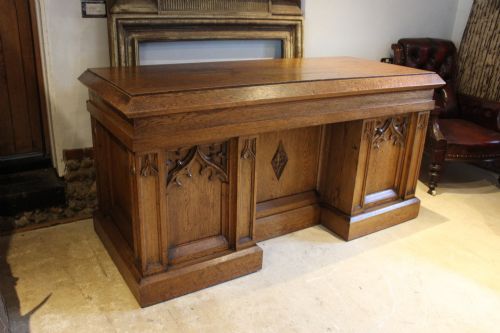
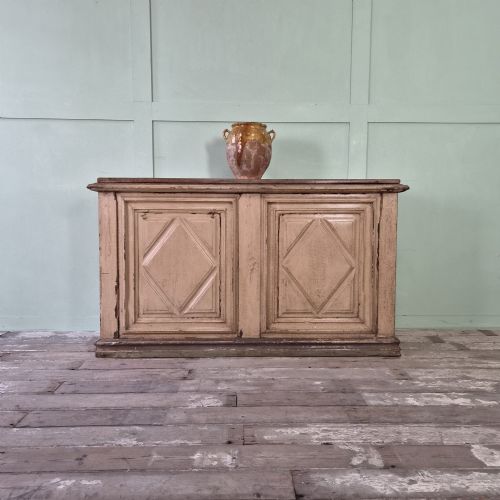
These large oak island pieces are substantial working tables and counters that anchor a room with genuine antique utility.
Large Oak Island
A large oak island search brings up heavy timber tables, workbenches, drapers tables and butchers blocks designed for serious domestic or workshop tasks. These pieces arrive from nineteenth century France and Britain, built to handle daily labour rather than polite parlour use.
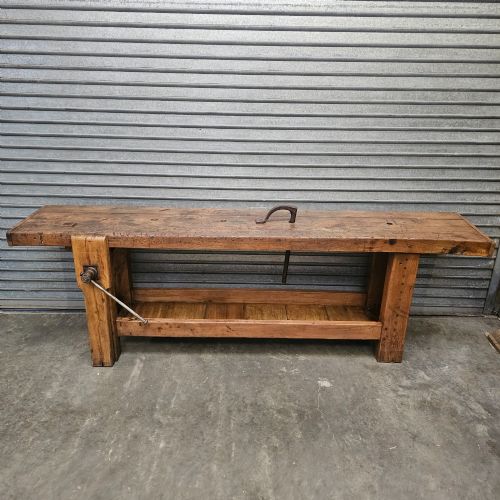
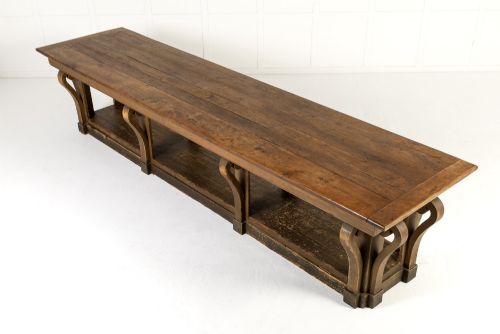
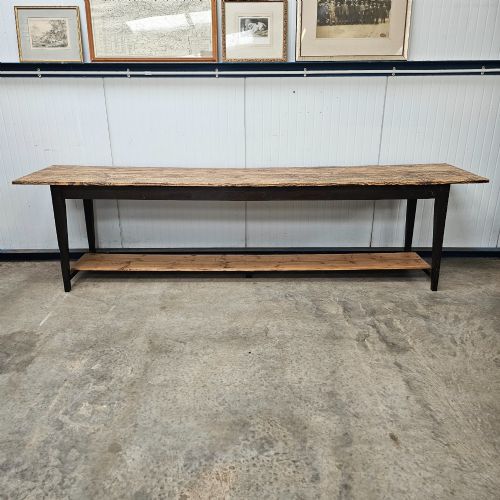
You are most likely to meet long French drapers tables in bleached oak or substantial nineteenth century workbenches fitted with vices. These forms offer long expanses of timber surface supported by sturdy legs, often incorporating lower shelves or drawers.
The selection ranges from rustic French country farmhouse tables to monumental four metre commercial counters. Each item retains the scars of genuine historic use, showing that these massive oak frames were built to endure generations of heavy work.
Materials and construction
Makers built these pieces primarily from solid oak, sometimes combined with pine, elm or other hardwoods for internal framing and secondary components. Iron vices, brass fittings and painted finishes appear on specific workshop and butchers block examples.
Carpenters joined thick timber slabs using robust traditional methods to withstand constant pressure, hammering and cutting. Surfaces display the honest grain of heavy oak, occasionally bleached or left with traces of original paint.
Large Oak Island Retail Price Guide 2026
Typical asking prices for large oak island among the pieces listed under this phrase on Sellingantiques today, from the lower quarter to the upper quarter. They describe what is for sale here now, not the wider market.
Several heavy workbenches still retain their original wooden vices, ready to clamp down on your morning post.
Judging quality in large oak island pieces
Quality rests entirely in the integrity of the original timber and the honesty of the wear. Pieces retain their value when the heavy oak top remains thick and flat without excessive modern alterations.
Construction details distinguish a provincial workshop utility bench from a finer domestic dining table. The presence of working original vices, untouched original paint surfaces, or untouched historic patina elevates an example above standard utility items.
The Large Oak Island Glossary
- Workbench
- A heavy utilitarian table fitted with a wooden vice, designed for carpentry or craft work. These items provide immense structural weight and thick timber tops.
- Drapers Table
- A long, narrow retail counter featuring multiple tiers or drawers used originally for folding and displaying textiles. They offer exceptional surface length for modern kitchens.
- Refectory Table
- A long dining table traditionally used in communal halls, featuring sturdy stretcher bases to prevent leg wobble over long spans. This form suits large gathering spaces.
- Bleached Oak
- Timber that has undergone a process to lighten its natural tone while retaining the visible grain structure. This finish appears frequently on French country furniture.
- Butchers Block
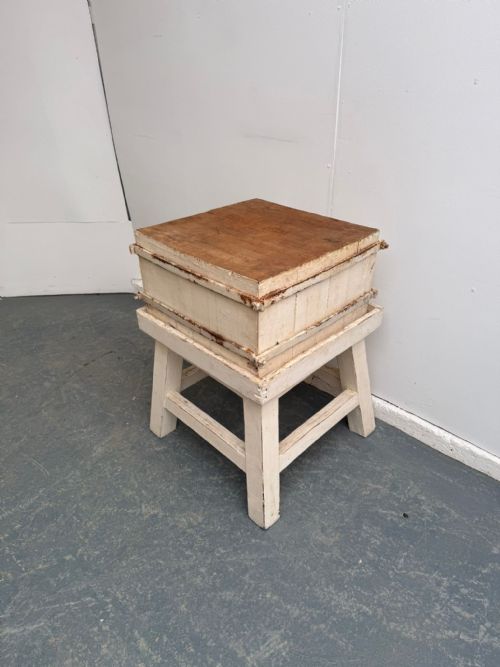
- A thick, heavy block of end-grain timber mounted on a sturdy frame, used for meat preparation. These pieces demonstrate intense industrial wear and solid construction.
Large Oak Island: Frequently Asked Questions
How do I clean a large oak island surface?
Wipe the timber using a damp cloth with mild soap, avoiding harsh chemical cleaners that strip the historic finish. Dry the surface immediately to protect the antique wood grain.
Nourish the oak periodically with a suitable beeswax or natural oil to prevent the heavy boards from drying out over time.
Can I use a workbench as a kitchen island?
These robust workbenches and drapers tables make ideal kitchen islands due to their height, depth and durable timber construction. They provide ample workspace for food preparation and storage underneath.
Ensure you measure your floor space carefully, as these monumental pieces require substantial clearance around all sides for comfortable movement.
How do I identify a nineteenth century piece?
Examine the construction marks beneath the top and along the frame for hand-cut joinery and signs of ageing. Nineteenth century timber displays authentic tool marks and shrinkage patterns absent in modern reproductions.
Check the fasteners and hardware for period accuracy, noting that hand-forged iron and early brass fittings accompany genuine antique pieces.
What is the difference between bleached oak and raw oak?
Bleached oak has been chemically treated to achieve a lighter, Scandinavian-style pale tone while preserving the underlying texture of the hardwood. This finish became popular for softening the heavy appearance of large French furniture.
Raw or natural oak displays the darker, warmer golden brown hues developed through age and exposure to light without surface lightening treatments.