



Brown Wood Workbench
A brown wood workbench brings honest utility and heavy timber presence into a room, forged from decades of practical trade.
Brown Wood Workbench
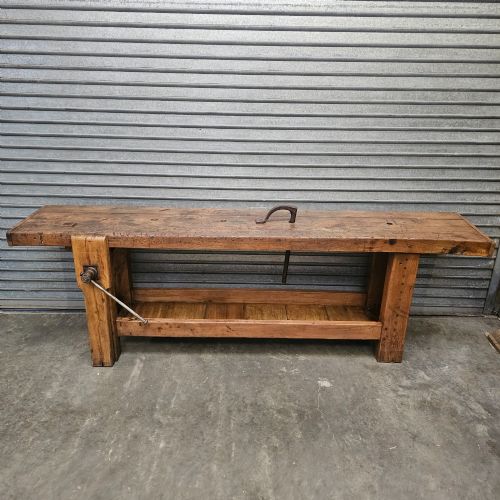
When you search for a brown wood workbench, you are looking at heavy utility furniture designed for crafts and trades, most commonly appearing here as French artisans' workbenches and English tavern tables from the nineteenth century. These pieces were built to withstand demanding workshop environments, featuring thick tops and integrated vices.
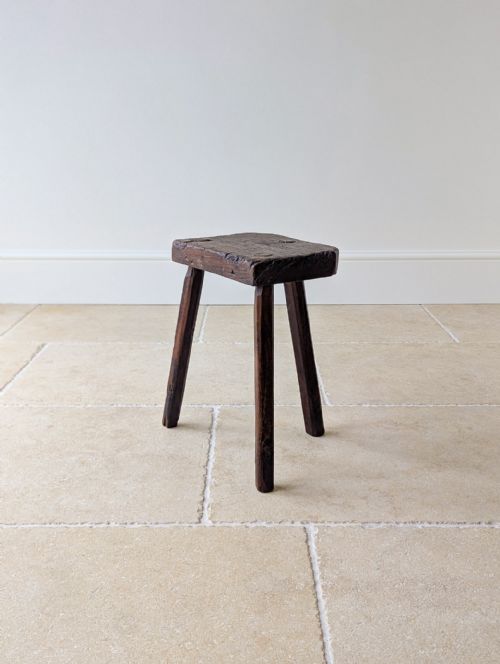
You are most likely to meet French provincial and rustic examples on this page, alongside industrial salvage and Victorian pieces constructed from robust timbers. Forms range from traditional workbenches with vices to related workshop seating like jeweller's stools and sorting tables.
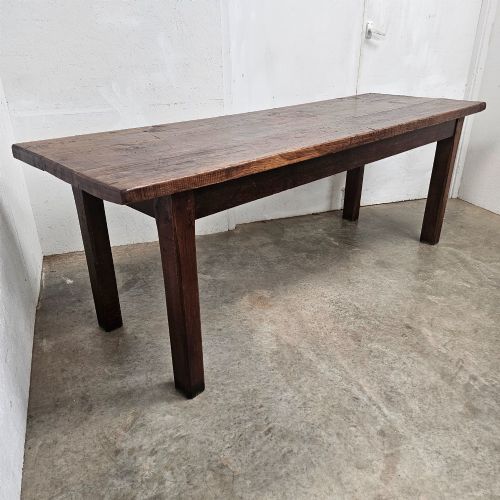
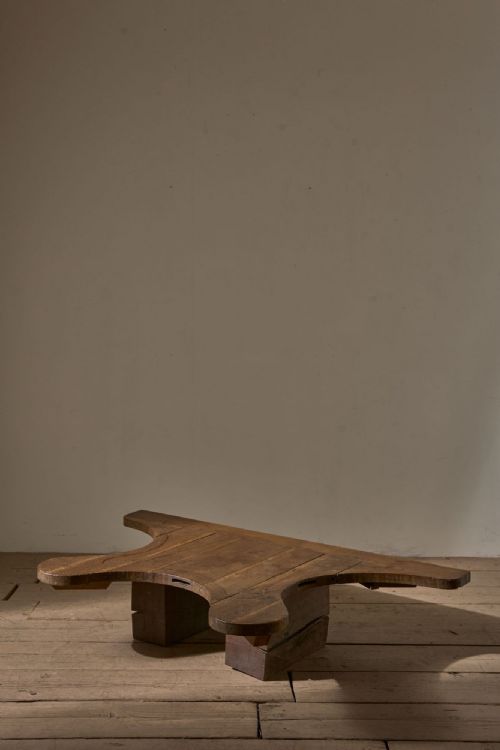
The heavier examples retain the scars and patination of genuine labour, showing how trade furniture transitions naturally into domestic interiors as dining tables or coffee tables.
Materials and construction
Construction relies on dense hardwoods such as oak, beech, fruitwood, elm, and ash, chosen for their ability to endure heavy pounding and sustained pressure without splitting. These substantial timbers are frequently paired with iron and cast iron hardware, notably in the heavy vices and mechanical components.
Joinery is straightforward and utilitarian, prioritising structural rigidity over decorative flourish. Thick wooden tops are pegged or bolted to robust underframes, creating stable platforms designed to remain motionless during rigorous handwork.
Brown Wood Workbench Retail Price Guide 2026
Typical asking prices for brown wood workbench among the pieces listed under this phrase on Sellingantiques today, from the lower quarter to the upper quarter. They describe what is for sale here now, not the wider market.
The listings span the nineteenth and early twentieth centuries, featuring oak, beech, fruitwood, and cast iron.
Judging quality in workshop furniture
Quality rests primarily on the integrity and thickness of the timber used for the top, as well as the completeness of original working mechanisms like wooden vices. Pieces that retain their genuine structural hardware and bear deep, honest wear from decades of trade stand apart from later recreations.
The balance of proportions between the heavy top and the supporting underframe defines a superior example. Retaining original metalwork, screws, and vice handles preserves the functional authenticity that collectors value above sanitised restoration.
Thonet
The Brown Wood Workbench Glossary
- Vice
- A mechanical screw device mounted to the workbench to hold material firmly in place while worked. Original wooden or iron vices are integral to the piece's function.
- Patina
- The surface sheen and colour acquired through years of use, handling, and polishing. It marks the transition from workshop tool to domestic centrepiece.
- Primitive
- A style descriptor for furniture made without sophisticated joinery techniques, relying on straightforward construction. These items emphasise raw utility over academic design.
- Artisans bench
- A heavy work surface designed for skilled handcrafts, typically fitted with tool wells and clamping mechanisms. They form the core of current workshop listings.
Brown Wood Workbench: Frequently Asked Questions
How were workbenches used originally?
These tables served as heavy-duty stations for carpenters, watchmakers, and jewellers, providing a stable surface for hammering, cutting, and assembly. Integrated vices and wells kept tools and materials secured during intricate labour.
Over decades of trade use, they absorbed the oils, paints, and impacts characteristic of nineteenth-century workshops.
How do I live with a workbench?
A heavy wooden workbench functions well as a kitchen island, a dining table, or a low coffee table depending on its height. Their substantial timber presence anchors a room and tolerates daily domestic use.
Keep the surface treated with suitable oils to protect the aged hardwood without erasing the historic marks of trade.
How do I spot nineteenth-century workbenches?
Look for dense hardwoods like oak, beech, and fruitwood paired with hand-forged iron components and traditional pegged joinery. The timber should display deep patination and honest wear rather than uniform factory finishing.
Construction methods reflect practical necessity, featuring thick tops designed to absorb heavy impacts.
What is an artisan bench?
An artisan bench is a specialised trade table designed for skilled craftspeople such as watchmakers, jewellers, or cabinet makers. These pieces often feature smaller dimensions, sorting compartments, or built-in vices suited to delicate tasks.
They translate easily into domestic spaces as unique side tables or desks.