

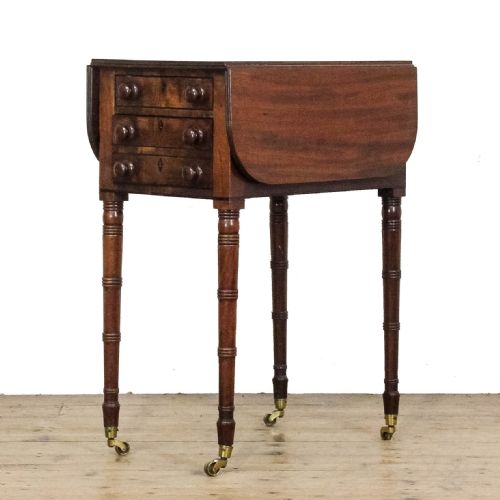


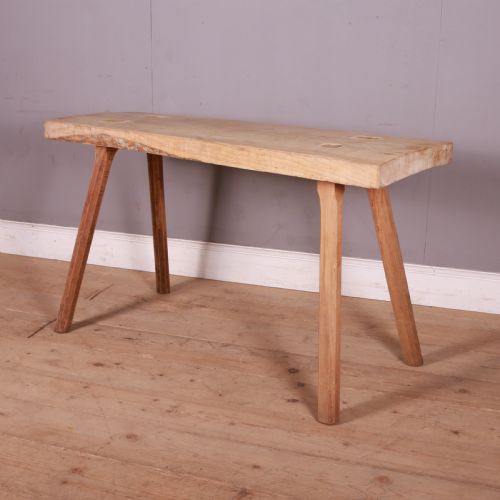


Antique Timber Worktable
An antique timber worktable is a sturdy, functional surface built for practical graft that now brings honest character to modern rooms.
Antique Timber Worktable
An antique timber worktable covers heavy utilitarian furniture ranging from French craftsmen's benches to Welsh farmhouse tables. Buyers hunting for an antique timber worktable will find robust surfaces built for actual labour rather than polite parlour use.
The pieces present on this page span the eighteenth, nineteenth, and early twentieth centuries. Regional variations include French country workbenches, Spanish farmhouse tables, and Victorian kitchen pieces.
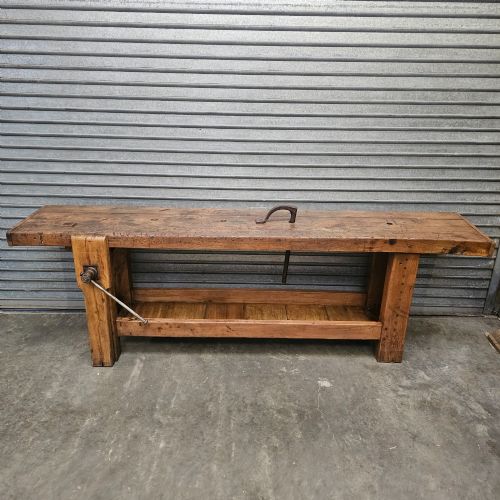
Form follows function closely across these examples. Many pieces incorporate vices, clamping bars, or trestle supports designed for demanding daily tasks.
How they were made
Construction relies on hard-wearing timbers selected for resilience. Oak, beech, pine, sycamore, elm, and chestnut form the primary bodies, often paired with iron or brass hardware.
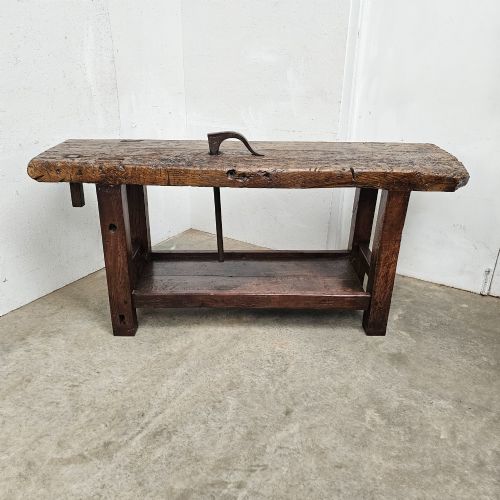
Joinery and structural elements reflect workshop and agricultural requirements. Thick tops sit on braced legs or trestle bases, occasionally fitted with functional vices and mounting bars.
Antique Timber Worktable Retail Price Guide 2026
Typical asking prices for timber worktable among the pieces listed under this phrase on Sellingantiques today, from the lower quarter to the upper quarter. They describe what is for sale here now, not the wider market.
One French butcher's block arrives equipped with bronzed mounts and a glass top, trading raw meat prep for elegant display.
What varies in quality
Quality rests in the integrity of the timber and the honesty of the wear. Tables that retain their original working mechanisms, such as wooden vices and clamping bars, hold greater documentary interest.
Proportion and scale distinguish ordinary boards from superior examples. Well-balanced trestle framing and substantial timber thickness separate utilitarian items from finer provincial craftsmanship.
The Antique Timber Worktable Glossary
- Vice
- A mechanical screw device attached to a workbench to hold timber firmly in place during crafting. This feature is common on nineteenth-century artisan benches.
- Trestle table
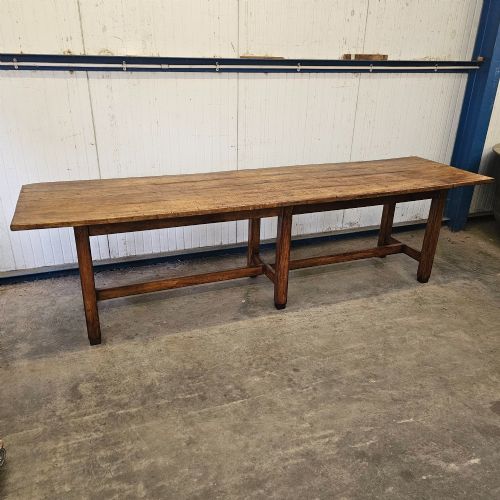
- A board resting on two or more supporting frames or tressels rather than four separate legs. This design offers stability for heavy workshop use.
- Clamping bar
- A sliding wooden beam used to secure workpieces across the bench top. It assists with heavy assembly tasks.
- Scrubbed
- A surface finish achieved by vigorous cleaning with water and a stiff brush, removing accumulated grime to reveal raw pale wood. This treatment is typical of utilitarian kitchen tables.
- Butchers block
- A thick wooden block designed for meat preparation, often supported by heavy frames with metal mounts. These surfaces show deep scoring from daily cutting.
Antique Timber Worktable: Frequently Asked Questions
What is an antique timber worktable used for today?
These tables serve primarily as kitchen islands, dining surfaces, or console desks in domestic interiors. Their generous proportions and sturdy builds make them practical for modern food preparation and daily gatherings.
The utilitarian origins mean buyers often place them in busy rooms where heavy use is welcomed rather than feared. Their surfaces carry the marks of past labour, adding texture to contemporary spaces.
How do I identify a workbench from a farmhouse table?
Workbenches usually feature integrated wooden vices, dog holes, or heavy clamping bars designed for trade work. Farmhouse tables generally omit these mechanical additions in favour of straightforward four-legged or trestle frames.
Examining the top provides further clues. Workbenches often display deep scars, tool marks, and stains from paints or oils, whereas domestic tables show softer wear from daily dining.
What timbers were commonly used for these tables?
Makers selected dense hardwoods and sturdy softwoods depending on regional availability and the intended task. Oak, beech, sycamore, elm, and chestnut provide the heavy framing and thick tops seen on nineteenth-century pieces.
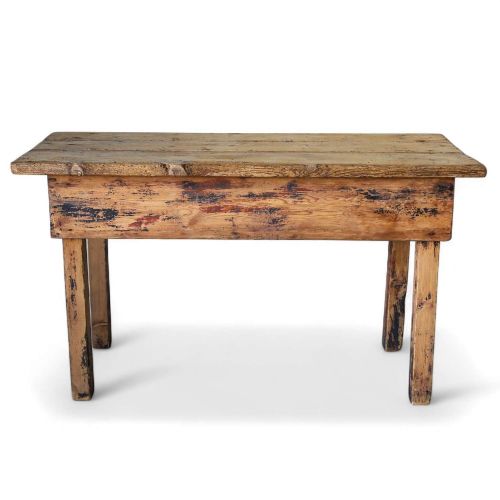
Pine appears frequently in Welsh and European domestic kitchen tables, offering a lighter alternative to industrial workbenches while maintaining structural strength.
How should I care for a scrubbed timber surface?
Scrubbed pine and sycamore tables benefit from dry cleaning or gentle wiping with a damp cloth rather than heavy chemical polishes. Keeping the raw wood clean preserves the pale, historic appearance.
Applying occasional natural wax can protect the grain from modern spills without creating an artificial gloss. This maintenance allows the historic patina to mature naturally over time.