

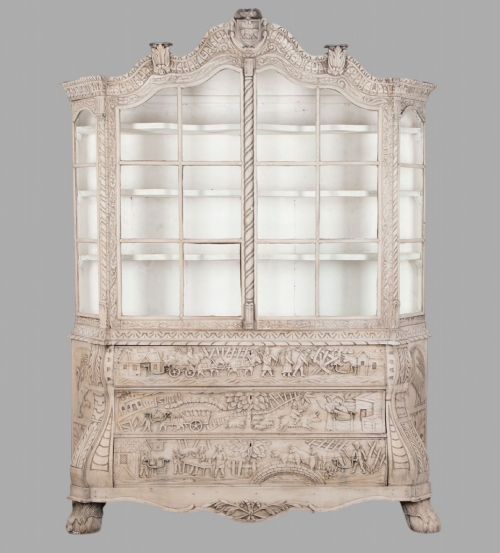
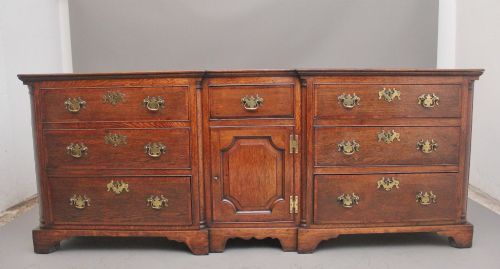


Large Oak Chest Drawers
A large oak chest drawers delivers robust storage capacity, uniting sturdy regional timbers with generations of practical domestic utility.
Large Oak Chest Drawers
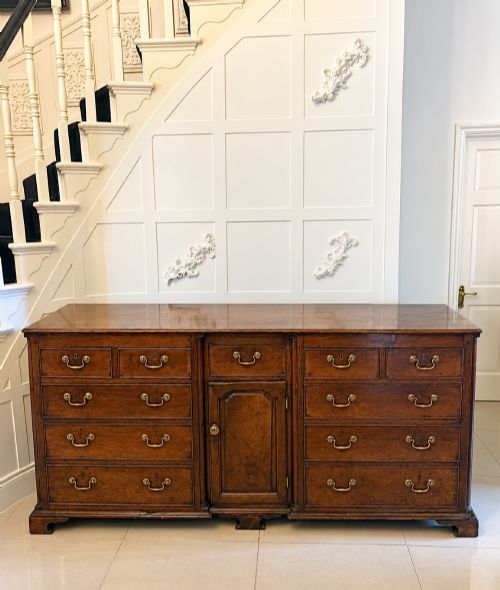
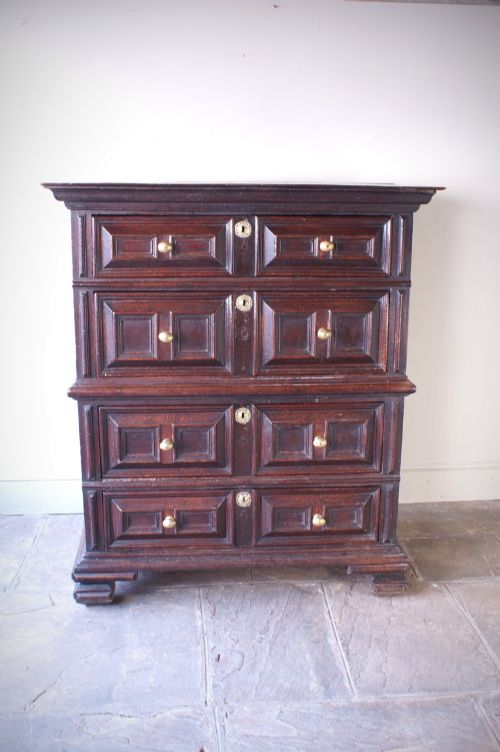
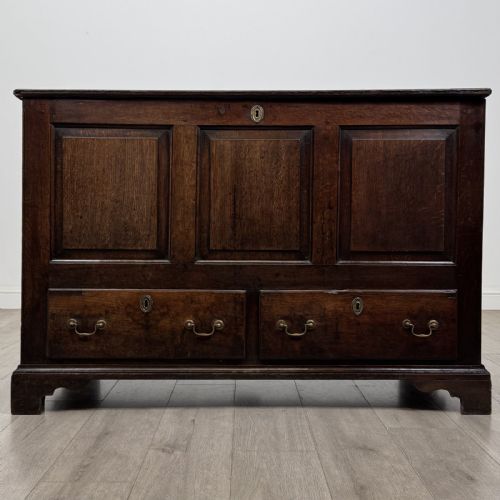
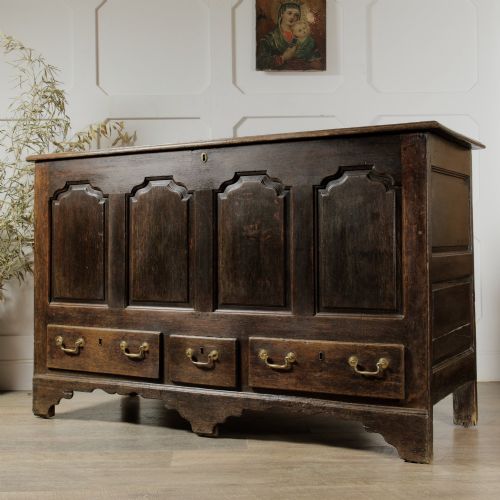
When you search for large oak chest drawers, you encounter substantial storage pieces designed for domestic linen and apparel, most frequently originating from the Georgian and Victorian periods. These items combine deep functional drawers with the dense grain and rich patina of solid oak, spanning traditional chest of drawers formats as well as hybrid mule chests featuring integrated base drawers.
The selection ranges from vernacular 18th-century country pieces and panelled coffer forms to refined Arts & Crafts designs and later mid-century utility outputs. On this page, English and continental examples predominate, often showing structural depth through multi-drawer layouts, crossbanded mahogany accents, or panelled construction.
How they were made
Construction relies heavily on solid oak timbers, frequently paired with secondary woods like mahogany for crossbanding or drawer linings, and augmented by structural iron and brass hardware. Cabinetmakers utilised traditional joinery, including hand-cut dovetails for drawer construction and pegged tenons for larger panelled carcases.
Surface finishes historically involved wax or oil treatments that allowed the natural grain patterns to emerge over decades of handling. Details such as carved decorations, bone escutcheons, and walnut inlay reveal the regional techniques and stylistic shifts of periods spanning from the late 17th century through the 20th century.
Large Oak Chest Drawers Retail Price Guide 2026
Typical asking prices for large oak chest drawers among the pieces listed under this phrase on Sellingantiques today, from the lower quarter to the upper quarter. They describe what is for sale here now, not the wider market.
Several items conceal hidden compartments or secret drawers designed to outsmart curious houseguests.
What varies in quality
Quality rests upon the integrity of the original timber selection, the crispness of the hand-cut joinery, and the retention of period-correct brass or iron handles and escutcheons. Pieces featuring secondary wood linings that match the structural ambition of the exterior display a higher tier of workshop execution.
Heals of London·Jas Shoolbred
The Large Oak Chest Drawers Glossary
- Mule chest
- A storage chest fitted with one or more functional drawers beneath the main coffer compartment. This hybrid form bridges the gap between traditional blanket boxes and modern drawer chests.
- Crossbanding
- A decorative border technique where thin strips of veneer, often mahogany, are laid across the grain of the primary oak surface. It provides visual contrast on drawer fronts and tabletops.
- Escutcheon
- A protective plate surrounding a keyhole, frequently fashioned from brass or bone. It prevents the surrounding wood from wearing down through repeated use.
- Coffer
- A large wooden chest used historically for storing valuables or textiles. They often form the lower base structure for mid-period transitional furniture pieces.
Large Oak Chest Drawers: Frequently Asked Questions
What is a mule chest?
A mule chest combines a traditional hinged-lid storage coffer at the top with one or more operational drawers built into the base.
This evolutionary form emerged when makers realised adding lower drawers allowed access to stored textiles without disturbing items piled on top.
How do I date an oak chest?
Dating relies on examining construction methods, such as hand-cut dovetails, tool marks, and the presence of pegged joints rather than modern screws.
Hardware styles, timber selection, and regional design characteristics also help narrow down the period of manufacture.
Are these drawers suitable for daily use?
Solid oak construction and robust timber runners make these historic pieces exceptionally sturdy for storing modern clothing and household linens.
Internal drawer depths vary by period, with Georgian and Victorian examples offering generous proportions for heavy garments.
How do I care for antique oak?
Maintain the timber by applying traditional beeswax periodically to nourish the dry grain and protect the historic surface finish.
Keep pieces away from direct heat sources and dramatic humidity fluctuations to prevent wood splitting or joint separation.