


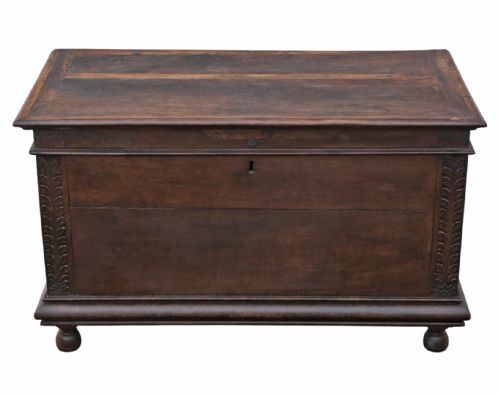


Large Oak Blanket Box
A large oak blanket box provides robust storage with centuries of heavy-duty craftsmanship, offering deep timber compartments suited for bulky household textiles.
Large Oak Blanket Box
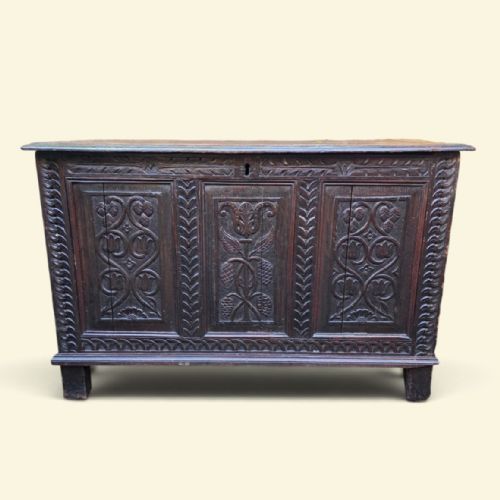
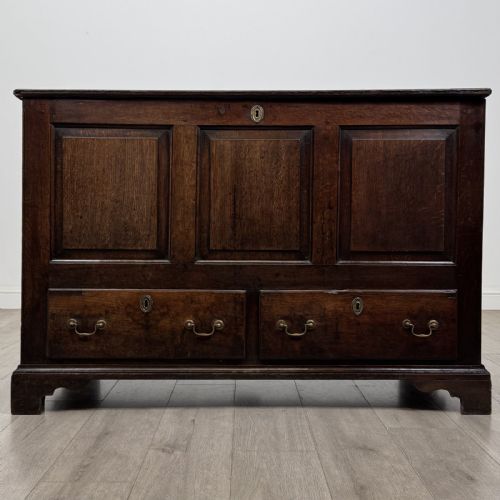
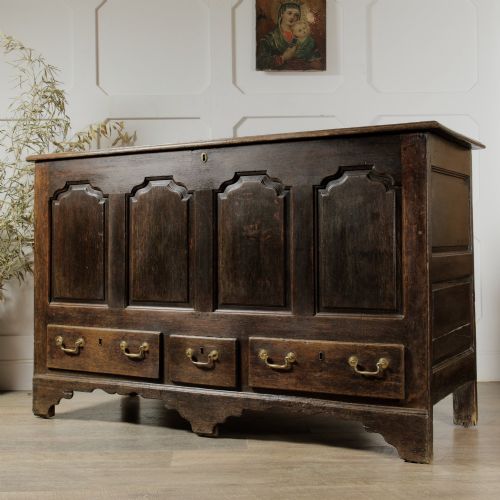
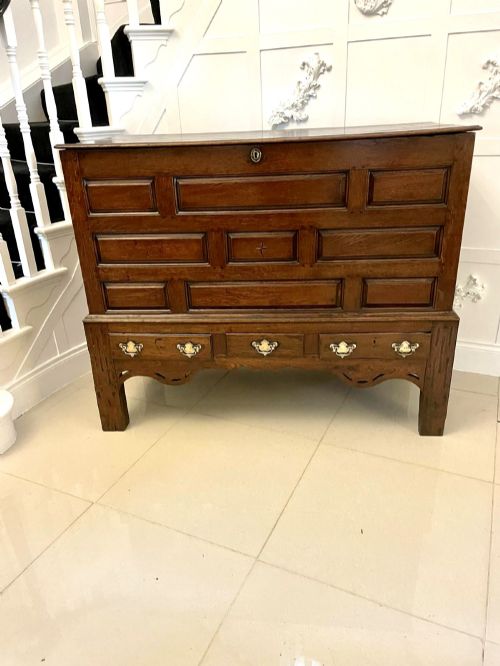
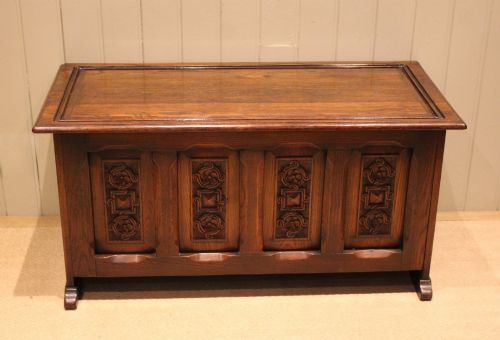
A large oak blanket box covers heavy storage chests, coffers, and mule chests spanning the seventeenth century through to the Edwardian era. You will encounter plain panelled coffers alongside elaborate Georgian and William III examples fitted with lower storage drawers.
Many items derive from regional British workshops, including Welsh and Northern English makers, while others reflect broader European influences. Standard domestic forms double as window seats or heavy trunk storage depending on their internal layout.
Materials and Technique
Carpenters constructed these heavy storage pieces primarily from solid native hardwoods, joining thick panels with traditional pegging rather than modern metal fasteners. Certain provincial variations incorporate contrasting mahogany crossbanding or subtle wood inlay to accent the primary timber.
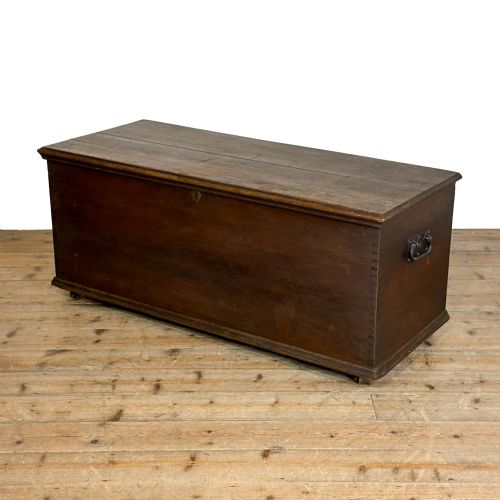
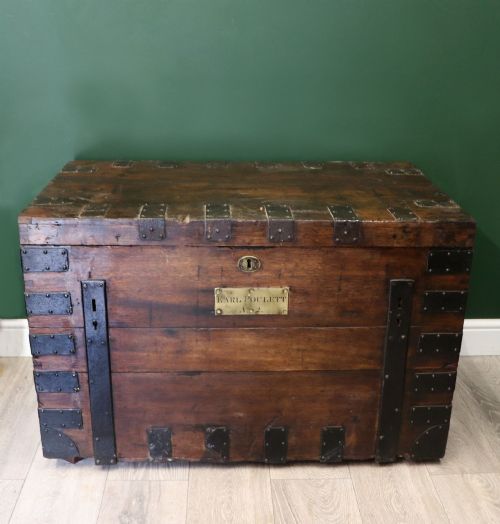
Heavy-duty utilitarian versions add structural reinforcement through iron bands, brass mounts, and robust strap hinges designed to withstand frequent travel or secure silver. Internal fittings often incorporate small internal candle boxes or partitioned trays for organised storage.
Large Oak Blanket Box Retail Price Guide 2026
Typical asking prices for large oak blanket box among the pieces listed under this phrase on Sellingantiques today, from the lower quarter to the upper quarter. They describe what is for sale here now, not the wider market.
A surprising number of heavy nineteenth-century travel chests doubled as secure silver repositories for travelling silversmith retailers.
Standards of Execution
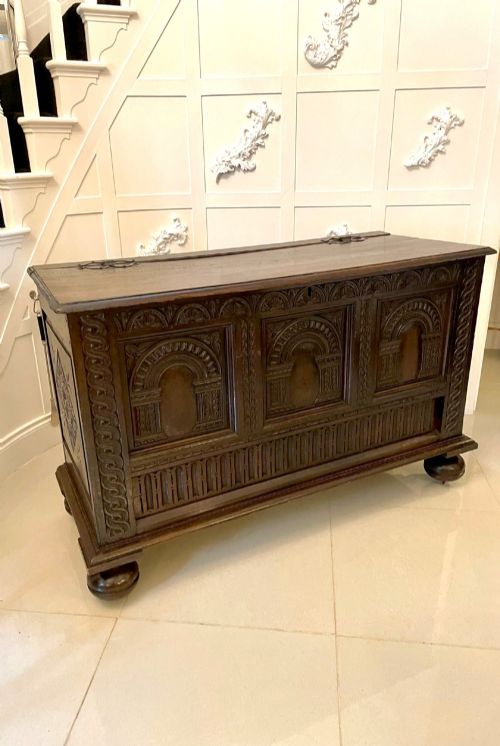
Quality rests in the crispness of hand-carved relief work, the thickness of the primary timber planks, and the structural integrity of the corner joints. Pieces featuring integrated drawer tiers or specialised metalbound reinforcement demand greater joinery skill than plain boarded boxes.
The preservation of original surface patination and authentic hardware distinguishes superior examples from heavily restored or later revival pieces. Interior completeness, such as retaining an original internal candle box, elevates the standard of survival.
H D Dean
The Large Oak Blanket Box Glossary
- Mule chest
- A storage chest fitted with one or more working drawers beneath the main lift-top compartment. This form developed during the late seventeenth and eighteenth centuries to offer more accessible organisation.
- Coffer
- A heavy wooden box with a hinged lid traditionally used for storing valuables, documents, or textiles. Early examples rely on sturdy frame-and-panel construction.
- Crossbanding
- A decorative border technique where thin strips of veneer, frequently mahogany, are laid perpendicular to the surrounding grain. This detail frames drawer fronts and top panels on eighteenth-century pieces.
- Candle box
- A small internal partitioned compartment fixed inside a chest to keep small items separate from bulk storage. It lifts out or sits quietly at one end beneath the main lid.
- Panel
- A flat section of timber fitted within a grooved frame to allow the wood to expand and contract safely with humidity changes. Multiple panels form the sides and front of standard coffers.
Large Oak Blanket Box: Frequently Asked Questions
What is a mule chest?
A mule chest combines a traditional lift-top coffer with one or more practical drawers set beneath the main storage compartment. This hybrid design emerged as cabinetmakers sought to provide easier access to everyday linens without disturbing items stacked on top.
Such pieces date predominantly from the Georgian and William III periods, offering substantial capacity for domestic organisation.
How do I date an old oak chest?
Dating relies on observing construction methods, timber selection, and decorative styles rather than relying solely on surface appearance. Seventeenth-century examples typically feature heavy hand-pegged frame-and-panel joints with deep geometric or figural carvings.
Later eighteenth and nineteenth-century versions introduce dovetail drawer construction, mahogany crossbanding, or utilitarian iron binding suited for travel and shipping.
Were these chests used for travel?
Certain robustly built examples served as travelling trunks, carriage trunks, or secure silver chests equipped with heavy iron bands and carrying handles. Merchants and wealthy households utilised these reinforced containers to transport valuables safely across land and sea.
Plain domestic blanket boxes remained stationary at the foot of beds or inside living quarters for heavy bedding storage.
How do I care for antique oak?
Maintain antique oak by placing the piece away from direct heat sources and rapid temperature fluctuations that cause timber to split. Regular dusting with a dry, soft cloth preserves the natural wax finish without building up heavy chemical residues.
Allowing the wood to breathe naturally ensures the historic surface patination continues to mature gracefully over time.