



Large Medallion Rug
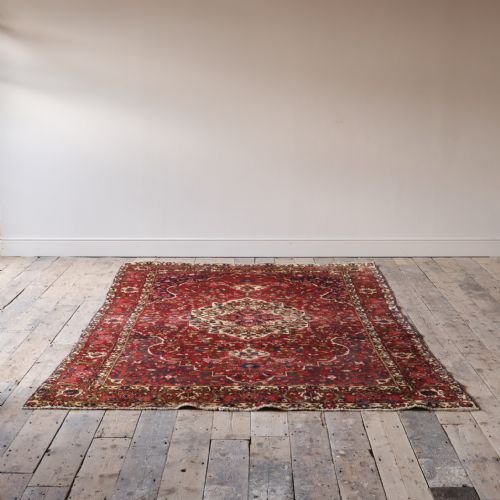
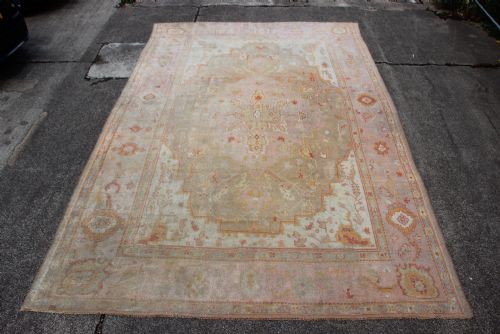
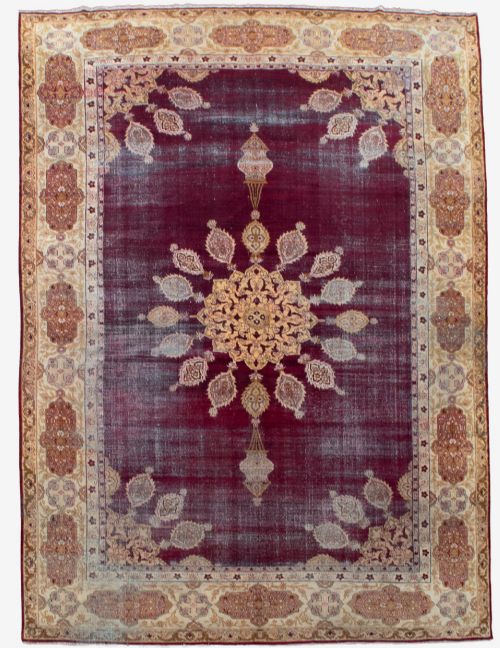
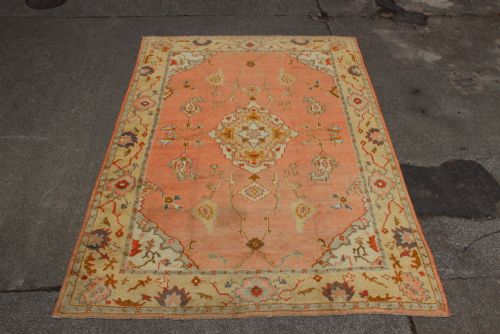
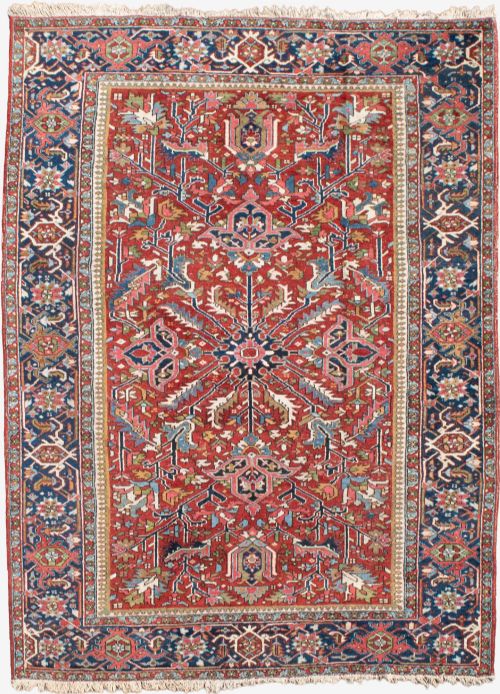
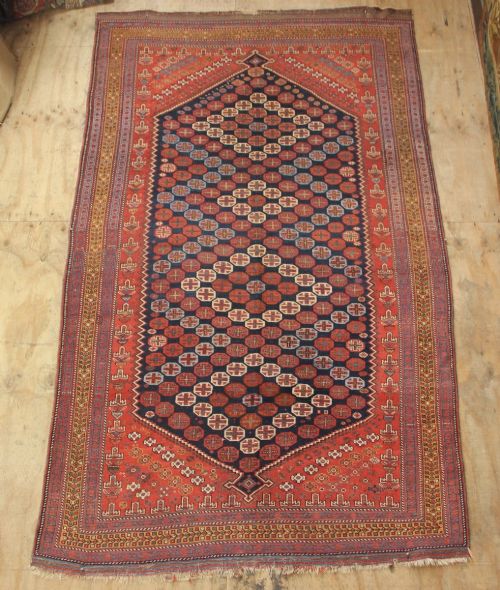
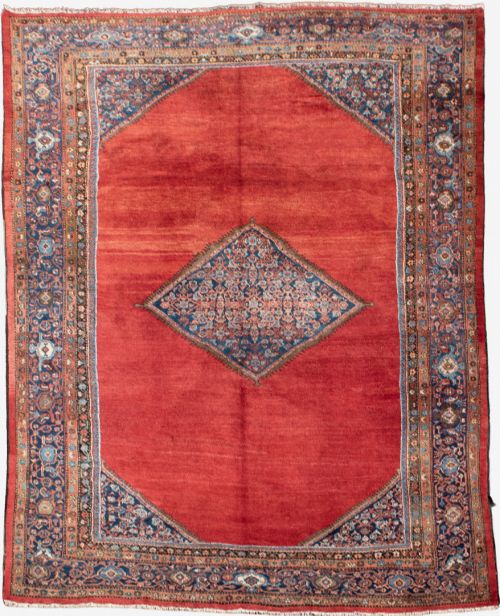
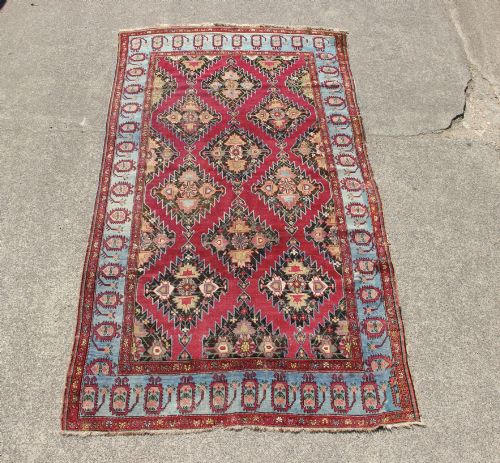
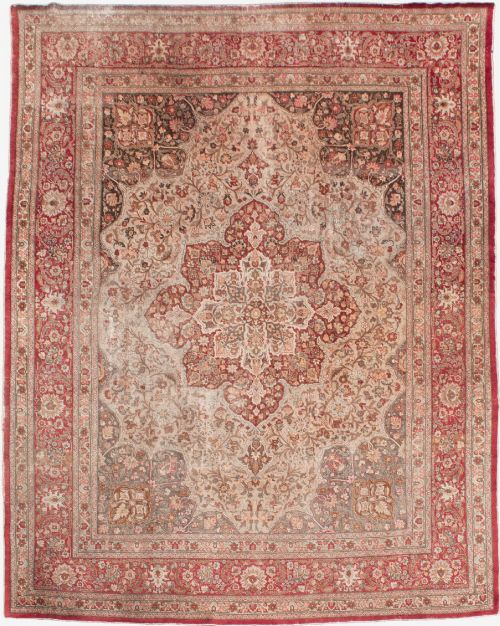
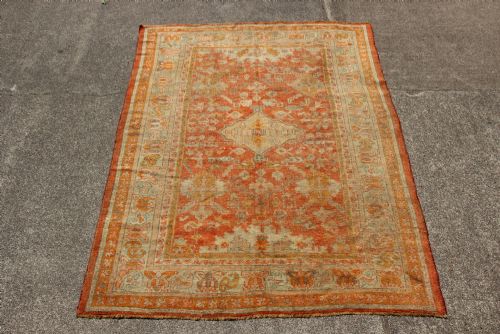
A large medallion rug anchors a room with a central geometric or floral motif handed down through generations of weavers.
Large Medallion Rug
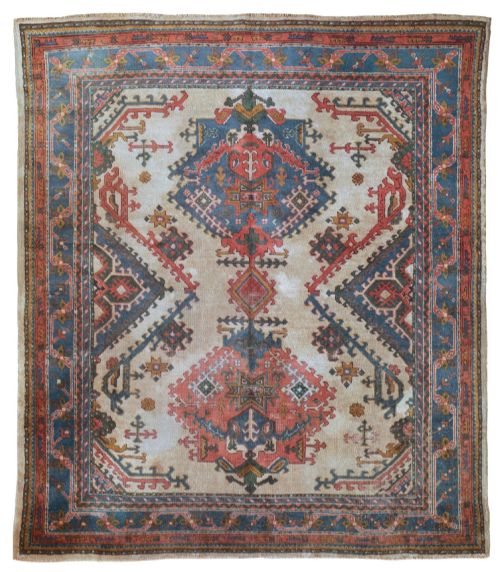
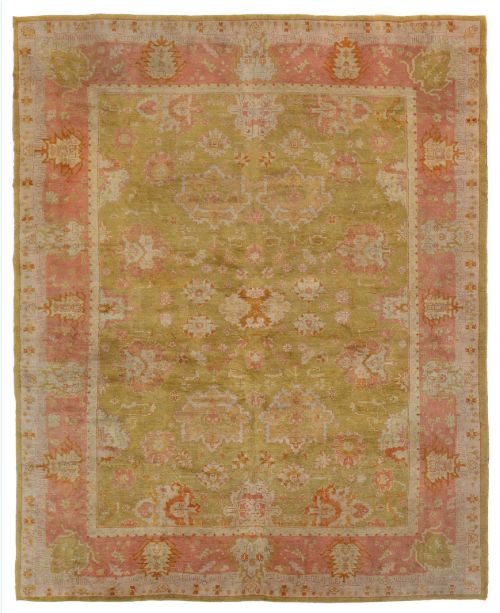
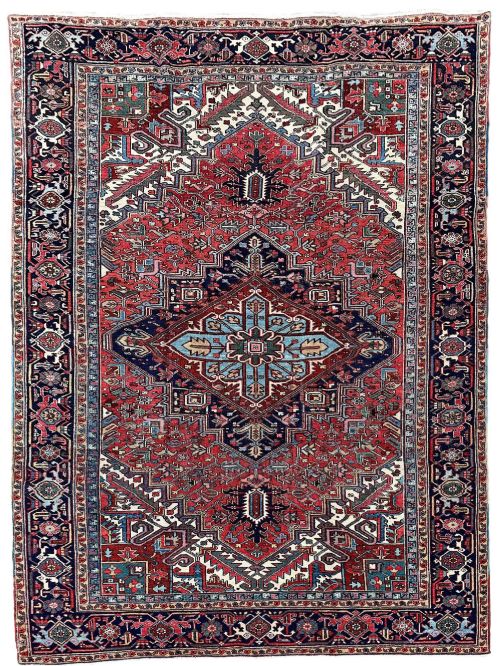
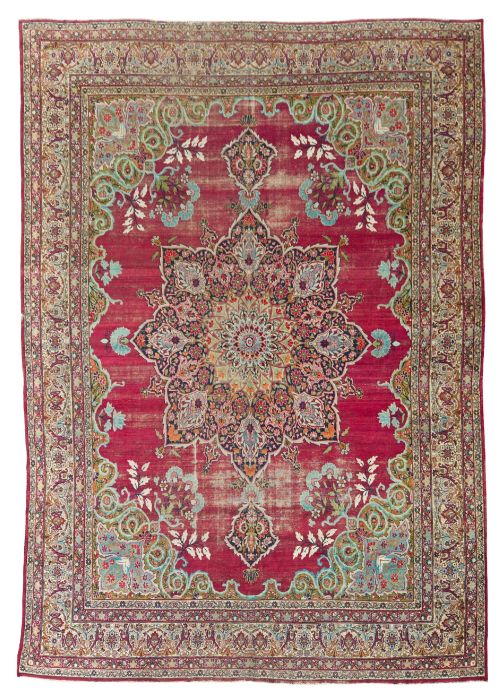
A large medallion rug brings together historical Persian, Anatolian, and Turkish weaving traditions, spanning the nineteenth and twentieth centuries. These room-sized floor coverings establish visual gravity in a space through their scale and central design.
Heriz and Ushak origins dominate this selection, alongside specimens from Tabriz, Kirman, and Amritsar. Buyers encounter substantial formats designed for country houses and formal reception rooms, often measuring several metres across.
The aesthetic centres on a pronounced central ornament, balanced by intricate corner spandrels and patterned borders. This architectural layout draws the eye inward, structuring the entire floor plan around the textile.
Materials and construction
Weavers constructed these carpets using natural wool for the pile and foundation, occasionally pairing it with cotton warps and structural details in silk. Hand-knotting techniques ensure durability, allowing large formats to withstand centuries of foot traffic.
Dyers utilised natural materials to obtain rich palettes, anchoring designs in ivory, deep reds, and saturated blues. The interplay of hand-spun fibres creates subtle tonal variations across the expanse of the weave.
Large Medallion Rug Retail Price Guide 2026
Typical asking prices for large medallion rug among the pieces listed under this phrase on Sellingantiques today, from the lower quarter to the upper quarter. They describe what is for sale here now, not the wider market.
Listings span eight distinct decades of production, with pieces originating from Persian, Turkish, and Indian weaving centres using wool, cotton, and silk.
Distinctions in quality
Knot density and structural integrity dictate the calibre of an antique carpet, alongside the clarity of the central design. Finer knotting permits sharper delineation within the medallion and border motifs.
The handling of the wool foundation influences how the textile drapes and wears over time. Superior examples maintain pile resilience and crisp colour saturation even after decades of domestic use.
Haji Jalili
The Large Medallion Rug Glossary
- Medallion
- The central ornamental motif dominating the field of the rug. It typically takes a symmetrical geometric or floral form.
- Spandrels
- The triangular corner designs situated in the four corners of the main field, balancing the central medallion.
- Pile
- The vertical tufts of wool, cotton, or silk that form the soft surface of the carpet. Its thickness varies by region and loom technique.
- Warp
- The longitudinal threads stretched tightly on the loom before knotting begins. Foundation threads provide structural support to the entire textile.
- Weft
- The horizontal threads passed between warp rows to lock the knots in place. This technique secures the structural integrity of hand-knotted pieces.
Large Medallion Rug: Frequently Asked Questions
How do I place a large rug in a modern room?
Position the piece so that furniture legs rest upon the border, uniting the seating arrangement over the central motif. This grounds the room layout around the textile.
Allow surrounding floorboards to frame the edges, preventing the room from feeling visually overwhelmed by the scale of the carpet.
What maintenance do antique carpets require?
Vacuum regularly using suction alone without rotating brushes to protect fragile wool pile from premature fibre wear.
Rotate the floor covering periodically to ensure even exposure to foot traffic and natural sunlight over the decades.
Are these carpets suitable for heavy foot traffic?
Hand-knotted wool construction provides exceptional durability, allowing these textiles to endure daily movement in busy household spaces. The natural lanolin in traditional wool resists dirt and repels moisture effectively.
Place a quality underlay beneath the carpet to cushion the foundation threads and prevent slipping on smooth flooring.