

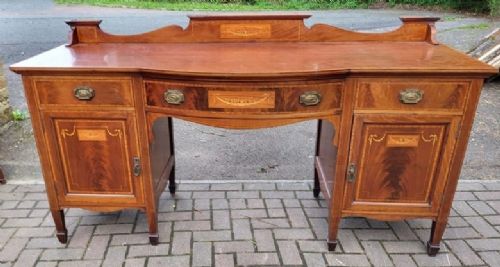
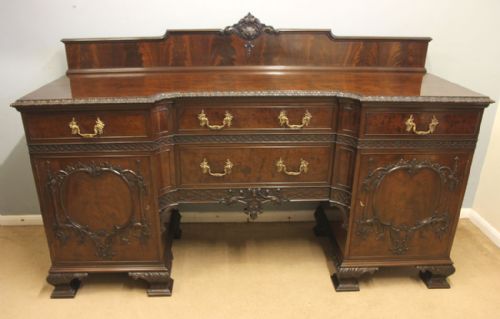

Large Mahogany Credenza
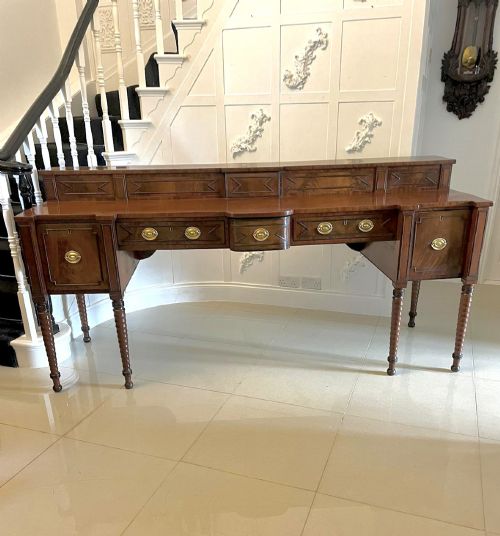
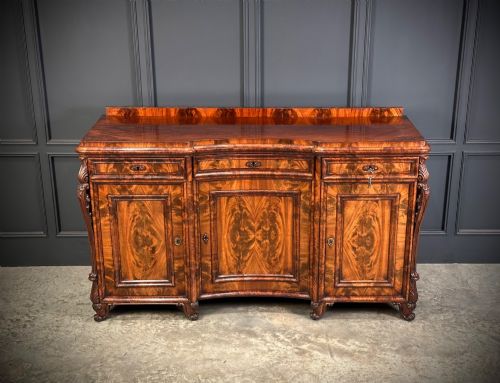
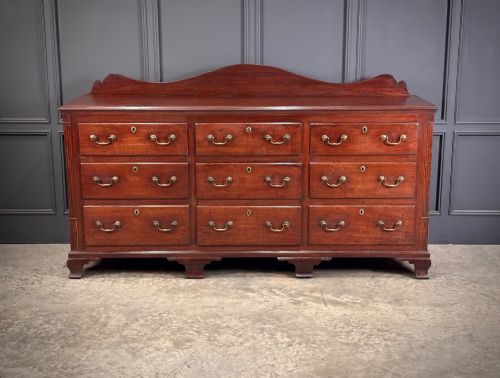
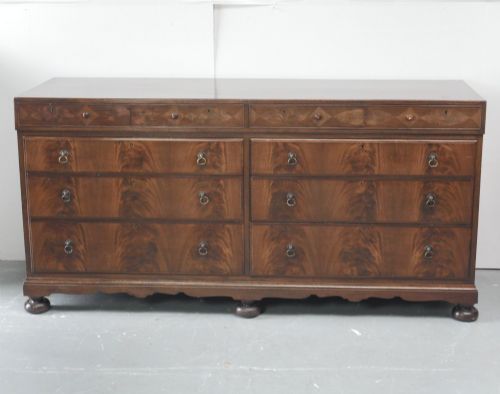
A large mahogany credenza or sideboard anchors a dining room with substantial timber and historic utility.
Large Mahogany Credenza
When you search for a large mahogany credenza, you encounter substantial serving furniture designed for formal dining rooms and grand interiors. These heavy storage pieces emerge primarily from the Georgian, Regency, and Victorian periods.
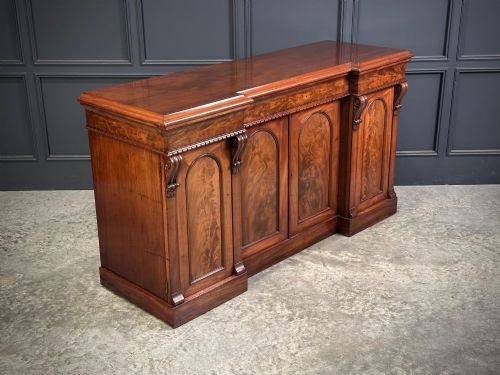
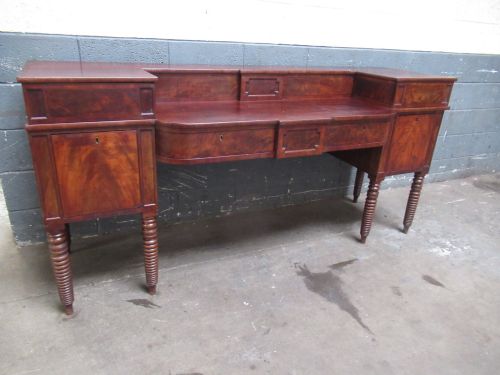
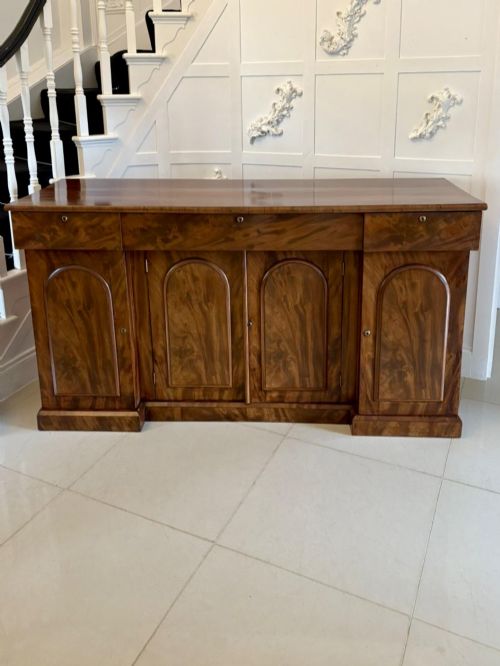
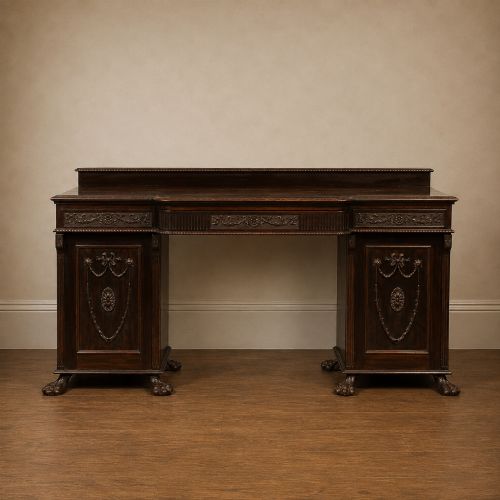
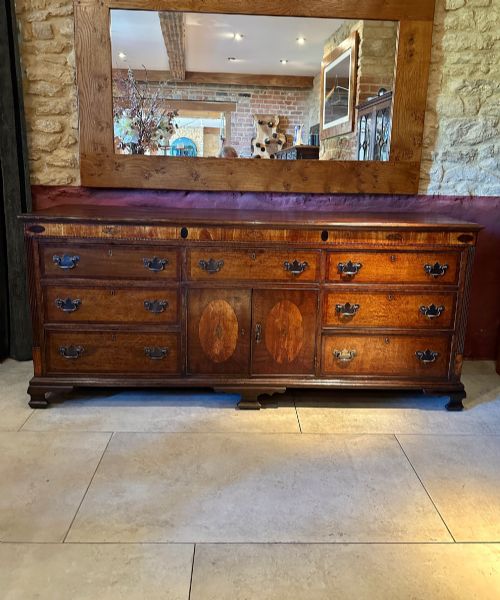
The versions most common on this page are substantial sideboards, breakfronts, and pedestal servers dating from the eighteenth and nineteenth centuries. Makers built these items to dominate a dining space while storing linens, silver, and heavy china.
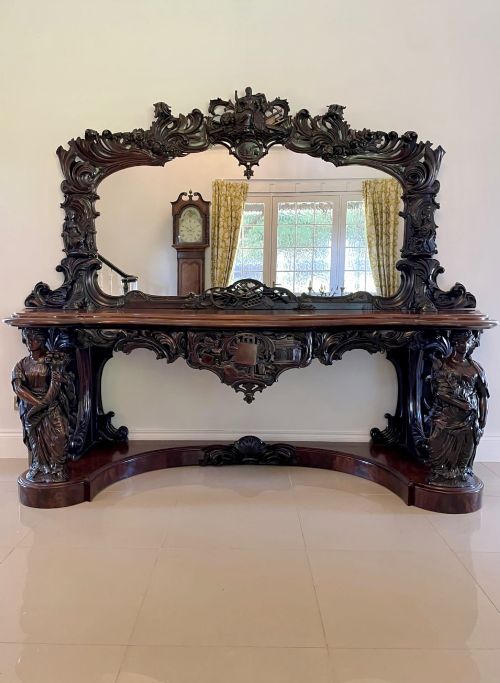
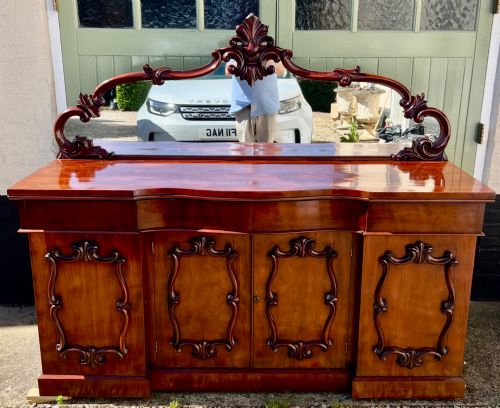
The form spans straightforward pedestal designs to elaborate mirror-backed and stage-back configurations. Structural variations include bow fronts, serpentine shapes, and breakfront profiles executed in dense tropical timber.
Materials and construction
Cabinetmakers constructed these large storage pieces using solid timber frames faced with figured mahogany and flame mahogany veneers. Workshops applied these decorative veneers to drawer fronts and door panels to highlight rich grain patterns.
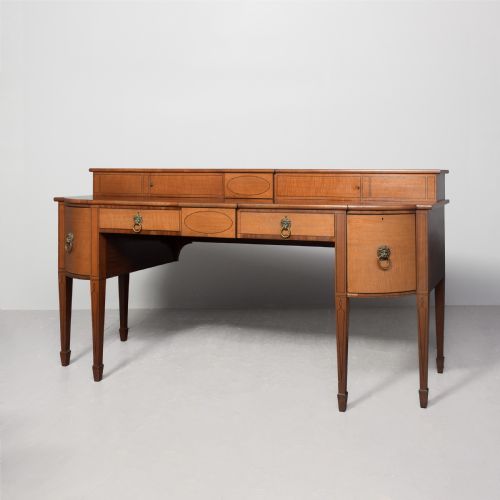
Craftsmen enhanced the dark timber surfaces with contrasting inlay work using satinwood, boxwood, and oak for structural carcases. Metal hardware such as brass handles and paw feet completed the construction of these formal dining room pieces.
Many a Victorian sideboard hides a built-in cellarette drawer designed to keep wine bottles cool on sawdust.
Distinguishing quality levels
Quality separates through the selection of timber veneers and the intricacy of inlay work rather than sheer scale. Pieces featuring symmetrical flame mahogany and precise boxwood stringing sit at the upper end of the range.
Hand-carved decorative details, structural integrity in large breakfront bodies, and original brass fittings elevate certain examples above standard utilitarian workshop output.
Whytock & Reid·Robson & Sons
The Large Mahogany Credenza Glossary
- Flame mahogany
- A figured wood veneer displaying a distinctive flame-like pattern caused by the intersection of branch growth with the main trunk. Cabinetmakers selected these dramatic veneers for the principal display surfaces of formal dining furniture.
- Breakfront
- A piece of furniture featuring a central section that projects forward from the flanking outer cabinets. This architectural layout creates visual depth across large sideboards and bookcases.
- Pedestal sideboard
- A form comprising two distinct pedestals or cupboards joined by a central table section or recessed board. These grand items dominated nineteenth-century dining rooms.
- Stage-back
- An elevated tier or superstructure mounted at the rear surface of a sideboard for displaying plate and serving dishes. This feature appears frequently on larger Georgian and Victorian dining pieces.
- Serpentine
- A curved furniture front characterised by a convex centre flanked by concave wings. This flowing contour requires high carpentry skill to execute across dense hardwood.
Large Mahogany Credenza: Frequently Asked Questions
Where did these large sideboards stand?
These large storage pieces stood against the primary wall of formal nineteenth-century dining rooms. Servants used the flat timber surfaces to prepare courses and arrange heavy serving dishes before bringing them to the main table.
Beneath the top boards, deep cupboards and drawers held household silver, table linen, and glassware. Their imposing scale suited them exclusively for large domestic interiors and estate houses.
How do I date a mahogany sideboard?
Dating relies on observing structural proportions, decorative styles, and timber treatments across the carcase. Georgian and Regency examples often feature restrained linear inlay and tapered legs, while Victorian pieces display heavier carved mouldings, pedestal bases, and mirrored superstructures.
Secondary woods inside drawers also help determine the era of manufacture. Oak and pine linings typically shift from hand-sawn boards in earlier pieces to machine-cut timber in later nineteenth-century examples.
Will a large sideboard fit my dining room?
These substantial items require considerable floor space and wide wall clearance to avoid overwhelming a modern room. Measuring both the width and the depth is essential, as breakfront cornices and pedestal feet project further than standard sideboards.
Ceiling height matters particularly for pieces featuring mirror backs or stage-backs. Delivery access through historic doorways and stairwells also demands careful prior measurement.
How do I care for antique mahogany timber?
Maintaining antique mahogany involves keeping the wood away from direct heat sources and strong sunlight. Excessive temperature fluctuations cause timber shrinkage and split delicate flame veneers over time.
Applying a traditional beeswax polish periodically nourishes the grain and preserves the historic sheen. Avoid modern silicone sprays, which penetrate the porous surface and damage the aged finish.