

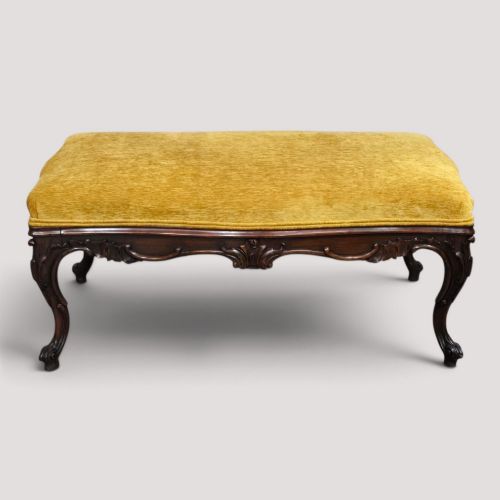


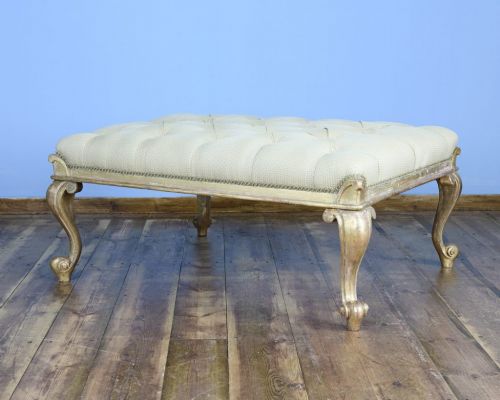

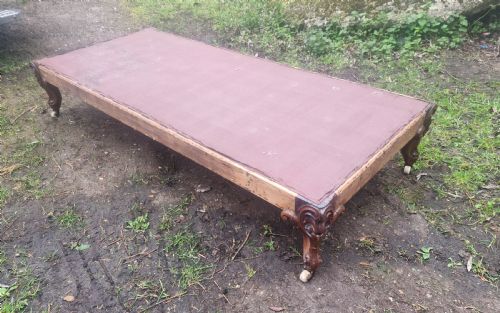


Large Low Stool
A large low stool anchors a room with quiet presence, offering versatile seating or a surface under foot.
Large Low Stool
A large low stool serves as a functional centrepiece within traditional interiors, functioning as a footstool, centre ottoman, or fireside seat. When you search for a large low stool, you encounter robust proportions designed for comfort and presence in principal rooms.
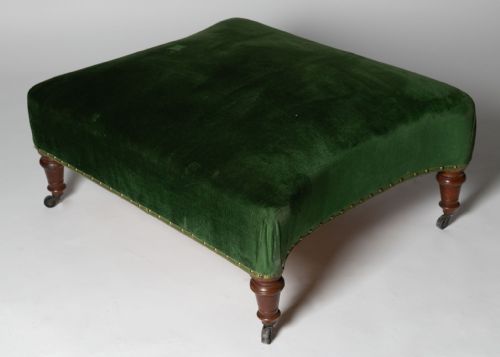
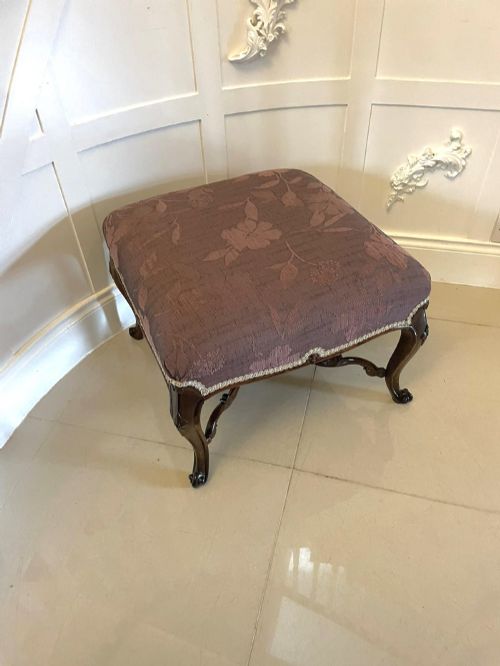
The pieces appearing on this page span several centuries and origins, from nineteenth-century English country house examples to French giltwood designs and Anglo-Indian creations. Common forms include centre stools, footstools, and low ottomans, often standing upon brass castors or short carved legs.
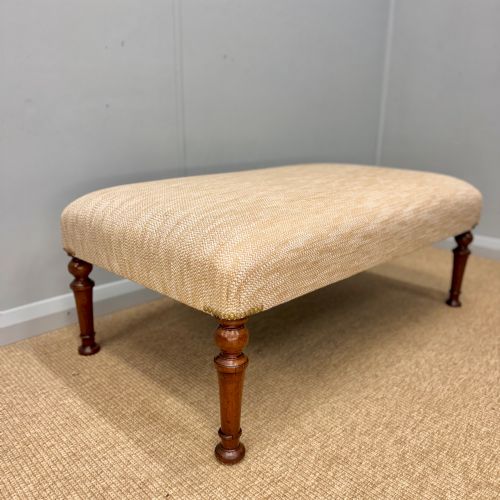
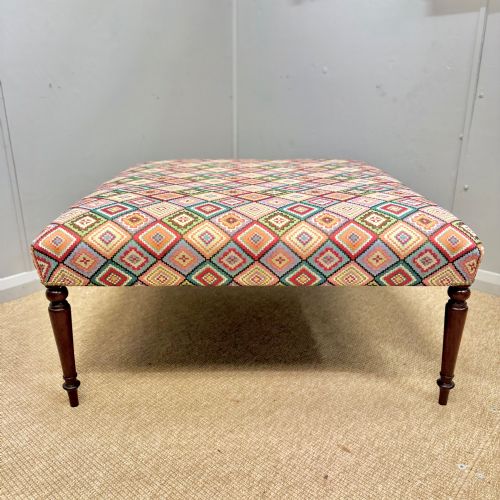
Many examples arrive newly upholstered in ticking stripe or geometric fabrics, while others retain older textiles or leather upholstery. Their substantial scale allows them to sit comfortably before large sofas or within spacious hallways.
Materials and Construction
Cabinetmakers constructed the foundational frames of these pieces using dense hardwoods such as mahogany, walnut, rosewood, oak, and timber. These robust timbers supported heavy use, particularly in nineteenth-century country house environments where seating endured regular daily demands.
Decorative detailing on frames frequently involved hand carving, parcel gilding, or applied cane work, alongside structural elements like cross stretchers. Brass castors were frequently fitted beneath the legs to ease movement across heavy carpets and wooden floors.
Upholstery methods ranged from deep buttoning and linen webbing to modern fabric applications during later restorations. Silk tapestry, leather, and woven textiles provided the durable upper surfaces required for resting feet or sitting.
Large Low Stool Retail Price Guide 2026
Typical asking prices for large low stool among the pieces listed under this phrase on Sellingantiques today, from the lower quarter to the upper quarter. They describe what is for sale here now, not the wider market.
The listings here feature nineteenth-century pieces constructed from mahogany, walnut, rosewood, and oak, incorporating styles from Regency to Scottish Baronial.
Assessing Quality and Craftsmanship
The distinction between ordinary seating and exceptional examples lies in the integrity of the timber frame and the depth of hand-carved ornament. Superior pieces display crisp detailing in walnut, mahogany, or giltwood, where mouldings and carved motifs remain sharp and well-defined.
Proportion and scale dictate the visual balance of the piece, with finer examples demonstrating careful harmony between the low frame and the upholstered top. The presence of original maker stamps or high-status regional characteristics, such as Scottish Baronial or French rococo revival styling, elevates the standing of the work.
The underlying joinery and structural stability of the legs and stretchers determine the longevity of the stool. Frames that retain their original castors, sound timber construction, and well-executed upholstery foundations represent the more desirable survivals.
Loidrault Freres Paris·Whytock and Reid
The Large Low Stool Glossary
- Centre stool
- A freestanding seating piece designed to stand in the middle of a room rather than against a wall. These large stools often feature decorative carving on all four sides.
- Cross stretcher
- An intersecting wooden brace connecting the legs beneath a stool to provide structural stability. They frequently feature central finials or carved intersections.
- Giltwood
- Timber coated with a thin layer of gold leaf applied over a prepared gesso ground. This luxurious finish appeared frequently on revival salon furniture.
- Parcel gilt
- A decorative technique where specific carved details or highlights on a wooden frame are partially gilded while the remaining timber stays visible. It accentuates architectural details.
- Ottoman
- A low, upholstered seat without a back or arms, often built on a large scale for domestic comfort. They function interchangeably as seating or low coffee tables.
Large Low Stool: Frequently Asked Questions
How were large low stools used historically?
Historically, these substantial stools served primarily as footstools before large hearths or as centre tables topped with trays. In country house drawing rooms, they provided flexible seating options that could easily be drawn up to a fire.
Over time, their low profiles and generous proportions made them adaptable for use as casual seating or impromptu surfaces for books and textiles.
Can these stools support the weight of sitting?
The robust hardwood frames and traditional joinery of nineteenth-century stools were built to withstand heavy domestic use. Their sturdy construction in timbers like mahogany and oak ensures they remain structurally sound for daily seating.
When fitted with reinforced webbing and firm upholstery, they easily function as low benches or ottomans in busy living spaces.
How do I care for antique upholstery?
Maintaining antique or newly upholstered fabric involves regular gentle vacuuming with a soft brush attachment to remove dust. Avoiding direct sunlight prevents fading in delicate textiles like linen stripes and tapestries.
For leather surfaces, occasional conditioning helps preserve the suppleness of the hide without altering its historic character.
How do I identify a Victorian centre stool?
Victorian centre stools typically exhibit generous proportions, heavy timber frames in walnut or rosewood, and sophisticated carving styles such as French rococo revival. They frequently stand on short legs equipped with brass castors to allow smooth repositioning across carpets.
Looking underneath the frame often reveals traditional hand-tied webbing and period construction methods that distinguish nineteenth-century examples from later reproductions.