
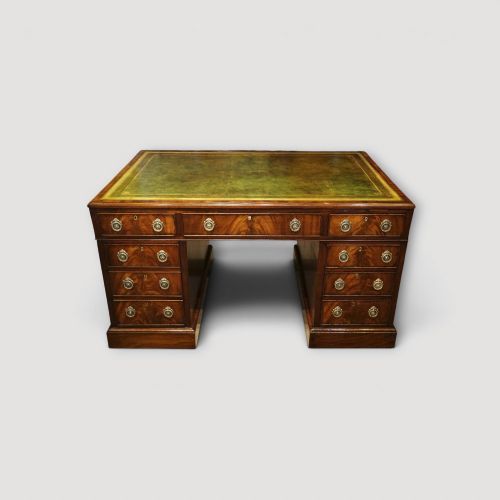
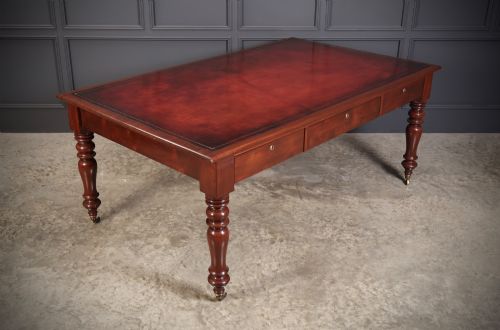
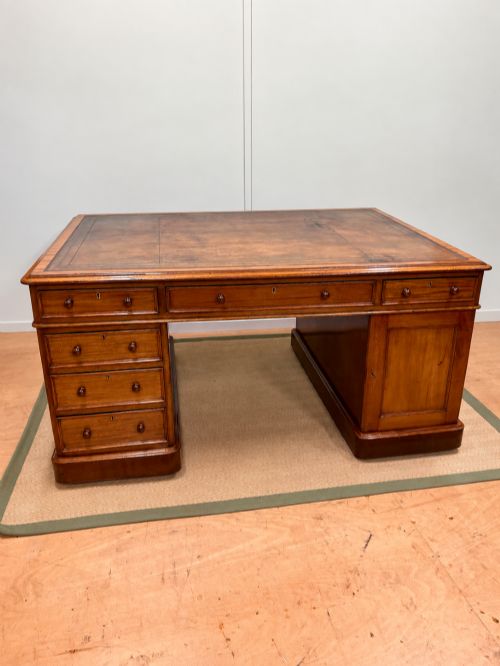
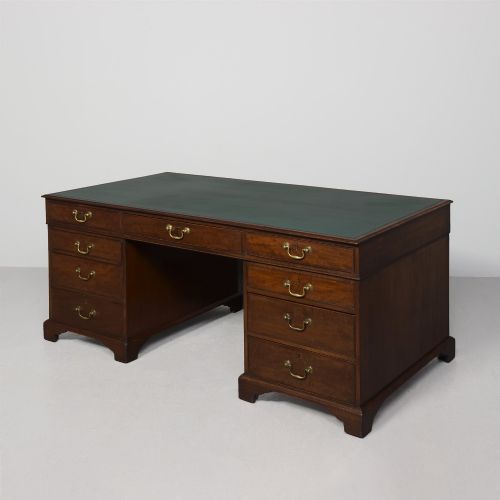
Large Library Table
When you need a large library table, you are looking for a substantial writing piece built to anchor a serious room.
Large Library Table
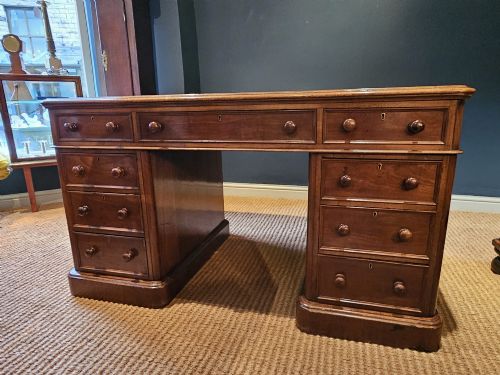
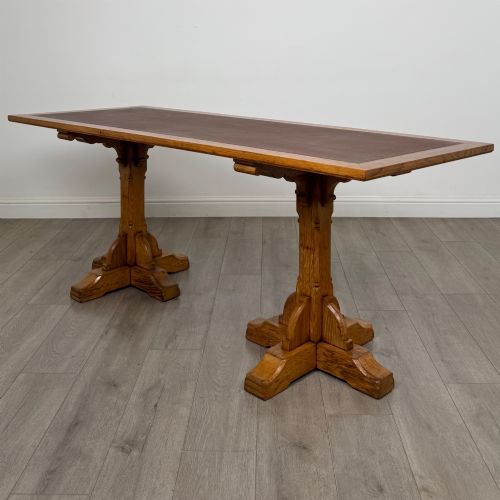
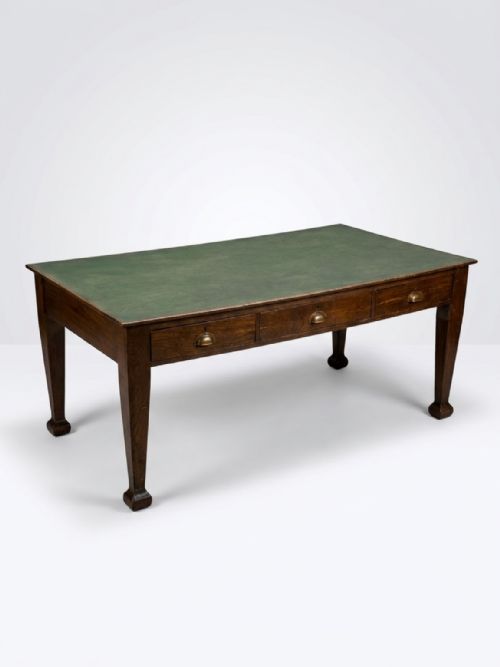
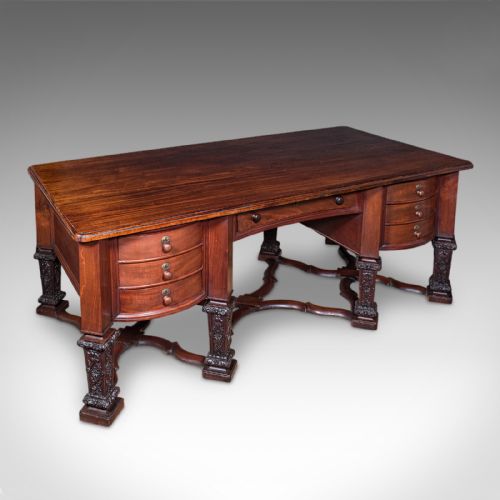
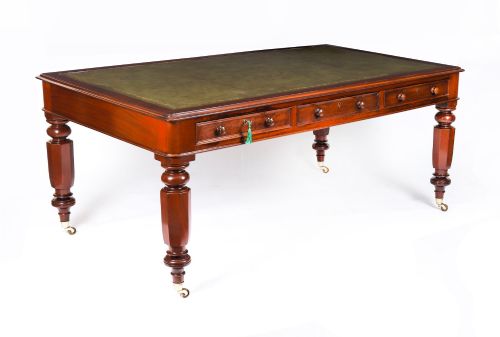
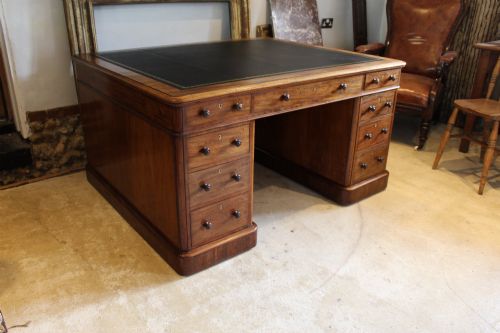
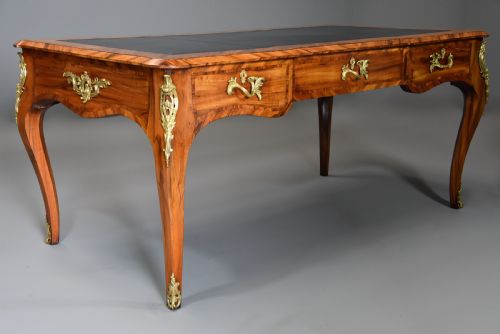
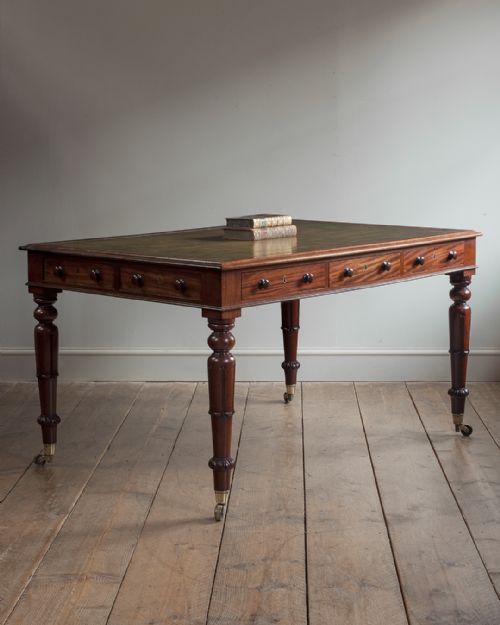
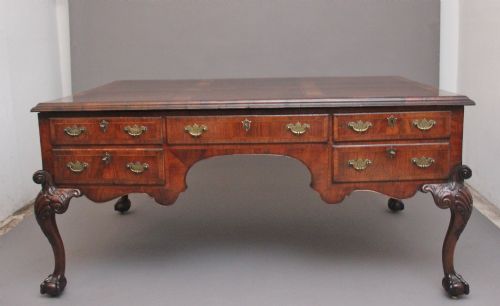
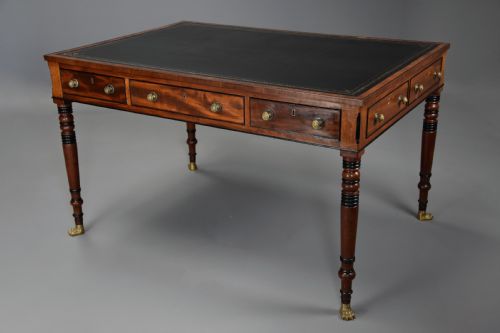
A large library table is a substantial writing and working surface designed for heavy institutional or domestic use, often taking the form of a partners desk, centre table, or pedestal desk. When you search for this phrase, you will most frequently encounter nineteenth-century Victorian and Georgian mahogany or oak examples. These pieces typically offer deep drawers, generous surface areas, and freestanding proportions intended to sit in the middle of a room.
The material selection spans solid oak, walnut, rosewood, and flame mahogany, frequently inset with contrasting leather writing surfaces. Many examples date from the eighteenth and nineteenth centuries, carrying stylistic influences from the Regency, William IV, and Edwardian periods. Their robust construction reflects an era when furniture was built to serve working studies, public schools, and grand libraries.
How they were made
Cabinet makers constructed these tables using dense hardwoods like mahogany, oak, and walnut, often selecting flame mahogany veneers for prominent surfaces. Structural joints relied on traditional dovetailing and mortise and tenon techniques to support the considerable weight of large timber tops.
Working surfaces commonly received inset panels of tooled leather, whilst drawer fronts incorporated solid brass handles and locks. Secondary timbers such as pine appeared in internal framing and drawer linings, hidden beneath the primary show woods.
Listings feature woods including mahogany, oak, walnut, rosewood, and ebonised wood, spanning the eighteenth to the twentieth centuries.
What varies in quality
The standard of a large library table rests upon the choice of timber and the precision of its construction. Desks utilising well-figured flame mahogany or dense quarter-sawn oak sit at the upper end of the scale, showing careful grain matching across large surfaces.
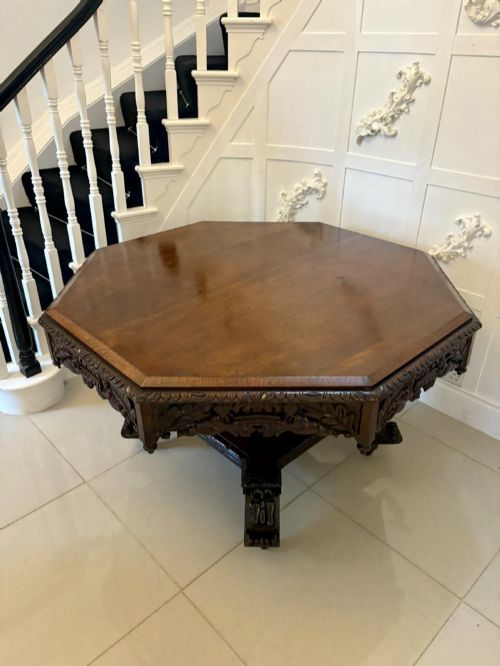
Execution of carved details, such as those found on Victorian or Gothic Reform examples, distinguishes standard cabinet work from exceptional output. The presence of original brass hardware, working locks, and undisturbed patination on the timber further define the grade of the piece.
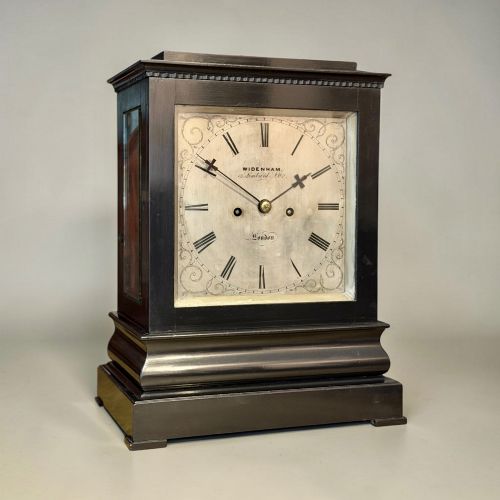
Widenham of London·Charles Andrea Nosotti·Cookes of Finsbury London
The Large Library Table Glossary
- Partners desk
- A double-sided writing table designed with drawers and cupboards facing both directions, allowing two people to work opposite one another.
- Centre table
- A freestanding piece finished on all sides so it can stand independently in the middle of a room rather than against a wall.
- Pedestal desk
- A heavy desk comprising two upright banks of drawers that support a wide writing top.
- Flame mahogany
- A veneer cut from timber where the branch meets the trunk, producing a distinctive flickering, flame-like grain pattern.
- Patina
- The surface sheen and softening of colour developed by wood and leather through decades of handling and exposure to light.
Large Library Table: Frequently Asked Questions
What is a partners desk?
A partners desk is a large double-sided writing table designed with matching drawers or cupboards on both long sides. This configuration allowed two people to sit opposite each other and work independently.
Such desks often served in institutional libraries, government offices, and large estate studies where multiple scholars or administrators required shared workspace.
How do I care for leather top desks?
Leather writing surfaces require gentle cleaning with a slightly damp cloth followed by periodic treatment with specialist leather balms to prevent drying and cracking. Avoid harsh chemical cleaners and keep direct sunlight away from the surface.
Using blotters or writing pads helps protect the original leather from ink stains and deep scratches during everyday use.
Can these tables be used as dining tables?
Certain large centre tables and library tables offer adequate knee clearance and surface area to function as dining tables. Octagonal and round variants, particularly those from the Victorian period, frequently serve this dual purpose.
Buyers should check the height from the floor to the underside of the drawer rails to ensure comfortable seating for dining chairs.
How do I distinguish Regency from Victorian?
Regency pieces, dating from the early nineteenth century, typically exhibit cleaner classical lines, restrained brass inlay, and a lighter architectural feel. Victorian furniture, spanning the mid to late nineteenth century, tends to feature heavier proportions, bolder carvings, and darker timber finishes.
Examining the secondary woods, screw types, and construction methods helps clarify the manufacturing era when stylistic cues overlap.