
Large Library Shelving Unit
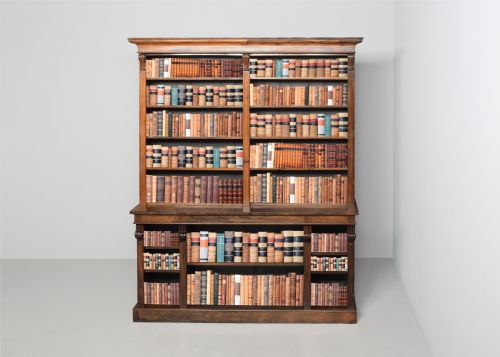
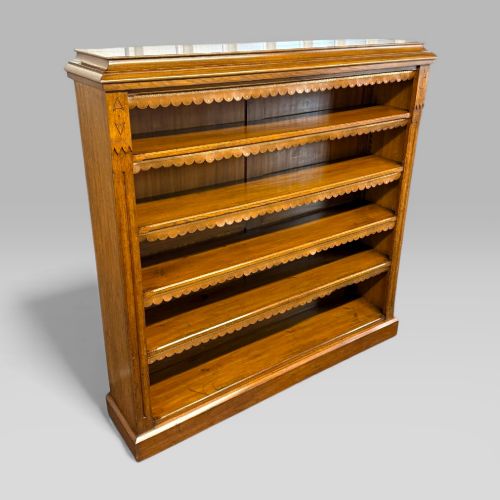
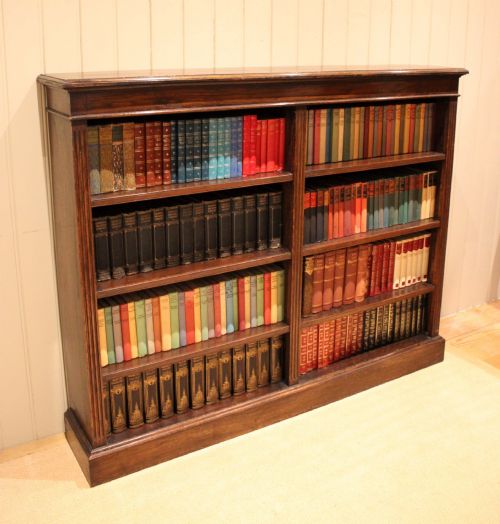
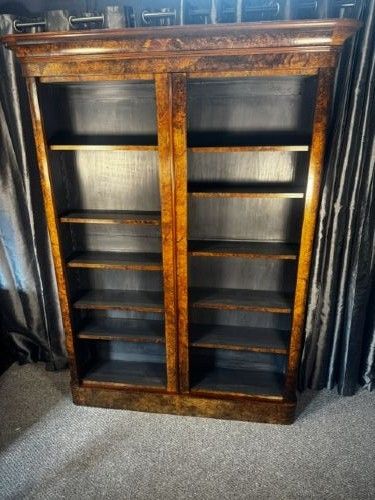
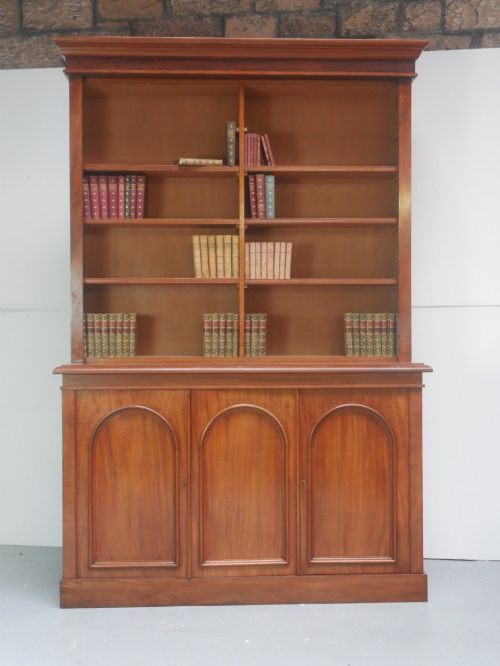
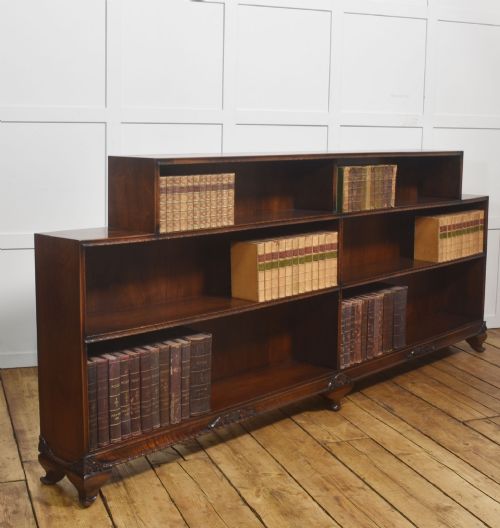
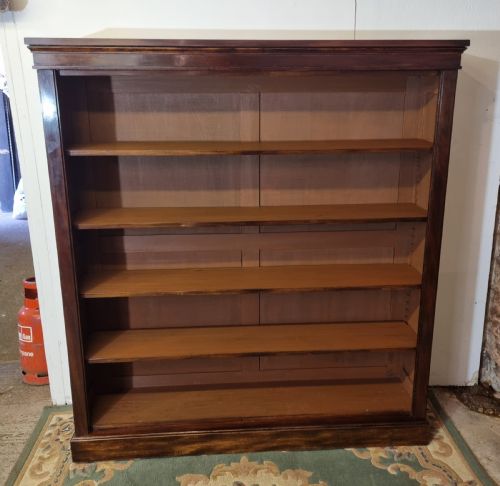
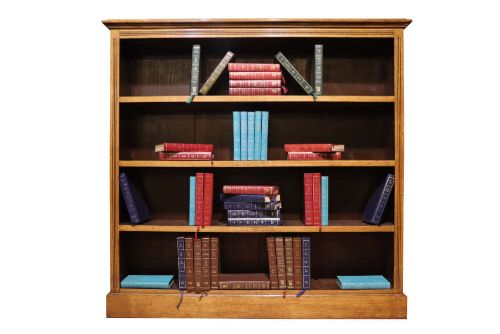
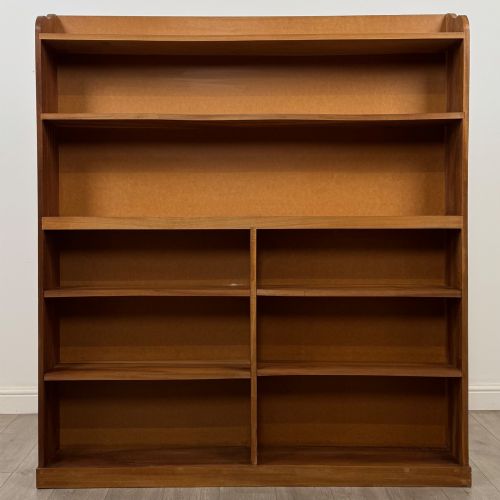
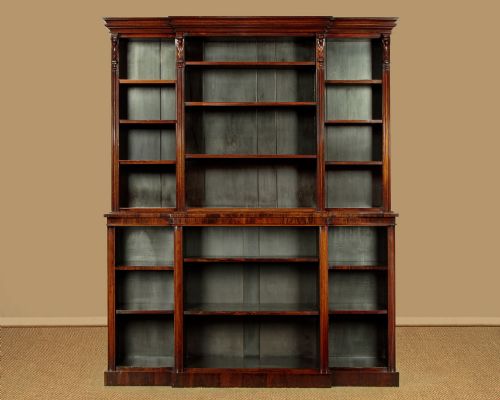
A large library shelving unit is a substantial piece of furniture designed to hold substantial collections, appearing here in open mahogany, oak, and walnut forms.
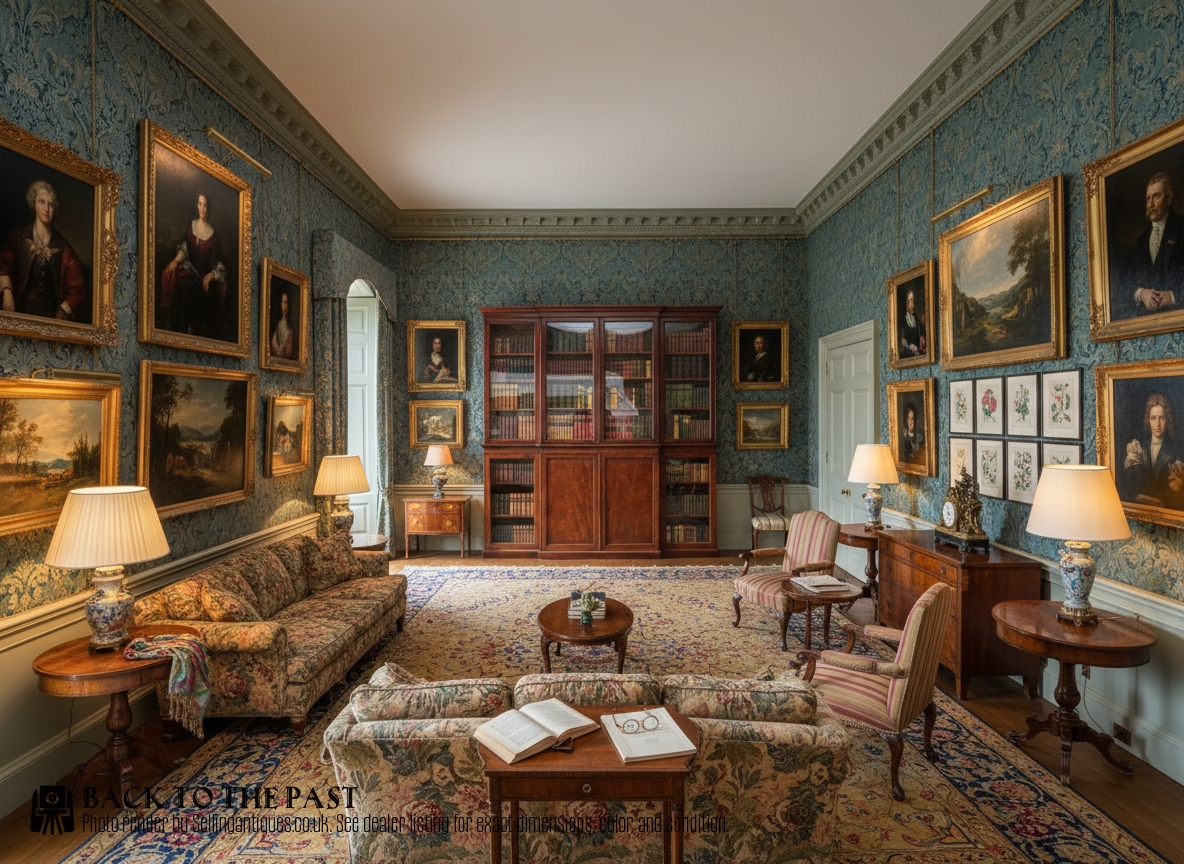
Large Library Shelving Unit
When you search for a large library shelving unit, you find open bookcases and shelving configurations built during the nineteenth and early twentieth centuries. These large pieces were designed for institutional or domestic libraries to store extensive collections of books within easy reach.
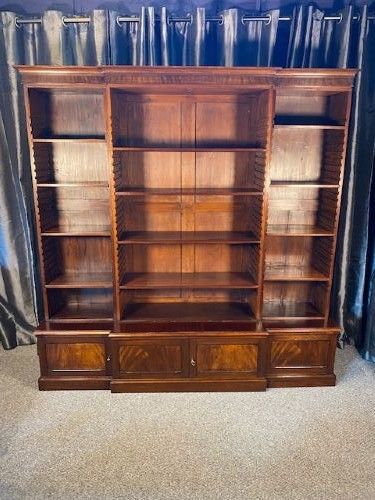
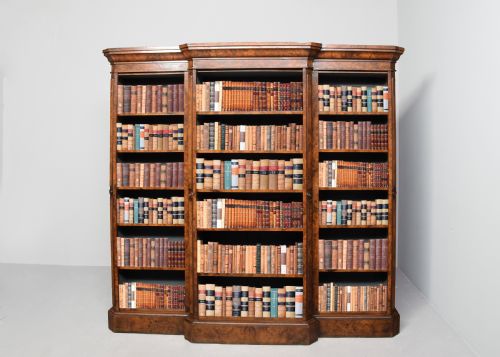
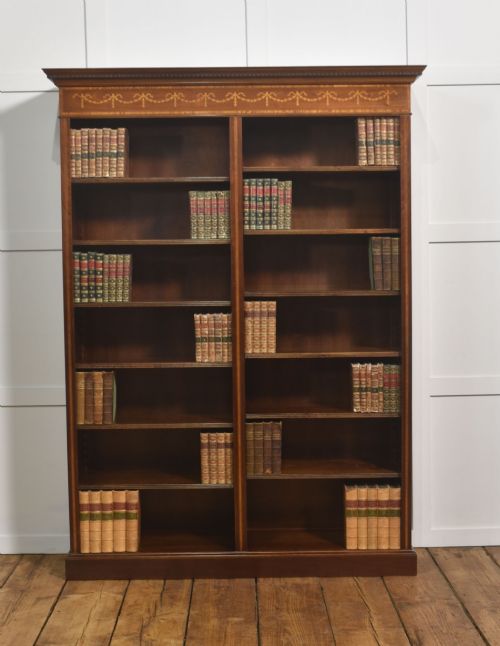
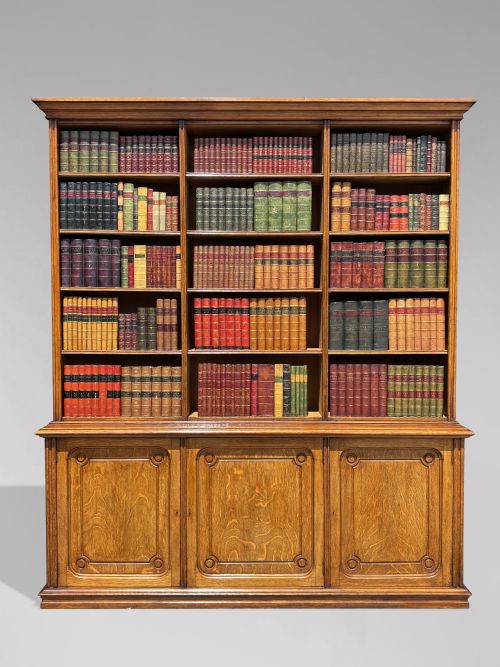
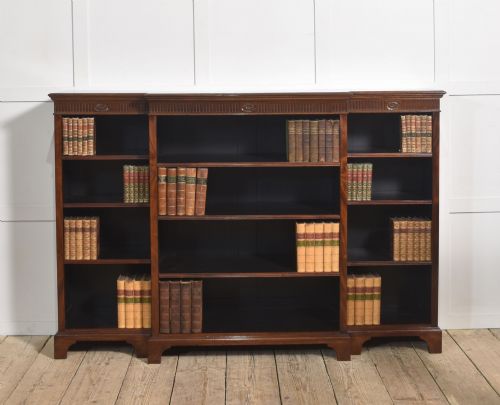
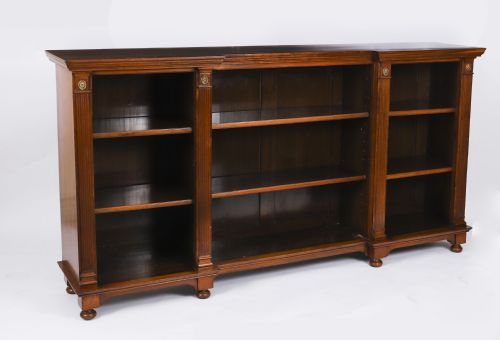
The pieces on this page appear predominantly as open bookcases, often featuring multiple sections or breakfront profiles. Woods such as mahogany, oak, and walnut dominate the selection, spanning periods from the Victorian era through the Edwardian period.
How they were made
Cabinet makers utilised dense hardwoods such as mahogany, oak, walnut, and rosewood, often selecting figured veneers like burr walnut or birdseye maple for visible surfaces. Pine and deal wood served for internal framing or simpler utilitarian constructions.
Construction techniques relied on sturdy joinery and adjustable shelving systems to accommodate varying book heights. Decorative elements range from simple carved mouldings to ormolu mounts, brass details, and Sheraton Revival inlay.
Listings feature woods including mahogany, oak, walnut, rosewood, burr walnut, pine, deal wood, and elm across the nineteenth and early twentieth centuries.
What varies in quality
The distinction between standard pieces and exceptional ones rests upon timber selection and architectural ambition. Breakfront designs with figured burr walnut veneers or detailed inlays reflect higher craftsmanship than plain single-section pine units.
Internal engineering also dictates standing; adjustable shelving mechanisms that operate smoothly and fine proportional balance separate utilitarian library storage from high country house furniture.
Goodhall Lamb and Heighway·Sir Charles Barry
The Large Library Shelving Unit Glossary
- Breakfront
- A piece of furniture where the central section projects forward from the flanking sections. This configuration adds architectural depth to large bookcases.
- Open bookcase
- A shelving unit without glazed or solid doors, allowing direct access to the books stored within. These pieces emphasise display and ease of retrieval.
- Adjustable shelves
- Shelves that can be moved to different heights using wooden ratchets, metal pins, or side grooves. This adaptability is essential for accommodating books of various sizes.
- Burr walnut
- Wood taken from the warted growths on walnut trees, yielding highly figured grain patterns. Cabinet makers used it as a decorative veneer on statement furniture.
Large Library Shelving Unit: Frequently Asked Questions
How are adjustable shelves configured?
Adjustable shelves in antique bookcases typically rest on wooden ratchets, brass studs, or sliding pins fitted inside the upright panels. This allows the owner to change shelf heights for different volumes.
Such systems indicate a piece built for functional library use rather than static display.
What woods were used for these units?
Cabinet makers built large library shelving units predominantly in mahogany, oak, and walnut. More decorative pieces incorporated rosewood, satinwood, burr walnut, and birdseye maple.
Simpler utilitarian versions were occasionally constructed from pine or deal wood.
How do I style a large library unit?
A large library unit serves as a natural focal point in a study, drawing room, or hallway. Filling the shelves with books of varied heights and bindings grounds the architectural weight of the furniture.
Leaving small pockets of space or adding framed objects softens the dense wall of text.