





Large Japanese Plate
A large japanese plate brings rich Meiji and Edo period craftsmanship to a room, offering bold patterns and remarkable scale.
Large Japanese Plate
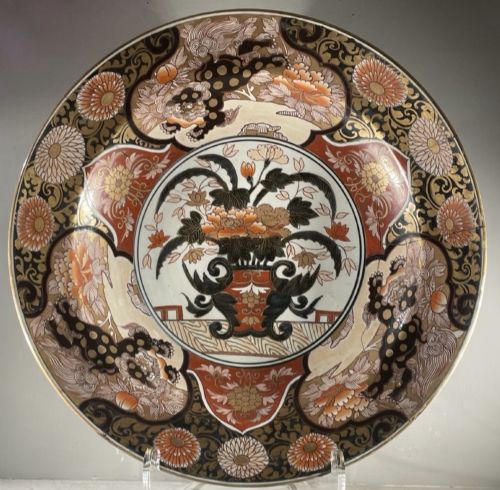
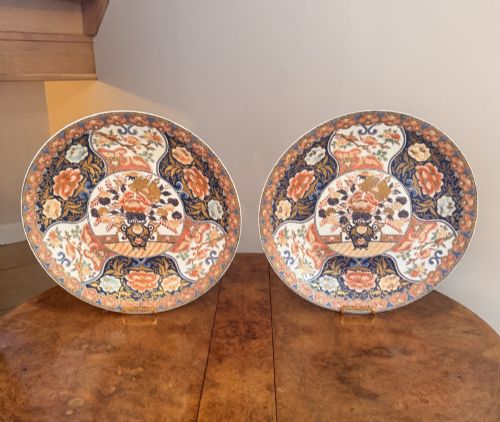
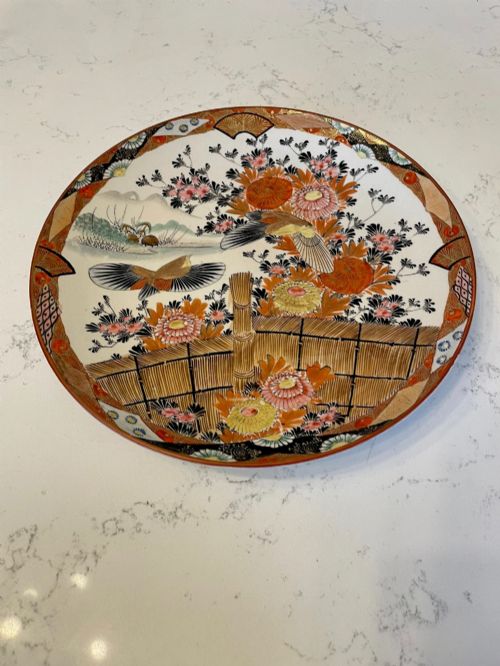
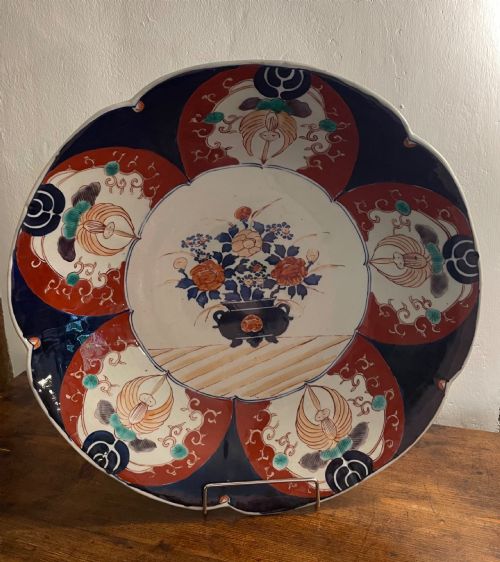
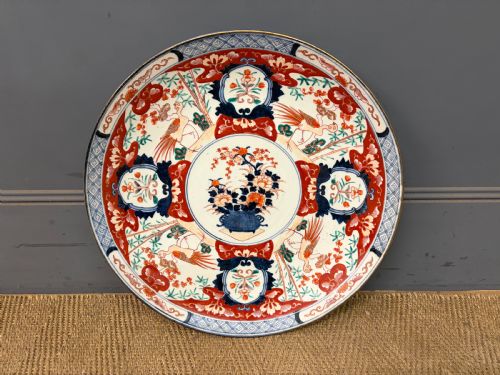
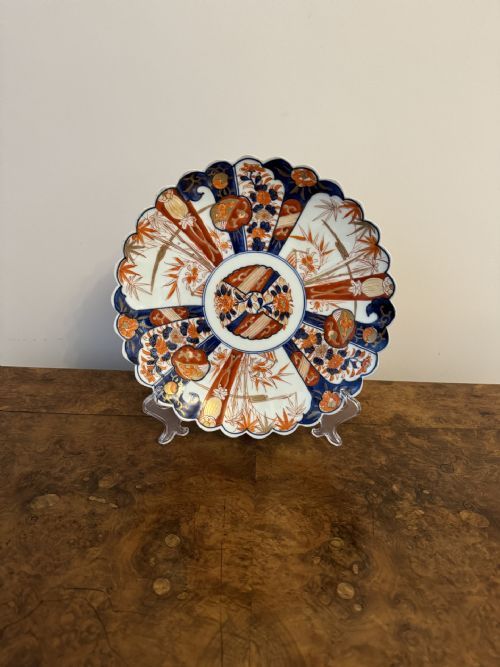
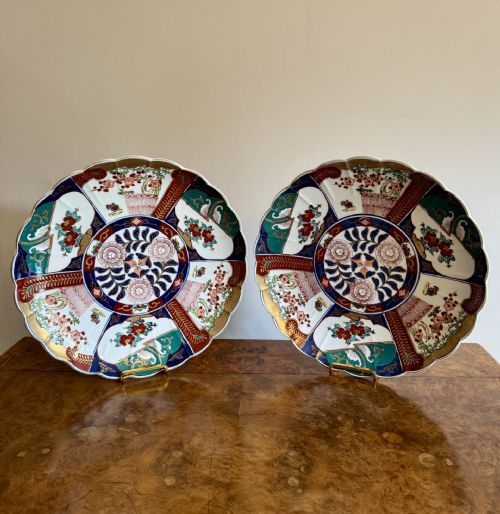
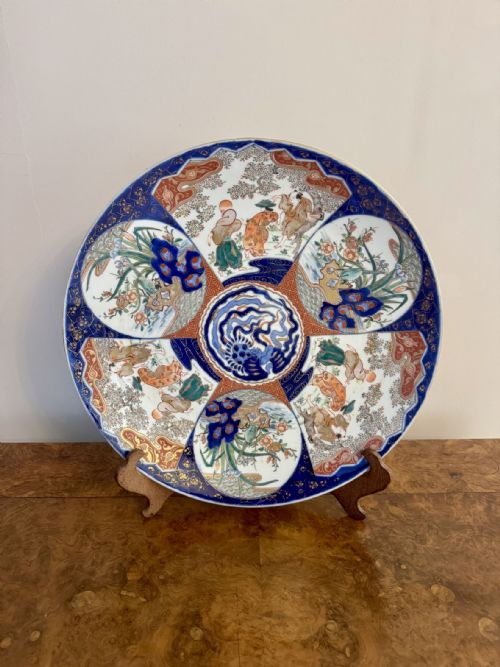
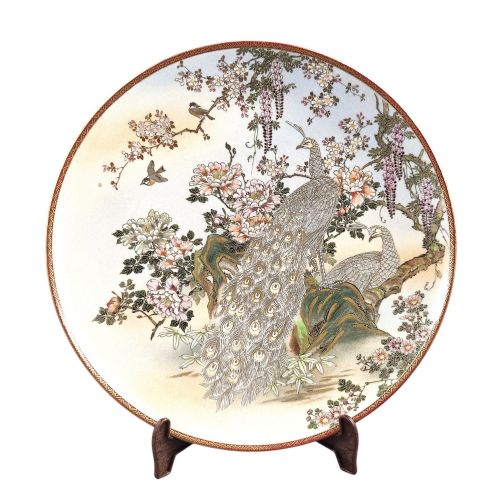
A large japanese plate comprises substantial porcelain and cloisonne chargers, dishes, and platters spanning the nineteenth and early twentieth centuries. These pieces emerge predominantly in Imari styles alongside Kutani and Satsuma wares, showcasing intricate hand-painted motifs.
Buyers encounter heavy porcelain chargers decorated in traditional blue and white or vibrant iron-red and gold palettes, as well as copper and brass vessels worked in enamel. Forms range from deep round chargers to scalloped edges and square plates.
The selection draws heavily on late nineteenth century Meiji period production, with occasional examples extending back to the Edo period. These decorative items serve as striking focal points for display on walls, tables, or stands.
How they were made
Ceramic pieces rely on porcelain bodies shaped and fired before receiving hand-painted designs in cobalt blue, enamel, and gold leaf. Potters apply glaze to seal the surface, creating durable decorative chargers.
Cloisonne examples utilise metal bases of copper or brass fitted with thin wire cells. Artisans fill these compartments with coloured enamel and fire them repeatedly to achieve detailed pictorial scenes.
Moriage techniques build up raised slip decoration on Satsuma wares, adding tactile dimension to depictions of flora and fauna. Artisans integrate gilt highlights to catch the light across the surface.
Large Japanese Plate Retail Price Guide 2026
Typical asking prices for large japanese plate among the pieces listed under this phrase on Sellingantiques today, from the lower quarter to the upper quarter. They describe what is for sale here now, not the wider market.
Listings feature Imari porcelain, cloisonne enamel, and Kutani ceramic chargers from the Meiji and Edo periods.
What varies in quality
The precision of the brushwork and the complexity of the hand-painted details separate standard production from superior examples. Master artisans execute intricate depictions of figures, birds, and carp with remarkable clarity.
In cloisonne work, the fineness of the wirework and the depth of the enamel determine the standard of the piece. Clean lines and smooth, uniform surfaces indicate superior craftsmanship.
The richness of the palette, including the application of gold leaf and the depth of the glaze, distinguishes the finer chargers from ordinary wares.
Shozo
The Large Japanese Plate Glossary
- Imari
- A traditional style of Japanese porcelain featuring a distinct palette of underglaze blue, iron-red, and gilt. It originated in Arita and became widely exported during the Edo and Meiji periods.
- Charger
- A large decorative plate traditionally used for display rather than dining. These pieces measure significantly wider than standard dinner plates.
- Cloisonne
- A metalwork technique where wire partitions are soldered to a base and filled with enamel paste. Artisans fire and polish the surface to create detailed pictorial designs.
- Kutani
- A style of Japanese coloured porcelain known for bold pictorial designs and rich enamel palettes. These wares often incorporate extensive gilt detailing and artist signatures.
- Moriage
- A decorative ceramic technique using piped clay slip to build up raised patterns. This method adds a tactile, three-dimensional texture to the surface of the ware.
Large Japanese Plate: Frequently Asked Questions
How were large Japanese plates used?
These large vessels served primarily as decorative chargers rather than functional tableware. Households displayed them on stands or hung them on walls to showcase skilled craftsmanship.
Export demand during the Meiji period meant many pieces were created specifically for international decorative display in Western homes.
How do I hang a heavy charger?
Displaying a heavy porcelain or cloisonne charger requires a secure, properly sized wall bracket designed for plate weight. Spring-loaded hangers should grip the rim firmly without putting undue pressure on the body.
Alternatively, sturdy tabletop display stands allow the plate to rest safely on a surface without wall mounting.
How do I care for antique enamel chargers?
Cloisonne and enamel surfaces require gentle dusting with a soft, dry cloth to prevent accumulation. Harsh chemical cleaners and abrasive materials will damage the delicate metal wires and vitreous enamel.
Keeping the pieces away from direct, prolonged sunlight helps preserve the vibrant tones of the original pigments.