









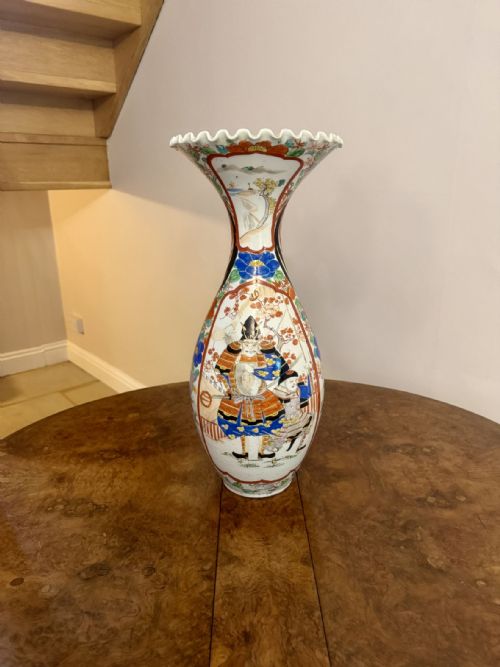

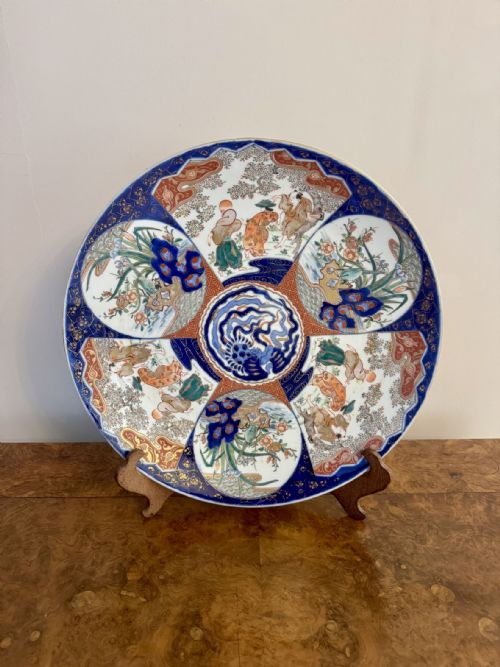

Large Imari Ceramic
Large imari ceramic pieces bring striking palettes of cobalt blue, iron red and gilt into a room, shaped as substantial chargers, deep bowls and tall floor vases.
Large Imari Ceramic
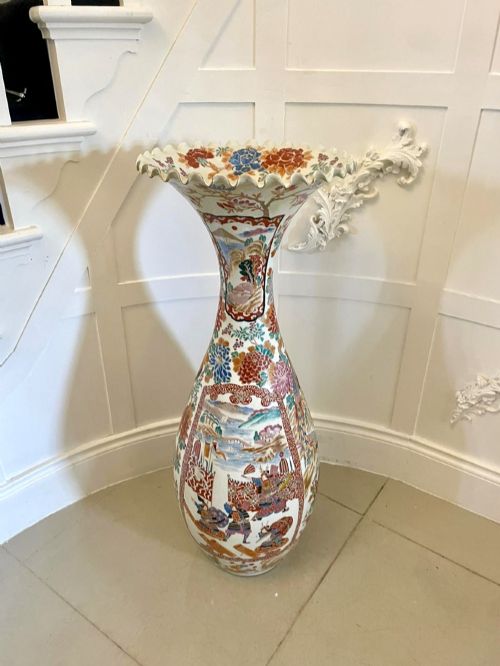
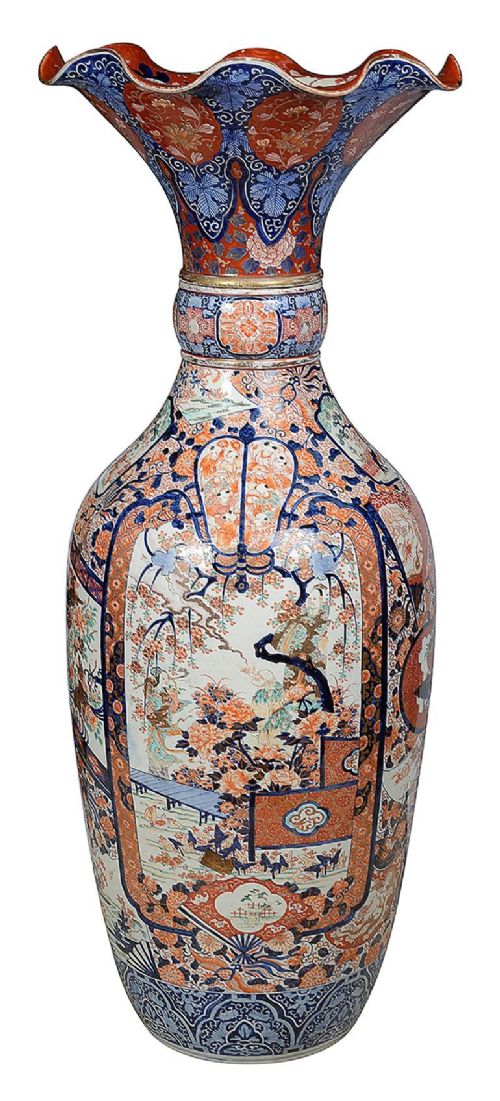
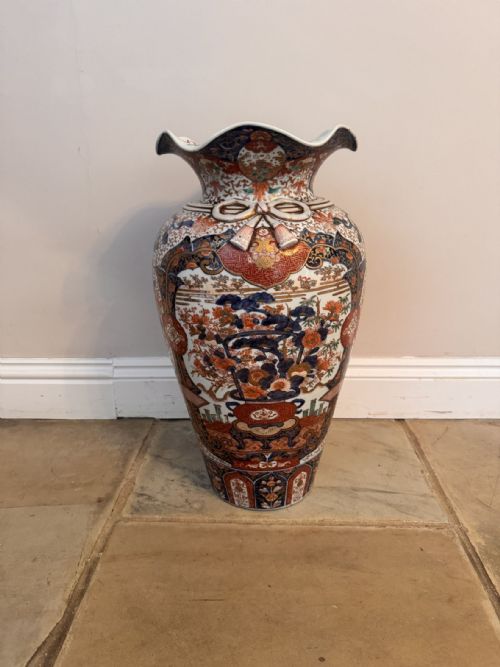
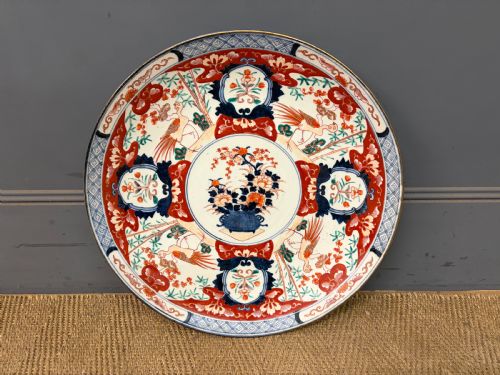
When you search for large imari ceramic, you encounter robust objects created for display and service, spanning Japanese porcelain traditions from the Edo and Meiji periods alongside English ironstone interpretations. The forms on this page run from expansive chargers and scalloped plates to monumental lidded vases, jardinières and floor-standing urns.
You are most likely to meet pieces originating from late nineteenth-century Japan alongside eighteenth-century Arita works and nineteenth-century English ironstone adaptations. These items serve as focal points in interiors, offering dense hand-painted patterns that combine floral motifs, figures and landscapes in traditional palettes.
Materials and construction
These items utilise porcelain and ironstone as bodies, shaped into substantial bowls, chargers and vases before undergoing high-temperature firing. Potters built up the forms manually or through press-moulding, allowing for large floor-standing vessels and heavy pedestal bowls that required considerable structural stability.
Decoration relies on underglaze cobalt blue combined with overglaze iron red enamel and gold leaf highlights, fused through successive kiln firings. Artisans painted intricate scenes by hand, incorporating gilding and glaze layers to achieve the rich surface texture characteristic of the style.
Large Imari Ceramic Retail Price Guide 2026
Typical asking prices for large imari ceramic among the pieces listed under this phrase on Sellingantiques today, from the lower quarter to the upper quarter. They describe what is for sale here now, not the wider market.
Listings span porcelain and ironstone, featuring forms from large chargers and wall plates to monumental floor-standing vases dating from the eighteenth century to the twentieth.
Distinguishing finer examples
Quality rests in the precision and density of the hand-painted brushwork, where finer pieces display sharply defined motifs and controlled pigment application rather than hurried strokes. The depth of the cobalt blue and the richness of the overglaze red and gilding separate superior items from standard production wares.
Structural ambition also defines the upper tier, seen in monumental floor-standing vases, deep jardinières and perfectly potted large chargers that maintain their circular form without distortion during the kiln firing process.
The Large Imari Ceramic Glossary
- Imari
- A style of ceramic originating from the Japanese port of Imari, characterised by a distinctive palette of cobalt blue, iron red and gold.
- Charger
- A large ornamental plate designed for display on a wall or dresser rather than for dining use.
- Arita
- The Japanese town and surrounding region long recognised as the historic centre of porcelain production.
- Ironstone
- A heavy, durable type of ceramic developed in nineteenth-century England to imitate porcelain.
- Meiji Period
- The era in Japanese history spanning from 1868 to 1912, noted for expansive export ceramics.
Large Imari Ceramic: Frequently Asked Questions
How were large imari ceramic chargers used?
These large plates were primarily created for visual display on walls, sideboards or specially designed stands rather than everyday dining.
Their heavy construction and rich hand-painted decoration made them centrepieces in both Japanese domestic settings and European drawing rooms.
How do I distinguish eighteenth-century pieces?
Early pieces often feature a slightly different weight to the porcelain body and distinct potting characteristics compared to later export wares.
Examination of the underglaze blue and the integration of the iron red enamel provides further clues to the period of manufacture.
Can these large vessels sit on the floor?
Floor-standing vases, tall urns and large jardinières were specifically built to occupy floor space in hallways and principal rooms.
Their substantial height and stable bases allow them to stand independently as architectural accents within an interior.
What is the difference between Japanese and English versions?
Japanese examples utilise true porcelain bodies decorated with traditional regional motifs, while English interpretations often employ heavy ironstone.
English makers such as Mason's adapted the distinctive palette to domestic forms like jugs, basins and pedestal bowls.