

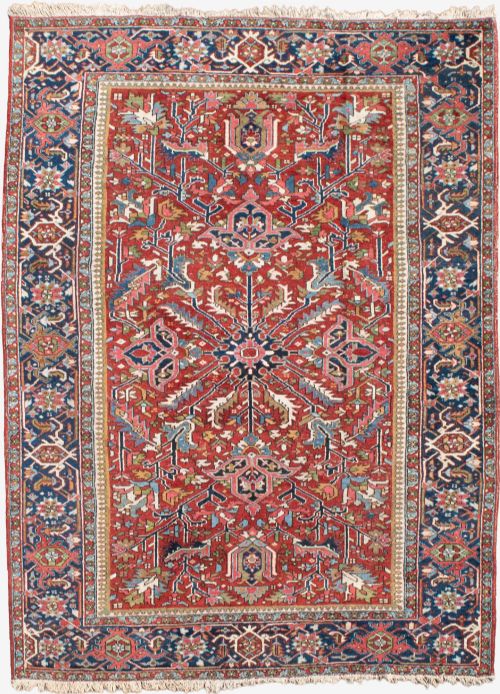

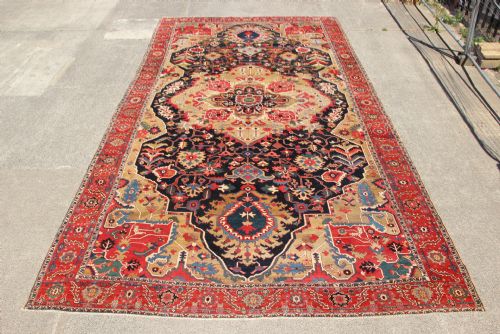
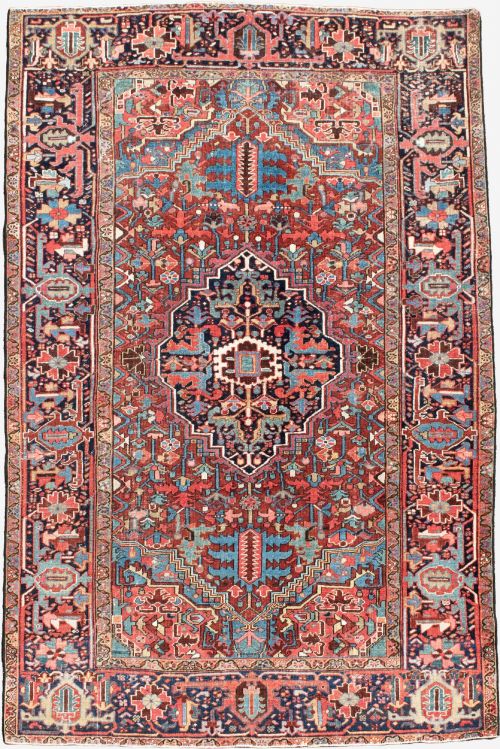
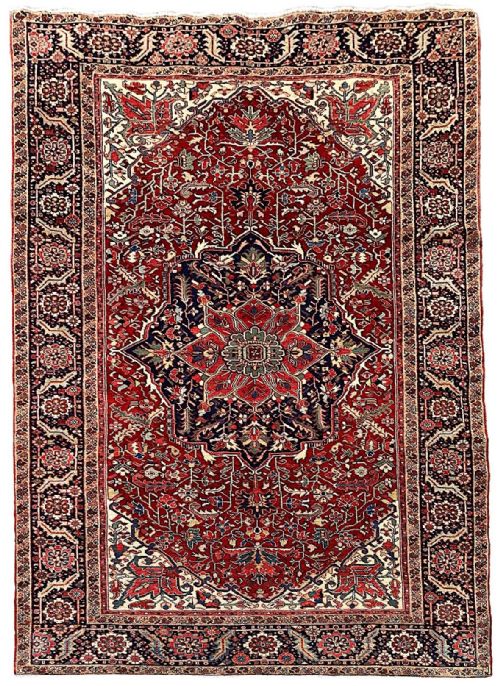
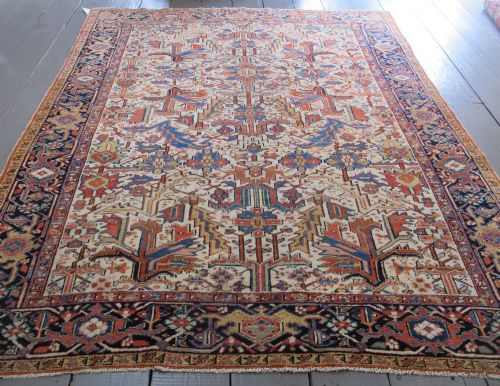
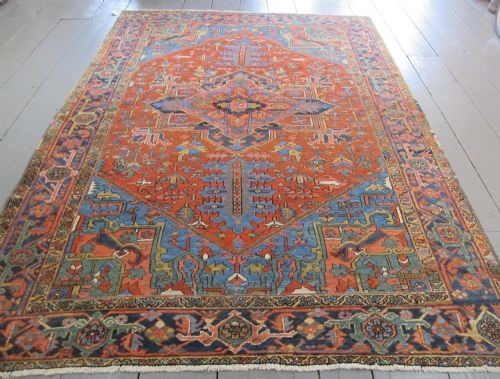
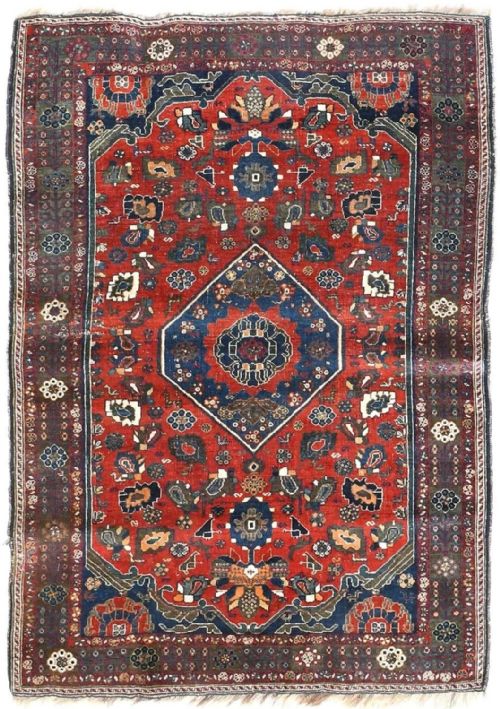


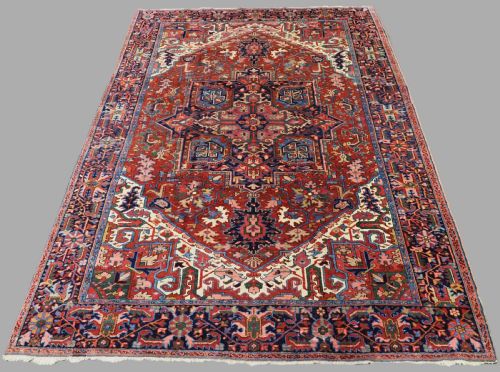


Large Heriz Medallion Rug
A large heriz medallion rug anchors a room with bold geometry and rich wool, drawing the eye instantly.
Large Heriz Medallion Rug
A large heriz medallion rug delivers substantial floor coverage originating from north-west Persia during the nineteenth and early twentieth centuries. These floor coverings are built around prominent central motifs flanked by geometric corners and structured borders.
Most examples encountered here date from the decades between eighteen eighty and nineteen thirty, spanning traditional Persian weaving traditions. Buyers regularly find substantial formats designed for principal rooms, often measuring upwards of three metres in length.
The regional style bridges nomadic geometric patterns with formal court designs, resulting in robust carpets suited for heavy foot traffic. Woven primarily in village workshops, each piece reflects the distinct aesthetic preferences of north-west Persian weavers.
How they were made
Construction relies on hand-knotted wool piled firmly onto sturdy cotton foundations. This pairing provides the structural rigidity necessary to maintain the crisp geometric lines characteristic of the region.
Weavers utilised natural dyes derived from local plants and minerals to colour the wool, producing deep terracotta, navy, and ivory tones. Over decades, these organic dyes settle into stable, harmonious palettes that define the visual weight of each carpet.
The listings span production dates from eighteen sixty to nineteen thirty, documenting traditional Persian wool and cotton construction methods.
What varies in quality
The precision of the central medallion and the crispness of the surrounding geometric motifs determine the visual success of the piece. Master weavers achieved sharper definition through tighter knotting and disciplined control over the wool pile.
The balance and saturation of the dye palette dictate the overall depth of the composition. Variations in wool quality influence how the surface reflects light and withstands years of daily use in domestic settings.
The Large Heriz Medallion Rug Glossary
- Medallion
- The central ornamental motif dominating the field of the rug. It anchors the geometric symmetry characteristic of Persian weaving.
- Serapi
- A sub-category of Heriz carpets generally featuring more open fields and coarser, bolder geometric designs. These pieces often date to the nineteenth century.
- Hand-knotted
- A construction method where individual strands of wool are tied by hand onto the warp threads. This technique ensures durability and long-term structural integrity.
- Warp
- The vertical cotton threads stretched across the loom that form the foundational skeleton of the rug. The pile is knotted directly onto these tensioned strands.
Large Heriz Medallion Rug: Frequently Asked Questions
How do I clean a large heriz medallion rug?
Regular gentle vacuuming without a beater bar removes surface dust trapped within the wool pile. Professional cleaning by specialists in antique Persian textiles is recommended for deep maintenance.
Avoid harsh chemical treatments or excessive water immersion, which can damage the organic dyes and cotton foundations. Prompt attention to spills prevents staining without altering the integrity of the wool.
Where were these carpets originally woven?
These carpets originate from the Heriz region located in north-west Persia, encompassing various surrounding village workshops. The local water and mineral content historically contributed to the resilience and specific texture of the wool.
Production centered around domestic or small cooperative workshops where families passed down weaving traditions across generations. This regional focus imparts a consistent geometric vocabulary unique to the district.
How do I date an antique heriz carpet?
Dating relies on assessing the dye palette, structural materials, and the specific geometry of the central medallion and border designs. Earlier nineteenth-century examples often display looser knots and more expansive, open field compositions.
Comparing the weave density and cotton foundation characteristics against documented periods from eighteen sixty to nineteen thirty helps establish a reliable timeline. Minor shifts in regional styles reflect the evolution of local weaving practices over those decades.
Can I use these rugs in high traffic areas?
The dense hand-knotted wool pile and sturdy cotton foundations make these carpets exceptionally durable for everyday living spaces. They withstand regular movement well when paired with a quality underlay to prevent shifting.
Rotating the carpet periodically ensures even exposure to light and foot traffic, preserving the balance of the pile over years of domestic use. Proper placement away from direct, harsh sunlight protects the natural dyed wool from uneven fading.