

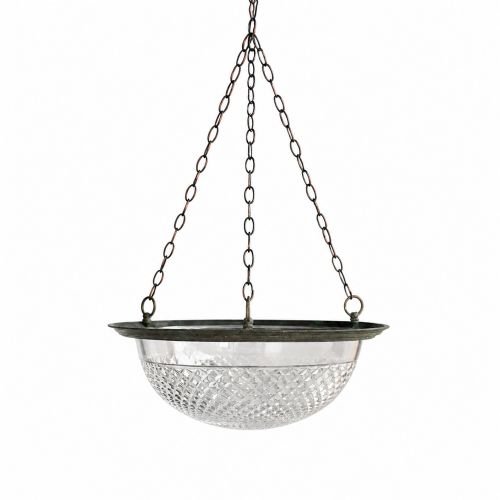


Large Hanging Pendant
A large hanging pendant provides scale and gravity to high ceilings, bringing illumination down into the volume of a room.
Large Hanging Pendant
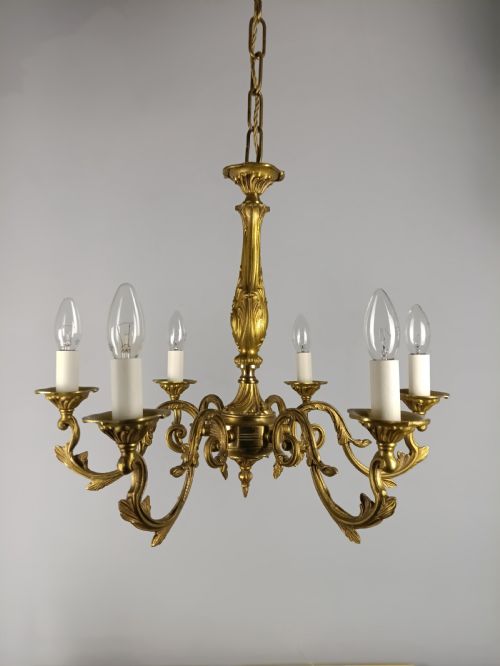
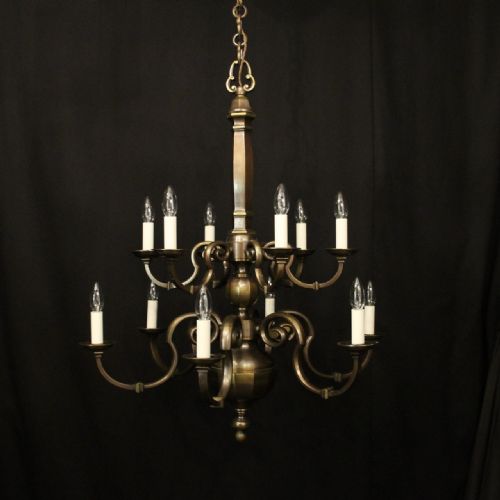
A large hanging pendant encompasses substantial ceiling fixtures designed to cast broad illumination over large spaces, drawing the eye upward while anchoring the room below. When searching for a large hanging pendant, buyers encounter an array of forms ranging from multi-light chandeliers and heavy bronze lanterns to simple opaline glass shades suspended from chains or cord. The selection spans distinct periods from the nineteenth century through the Art Deco era, with French provincial and gothic influences appearing frequently alongside English and American designs.
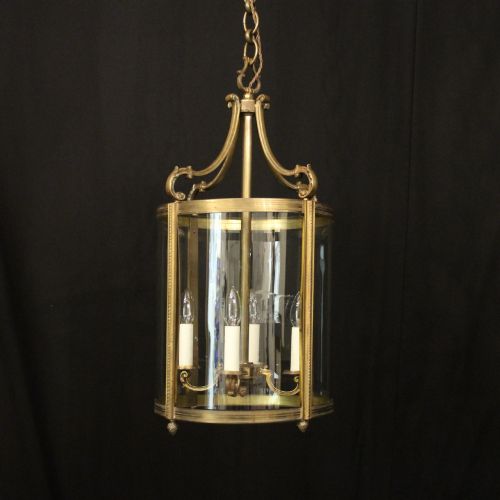
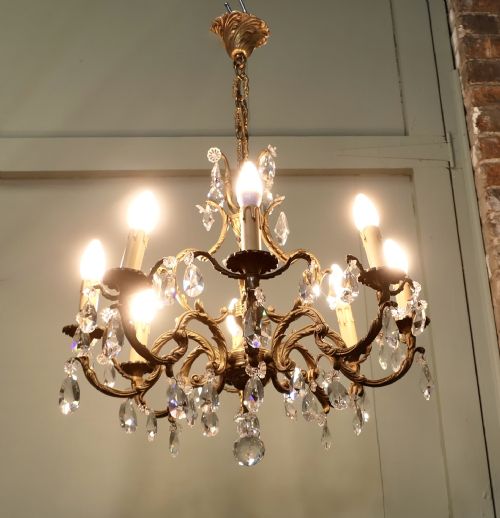
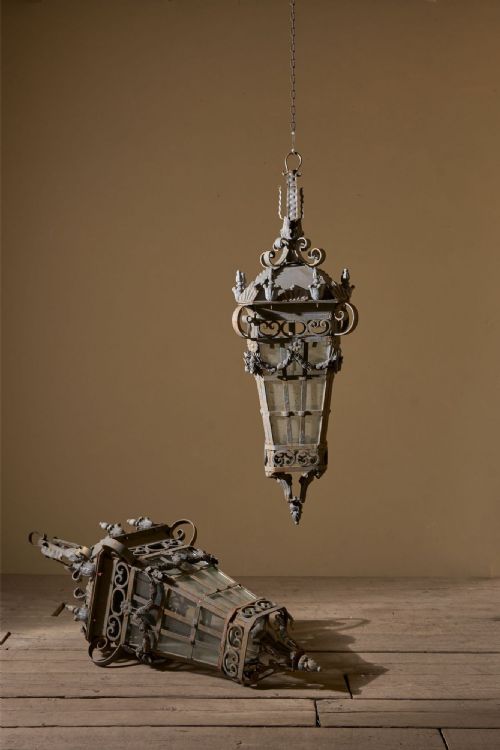
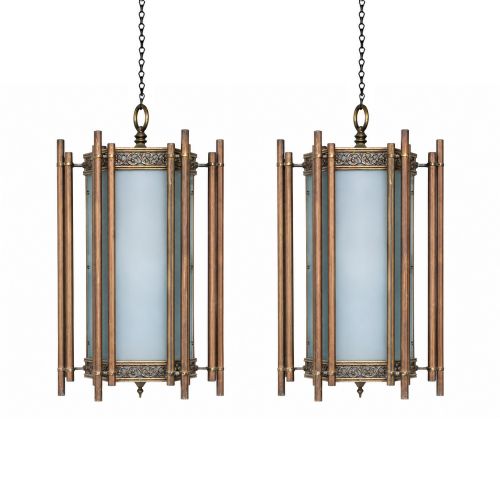
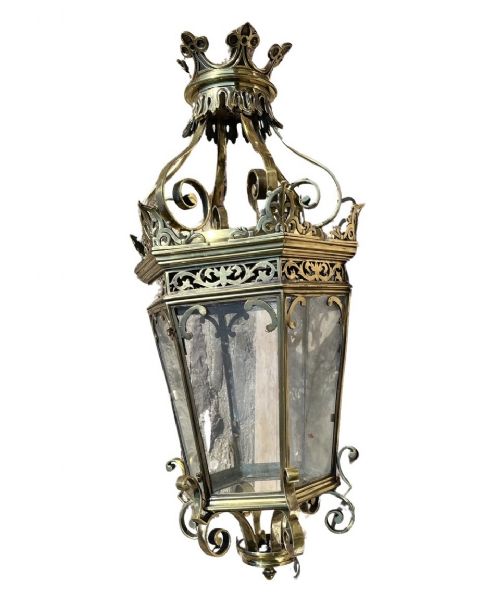
The dominant forms on this page include grand brass lanterns, multi-armed chandeliers hung with crystal lustres, and industrial pharmacy or chapel lights made of milk and opaline glass. These pieces originate from diverse settings, including country house porches, French chateaux, and urban institutions, reflecting the varied architectural demands of their original contexts.
How they were made
The construction of these fixtures relies heavily on cast and wrought metals such as brass, bronze, copper, iron, and gilt bronze, which form the structural frames and decorative mounts. Artisans shaped these metals through casting, hammering, and soldering to create sturdy cages and arms capable of supporting heavy glass components.
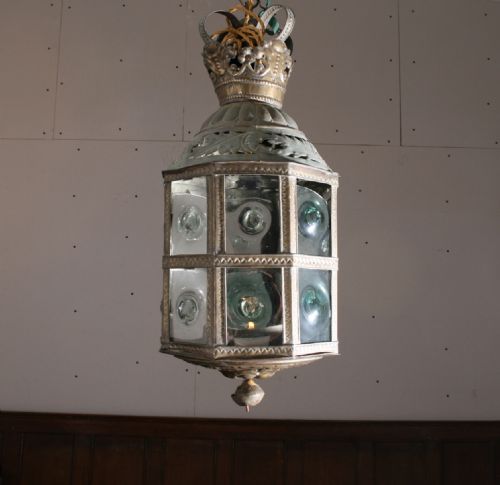
Glass elements form a core component of the manufacturing tradition seen here, utilising hand-blown bullseye panes, bevelled glass panels, and milk or opaline glass shades. Metalwork and glass are frequently combined with crystal lustres, leaded joints, and zinc components to diffuse light and provide structural integrity.
A nineteenth-century outside porch light survives complete with cast shamrocks, ready to greet visitors with botanical good luck.
What varies in quality
Quality in these hanging fixtures depends heavily on the weight and finish of the metalwork, distinguishing heavy cast bronze or gilt brass frames from thinner, stamped alternatives. Superior examples display crisp chasing on bronze mounts, robust gauge ironwork, and substantial glass elements free of modern replacement panels.
The integration of original components, such as matching crystal lustres, hand-blown glass with natural bubbles, and period suspension chains, elevates the integrity of a piece. Finer examples maintain uniform patination across the metal surfaces and complex structural assembly methods that reflect high-period craftsmanship.
The Large Hanging Pendant Glossary
- Plafond
- A ceiling light or fixture mounted directly or semi-directly rather than suspended on a long drop, though often grouped with hanging pendants.
- Opalescent
- Glass that exhibits a milky, semi-translucent appearance with pearlescent undertones, designed to diffuse harsh light effectively.
- Lustre
- A cut crystal pendant or drop hung from a chandelier to refract and multiply light across a room.
- Bevelled
- Glass panes featuring an angled edge ground down around the perimeter, catching light to create decorative prismatic effects.
- Chasing
- The manual technique of refining and detailing cast metal surfaces using tiny punches and hammers to sharpen decorative motifs.
Large Hanging Pendant: Frequently Asked Questions
How do I hang a heavy pendant?
Heavy fixtures require secure ceiling joists or adequate ceiling roses capable of supporting significant dead weight without pulling loose from the plaster.
Professional installation is recommended for large metal and glass lanterns to ensure the electrical wiring and suspension chains safely bear the load.
Where should I place a large pendant?
These sizable fixtures suit high-ceilinged entrance halls, stairwells, and grand reception rooms where they can hang freely without obstructing movement.
They also serve well above large dining tables or kitchen islands to anchor the central activity of the space.
How do I clean antique glass and brass?
Dust glass panels and metal frames regularly with a soft, dry cloth to prevent the accumulation of grime and dullness on the surface.
Avoid harsh chemical polishes on aged brass and bronze to preserve the natural historical patina accumulated over decades.